
Navigating the intricacies of obtaining a driver’s license in a new jurisdiction is often a key aspect of settling into a new locale, especially for those embarking on extensive travels or planning a longer stay. For individuals considering a move to or an extended visit in the Silver State, understanding the requirements for a Nevada driver’s permit is paramount. This guide delves into the specifics of the Nevada permit test, focusing on a crucial detail for prospective drivers: the number of questions. While the Nevada Department of Motor Vehicles (DMV) oversees the process, a clear grasp of the test’s format and content can significantly ease preparation and boost confidence.
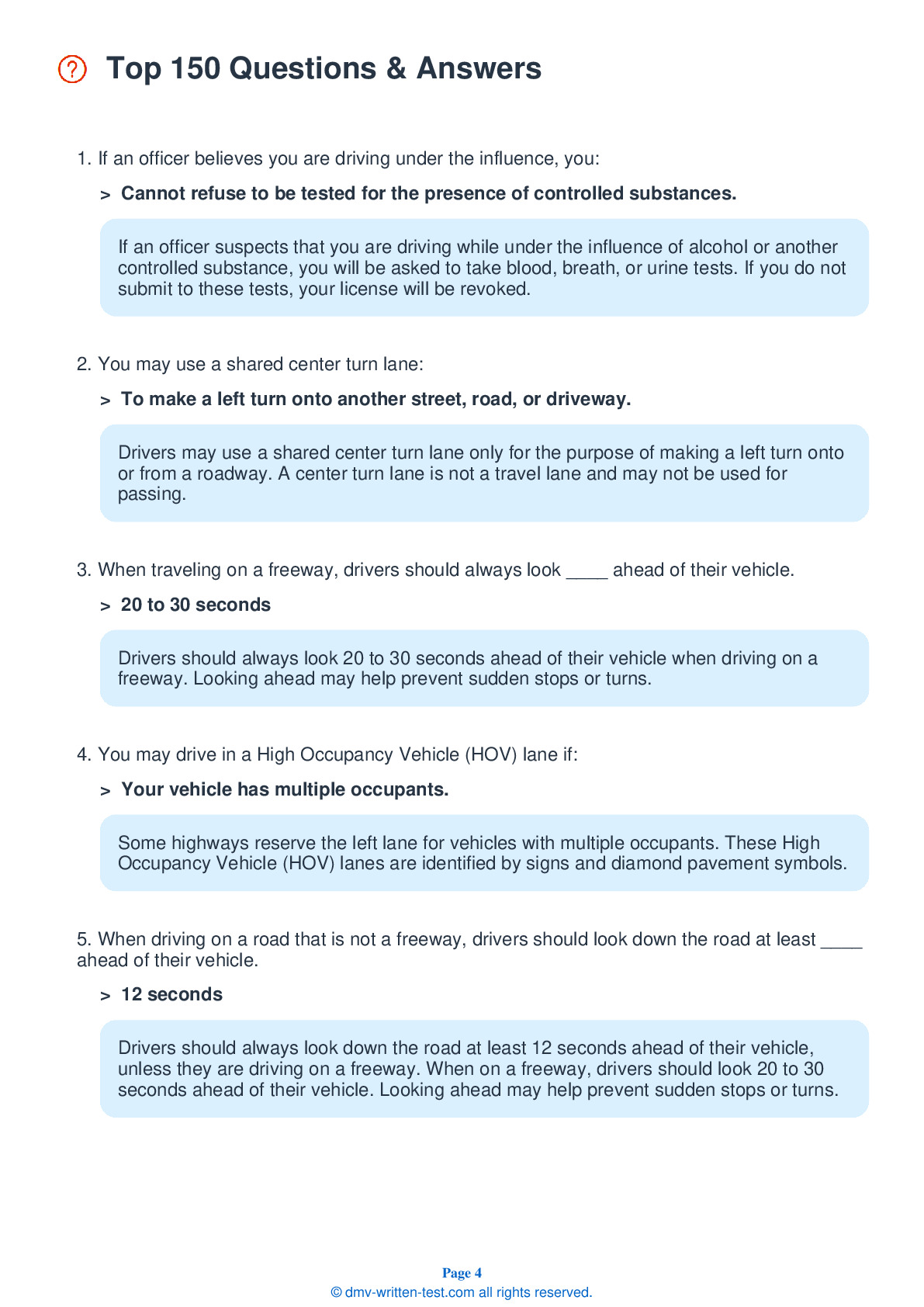
The Nevada permit test, officially known as the knowledge test, is designed to assess an applicant’s understanding of traffic laws, road signs, and safe driving practices specific to Nevada. Successfully passing this test is a mandatory step before a new driver can obtain a learner’s permit, which then allows for supervised driving practice. The number of questions, while seemingly a minor detail, is a significant piece of information for test-takers aiming to strategize their study efforts. A focused approach, understanding what to expect, can make the difference between a straightforward pass and the need for re-testing.
Understanding the Nevada Permit Test Structure
The Nevada permit test is a computer-based examination that covers a broad spectrum of driving knowledge. The Department of Motor Vehicles (DMV) aims to ensure that all new drivers are well-versed in the rules and regulations that govern the roadways, contributing to a safer driving environment for everyone. The test is not just about memorizing facts; it’s about comprehending the underlying principles of safe driving and responsible vehicle operation. The content is drawn directly from the official Nevada Driver’s Handbook, which serves as the definitive study guide for all applicants. Familiarizing oneself thoroughly with this handbook is the most effective way to prepare for the test.
The test itself is multiple-choice, meaning each question will have several options, and the applicant must select the correct answer. The questions are designed to be clear and concise, avoiding ambiguity. The difficulty level is calibrated to assess a foundational understanding of driving laws and safety procedures. Applicants are generally given ample time to complete the test, allowing them to read each question carefully and consider the provided options. It’s important to approach each question thoughtfully, recalling the information presented in the driver’s handbook.
The Crucial Number: How Many Questions?
The core of many prospective drivers’ inquiries revolves around the sheer volume of questions they will encounter. For the Nevada permit test, the standard number of questions is 50. Out of these 50 questions, an applicant must correctly answer at least 40 to achieve a passing score. This translates to a passing threshold of 80%. This figure is consistent for both the standard driver’s license permit test and tests for commercial driver’s licenses (CDLs), although the content for CDLs will be significantly more specialized and detailed.
This 50-question format means that while a majority of questions must be answered correctly, there is a small margin for error. However, aiming to answer all questions correctly is the most prudent strategy. Rushing through the test or not dedicating sufficient study time can lead to avoidable mistakes. The 40-question requirement is a clear benchmark, and test-takers should strive to exceed this by a comfortable margin. Understanding this specific number allows for targeted study sessions, ensuring that ample time is spent on all critical areas of the Nevada Driver’s Handbook.
Key Areas Covered by the 50 Questions
The 50 questions on the Nevada permit test are designed to cover a comprehensive range of driving-related topics. These can be broadly categorized to help applicants focus their study efforts.
Traffic Laws and Regulations
This is a foundational component of the test and covers the legal framework governing road usage. Questions will address speed limits (which vary by zone and condition), right-of-way rules (essential for intersections and lane changes), pedestrian laws (ensuring the safety of those on foot), and the regulations surrounding parking. Understanding specific laws pertaining to Nevada, such as those regarding the use of headlights during certain times or weather conditions, is crucial. The nuances of laws related to impaired driving, including the legal blood alcohol content (BAC) limits and the consequences of DUI, are also heavily tested.
Road Signs and Signals
Recognizing and understanding the meaning of various road signs and traffic signals is critical for safe navigation. The test will include questions on regulatory signs (like stop signs, yield signs, speed limit signs), warning signs (indicating potential hazards like curves, slippery roads, or animal crossings), and guide signs (providing directions to destinations). Understanding the color and shape coding of signs is also important, as this often provides immediate context about the sign’s purpose. Traffic signals, including the meaning of different colored lights and arrow signals, are also a common subject.
Safe Driving Practices and Vehicle Operation
Beyond the strict letter of the law, the Nevada permit test also evaluates an applicant’s knowledge of safe driving techniques and responsible vehicle operation. This includes questions on defensive driving strategies, such as maintaining a safe following distance, scanning the road ahead, and anticipating potential hazards. Information on proper lane changes, merging onto highways, and navigating various road conditions (e.g., rain, fog, snow, ice) will be present. Understanding vehicle maintenance basics, such as checking tire pressure and fluid levels, and the importance of seatbelt use for all occupants, are also key areas. The test also touches upon how to react to emergencies, such as tire blowouts or brake failure.
Specific Nevada Driving Scenarios
The test often incorporates questions that reflect common driving scenarios encountered in Nevada. This could include understanding the specific rules for navigating areas with heavy traffic, such as those found in Las Vegas or Reno. It may also include questions related to driving in the unique environmental conditions of Nevada, such as hot weather driving or driving in desert areas where visibility can be impacted by dust. Knowledge of laws pertaining to motorcycles, bicycles, and other vulnerable road users within Nevada is also included to ensure a comprehensive understanding of shared road responsibilities.
Preparing for the 50-Question Nevada Permit Test
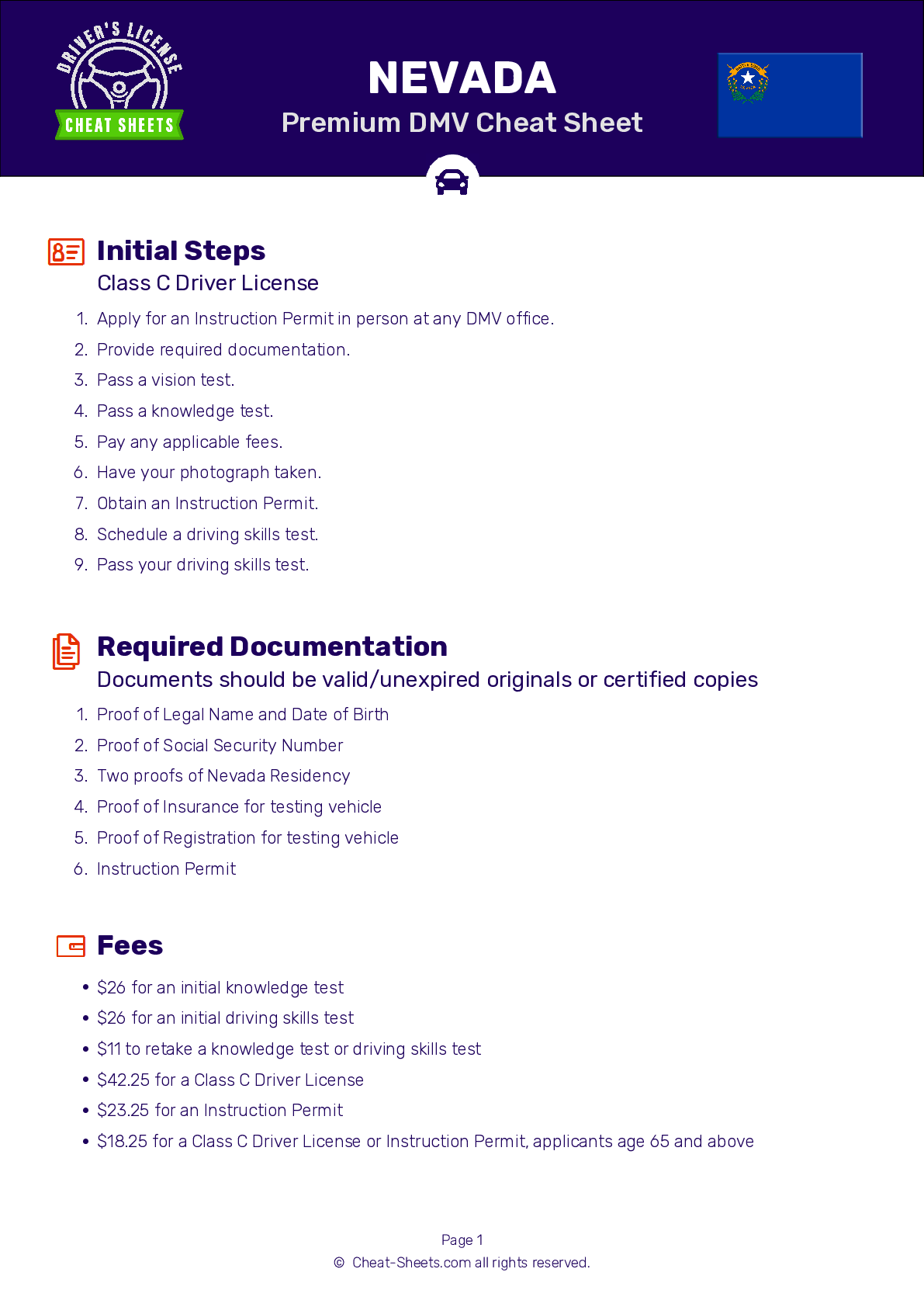
Effective preparation is key to successfully passing the Nevada permit test. With 50 questions and a requirement to answer at least 40 correctly, a systematic study approach is highly recommended. The primary resource for all aspiring drivers is the official Nevada Driver’s Handbook. This handbook is readily available on the Nevada DMV website and can also be obtained in hard copy at DMV offices. It contains all the necessary information that may appear on the test.
Applicants should aim to read the handbook thoroughly, paying close attention to the sections on traffic laws, road signs, and safe driving practices. It is beneficial to take notes and create flashcards for key terms, definitions, and rules. Many sections of the handbook can be directly translated into potential test questions, so identifying these key takeaways is a valuable study technique.
Beyond reading the handbook, utilizing practice tests is an exceptionally effective method for reinforcing learning and familiarizing oneself with the test format. Numerous online resources offer Nevada permit practice tests that simulate the actual exam. These practice tests often mirror the structure and types of questions found on the real test, providing a realistic preview of the experience. By taking multiple practice tests, applicants can identify areas where they need further study and gauge their readiness. Scoring consistently high on practice tests is a good indicator of preparedness for the official exam. It’s also helpful to understand the scoring system and the implications of incorrect answers. While there isn’t a penalty for wrong answers on the Nevada permit test, each incorrect answer moves an applicant further from the passing score of 40 correct answers.
Beyond the Questions: The DMV Testing Experience
While the number of questions is a vital piece of information, understanding the broader testing experience at the Nevada DMV is also beneficial for a smooth process. It’s advisable to schedule an appointment for the knowledge test, as walk-in services can involve significant wait times, especially in busier locations like those in the greater Las Vegas metropolitan area or the Reno district. Arriving early for the scheduled appointment allows for necessary paperwork and check-in procedures to be completed without haste.
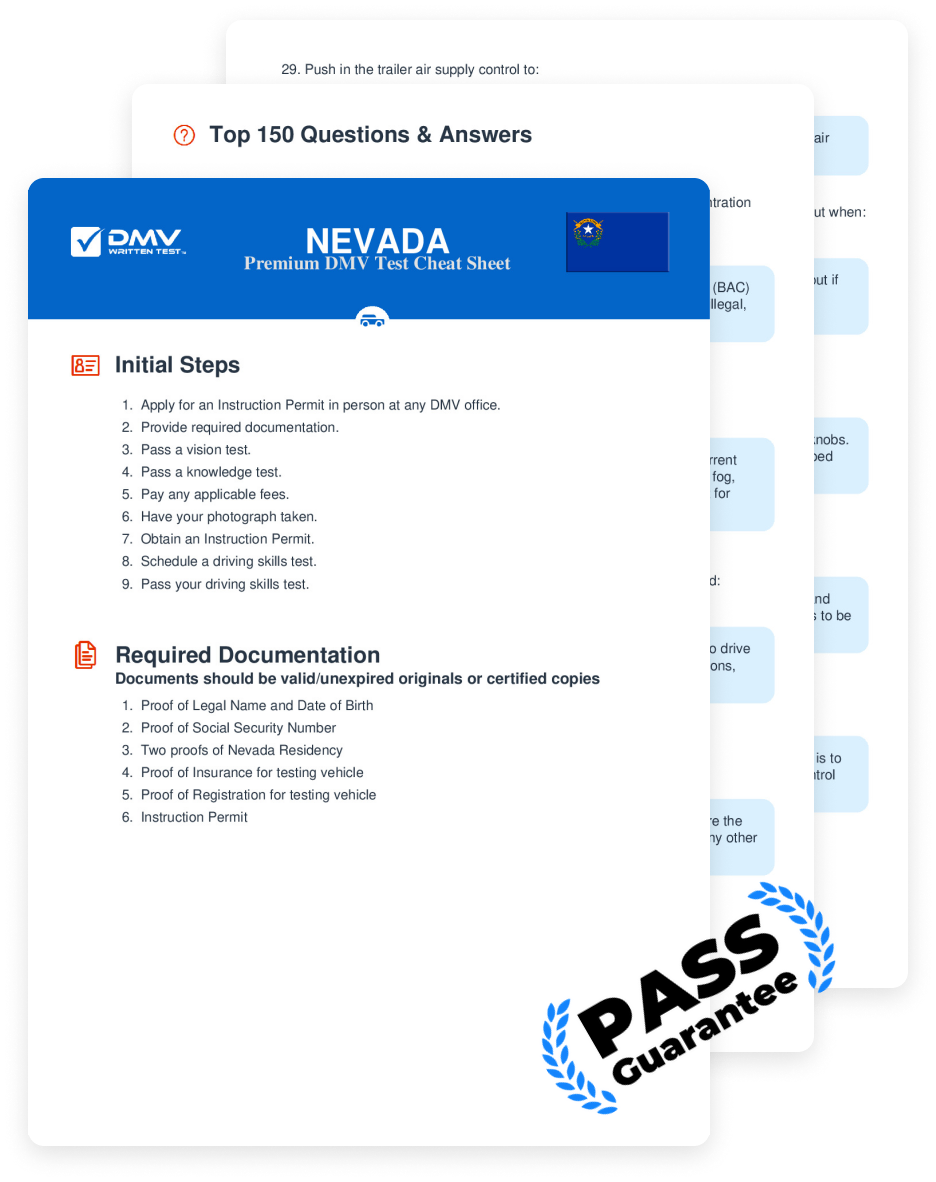
Applicants will need to bring specific documentation to their appointment. This typically includes proof of identity (such as a birth certificate or passport), proof of Social Security number, and proof of Nevada residency. The exact list of required documents can be found on the Nevada DMV website, and it is crucial to verify this list beforehand to avoid any delays or the need for a return visit. The test is administered on a computer, and the results are usually provided immediately upon completion. If an applicant passes, they will then proceed with the next steps to obtain their learner’s permit, which often includes a vision test and having their photograph taken. Should an applicant not achieve the required 40 correct answers out of 50, they will typically have the opportunity to re-take the test after a waiting period, often the next business day. This emphasizes the importance of thorough preparation to pass on the first attempt, especially for those on a tight schedule during their travel or relocation plans.
LifeOutOfTheBox is a participant in the Amazon Services LLC Associates Program, an affiliate advertising program designed to provide a means for sites to earn advertising fees by advertising and linking to Amazon.com. Amazon, the Amazon logo, AmazonSupply, and the AmazonSupply logo are trademarks of Amazon.com, Inc. or its affiliates. As an Amazon Associate we earn affiliate commissions from qualifying purchases.