
Nevada, often celebrated for its dazzling Las Vegas strip, vast desert landscapes, and the adventurous spirit of the American West, holds a unique distinction within the United States: it is the only state where prostitution is legal. This fact frequently surprises travelers and locals alike, sparking curiosity and often misunderstanding. Far from being a uniform law across the Silver State, the legality of prostitution is a complex tapestry woven from historical precedent, economic pragmatism, and a distinct approach to local governance. For those planning a trip or simply interested in the intriguing facets of American culture and law, understanding why this practice is permitted in Nevada offers a deeper insight into the state’s identity, its approach to tourism, and the unique lifestyle it fosters in certain regions.

This article delves into the historical, legal, and economic factors that have shaped Nevada’s stance on prostitution, examining how this unusual legal framework operates and what it means for visitors and residents. It’s a story that goes beyond the neon lights of the cities, reaching into the rugged, independent spirit of Nevada’s lesser-known corners.
A Glimpse into Nevada’s Unique Legal Landscape
At first glance, the concept of legal prostitution might seem counterintuitive in a modern Western society. However, Nevada’s legal framework is not a sudden development but rather the culmination of historical circumstances and a specific philosophy of local control. It’s crucial to understand that while legal, it is not a free-for-all. The industry is heavily regulated and restricted, operating under strict guidelines that vary significantly from one county to another. This decentralization is key to comprehending the patchwork nature of the law.
The state’s approach reflects a pragmatic understanding of human behavior, often arguing that regulation can provide a safer environment for both workers and clients than outright prohibition. This perspective, deeply rooted in Nevada’s frontier past, posits that rather than driving the activity underground, it is more effective to bring it into the open, subject it to health and safety standards, and tax it. This approach stands in stark contrast to virtually every other state in the United States, making Nevada an anomaly that continues to fascinate and sometimes perplex.
Dispelling Common Misconceptions: The Las Vegas Divide
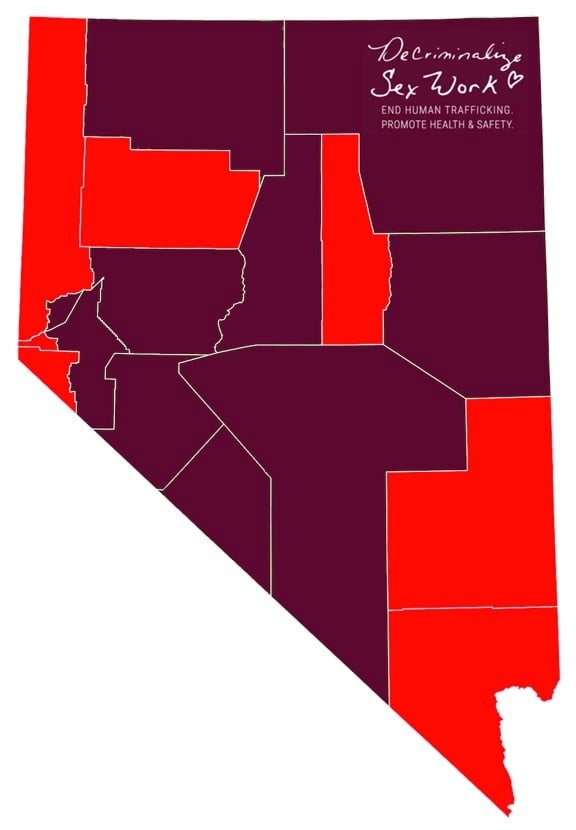
Perhaps the most significant misconception regarding prostitution in Nevada is the belief that it is legal throughout the entire state, including its most famous city. This is emphatically not true. Prostitution is illegal in Las Vegas, as well as in Reno, Carson City, and other major urban areas. The legality of prostitution is determined at the county level, and it is explicitly prohibited in Clark County (where Las Vegas is located) and Washoe County (home to Reno).
This distinction is vital for any traveler or resident. In Las Vegas, soliciting or engaging in prostitution carries significant legal penalties, just as it would in most other parts of the United States. The vibrant nightlife, luxurious hotels, and diverse entertainment options of Las Vegas – from the Bellagio‘s fountains to the MGM Grand‘s grandeur – thrive on a different kind of regulated indulgence. The legal brothels, numbering around 20, are instead situated in rural counties, often many miles from the major population centers. This geographic separation is deliberate, ensuring that the industry remains largely out of sight and out of mind for the vast majority of tourists who visit Nevada’s bustling cities. Understanding this divide is the first step in comprehending the nuanced reality of Nevada’s legal landscape.
The Historical Roots of Nevada’s Brothel Industry
To truly grasp why prostitution remains legal in parts of Nevada, one must look back to the state’s rugged origins. Nevada was forged in the crucible of the 19th-century mining boom, attracting a transient population of miners, prospectors, and entrepreneurs seeking their fortunes. These frontier towns, often remote and populated predominantly by men, were characterized by a certain lawlessness and a practical approach to social needs. Taverns, gambling halls, and brothels naturally emerged as integral components of these communities, catering to the transient workforce.
Unlike the more settled and morally conservative East Coast states, Nevada’s early settlers were less concerned with imposing Victorian morality and more focused on the immediate demands of a rapidly expanding, resource-driven economy. There was a prevailing attitude of live-and-let-live, where personal freedoms, even those considered taboo elsewhere, were tolerated as long as they didn’t overtly disrupt the peace or interfere with the primary business of mining. This frontier mentality laid the groundwork for a unique legislative path.
From Frontier Towns to Regulated Businesses
As Nevada transitioned from a territory to a state, and as mining operations evolved, the informal nature of prostitution began to be addressed through local ordinances rather than statewide prohibition. In many rural counties, local governments recognized that trying to outlaw an established industry would be difficult, if not impossible, and likely counterproductive. Instead, they opted for a system of control and taxation. This pragmatic approach allowed counties to monitor the establishments, collect revenue, and enforce basic health and safety standards, particularly concerning venereal diseases, which were a significant public health concern at the time.
The 1971 state law, which essentially formalized this long-standing local practice, prohibited prostitution in counties with populations over 700,000 (a threshold designed to exclude Clark County, and later Washoe County as its population grew), and left the decision for smaller counties to their individual discretion. This legislative move acknowledged and codified the historical reality that these businesses had operated openly for decades in rural areas. Establishments like the famous Mustang Ranch, located in Storey County, gained notoriety, further cementing Nevada’s image as a place where traditional social norms were interpreted with a distinctive local flavor. The legacy of these frontier beginnings continues to shape the legal landscape today, demonstrating how deeply rooted certain aspects of Nevada’s culture are in its historical development.
Understanding the Regulatory Framework and Economic Impact
The legality of prostitution in Nevada is not a free-for-all; it operates within a stringent, county-specific regulatory framework. This structure is designed to control, monitor, and, to some extent, legitimize an industry that remains controversial elsewhere. For travelers exploring the diverse attractions of Nevada beyond the bright lights, understanding this system provides context for the unique local culture and economy found in the state’s rural expanses.
County Control and Licensing

The key to Nevada’s approach is local autonomy. Only counties with populations under 700,000 are permitted to legalize and regulate brothels. Currently, this includes counties such as Lyon County, Nye County, Storey County, and Elko County. Even within these counties, individual cities and towns can choose to ban brothels through their own municipal ordinances, which many do. This results in a situation where legal brothels are typically found in unincorporated areas or small communities, often situated along remote highways, such as those near Mound House in Lyon County or in the desert expanses of Nye County.
Operating a legal brothel requires extensive licensing at both the county and state levels. These licenses are expensive and come with strict conditions:
- Health Regulations: Regular health checks are mandatory for all sex workers. These include weekly STI screenings to ensure the safety of both workers and clients. Failure to comply results in immediate suspension of working privileges.
- Age Restrictions: All sex workers must be over 21 years old.
- Confinement: Sex workers often live and work at the brothel for extended periods, usually weeks at a time. They cannot leave the premises during their shift without special permission.
- Advertising Restrictions: Advertising for brothels is heavily regulated, often limited to specific areas or publications, and outright bans on advertising in counties where prostitution is illegal are strictly enforced.
- No Pimping: The brothel owner manages the establishment and the workers, but traditional “pimping” (individuals profiting from managing sex workers outside of a licensed brothel) remains illegal.
- Drug-Free Zones: Brothels are strictly drug-free environments, with severe penalties for violations.
These regulations demonstrate a desire to control and contain the industry, mitigating some of the social issues often associated with unregulated prostitution. The aim is to create a business model that, while controversial, is structured and monitored rather than allowed to operate unchecked.
Tourism, Lifestyle, and Local Economies
From a tourism and lifestyle perspective, Nevada’s legal brothels represent a niche, yet undeniably significant, aspect of the state’s identity. While they are certainly not a mainstream tourist attraction like the Grand Canyon or a Las Vegas show, they draw a specific type of clientele. For some, visiting a legal brothel is part of the “experience” of exploring Nevada’s unique offerings, perhaps on a road trip through the rural parts of the state that connect California to Utah, or Oregon to Arizona and Idaho.
Economically, these establishments, though few in number, contribute to the local tax base in the rural counties where they operate. They provide employment not only for the sex workers but also for support staff such as cooks, housekeepers, security personnel, and administrative workers. This can be a notable economic injection in small, often struggling, communities that have limited industrial or tourism opportunities outside of gambling and mining. The revenue generated through licensing fees and taxes helps fund local services, indirectly supporting infrastructure, education, and other community needs. For these areas, the brothels are not just an unusual business but a tangible part of their local economy and a component of the independent, self-reliant lifestyle often associated with rural Nevada.
The Broader Debate: Ethical, Social, and Traveler Considerations
The legality of prostitution in Nevada is not without its critics, and it fuels ongoing debates both within and outside the state. The arguments often revolve around ethical concerns, social implications, and the perception it creates for Nevada as a travel destination. Understanding these different viewpoints is crucial for a comprehensive understanding of the issue.
Opponents frequently cite concerns about human trafficking, exploitation, and the moral implications of commercializing sex. While Nevada’s strict regulations aim to mitigate some of these issues by requiring age verification, health checks, and a controlled environment, critics argue that the very existence of legal prostitution, even under tight controls, can still create vulnerabilities or perpetuate harmful stereotypes. Advocates, however, contend that regulation offers a safer alternative to the unregulated black market, providing sex workers with legal protections, health care, and a framework for their profession that doesn’t exist where the practice is entirely criminalized. They argue that prohibition does not eliminate the industry but merely drives it underground, where exploitation and violence are far more prevalent.
Socially, the presence of brothels, even in remote areas, shapes a unique facet of Nevada’s local culture. In some of these communities, the brothels are long-established fixtures, integrated into the fabric of daily life, much like any other local business. For residents, this can simply be “the way things are,” a pragmatic acceptance of an industry that contributes to the local economy. In other areas, particularly those bordering counties where brothels are banned, there can be ongoing tensions and public debate about their presence.
Navigating the Nevada Experience for Visitors
For visitors to [Nevada](https://lifeoutofthebox.com/nevada], whether for leisure, business, or exploration, understanding the state’s unique laws around prostitution is primarily about awareness and respect for local regulations. Most tourists will experience Nevada through its major attractions – the world-class entertainment, hotels, resorts, and dining of Las Vegas and Reno, or the natural beauty of Lake Tahoe and the Red Rock Canyon National Conservation Area. These experiences are entirely separate from the regulated brothel industry.
If a traveler does venture into the rural counties where brothels are legal, it’s important to remember that these are private businesses operating under specific rules. Curiosity might lead some to visit a brothel out of interest in this unique aspect of Nevada’s culture, while others will prefer to steer clear. Regardless of personal inclination, the key takeaway for any visitor is to be informed about the law: prostitution is illegal in Las Vegas and Reno. Attempting to solicit or engage in such activities in these cities carries significant legal risks.
For those interested in exploring Nevada’s broader attractions, from its historical landmarks like the Hoover Dam to its stunning natural landscapes, the legal status of prostitution in some rural areas is simply one more distinctive feature of a state renowned for its independent spirit and willingness to forge its own path. It’s part of the diverse lifestyle mosaic that makes Nevada such a fascinating destination.
Conclusion: Nevada’s Enduring Anomaly
The question of “Why is prostitution legal in Nevada?” uncovers a rich tapestry of historical pragmatism, local governance, and economic realities that are deeply ingrained in the state’s identity. From its origins as a rough-and-tumble frontier territory where unconventional solutions were often the most practical, to its current system of strictly regulated county-level brothels, Nevada has consistently carved its own legislative path.
This unique legal framework is a testament to Nevada’s independent spirit and its long-standing tradition of local control. It’s a system designed to manage and contain an age-old industry, rather than attempt to eradicate it, believing that regulation offers a safer and more accountable environment. However, it’s a critical distinction for any visitor or resident to remember that this legality is confined to a handful of rural counties, explicitly excluding the bustling urban centers like Las Vegas and Reno, where prostitution remains illegal.
For travelers, this aspect of Nevada adds another layer to the state’s multifaceted appeal, showcasing its diverse culture and distinctive approach to lifestyle and commerce. It highlights how different regions within the same state can operate under dramatically different social and legal norms, shaped by their unique histories and local priorities. As Nevada continues to evolve, its stance on prostitution remains a powerful symbol of its enduring anomaly within the United States, a topic that continues to spark discussion and defines a particular facet of the Silver State’s captivating story.
LifeOutOfTheBox is a participant in the Amazon Services LLC Associates Program, an affiliate advertising program designed to provide a means for sites to earn advertising fees by advertising and linking to Amazon.com. Amazon, the Amazon logo, AmazonSupply, and the AmazonSupply logo are trademarks of Amazon.com, Inc. or its affiliates. As an Amazon Associate we earn affiliate commissions from qualifying purchases.