
For travelers with a passion for history, understanding the pivotal moments that shaped a nation can transform a mere trip into an immersive journey through time. Few legislative acts have left as indelible a mark on the United States as the Kansas-Nebraska Act. Signed into law on May 30, 1854, this seemingly administrative decision, aimed at organizing new territories, inadvertently ignited a powder keg of sectional tensions that would ultimately explode into the American Civil War. For those planning an adventure through the heartland of America, delving into the origins and aftermath of this act offers a profound understanding of the landscapes you traverse and the spirit of resilience that defines these regions.
This article will not only pinpoint the exact timing of the Kansas-Nebraska Act but will also guide you through its far-reaching consequences, inviting you to explore the historical landmarks, vibrant cities, and serene plains that once bore witness to unprecedented conflict. Whether you’re a history buff, a curious traveler, or simply seeking unique destinations, understanding this crucial piece of legislation provides an unparalleled context for your explorations in Kansas and Nebraska.
The Historical Crucible: Unpacking the Kansas-Nebraska Act of 1854
The mid-19th century United States was a nation teetering on the brink, deeply divided by the issue of slavery. The westward expansion, while embodying the American dream for many, continually exacerbated these tensions as new territories sought admission to the Union. The question of whether these new states would permit or prohibit slavery was a constant source of political strife, threatening to unravel the fragile peace. It was against this backdrop that the Kansas-Nebraska Act emerged, championed by Senator Stephen A. Douglas of Illinois.
Douglas, a powerful advocate for westward expansion and a potential presidential candidate, sought to organize the vast territory west of Missouri and Iowa to facilitate the construction of a transcontinental railroad. To gain Southern support for his plan, he proposed a radical solution: “popular sovereignty.” This doctrine would allow the residents of the newly formed territories of Kansas and Nebraska to decide for themselves, through local elections, whether to permit slavery within their borders.
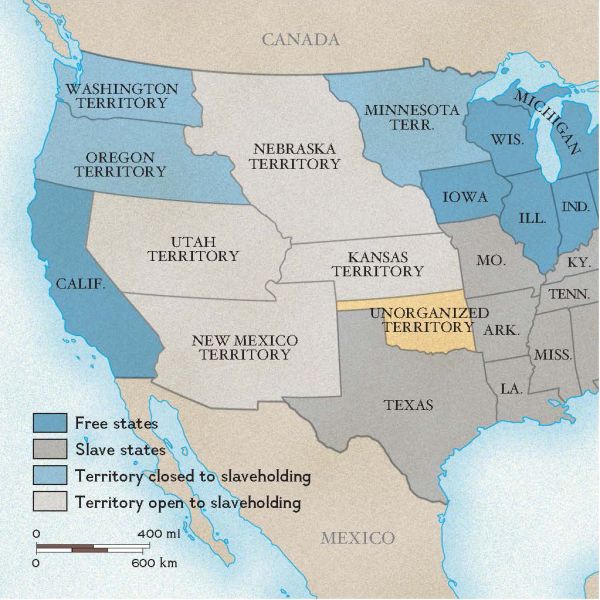
The passage of the act was a monumental moment in American history, not just for establishing the new territories but primarily for its controversial repeal of the Missouri Compromise of 1820. The Missouri Compromise had previously prohibited slavery in the northern parts of the Louisiana Purchase territory, specifically north of the 36°30′ parallel. The Kansas-Nebraska Act shattered this long-standing agreement, opening up previously free territories to the possibility of slavery and dramatically escalating the national debate.
A Nation Divided: Popular Sovereignty and its Perilous Promise
The principle of popular sovereignty, while seemingly democratic, proved to be anything but peaceful in practice. It transformed the political landscape, sparking outrage in the North, where many viewed it as a concession to the slave-holding South and a betrayal of previous compromises like the Missouri Compromise and the Compromise of 1850. The act fueled the rise of the Republican Party, a new political force committed to preventing the expansion of slavery into western territories.
For travelers interested in American political history, understanding the nuances of this legislative battle offers crucial insight into the ideological divides that shaped the nation. Visiting the historic halls of Congress in Washington, D.C. can offer a sense of the grandeur and gravity of such debates, though the direct impact of this act was felt most intensely hundreds of miles westward. The act essentially pushed the conflict from the legislative chambers directly into the hands of ordinary settlers, with devastating consequences.
Bleeding Kansas: The Unfolding of Conflict
The most immediate and brutal consequence of the Kansas-Nebraska Act was the period known as “Bleeding Kansas” (1854-1859). As pro-slavery and anti-slavery (Free-Stater) settlers flooded into Kansas to influence the outcome of local elections, the territory became a battleground. Each side was determined to ensure the territory’s future aligned with their views on slavery, leading to widespread violence, electoral fraud, and political chaos.
Towns like Lawrence, a Free-State stronghold, became targets for pro-slavery raids, such as the infamous “Sack of Lawrence” in May 1856. Retaliation was swift and brutal, epitomized by abolitionist John Brown’s Pottawatomie Massacre just days later. This period saw skirmishes, ambushes, and even full-scale battles, turning the tranquil plains into a theater of civil strife long before the official start of the American Civil War. The violence in Kansas served as a grim preview of the larger conflict to come, hardening attitudes on both sides and making compromise increasingly impossible.
Retracing History: A Journey Through the Territories of Conflict
Today, the states of Kansas and Nebraska offer a fascinating blend of historical exploration and modern charm. For history enthusiasts, tracing the path of the Kansas-Nebraska Act through these states provides a tangible connection to the past. These destinations offer unique insights into the struggles and triumphs that forged a nation, making them ideal for heritage tourism.
Exploring Modern-Day Kansas: Echoes of the Past
Kansas, often referred to as the “Sunflower State,” is rich with sites that vividly recall the turbulent “Bleeding Kansas” era. A journey through this state is an essential part of understanding the act’s legacy.
- Lawrence: This vibrant college town, home to the University of Kansas, was ground zero for much of the conflict. Visitors can explore sites related to the “Sack of Lawrence” and learn about the Free-State movement. The city’s downtown area offers charming boutique hotels and local eateries, perfect for a comfortable stay after a day of historical immersion. The Historic Lawrence Inn offers a blend of classic charm and modern amenities, making it a comfortable base.
- Topeka: The state capital, Topeka, also played a significant role. It was the site of the Topeka Constitution, an early attempt by Free-Staters to establish a government. While known for its pivotal role in the later Civil Rights Movement (home to the Brown v. Board of Education National Historic Site), its earlier history is equally compelling. The Kansas State Capitol Building itself is an architectural marvel. For accommodation, the Topeka Heritage Suites provides excellent service and proximity to historical attractions.
- Lecompton: Once the pro-slavery territorial capital, Lecompton offers a stark contrast to Lawrence. The Constitution Hall State Historic Site here allows visitors to step back in time and witness where the controversial Lecompton Constitution was drafted, an attempt to admit Kansas as a slave state.
- Battlefield Sites: For a deeper dive into the violence, consider visiting the Black Jack Battlefield near Baldwin City, where John Brown led his first armed conflict against pro-slavery forces, or the Mine Creek Battlefield, site of the largest Civil War battle in Kansas. These sites provide a solemn reminder of the human cost of political division.
Discovering Nebraska’s Legacy: Beyond the Act
While Kansas endured the brunt of the violence, Nebraska’s path was calmer, largely due to a lesser influx of pro-slavery settlers and its more northerly location. Nevertheless, its formation under the Kansas-Nebraska Act is a crucial part of its state identity and the larger American story.
- Omaha: As Nebraska’s largest city, Omaha was a key starting point for westward migration, and its history is intertwined with the development of the transcontinental railroad, which Stephen A. Douglas’s act helped pave the way for. Today, Omaha boasts a vibrant cultural scene, impressive museums like the Durham Museum (housed in the historic Omaha Union Station), and diverse culinary experiences. Accommodation options range from luxury hotels to charming boutique stays, such as the Omaha Riverfront Resort, perfect for families and business travelers alike.
- Lincoln: The state capital, Lincoln, offers a more serene but equally engaging historical experience. The Nebraska State Capitol Building is an iconic landmark, known for its distinctive dome and rich architectural detail. Visitors can explore the Nebraska State Historical Society Museum to learn about the state’s pioneer days, Native American heritage, and its role in national development. For those interested in unique cultural offerings, the Museum of American Speed is also a fantastic attraction. The Lincoln Downtown Hotel provides a convenient and comfortable stay for exploring the city.
- Homestead National Historical Park: Located near Beatrice, this park commemorates the passage of the Homestead Act of 1862, a post-Civil War piece of legislation that dramatically reshaped the American West. While not directly part of the Kansas-Nebraska Act itself, it showcases the subsequent development of these territories and the enduring American spirit of westward expansion that the act initially sought to facilitate.
Planning Your Historical Heritage Trip: Travel, Accommodation, and Immersion
Embarking on a journey through the historical heartland of Kansas and Nebraska offers more than just sightseeing; it’s an opportunity for deep cultural immersion and personal reflection. Integrating historical exploration with comfortable travel and accommodation choices enhances the overall experience, turning a simple vacation into an unforgettable educational adventure.
Crafting Your Itinerary: From Battlegrounds to Boulevards
When planning your trip, consider focusing on a specific theme or region to maximize your time. A “Bleeding Kansas” trail could involve starting in Lawrence, moving to Topeka and Lecompton, and then venturing to the battlefield sites. For a broader perspective, combine your Kansas journey with a trip north to Nebraska, exploring Omaha and Lincoln to understand how the territories developed differently post-act.
Consider a road trip approach, allowing flexibility to stop at smaller historical markers and scenic overlooks. Many state historical societies and local tourism boards offer detailed guides and maps tailored to historical tours. Look for living history events or reenactments, which can bring the past to life in a visceral way. Engaging with local historians or guides can also provide invaluable insights not found in guidebooks. This type of travel combines the thrill of discovery with the profound weight of historical understanding.
Where to Stay: Hotels and Resorts Steeped in History
Accommodation plays a crucial role in any travel experience, and in historical regions, choosing the right place can deepen your connection to the past. While purpose-built historical hotels might be limited in some of the smaller towns, many cities offer charming bed and breakfasts or boutique hotels housed in restored historic buildings.
- Lawrence: The previously mentioned Historic Lawrence Inn or other downtown hotels provide walkable access to historical sites and a vibrant local scene.
- Topeka: Beyond the Topeka Heritage Suites, look for guesthouses near the state capitol or in the historic downtown area, offering a blend of comfort and character.
- Omaha and Lincoln: These larger cities offer a wider array of options, from luxurious resorts like the Omaha Riverfront Resort to well-appointed downtown hotels such as the Lincoln Downtown Hotel. Many provide excellent amenities, including fine dining, fitness centers, and business facilities, catering to all types of lifestyles. Consider hotels that offer packages including guided tours or tickets to local museums.
Booking in advance, especially during peak travel seasons or around local festivals, is always advisable. Utilize online comparison tools to find the best deals and read reviews to ensure your chosen accommodation aligns with your expectations for comfort, location, and historical ambiance. For those seeking a long-term stay or a more intimate experience, charming Airbnb or VRBO rentals in historic neighborhoods can also be an excellent option, providing a ‘home away from home’ feeling.
The Kansas-Nebraska Act of May 30, 1854, stands as a pivotal moment in American history, irrevocably altering the course of the nation and setting the stage for the American Civil War. Its legacy is not just confined to textbooks but is etched into the landscapes and historical sites of Kansas and Nebraska. By visiting these regions, travelers can gain a profound appreciation for the complex struggles that shaped the United States and explore the enduring spirit of the people who lived through — and were forever changed by — this tumultuous era. This journey through the past is more than just a trip; it’s an educational expedition into the heart of America’s foundational narrative.
LifeOutOfTheBox is a participant in the Amazon Services LLC Associates Program, an affiliate advertising program designed to provide a means for sites to earn advertising fees by advertising and linking to Amazon.com. Amazon, the Amazon logo, AmazonSupply, and the AmazonSupply logo are trademarks of Amazon.com, Inc. or its affiliates. As an Amazon Associate we earn affiliate commissions from qualifying purchases.