
Venturing into the sprawling metropolis of New York City is an experience unlike any other, a vibrant tapestry of culture, commerce, and unparalleled energy. For any visitor, whether on a luxury travel excursion, a meticulous budget travel adventure, a memorable family trip, or a focused business stay, understanding the backbone of urban transportation is paramount. The New York City subway, operated by the Metropolitan Transportation Authority (MTA), is not just a means to get from point A to point B; it’s an immersive part of the NYC experience, a subterranean circulatory system connecting iconic landmarks, diverse neighborhoods, and countless attractions. So, how much does a ride on this legendary transit system cost, and how can you navigate its fare structure to optimize your travel budget? This comprehensive guide will delve into everything you need to know about New York subway fares, payment methods, essential tips, and how the subway integrates into the broader context of your NYC travel plans.

Understanding New York City Subway Fares and Payment Methods
At its core, the New York City subway operates on a flat-fare system for most rides, making it predictable and relatively easy to budget for once you understand the basic structure. However, the exact cost per ride can vary slightly depending on your chosen payment method and frequency of use.
The Standard Fare: Single Ride vs. Pay-Per-Ride
Currently, the standard base fare for a single subway or local bus ride is $2.90. This is the cost you can expect to pay for a one-way trip, regardless of the distance traveled or the number of transfers within the subway system (provided you don’t exit the system and re-enter).
For visitors, there are three primary ways to pay this fare:
- Single Ride Ticket: Available at vending machines in subway stations, this option is best for those who plan to take only one or two subway rides during their entire stay. A single ride ticket costs slightly more, typically around $3.25, and doesn’t offer the flexibility of a MetroCard or OMNY. It’s generally not recommended for most tourists due to the higher per-ride cost and limited functionality.
- MetroCard (Pay-Per-Ride): The traditional plastic swipe card, the MetroCard, remains a popular choice. You can purchase a new MetroCard for a $1 fee at any subway station vending machine or booth. Once you have the card, you can load it with any amount of money, typically starting from a minimum. When you swipe your MetroCard at a turnstile, $2.90 is deducted from your balance. The advantage here is that you pay the standard fare, and if you load enough money, you can avoid the hassle of buying tickets for each trip. This is a solid option for those who will take several rides but not enough to justify an unlimited pass.
- OMNY (One Metro New York): This is the MTA’s modern, contactless fare payment system. With OMNY, you simply tap your contactless credit or debit card, smartphone (using Apple Pay, Google Pay, etc.), or wearable device directly on the fare reader at the turnstile. The system automatically deducts the $2.90 fare. OMNY offers a significant convenience for travelers who already use contactless payment methods, eliminating the need to purchase or refill a separate MetroCard. Furthermore, OMNY has a fare-capping feature: after 12 paid rides in a 7-day period (Monday to Sunday), any subsequent rides within that period become free. This essentially functions like an unlimited weekly pass, but you only pay for what you use up to the cap. For most tourists, OMNY is often the most convenient and cost-effective option, offering flexibility without upfront commitment to an unlimited pass.
Unlimited Ride MetroCards and Special Considerations
For those planning extensive subway use during their stay, an unlimited ride MetroCard can offer significant savings. These passes allow for unlimited rides on subways and local buses for a set period.
- 7-Day Unlimited Pass: This pass currently costs $34. If you plan to take more than 12 rides within a seven-day period, this pass quickly pays for itself. For example, 12 rides at $2.90 each would cost $34.80. So, if you foresee using the subway 2-3 times a day for a week, this is a highly economical choice. It’s ideal for tourists who want to explore various NYC attractions across different boroughs like Manhattan, Brooklyn, and Queens without worrying about individual fare deductions.
- 30-Day Unlimited Pass: Priced at $132, this pass is generally more suitable for residents, long-term visitors, or those on extended business stays who will be in the city for a month or more.
It’s important to note that unlimited MetroCards cannot be used by more than one person at a time at the same station. There’s an 18-minute lockout period after a swipe before the card can be used again at the same station. This means each member of a family trip or travel group will need their own MetroCard or OMNY payment method.
Children’s Fares: Children under 44 inches tall ride for free when accompanied by a paying adult, up to three children per adult. This is a helpful concession for family trips with young children.
Navigating the Subway: Tips for a Seamless Experience
Once you’ve sorted out your payment method, mastering the art of riding the NYC subway will unlock the city for you. It might seem daunting at first with its extensive network of lines, but with a few tips, you’ll be navigating like a local in no time.
Planning Your Journey and Staying Safe
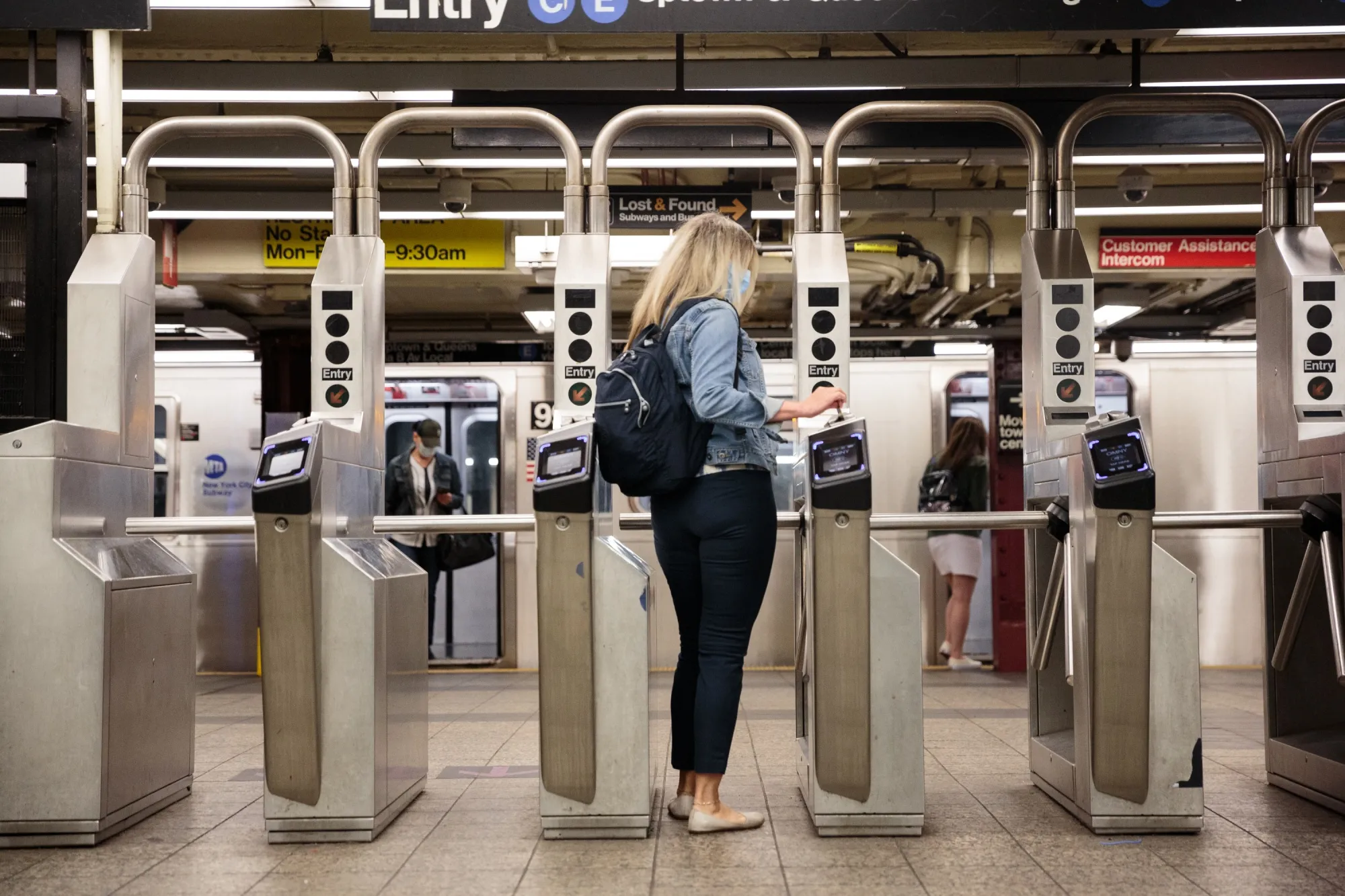
The sheer size of the New York City subway map can be intimidating, but modern technology makes planning your route straightforward.
- Use Apps: Download the official MTA app, Google Maps, or Citymapper. These apps provide real-time train schedules, estimated travel times, and directions, including transfers. They can also alert you to service changes or delays, which are common occurrences in NYC.
- Understand Local vs. Express: A critical distinction on the NYC subway is between local and express trains. Local trains stop at every station, while express trains skip many stops, making them faster for longer distances. Ensure you’re boarding the correct train for your destination, especially if your stop is an express-only or local-only station. Station signs and platform announcements will clearly indicate whether a train is local or express.
- Peak Hours: Like any major city, New York experiences rush hour. Mornings (7-9 AM) and evenings (5-7 PM) on weekdays see crowded trains and platforms. If possible, try to travel during off-peak hours for a more comfortable experience.
- Safety First: While generally safe, especially during the day, it’s always wise to be aware of your surroundings. Avoid displaying expensive electronics prominently, keep an eye on your belongings, and if traveling late at night, try to ride in the conductor’s car (usually in the middle of the train) or in well-lit areas.
Connecting to Key Destinations
The true power of the New York City subway lies in its unparalleled ability to connect you to virtually every major attraction and landmark in the city. From your hotel in Midtown Manhattan to a hidden gem in Brooklyn, the subway is your express ticket.
- Manhattan Exploration: Want to see the dazzling lights of Times Square? Multiple subway lines converge there. Heading to the tranquil expanses of Central Park? The A, C, B, D, 1, 2, 3, N, Q, R, and W trains have stops along its perimeter. Art enthusiasts can reach the Museum of Modern Art (MoMA), the Metropolitan Museum of Art, or the Guggenheim Museum easily via subway. Iconic skyscrapers like the Empire State Building, Top of the Rock at Rockefeller Center, and the Freedom Tower (with its One World Observatory and the moving 9/11 Memorial & Museum) are all within a short walk from subway stations. For those interested in history and finance, the Financial District and Wall Street are readily accessible.
- Beyond Manhattan: Don’t limit your exploration to just Manhattan! The subway is your gateway to Brooklyn treasures like crossing the magnificent Brooklyn Bridge, exploring the trendy streets of DUMBO and Williamsburg, or enjoying the iconic boardwalk and amusement rides at Coney Island. In Queens, you can catch a game at Citi Field or explore the diverse culinary scene. Even The Bronx is within reach, home to Yankee Stadium. For a trip to the Statue of Liberty and Ellis Island, you’ll take the subway to Battery Park for the ferry.
- Specific Stops for Famous Spots:
- Times Square: N, Q, R, W, S (Shuttle), 1, 2, 3, 7 trains to Times Square-42nd Street.
- Central Park: A, C, B, D, 1 to 59th St-Columbus Circle; N, Q, R, W to 59th St; 4, 5, 6 to 59th St or 86th St.
- Brooklyn Bridge: A, C to High Street or 2, 3 to Clark Street (on the Brooklyn side) or 4, 5, 6 to Brooklyn Bridge-City Hall (on the Manhattan side).
- Statue of Liberty Ferry: 4, 5 to Bowling Green or 1 to South Ferry.
- Grand Central Terminal: 4, 5, 6, 7, S trains to Grand Central-42nd Street.
- Penn Station: A, C, E, 1, 2, 3 trains to 34th Street-Penn Station.
- High Line: A, C, E, L to 14th Street-8th Avenue; 1, 2, 3 to 14th Street-7th Avenue; F, M to 14th Street-6th Avenue.
- Chelsea Market: A, C, E, L to 14th Street-8th Avenue.
The Subway’s Role in Your New York City Travel Budget and Accommodation
For travelers on a budget, the subway is an indispensable ally, offering significant savings compared to taxis, ride-sharing services, or private car hires. It’s not just about the immediate savings per ride, but how these savings contribute to your overall travel budget, allowing you to allocate funds to other enriching experiences like dining, shows, or shopping.
Budget-Friendly Exploration and Strategic Spending
Imagine the cost of taking a taxi from Lower Manhattan to Upper East Side during rush hour – it could easily run you $30-$50 or more, not to mention potential traffic delays. A subway ride, on the other hand, is a flat $2.90 and often much faster. Over the course of a multi-day trip, these savings add up dramatically, freeing up hundreds of dollars.
- Maximize Unlimited Options: If your itinerary is packed with sightseeing across different boroughs, an unlimited 7-Day MetroCard or leveraging OMNY’s fare capping is almost always the most economical choice. It removes the psychological barrier of paying for each ride, encouraging more spontaneous exploration and making it easier to return to your hotel for a break or to hop between attractions without a second thought about cost.
- Consider Walking and Subway Combinations: For closer destinations, combining a subway ride with a walk can be a great way to experience NYC at street level, discovering charming neighborhoods, unique food spots, and unexpected local culture that you might miss underground. Walking across the Brooklyn Bridge after a subway ride to City Hall is a classic example of this perfect synergy.
Choosing Accommodation Based on Subway Access
Your choice of accommodation in New York City can significantly impact your travel budget, and subway access plays a crucial role. While staying in prime Manhattan locations like Times Square or Midtown offers unparalleled convenience, it often comes with a higher price tag for hotels, suites, or apartments.
- Expand Your Search: Don’t limit your hotel search to just the most central parts of Manhattan. Consider areas slightly further out but with excellent subway connectivity. For instance, parts of Long Island City in Queens or downtown Brooklyn often offer more affordable accommodation options while still providing quick and easy subway access to Manhattan’s main attractions. A 15-20 minute subway ride can save you hundreds of dollars per night on your hotel stay.
- Prioritize Subway Line Proximity: When booking accommodation, check its proximity to a major subway station and robust lines. A hotel a few blocks from an express stop can be more convenient than one directly above a local stop if you plan on traveling long distances. Good subway access isn’t just about reaching tourist attractions; it’s about efficiently getting to food spots, shopping areas, or even business meetings. This strategic planning is especially vital for budget travelers and those seeking long-term stays where daily commute costs add up.

Beyond the Fare: Experiencing New York’s Underground Culture
While primarily a functional necessity, the New York City subway offers an unfiltered glimpse into the city’s unique pulse and local culture. It’s more than just tunnels and trains; it’s an underground stage, a moving museum, and a microcosm of the city itself.
The subway system, despite its age, is a marvel of engineering and a testament to New York’s enduring dynamism. From the historic mosaic signs at stations like City Hall (old IRT station, not open to public but glimpsed on 6 train loop) to the vibrant street art in certain underground passages, the environment itself tells a story. You’ll encounter a diverse array of people – commuters, artists, musicians, tourists – all sharing a common journey. Subway performers, or “buskers,” are a regulated and often talented group, adding a unique soundtrack to your travels. Their impromptu concerts, ranging from jazz ensembles to opera singers, can transform a mundane commute into a memorable cultural moment. The vibrant energy and diverse faces you see below ground are just as much a part of the New York experience as the iconic sights above. Embracing this aspect of the subway adds another layer of depth to your visit, connecting you more intimately with the rhythm of urban life.
In conclusion, a ride on the New York City subway is an affordable $2.90, but the real value lies in how you choose to pay and integrate it into your travel strategy. Whether you opt for the convenience of OMNY, the savings of a 7-Day MetroCard, or the simplicity of a pay-per-ride option, the subway remains the most efficient, economical, and authentic way to explore the vast wonders of New York City. It’s not just about the fare; it’s about the freedom it grants to experience every facet of this incredible destination.
LifeOutOfTheBox is a participant in the Amazon Services LLC Associates Program, an affiliate advertising program designed to provide a means for sites to earn advertising fees by advertising and linking to Amazon.com. Amazon, the Amazon logo, AmazonSupply, and the AmazonSupply logo are trademarks of Amazon.com, Inc. or its affiliates. As an Amazon Associate we earn affiliate commissions from qualifying purchases.