
The name “Five Points” often evokes a sense of historical intrigue and urban grit, conjuring images of a tumultuous past in the heart of New York City. While the physical landscape of the area has transformed dramatically over the centuries, understanding where Five Points once stood is crucial for grasping the historical evolution of Manhattan and the social forces that shaped New York into the metropolis it is today. This iconic neighborhood, though no longer bearing its original name on modern maps, remains a significant touchstone for understanding immigration, poverty, crime, and reform in 19th-century America.
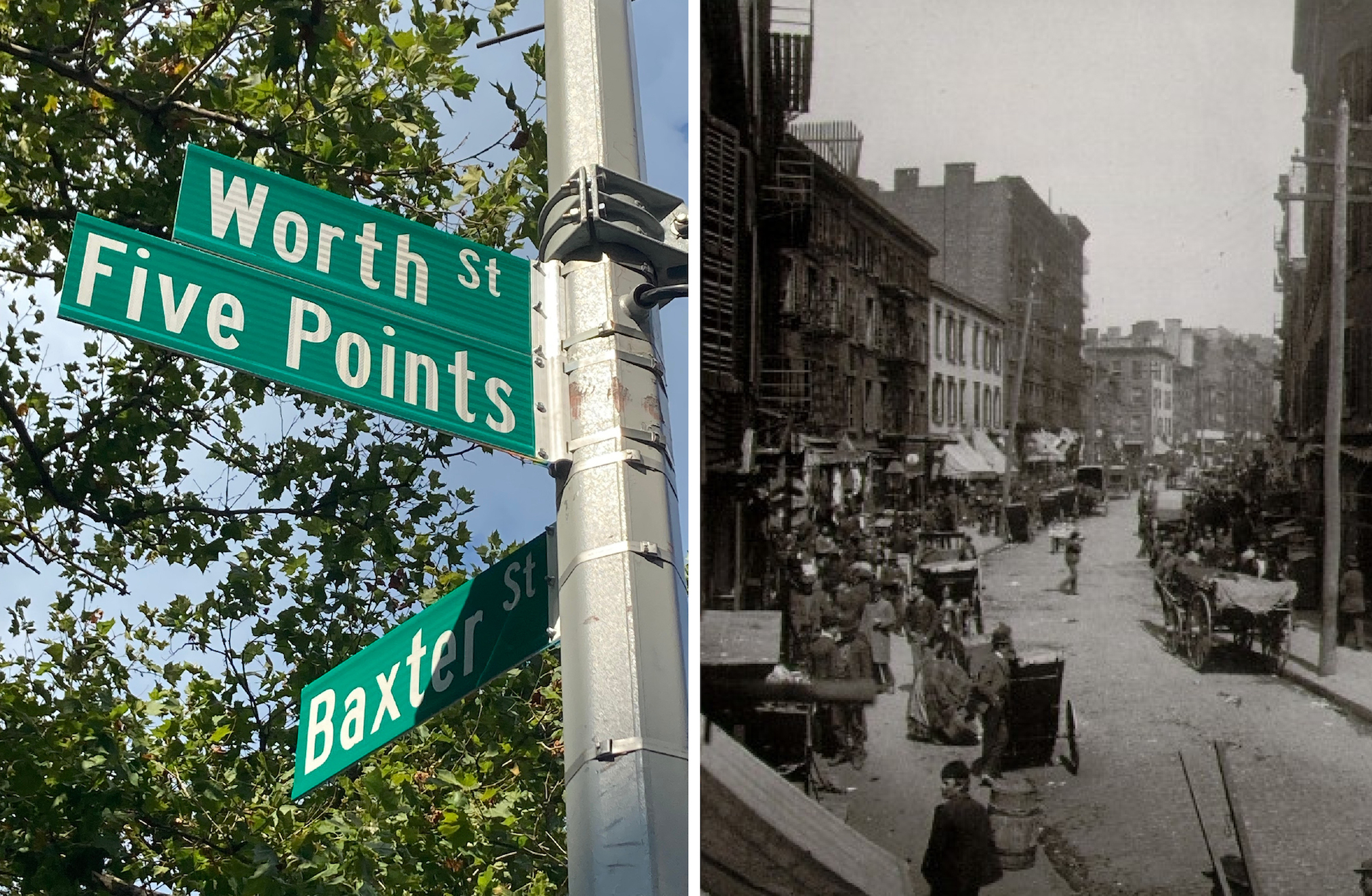
Unearthing the Historical Geography of Five Points
The Five Points neighborhood was not a singular, precisely defined district in the way we might think of modern neighborhoods. Instead, it was an area defined by its distinctive geography and the confluence of several intersecting streets. Its notoriety stemmed from its dense population, extreme poverty, and the resulting social issues that plagued it. To pinpoint its location, we must delve into the cartographic and historical records of New York City’s development.
The Intersection That Gave It Its Name
The heart of the Five Points district was, quite literally, the intersection of five streets: Anthony Street (now Worth Street), Cross Street (now Mosco Street), Orange Street (now Baxter Street), Little Water Street, and Mulberry Street. This chaotic, five-way intersection was the nexus of the neighborhood’s identity. The area was originally a more marshy, less desirable part of New York, built on landfill that was prone to flooding. This natural disadvantage contributed to its early development as a less affluent area.
Over time, as New York City grew, this area became densely packed with tenements, housing waves of immigrants, particularly the Irish and later the Italians. The lack of sanitation, overcrowding, and abject poverty created a breeding ground for disease, crime, and social unrest. The name “Five Points” thus became synonymous with the social ills of the era, a stark contrast to the burgeoning wealth and opportunity elsewhere in the city.
The Vanishing Streets and Evolving Landscape
The physical boundaries and street names of Five Points have long since been altered by urban redevelopment. The most significant transformation came with the construction of the Courthouse and Federal Buildings in the mid-19th century. Anthony Street, Cross Street, and Little Water Street were largely absorbed or obliterated by this development, fundamentally reshaping the street grid. Modern Manhattan‘s street numbering and naming conventions obscure the original layout, making it difficult for casual observers to recognize the historical footprint of Five Points.
However, by overlaying historical maps with contemporary ones, we can trace the approximate area. The core of Five Points would have encompassed parts of what is now Chinatown and the surrounding vicinity of Civic Center. Specifically, the intersection of modern Baxter Street and Mosco Street offers a reasonable approximation of the original five-way convergence, though the character and scale of the junction are vastly different today. The area that was once Five Points is now a vibrant, multi-cultural section of New York City, a testament to its resilience and capacity for change, though the echoes of its past persist.
The Legacy of Five Points: Beyond a Geographical Marker
While the physical location of Five Points has been dramatically altered, its legacy endures as a crucial chapter in the social and urban history of New York. It serves as a powerful reminder of the challenges faced by early immigrants and the persistent issues of poverty and inequality that continue to be relevant in urban environments.
Immigrant Hub and Social Crucible

In the 19th century, Five Points was one of the primary destinations for immigrants arriving in New York, particularly those fleeing famine in Ireland. These newcomers, often with little more than the clothes on their backs, found themselves crammed into squalid tenements with inadequate sanitation and little access to resources. The area became a melting pot of cultures, but also a crucible where desperation and hardship often led to crime and social disintegration. Gangs like the Dead Rabbits and the Whyos became notorious residents, contributing to the area’s grim reputation.
The social conditions in Five Points also spurred significant reform movements. Missionaries, social workers, and charitable organizations worked tirelessly to alleviate suffering, provide education, and combat vice. Figures like Jacob Riis, whose photographic exposé “How the Other Half Lives” documented the horrific conditions, played a pivotal role in raising public awareness and advocating for change. The history of Five Points is thus intrinsically linked to the development of social welfare and urban reform in America.
Influence on Culture and Narrative
The sensationalized image of Five Points as a den of iniquity and despair captured the public imagination, influencing literature, theater, and art. It became a symbol of the dark underbelly of the American dream, a place where the promises of opportunity seemed to vanish. This narrative was amplified by dime novels, minstrel shows, and later, by historical accounts and fictionalized portrayals that, while sometimes sensationalized, contributed to its enduring place in the American consciousness.
The Five Points played a significant role in the early development of American popular culture, offering a dramatic backdrop for stories of struggle, survival, and vice. Even today, the area’s history continues to inspire historical research, documentaries, and fictional works that explore themes of immigration, social justice, and the enduring spirit of New York City. Its transformation from a notorious slum to a modern, bustling district is a narrative in itself, highlighting the constant flux and evolution that define urban life.
Navigating the Modern Landscape: Traces of the Past
While the original Five Points intersection is no longer recognizable as such, exploring the area today offers a unique opportunity to connect with its historical echoes. The modern Chinatown and the surrounding Civic Center district occupy the land where this infamous neighborhood once thrived.
Modern Chinatown and its Roots
The vibrant and bustling streets of modern Chinatown now sit atop much of the former Five Points. The influx of Chinese immigrants in the late 19th and early 20th centuries gradually transformed the area, creating a new cultural and economic hub. While the demographic has shifted significantly, it’s fascinating to consider that these same streets, once teeming with Irish tenements and saloons, are now filled with Chinese markets, restaurants, and community centers.
Walking through Chinatown, particularly around streets like Mott Street, Pell Street, and Doyers Street, one can still feel the density and the historical layers of immigration that have characterized this part of New York. While the specific buildings and businesses are new, the spirit of a diverse and resilient community building a new life in America persists. The area’s rich history of successive immigrant waves makes it a compelling study in urban transformation.
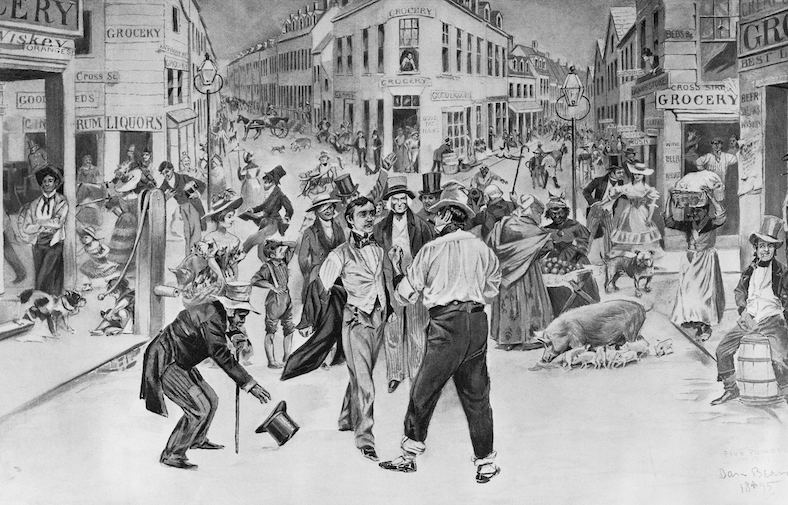
The Civic Center and the Erasing of Streets
The construction of government buildings, courthouses, and public spaces in the Civic Center area, particularly around City Hall Park, led to the most significant physical erasure of Five Points. Streets that were once bustling with activity were demolished to make way for these monumental structures. This redevelopment, while serving the administrative needs of the city, also effectively buried the physical remnants of the Five Points neighborhood.
Despite this, the area remains a vital part of New York City’s urban fabric. Visitors interested in the history of Five Points can still gain insights by studying historical maps and comparing them with contemporary layouts. Understanding the original street names and their approximate modern equivalents, such as the relationship between Anthony Street and Worth Street, or Orange Street and Baxter Street, provides a tangible link to the past. The very existence of Chinatown on this land, a testament to continuous immigration and community building, serves as a living monument to the enduring human spirit that has always defined this section of New York. The story of Five Points is not just about a place, but about the people who inhabited it, their struggles, and their enduring impact on the history of New York and the United States.
LifeOutOfTheBox is a participant in the Amazon Services LLC Associates Program, an affiliate advertising program designed to provide a means for sites to earn advertising fees by advertising and linking to Amazon.com. Amazon, the Amazon logo, AmazonSupply, and the AmazonSupply logo are trademarks of Amazon.com, Inc. or its affiliates. As an Amazon Associate we earn affiliate commissions from qualifying purchases.