
Navigating the educational landscape of any state can be a complex undertaking, and for students and families in Oklahoma, understanding the graduation credit requirements is paramount. While the specific number of credits can fluctuate slightly based on the individual school district and the evolving educational policies, a foundational framework is established at the state level. This framework ensures that all students receive a comprehensive education designed to prepare them for post-secondary education, vocational training, or direct entry into the workforce. This article will delve into the typical credit requirements for high school graduation in Oklahoma, offering insights into the core subject areas and elective options that contribute to a well-rounded academic journey.
Understanding the Oklahoma State Graduation Requirements
The Oklahoma State Department of Education sets forth the minimum credit requirements that all accredited high schools within the state must adhere to. These requirements are designed to ensure a standardized level of academic achievement and preparedness for all graduating seniors. While districts may add to these minimums, they cannot subtract from them. The credit system is structured to cover a broad spectrum of knowledge and skills, encompassing essential academic disciplines.
Core Subject Area Requirements
The bulk of a student’s high school credits will be earned in core academic subjects. These are considered foundational to a student’s intellectual development and are crucial for future academic or career pursuits. The typical breakdown of required credits in these areas is as follows:
English Language Arts
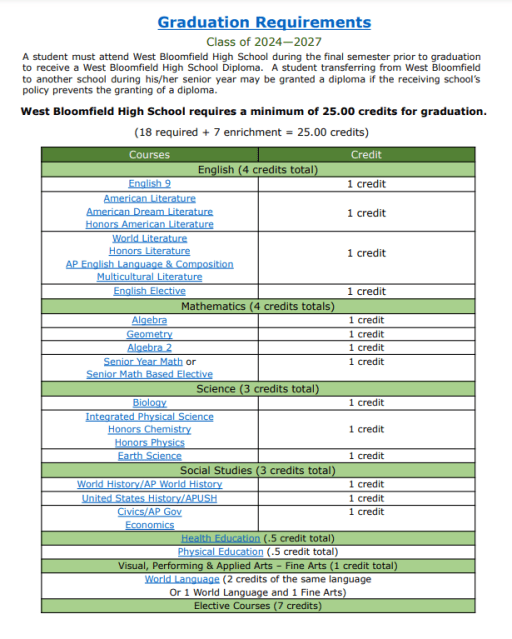
A robust understanding of the English language is fundamental. Students are generally required to complete a minimum of four credits in English Language Arts. This typically includes courses such as English I, English II, English III (often focusing on American Literature), and English IV (often focusing on World Literature or advanced composition). These courses aim to develop critical reading, analytical writing, effective communication, and a deep appreciation for literary works.
Mathematics
Mathematical proficiency is a cornerstone of modern education and essential for problem-solving in various contexts. Oklahoma high schools typically require a minimum of three credits in mathematics. This usually includes Algebra I, Geometry, and Algebra II. Depending on the student’s academic path and the school’s curriculum, advanced courses like Pre-Calculus or Calculus may be offered and encouraged. The focus is on building a strong foundation in mathematical concepts, critical thinking, and quantitative reasoning.
Science
A solid understanding of the natural world is vital. Students are typically required to earn three credits in science. This often includes at least one credit in biological science (e.g., Biology) and at least one credit in physical science (e.g., Chemistry or Physics). A third science credit can be fulfilled by another course in biological or physical science, or potentially through an earth science or environmental science course. The aim is to foster scientific inquiry, understanding of scientific principles, and the ability to interpret scientific data.
Social Studies
A grasp of history, civics, and economics is crucial for informed citizenship and understanding societal structures. Students are typically required to complete three credits in social studies. This usually includes:
- U.S. History: A comprehensive study of the history of the United States from its origins to the present day.
- U.S. Government: An exploration of the principles, structure, and functions of the U.S. government, including civics and the Constitution.
- World History/Geography: A study of significant historical events and civilizations across the globe, often combined with an understanding of geographical contexts.
Some districts may also require or offer economics or sociology as part of the social studies curriculum.
Other Core Requirements
Beyond these primary academic areas, students will also need to fulfill requirements in other essential subjects. These typically include:
- Foreign Language: While not always a mandatory minimum for all diplomas, most universities and many competitive post-secondary programs strongly recommend or require at least two credits in a single foreign language (e.g., Spanish, French, German). Some districts may mandate one credit.
- Health and Physical Education: Students are generally required to complete one credit in Health and one credit in Physical Education. These courses focus on promoting physical well-being, understanding health principles, and developing lifelong healthy habits.
Elective Credits and Graduation Pathways
While core subjects form the backbone of a high school education, elective credits play a crucial role in allowing students to explore their interests, develop specialized skills, and tailor their academic experience to their future aspirations. The number of required elective credits can vary significantly between school districts and diploma types.
The Role of Electives in a Well-Rounded Education

Electives provide students with the opportunity to delve into subjects not covered by the core curriculum. These can range widely and include:
- Fine Arts: Music (choir, band, orchestra), visual arts (drawing, painting, sculpture, digital art), theater arts, and dance.
- Career and Technical Education (CTE): Programs focused on vocational skills and career preparation, such as agricultural science, business and information technology, health sciences, family and consumer sciences, manufacturing, and STEM fields.
- Additional Academics: Students may choose to pursue additional credits in subjects like advanced mathematics, science, English, or social studies to deepen their knowledge or prepare for advanced placement exams.
- Other Subject Areas: This can include subjects like psychology, sociology, journalism, debate, or even unique offerings specific to a particular school district.
The flexibility of electives allows students to:
- Discover Passions: Uncover interests that can lead to fulfilling hobbies or career paths.
- Develop Talents: Hone skills in areas where they naturally excel.
- Gain Practical Experience: Acquire hands-on skills through CTE programs.
- Enhance College Applications: Demonstrate a breadth of interests and a commitment to exploration.
Diploma Types and Credit Variations
It’s important to note that Oklahoma may offer different diploma types, such as a standard diploma, an honors diploma, or a career-tech diploma. Each of these pathways might have slightly different credit requirements, particularly in the number and type of electives recommended or required. For instance, a career-tech diploma will likely emphasize a greater number of CTE credits, while an honors diploma might require additional advanced academic courses or a higher GPA.
Students and their counselors should carefully review the specific requirements for each diploma type offered by their school district to ensure they are on the track that best aligns with their post-graduation goals. This might involve seeking out specific courses that contribute to advanced standing at Oklahoma’s colleges and universities or that align with specific industry certifications.
Factors Influencing Credit Requirements
While the state sets the minimums, several factors can influence the exact number of credits a student needs and the specific courses available to them. Understanding these nuances is crucial for effective academic planning.
School District Policies
Each of the over 500 public school districts in Oklahoma has the autonomy to implement graduation requirements that meet or exceed the state minimums. This means that while the core structure remains consistent, the total number of credits needed for graduation could be slightly higher in one district compared to another. For example, a district might mandate four years of a foreign language or require an additional credit in computer science, which goes beyond the state’s baseline. These local policies are often developed to best serve the unique needs and aspirations of their student populations.
Standardized Testing and End-of-Course Exams
Oklahoma utilizes end-of-course (EOC) exams for certain subjects. While these exams are primarily used to assess student learning and school accountability, in some cases, successful completion of these exams can be tied to graduation, sometimes acting as a de facto requirement that complements course credit accumulation. Students should be aware of which courses have associated EOC exams and prepare accordingly. The state’s assessment system is designed to ensure that students have mastered essential academic content before receiving their diploma.
Individualized Education Programs (IEPs) and Accommodations
For students with disabilities or those requiring specialized academic support, Individualized Education Programs (IEPs) play a vital role. IEPs are tailored to meet the unique needs of each student. While the goal remains high school graduation, the path to achieving it may involve modifications to course requirements, alternative assessments, or the substitution of certain credits. The IEP team, which includes parents, educators, and specialists, works collaboratively to determine the most appropriate and achievable graduation requirements for students with IEPs. These individualized plans ensure that all students have the opportunity to earn a diploma and are prepared for their post-secondary journeys.
Planning for Graduation and Beyond
Successfully navigating the credit requirements for high school graduation in Oklahoma requires proactive planning and ongoing communication between students, parents, and educators. Understanding the credit landscape is the first step towards ensuring a smooth and successful academic career.
The Importance of Academic Advising
From the freshman year onwards, students should engage regularly with their school counselors and academic advisors. These professionals are invaluable resources for:
- Course Selection: Helping students choose courses that meet graduation requirements, align with their interests, and prepare them for their desired post-graduation path (college, career school, or workforce).
- Credit Tracking: Monitoring progress towards graduation and identifying any potential shortfalls or areas of concern early on.
- College and Career Exploration: Providing information and guidance on post-secondary options, including admission requirements for Oklahoma colleges and universities and vocational training programs.
- Understanding Diploma Options: Explaining the differences between various diploma types and helping students select the pathway that best suits their aspirations.

Preparing for Post-Secondary Success
The credits earned in high school are not merely a means to an end; they are the building blocks for future success. A strong academic record, a diverse range of coursework, and the development of critical thinking and problem-solving skills will serve students well regardless of their chosen path. For those aiming for university, rigorous coursework in core subjects and relevant electives will enhance their competitiveness in the application process. For students entering the workforce or pursuing vocational training, the practical skills and knowledge gained through CTE programs and foundational academics will be directly applicable.
In conclusion, while the exact credit count can have minor variations based on local district policies, the core structure of Oklahoma’s high school graduation requirements provides a comprehensive and balanced curriculum. By understanding these requirements and engaging in thoughtful academic planning, students can confidently navigate their high school journey and lay a solid foundation for their future endeavors.
LifeOutOfTheBox is a participant in the Amazon Services LLC Associates Program, an affiliate advertising program designed to provide a means for sites to earn advertising fees by advertising and linking to Amazon.com. Amazon, the Amazon logo, AmazonSupply, and the AmazonSupply logo are trademarks of Amazon.com, Inc. or its affiliates. As an Amazon Associate we earn affiliate commissions from qualifying purchases.