
Navigating the legal intricacies of divorce can feel overwhelming, especially when you’re facing significant personal changes. This guide is designed to provide a clear, step-by-step understanding of how to file for divorce in the state of Oklahoma. While this article aims to be informative, it is crucial to remember that legal processes are complex, and consulting with a qualified attorney in Oklahoma is highly recommended for personalized advice and representation. This guide focuses on the procedural aspects of divorce within the state.
Understanding the Basics of Divorce in Oklahoma
Before embarking on the divorce process in Oklahoma, it’s essential to understand the foundational requirements and the different types of divorce available. This knowledge will help you prepare for the journey ahead and ensure you are taking the correct initial steps.
Residency Requirements
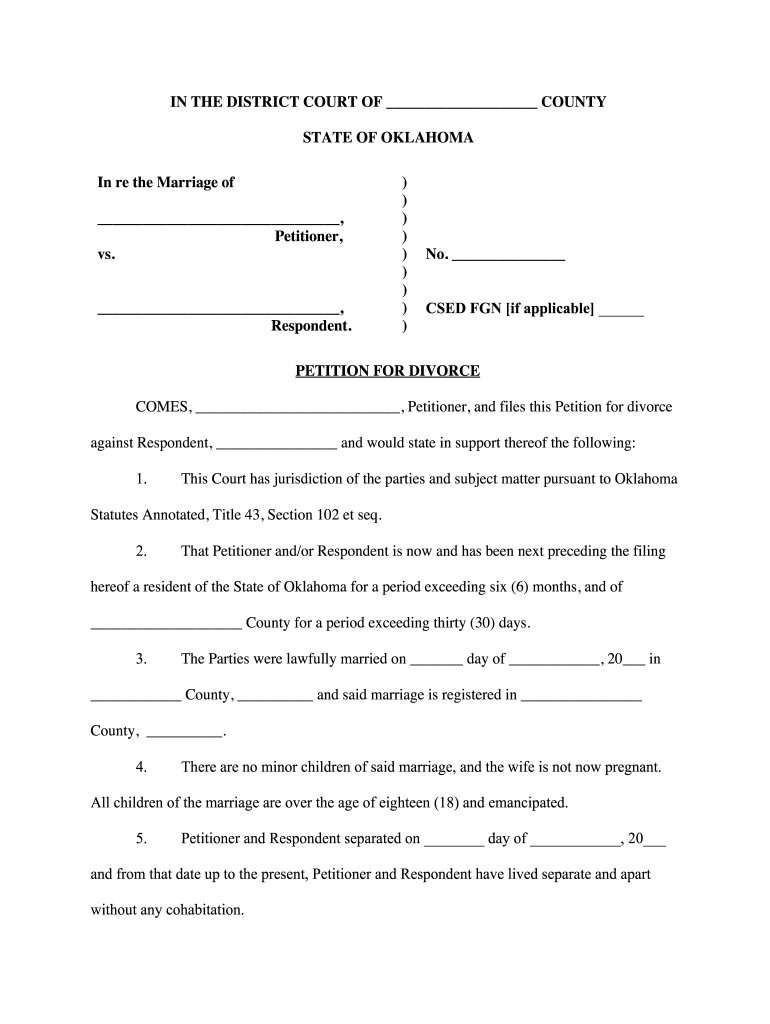
To file for divorce in Oklahoma, one or both spouses must meet specific residency requirements. Generally, at least one spouse must have resided in the state for at least six months and in a particular county within the state for at least 30 days immediately preceding the filing of the divorce petition. This ensures that the court has proper jurisdiction over the case. Failure to meet these requirements can lead to the dismissal of the divorce petition. It’s important to verify these exact durations with the court clerk or an attorney, as minor variations can exist or be influenced by specific circumstances.
Types of Divorce in Oklahoma
Oklahoma recognizes two primary types of divorce: dissolution of marriage and legal separation. A dissolution of marriage, commonly referred to as a divorce, legally ends the marital union. A legal separation, on the other hand, allows spouses to live apart and resolve issues like child custody and property division while remaining legally married. Most individuals seeking to end their marriage pursue a dissolution.
Within these categories, divorces are further classified by whether they are contested or uncontested.
-
Uncontested Divorce: This is the most straightforward and often the quickest route. An uncontested divorce occurs when both spouses agree on all major issues, including property division, child custody, child support, and spousal support (alimony). In this scenario, a settlement agreement is drafted and submitted to the court for approval. This type of divorce typically involves less court time and lower legal fees.
-
Contested Divorce: A contested divorce arises when spouses cannot agree on one or more significant issues. These cases often require negotiation, mediation, or even a trial to resolve disputes. Contested divorces can be more time-consuming, emotionally draining, and financially costly due to the involvement of legal professionals and potentially lengthy court proceedings.
Grounds for Divorce in Oklahoma
Oklahoma is a “no-fault” divorce state. This means you do not need to prove that one spouse was at fault for the breakdown of the marriage. The most common ground cited is “incompatibility,” which simply means the marital relationship has broken down to the point where reconciliation is impossible. Other grounds exist but are rarely used in modern divorce proceedings.
The Divorce Filing Process: Step-by-Step
Filing for divorce involves several key steps, from preparing the initial paperwork to finalizing the divorce decree. Understanding this process will help you navigate each stage with greater confidence.
Step 1: Preparing the Divorce Petition
The divorce process officially begins when one spouse, known as the petitioner, files a Divorce Petition with the court. This document formally requests the court to grant a divorce. The petition must contain specific information, including:
- Names and addresses of both spouses.
- Date and place of marriage.
- Names and birthdates of any minor children.
- A statement affirming that residency requirements have been met.
- The grounds for divorce (usually incompatibility).
- A request for relief, which outlines what the petitioner is asking the court to order regarding property division, child custody, support, etc.
If there are minor children involved, additional forms such as a Child Custody Affidavit and a Parenting Plan may need to be prepared and submitted.
Step 2: Filing the Petition with the Court
Once the Divorce Petition and any accompanying documents are completed, they must be filed with the District Court in the county where at least one of the spouses resides. You will need to pay a filing fee at the courthouse. If you cannot afford the fee, you can file a Poverty Affidavit and request that the fees be waived. The court clerk will assign a case number to your divorce.
Step 3: Serving the Other Spouse
After filing, the other spouse, known as the respondent, must be formally notified of the divorce action. This is called service of process. The most common methods of service in Oklahoma are:

- Personal Service: A sheriff or a professional process server physically delivers copies of the filed divorce documents to the respondent. This is generally the preferred method as it ensures proper notification.
- Waiver of Service: If the respondent is cooperative, they can sign a Waiver of Service form, acknowledging they have received the documents and agreeing not to require formal personal service. This can save time and expense.
The respondent then has a specific period, typically 20 days, to file a response with the court.
Step 4: The Response and Potential Counter-Petition
If the respondent chooses to file a response, they will submit an Answer to the court. In their Answer, they can admit or deny the claims made in the Divorce Petition. The respondent may also file a Counter-Petition, which outlines their own requests for relief from the court, similar to the initial petition. If a Counter-Petition is filed, the petitioner may need to file a response to it.
Resolving Key Issues in Divorce
Beyond the procedural steps, a divorce in Oklahoma requires addressing several critical issues that will significantly impact your future. These include the division of property and debts, and arrangements for any minor children.
Property and Debt Division
Oklahoma is an “equitable distribution” state. This means that marital property and debts acquired during the marriage will be divided fairly, though not necessarily equally, between the spouses. Property and debts are categorized as either “marital” or “separate.”
- Marital Property: This includes assets and debts acquired by either spouse from the date of marriage until the date of separation. Examples include homes, vehicles, bank accounts, retirement funds, and credit card debt accumulated during the marriage.
- Separate Property: This is property owned by a spouse before the marriage, or received during the marriage as a gift or inheritance. Separate property is generally not subject to division in a divorce, although its commingling with marital property can complicate matters.
The court will consider various factors when determining an equitable division, such as the length of the marriage, the contributions of each spouse (both financial and non-financial), the economic circumstances of each spouse, and the conduct of the parties.
Child Custody, Visitation, and Support
For divorces involving minor children, child custody, visitation, and child support are paramount concerns. Oklahoma courts prioritize the best interests of the child when making these decisions.
- Legal Custody: This refers to the right and responsibility to make important decisions about a child’s upbringing, such as education, healthcare, and religious training. Custody can be awarded as sole legal custody (one parent makes all decisions) or joint legal custody (both parents share decision-making authority).
- Physical Custody: This determines where the child will live primarily. Similar to legal custody, it can be awarded as sole physical custody (child lives with one parent the majority of the time) or joint physical custody (child spends significant time with both parents).
- Visitation (Parenting Time): If one parent has sole physical custody, the other parent will typically be awarded visitation rights. The court will establish a schedule for when the non-custodial parent will have the child.
- Child Support: Both parents have a legal obligation to financially support their children. Child support payments are calculated based on state guidelines, which consider the income of both parents and the amount of overnight time each parent has with the child.
A Parenting Plan is a crucial document that outlines the details of custody, visitation, and the responsibilities of each parent. It is often developed collaboratively by the parents with the help of their attorneys or a mediator.
Finalizing Your Divorce in Oklahoma
The culmination of the divorce process involves reaching agreements, submitting final documents to the court, and receiving the official decree of divorce.
Reaching a Settlement Agreement
If the parties can resolve all issues through negotiation or mediation, they will draft a comprehensive Marital Settlement Agreement. This legally binding document details the terms of the divorce, including property and debt division, child custody and support arrangements, and any spousal support. Both parties and their attorneys (if represented) will review and sign the agreement.
The Final Divorce Decree
Once a settlement agreement is reached or if a judge makes decisions after a trial, the final divorce documents are prepared. The most critical of these is the Journal Entry of Judgment, which incorporates the settlement agreement or the court’s orders. This document is signed by the judge, making the divorce official.
In Oklahoma, there is typically a mandatory 90-day waiting period from the date the divorce petition is filed before the divorce can be finalized, unless specific exceptions apply. This period allows for reflection and potential reconciliation.

Obtaining Your Divorce Decree
After the judge signs the Journal Entry of Judgment, the divorce is granted. You will receive a copy of the Decree of Divorce, which is the official court order that legally terminates your marriage. It is essential to keep a certified copy of this document for your records, as it will be required for various legal and administrative purposes, such as changing your name, updating property titles, or managing financial accounts.
While this guide provides a general overview, the complexities of divorce law can be substantial. Seeking professional legal advice from an experienced Oklahoma divorce attorney is the most effective way to ensure your rights are protected and that you navigate the process correctly.
LifeOutOfTheBox is a participant in the Amazon Services LLC Associates Program, an affiliate advertising program designed to provide a means for sites to earn advertising fees by advertising and linking to Amazon.com. Amazon, the Amazon logo, AmazonSupply, and the AmazonSupply logo are trademarks of Amazon.com, Inc. or its affiliates. As an Amazon Associate we earn affiliate commissions from qualifying purchases.