
The question of “How many electoral votes does Oregon have?” is a fundamental one for anyone seeking to understand the intricacies of the United States presidential election system. While the answer itself is a specific number, the significance of that number and its implications for the political landscape of Oregon and the nation are far more complex and engaging. This inquiry delves into the mechanics of the Electoral College, the factors that determine a state’s representation, and ultimately, Oregon’s place within this foundational aspect of American democracy.
The Mechanics of the Electoral College
The Electoral College is a uniquely American system established by the Founding Fathers as a compromise between electing the president by popular vote and electing the president by a vote in Congress. It is not a place, but rather a process. Each state is allocated a certain number of electors, which corresponds to the total number of its representatives in Congress – that is, its two senators plus its number of representatives in the House of Representatives. This system ensures that all states, regardless of their population size, have a voice in presidential elections.
Apportionment: The Basis of Electoral Power
The number of electoral votes for each state is not static; it is reapportioned among the states following each decennial census. The U.S. Constitution mandates that a census be conducted every ten years to count the population of the United States. This census is crucial because it determines how many seats each state will have in the House of Representatives. As the number of representatives in the House is fixed at 435, states with growing populations may gain seats, while those with shrinking populations may lose them. Consequently, a state’s electoral vote count, which is directly tied to its congressional delegation, will fluctuate based on these shifts. For example, a state that gains a representative in the House will also gain an additional electoral vote. Conversely, a state that loses a representative will see its electoral vote count decrease. This dynamic ensures that the Electoral College remains, in theory, representative of the nation’s population distribution as it evolves over time.
Winner-Take-All: The Dominant Strategy
In nearly all states, the presidential candidate who wins the popular vote in that state receives all of that state’s electoral votes. This “winner-take-all” system, also known as “district method” in Maine and Nebraska, significantly shapes campaign strategies. Candidates often focus their resources and attention on “swing states” – states where the outcome is uncertain and could plausibly be won by either major party. States that reliably vote for one party or the other are often referred to as “safe states” and tend to receive less attention from presidential campaigns, although their electoral votes are still crucial for reaching the magic number of 270 needed to win the presidency. The winner-take-all approach incentivizes candidates to mobilize voters within each state to secure a plurality, making the statewide popular vote outcome paramount in determining electoral outcomes.
Oregon’s Electoral Vote Count: A Steady Presence
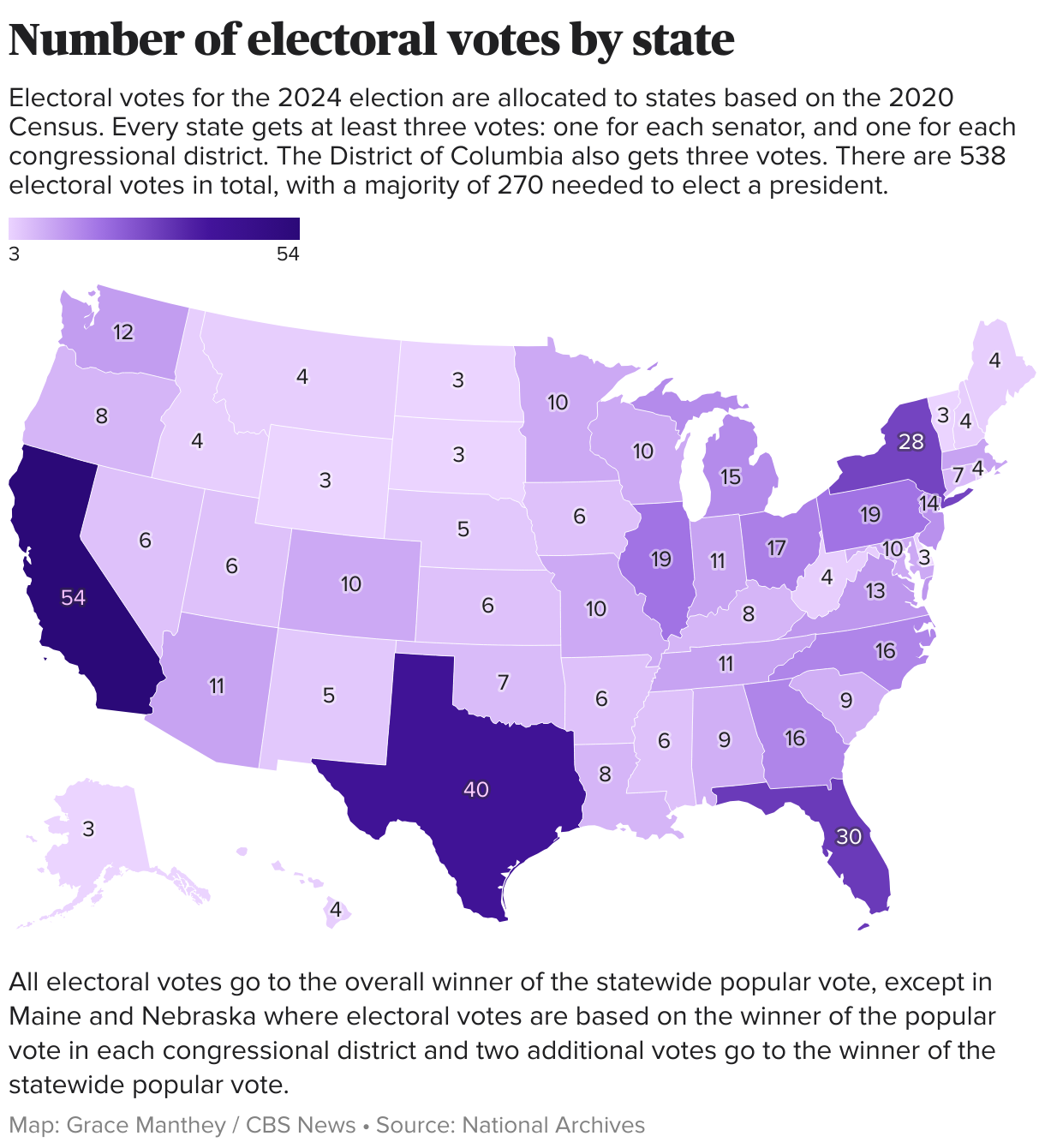
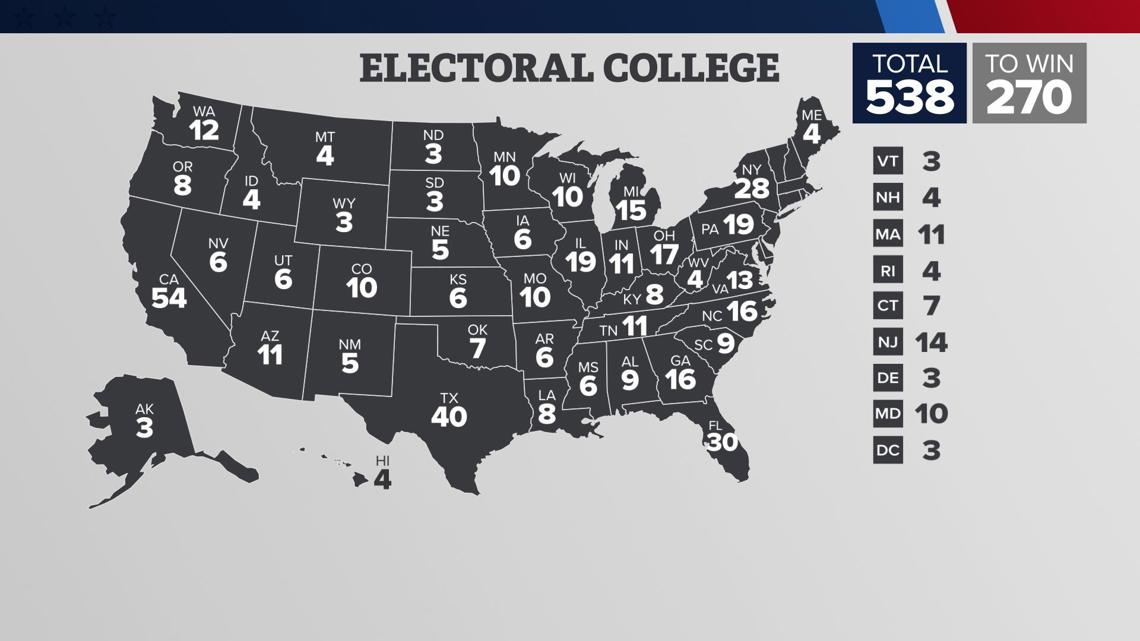
As of the 2020 Census and for the upcoming 2024 and 2028 presidential elections, Oregon is allocated seven electoral votes. This number reflects Oregon’s population relative to other states and its representation in Congress. Oregon currently has two senators in the U.S. Senate and six representatives in the House of Representatives, totaling eight congressional delegates. Therefore, the state is entitled to eight electoral votes. This consistent representation has made Oregon a predictable, albeit not entirely ignored, state in presidential elections. Understanding Oregon’s electoral count is vital for analyzing its potential impact on the national outcome.
Historical Trends and Political Leanings

Historically, Oregon has tended to vote for Democratic presidential candidates in recent decades. While not as reliably “blue” as some coastal states, its voting patterns have generally favored the Democratic Party since the 1990s. This trend means that Democratic candidates often consider Oregon a secure state in their electoral map. However, this does not mean that Republican candidates concede the state entirely; they may still invest some resources in attempting to sway voters, particularly in more rural or conservative-leaning regions of the state. The political landscape of Oregon is diverse, with significant urban centers like Portland and Eugene often leaning Democratic, while more rural areas tend to be more conservative. This internal variation can sometimes lead to surprisingly close races, though the overall statewide trend has been toward the Democratic Party. The state’s established electoral vote count means that candidates must strategically allocate their time and resources, factoring in Oregon’s predictable leanings against more competitive battleground states.
The Impact of Oregon’s Electoral Votes
While Oregon’s seven electoral votes might seem modest compared to populous states like California (54 electoral votes) or Texas (40 electoral votes), they are by no means insignificant. In close presidential elections, every electoral vote counts towards the crucial 270 needed to win. A shift of even one or two states can determine the outcome of an election. Therefore, while Oregon may not be a primary battleground in the same vein as Pennsylvania or Florida, its seven electoral votes still contribute to the national tally and cannot be overlooked by either major party. Presidential campaigns will, at minimum, ensure that their base voters in Oregon are mobilized to prevent any unexpected surprises. Furthermore, Oregon’s influence extends beyond just its electoral votes; its political discourse and voting patterns can sometimes reflect broader national trends or offer insights into the shifting allegiances of voters in the Pacific Northwest.
Factors Influencing Electoral Vote Apportionment Beyond Oregon
While the focus here is on Oregon, it’s important to understand the broader forces that shape electoral vote apportionment across all states. These factors are dynamic and can lead to significant shifts in a state’s electoral power over time, influencing national election strategies and the perceived importance of different regions.
Population Growth and Decline: The Census as Arbiter
The decennial U.S. Census is the ultimate arbiter of congressional apportionment, and by extension, electoral vote allocation. States experiencing rapid population growth, often found in the Sun Belt and parts of the West, tend to gain congressional seats and thus electoral votes. Conversely, states with stagnant or declining populations, often in the Rust Belt and Northeast, may lose seats and electoral votes. For instance, states like Florida and Texas have seen substantial population increases over the past few decades, leading to a rise in their respective electoral vote counts. This shift in electoral power can influence where presidential candidates direct their attention and resources, as the path to 270 electoral votes becomes increasingly influenced by the demographics and growth patterns of certain regions.
The Shifting Electoral Map: A Constant Evolution
The perceived importance of states in the Electoral College map is not static. A state that was considered a “safe” state for one party in one election cycle might become a “swing” state in the next due to demographic changes, economic shifts, or evolving political sentiments. This constant evolution means that presidential campaigns must continually reassess their strategies and allocate resources dynamically. The rise of new demographic groups, the migration of populations, and the changing economic fortunes of different regions all play a role in reshaping the electoral map. For example, states that were once reliably Democratic might now be considered competitive, and vice versa. This fluidity underscores the importance of understanding not just the current number of electoral votes a state possesses but also the underlying factors that might cause its political leanings to shift.
Conclusion: Oregon’s Enduring Role in the Electoral Process
In conclusion, Oregon currently holds seven electoral votes, a number determined by its congressional representation, which is itself a product of the decennial U.S. Census. While this count places Oregon outside the top tier of electoral vote-rich states, its consistent voting pattern as a reliably Democratic state makes it a valuable component of the Democratic Party’s electoral strategy. The seven electoral votes are a solid foundation upon which Democratic candidates build their path to the 270 electoral votes required to win the presidency.
The Electoral College system, with its winner-take-all mechanism in most states, ensures that every state’s electoral votes, regardless of its total number, can be pivotal in a close election. While Oregon’s political landscape may not be as hotly contested as some traditional swing states, its electoral votes are an integral part of the national electoral calculation. Understanding how many electoral votes Oregon has is not just a matter of trivia; it is a key to comprehending the strategic nuances of American presidential elections and how individual states, even those with a relatively stable political leaning, contribute to the overarching democratic process. The state’s consistent contribution highlights the enduring importance of all states in the intricate tapestry of American presidential politics.
LifeOutOfTheBox is a participant in the Amazon Services LLC Associates Program, an affiliate advertising program designed to provide a means for sites to earn advertising fees by advertising and linking to Amazon.com. Amazon, the Amazon logo, AmazonSupply, and the AmazonSupply logo are trademarks of Amazon.com, Inc. or its affiliates. As an Amazon Associate we earn affiliate commissions from qualifying purchases.