
Florida, often affectionately known as the Sunshine State, beckons millions of visitors each year with its pristine beaches, world-class theme parks, vibrant cities, and unique natural landscapes. From the magical enchantment of Walt Disney World Resort in Orlando to the art deco charm of Miami Beach and the tranquil shores of the Florida Panhandle, the state offers an unparalleled diversity of experiences. However, as travelers plan their dream Florida getaways, one crucial detail often overlooked can significantly impact their itinerary: Florida actually spans two distinct time zones.
Understanding the geographical split and its implications is paramount for seamless travel, whether you’re booking flights, scheduling attractions, or simply making dinner reservations. This comprehensive guide will illuminate Florida’s time zone landscape, offering practical advice for navigating the differences and ensuring your trip is as smooth as the state’s iconic white-sand beaches. Let’s delve into the intricacies of time in the Sunshine State.
Navigating Florida’s Dual Time Zones: Eastern vs. Central
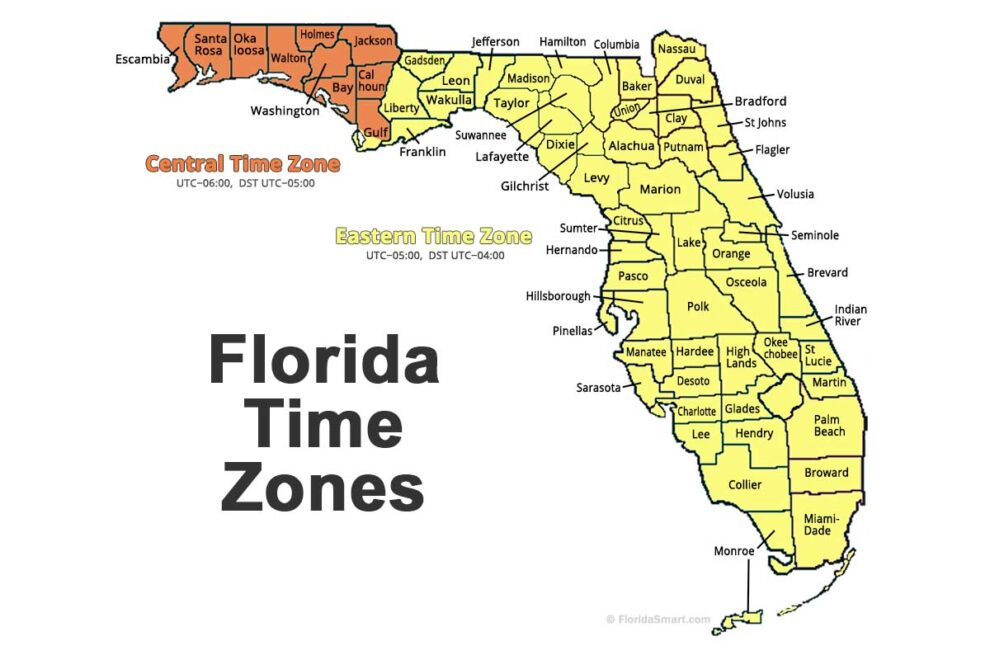
Unlike many other states in the United States that primarily adhere to a single time zone, Florida is divided between the Eastern Time Zone (ET) and the Central Time Zone (CT). This division is not arbitrary but follows a geographical line that primarily impacts the western reaches of the Florida Panhandle. The vast majority of the state, including all its major metropolitan areas and popular tourist destinations, falls within the Eastern Time Zone.
Both time zones observe Daylight Saving Time, meaning they both spring forward by one hour on the second Sunday in March and fall back by one hour on the first Sunday in November. This synchronization ensures that the time difference between the two zones consistently remains one hour throughout the year, preventing additional confusion. When it’s 3:00 PM in Eastern Time, it will be 2:00 PM in Central Time. Knowing this fundamental difference is the first step in mastering Florida travel logistics.
The Eastern Time Zone: Florida’s Heartbeat
The Eastern Time Zone is where most of Florida’s action happens. When the United States is on Eastern Standard Time (EST), it is UTC-5. During Daylight Saving Time, it shifts to Eastern Daylight Time (EDT), which is UTC-4. This expansive zone covers virtually all of South Florida, Central Florida, and a significant portion of North Florida, extending west to include cities like Tallahassee and a part of the Florida Panhandle.
Major cities and regions firmly within the Eastern Time Zone include:
- Miami and Fort Lauderdale (South Florida)
- Orlando and Kissimmee (Central Florida)
- Tampa and St. Petersburg (West Central Florida)
- Jacksonville and St. Augustine (Northeast Florida)
- The entire Florida Keys (including Key West)
- The Space Coast (home to the Kennedy Space Center)
- Tallahassee (Florida’s capital, located in the Panhandle, but still Eastern Time)
For travelers, this means that most of Florida’s iconic attractions operate on Eastern Time. Theme park opening hours at Walt Disney World Resort and Universal Studios Florida, Kennedy Space Center tours, Everglades National Park airboat rides, and reservation times at exquisite restaurants in Miami are all governed by ET. When planning your days, from catching an early flight out of Orlando International Airport to enjoying a sunset cruise off Key West, always assume Eastern Time unless specified otherwise. Accommodation options throughout this region are vast, ranging from luxury resorts like The Breakers Palm Beach and Waldorf Astoria Orlando to charming boutique hotels and family-friendly villas. When booking, verify check-in/check-out times are in ET to avoid any confusion.
The Central Time Zone: The Florida Panhandle’s Rhythm
Shifting westward, a significant portion of the Florida Panhandle operates on the Central Time Zone. During Central Standard Time (CST), it is UTC-6, and during Central Daylight Time (CDT), it is UTC-5. This means that these areas are consistently one hour behind the rest of Florida.
The major cities and regions within the Central Time Zone are:
- Pensacola
- Destin
- Fort Walton Beach
- Panama City Beach
- The entirety of Escambia County, Santa Rosa County, Okaloosa County, Walton County, and Bay County.
- Parts of Gulf County and Calhoun County.
This part of Florida is renowned for its sugar-white sand beaches and emerald green waters along the Emerald Coast. Tourism here often revolves around beach activities, fishing charters, and exploring historic sites like those in Pensacola. For visitors planning a beach retreat to Destin or a lively spring break in Panama City Beach, remembering the Central Time Zone is crucial for everything from booking water sports activities to making dinner reservations. Accommodation in these areas often includes beachfront condos, vacation rentals, and family-friendly resorts like Sandestin Golf and Beach Resort. Be mindful of their operating hours and any scheduled events, as they will always be an hour behind their Eastern counterparts.

Crossing the Time Zone Border: What Travelers Need to Know
The dividing line between Eastern and Central Time in Florida is fascinatingly nuanced, often running through counties. Specifically, the time zone change occurs at the Apalachicola River for the most part, affecting parts of Gulf County and Calhoun County. The cities of Port St. Joe and Mexico Beach in Gulf County, for example, are in Eastern Time, while areas just west of the Apalachicola River in the same county, like Wewahitchka, switch to Central Time. This makes it particularly important for road-trippers and those exploring the less-traveled parts of the Panhandle to pay close attention.
For travelers, the implications of crossing this border can be significant:
- Road Trips: If you’re driving from Tallahassee (ET) to Panama City Beach (CT), remember to set your watch back an hour as you cross the divide. Conversely, driving east from Pensacola (CT) towards the state capital (ET) means springing forward an hour. While most smartphones auto-adjust, a quick manual check can prevent missed appointments or early arrivals.
- Flight and Train Schedules: Always double-check the local time for departures and arrivals when booking flights between, say, Orlando International Airport (ET) and Pensacola International Airport (CT). A 9:00 AM flight from Orlando might arrive at 9:00 AM in Pensacola due to the time difference, effectively being a two-hour journey. Misinterpreting this could lead to missing connections or having less time than anticipated.
- Appointments and Meetings: Whether it’s a business stay or a scheduled tour, confirm the local time with the venue or person you are meeting. Don’t assume. A 10:00 AM meeting in Panama City Beach is actually 11:00 AM for someone calling from Miami.
- Digital Devices: While modern phones and GPS systems are usually reliable in detecting time zone changes, it’s always wise to manually confirm, especially in transitional areas. A quick glance at a local clock or asking a local is a simple, effective precaution.
Understanding these practicalities ensures that your focus remains on enjoying your Florida adventure, rather than grappling with scheduling mishaps.
Planning Your Florida Itinerary with Time Zones in Mind
The nuances of Florida’s dual time zones extend beyond just knowing the current hour. They weave into various aspects of travel planning, affecting everything from accommodation bookings to daily activities and even your chosen lifestyle of travel.
Accommodation & Booking Strategies
When searching for hotels, resorts, or vacation rentals across Florida, always pay close attention to the specified check-in and check-out times. Booking platforms typically display times in the local time zone of the property, but a confirmation email might revert to your home time zone, causing confusion. For instance, if you’re booking a long-term stay in Panama City Beach (CT) while managing remote work with a team on the East Coast, remember that your 9 AM call will be at 8 AM local time. Utilize the comparison features of various booking sites to ensure clarity regarding local times and cancellation policies, which are often tied to check-in times.
Activities & Attractions Scheduling
The vast array of Florida attractions means diverse operating hours. Theme parks in Orlando (ET), museums in St. Petersburg (ET), and water sports rentals in Destin (CT) all adhere strictly to their respective local times. If you’re planning a multi-city tour, perhaps starting with a visit to Busch Gardens Tampa Bay (ET) and then heading to the beaches of Fort Walton Beach (CT), ensure you adjust your internal clock for opening and closing times. Likewise, tour departure times, especially those that involve inter-regional travel or boat trips, should be confirmed with the provider’s local schedule. Embracing the rich local culture often involves attending specific events, festivals, or performances, so always verify their published start times.
Lifestyle & Travel Styles Considerations
- Family Trips: Managing children’s sleep schedules and meal times can be challenging enough. Adding a time zone change, even just an hour, requires careful planning. For younger children, a one-hour shift can feel significant, potentially leading to overtiredness or disrupted routines. Plan for slightly earlier mornings or later evenings when transitioning between ET and CT to ease the adjustment.
- Business Stays: For professionals on business trips in Florida, punctuality is key. All meetings, conference calls, and deadlines must be synchronized to the correct local time zone. If you’re attending a conference in Pensacola (CT) while colleagues are working from Miami (ET), clarify which time zone all schedules refer to. Many luxury hotels offer concierge services that can assist with complex international or inter-state itineraries, confirming times for you.
- Luxury Travel & Budget Travel: Regardless of your lifestyle choice, attention to detail regarding time zones is crucial. For luxury travelers, a missed private yacht charter or an exclusive dining reservation due to a time mix-up can be inconvenient. For budget travelers, missing a bus or train connection can lead to unexpected expenses and delays. Technology, such as smartphones and smartwatches, often auto-adjust, but cross-referencing with a reliable world clock app or simply asking a local for the current time serves as an excellent backup.
Beyond the Clock: Embracing Florida’s Diverse Experiences
While understanding the clock is a fundamental aspect of practical travel planning, it should never overshadow the incredible journey that awaits you in Florida. The state’s unique geography, encompassing two time zones, merely adds another layer to its rich tapestry of diverse experiences. From the bustling, vibrant energy of South Florida and Central Florida to the laid-back, natural beauty of the Florida Panhandle and the tranquil Big Bend region, Florida offers something for every kind of adventurer.
Whether you’re exploring the historic landmarks of St. Augustine, snorkeling among the coral reefs near Dry Tortugas National Park, or simply unwinding on the shores of Destin, a little awareness about the local time will only enhance your trip. By being prepared for the subtle shift between Eastern and Central Time, you can ensure that your Florida vacation unfolds smoothly, allowing you to fully immerse yourself in the sunshine, culture, and unforgettable moments that the Sunshine State so generously offers. So, set your watches, embark on your adventure, and let Florida’s timeless charm sweep you away.
LifeOutOfTheBox is a participant in the Amazon Services LLC Associates Program, an affiliate advertising program designed to provide a means for sites to earn advertising fees by advertising and linking to Amazon.com. Amazon, the Amazon logo, AmazonSupply, and the AmazonSupply logo are trademarks of Amazon.com, Inc. or its affiliates. As an Amazon Associate we earn affiliate commissions from qualifying purchases.