
Navigating the vast landscapes and diverse experiences of the Lone Star State often begins long before you set foot on its soil. For many travelers, the initial planning stages involve intricate details: booking flights, securing accommodation at a luxurious resort or a charming boutique hotel, and mapping out a captivating itinerary. Amidst this whirlwind of arrangements, a seemingly simple question can emerge, one that holds surprising importance for seamless travel planning and execution: “What time is Texas in?”
Understanding Texas’s time zones is not merely a matter of setting your watch; it’s a fundamental aspect of planning any trip to this expansive state. From coordinating flights and hotel check-ins to scheduling tours, dining reservations, and business meetings, being aware of the local time ensures a smooth and enjoyable experience. This guide will delve into the intricacies of Texas’s time zones, highlight key destinations, and offer invaluable tips for optimizing your visit, whether you’re embarking on a luxury travel adventure, a budget travel excursion, or a memorable family trip.
Understanding Texas’s Time Zones: A Geographic Overview
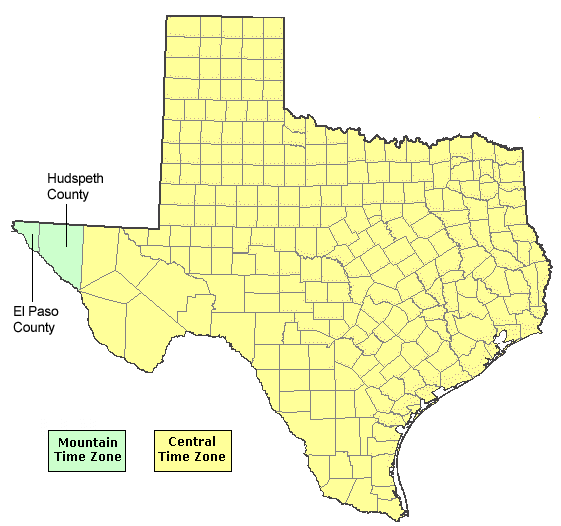
At first glance, the question of Texas’s time zone might seem straightforward, but the answer is a little more nuanced than one might expect for such a large state. The majority of Texas observes the Central Time Zone (CT), which is UTC-6 during standard time and UTC-5 during Daylight Saving Time. This encompasses major metropolitan hubs like Dallas, Houston, Austin, and San Antonio, which are popular destinations for both leisure and business stays.
However, a small but significant western portion of the state operates on the Mountain Time Zone (MT), which is UTC-7 during standard time and UTC-6 during Daylight Saving Time. This region primarily includes the city of El Paso and the two westernmost counties: Hudspeth and Culberson. This distinction is crucial for travelers, particularly those venturing across the state’s vast expanse, or those arriving from neighboring states like New Mexico or Oklahoma which mostly adhere to the Mountain Time Zone or Central Time Zone respectively.
The Central Time Zone Dominance
Most visitors to Texas will find themselves operating within the Central Time Zone. This zone spans from the eastern border with Louisiana and Arkansas all the way to just east of El Paso. This means that if you’re flying into Dallas/Fort Worth International Airport, experiencing the vibrant local culture in Austin, enjoying the Riverwalk in San Antonio, or exploring the historic sites of Houston, your clock will be set to CT.
For international travelers, understanding this primary time zone is key. If you’re arriving from a region observing the Eastern Time Zone (like New York or Florida) in the United States, you’ll need to adjust your internal clock back by one hour. For those coming from the Pacific Time Zone (such as California), you’ll be moving forward by two hours. These adjustments, while seemingly minor, are essential for avoiding jet lag and making the most of your initial days in the state.
The Mountain Time Zone Exception
The shift to the Mountain Time Zone in Far West Texas is a geographical necessity, aligning the region with its neighbors to the west. El Paso, often called “Sun City,” is the largest urban center in Texas to observe Mountain Time. This difference is particularly important for anyone traveling between El Paso and other Texas cities. A flight from Houston to El Paso will see you “gain” an hour upon arrival, while traveling east from El Paso will mean you “lose” an hour.
This western pocket of Texas is also home to spectacular natural landmarks and outdoor attractions, such as Guadalupe Mountains National Park and parts of Big Bend National Park. If your travel guide includes exploring the rugged beauty of the Chihuahuan Desert or stargazing near Marfa and the Davis Mountains, double-checking the local time zone for specific activities is non-negotiable.
Why Time Zones Matter for Your Texas Travel Experience
Beyond the simple act of telling time, understanding Texas’s time zones has profound implications for every facet of your trip. From booking flights to scheduling meals, being time-aware can save you from missed connections, unnecessary stress, and even financial penalties.
Seamless Logistics: Flights, Check-ins, and Reservations
Imagine landing at El Paso International Airport an hour earlier than your brain anticipated, only to find your pre-booked accommodation check-in isn’t until the “local” time. Or perhaps you’ve booked a connecting flight from Dallas/Fort Worth to El Paso, forgetting the time change, leading to a frantic dash or, worse, a missed flight.
- Flight Schedules: Always confirm departure and arrival times in the local time zone of each airport. Online booking systems usually manage this automatically, but a quick double-check can prevent miscalculations, especially for self-arranged itineraries.
- Hotel and Accommodation Bookings: Check-in and check-out times are always based on the local time of the hotel or apartment. If you’re crossing time zones within Texas, ensure your arrival perfectly aligns with your chosen suites or villas.
- Dining and Tour Reservations: Popular Texas restaurants and tourism operators, whether it’s a BBQ joint in Lockhart or a guided tour of the Alamo, operate strictly on local time. A one-hour miscalculation can lead to missing your coveted reservation, particularly for high-demand activities or exclusive experiences.
Optimizing Your Itinerary and Daily Activities
For those meticulously planning their journey, time zones play a crucial role in creating a realistic and enjoyable itinerary. From museum visits to outdoor adventures, every scheduled event needs to align with the local clock.
- Sightseeing and Attractions: When planning to visit landmarks like the Texas State Capitol in Austin, Space Center Houston, or the Dallas Arts District, be mindful of opening and closing times, which are always local.
- Outdoor Activities: Hiking in Big Bend or exploring the natural beauty near El Paso requires adherence to the Mountain Time Zone. This impacts sunrise and sunset times, crucial for planning hikes, photography, or simply enjoying the natural light.
- Business Meetings: For professionals on a business stay, coordinating with colleagues or clients across different Texas cities necessitates careful consideration of the time difference. A meeting scheduled for 10 AM CT will be 9 AM MT, requiring precise communication to avoid missteps.
Navigating Daylight Saving Time in Texas
Like most of the United States, Texas observes Daylight Saving Time. This means that on the second Sunday in March, clocks “spring forward” one hour, and on the first Sunday in November, they “fall back” one hour. During Daylight Saving Time, the Central Time Zone becomes Central Daylight Time (CDT), which is UTC-5. Similarly, the Mountain Time Zone becomes Mountain Daylight Time (MDT), which is UTC-6.
This biannual change is another layer of complexity for travelers, especially those planning trips around these transition dates.
- Spring Forward: If you arrive in Texas on the day Daylight Saving Time begins, be aware that you will effectively “lose” an hour of sleep or travel time.
- Fall Back: Conversely, when clocks “fall back,” you’ll “gain” an hour. While this might sound beneficial, it can still disrupt schedules if not accounted for, particularly for early morning flights or appointments.
Always check the current date and whether Daylight Saving Time is in effect when making your plans. Most modern smartphones and devices automatically adjust, but it’s always good practice to manually confirm, especially if relying on older travel clocks or when crossing international borders, such as into Mexico, where some regions do not observe Daylight Saving Time.
Practical Tips for Time-Conscious Texas Travelers
A successful trip to Texas, regardless of its duration or purpose, hinges on meticulous planning and adaptability. Keeping time zones in mind is a small detail that can yield significant benefits for your overall lifestyle and peace of mind while traveling.
Before You Go: Research and Preparation
- Check Your Itinerary Twice: Before finalizing any bookings – flights, hotels, rental cars, tours, or dining – always confirm the local time zones for each segment of your journey.
- Use Reliable Time Converters: Numerous online tools and apps can help you convert times between different zones. Make these your go-to resource for clarification.
- Set Alerts and Reminders: Utilize your smartphone to set alarms or reminders for critical times, always noting the local time zone. This is particularly useful for flights or important meetings.
- Inform Your Contacts: If you’re traveling for business or meeting friends, communicate your travel schedule and the time zones you’ll be in to avoid any miscommunication.
During Your Trip: Stay Vigilant
- Update Your Devices: Ensure your smartphone, smartwatch, and other electronic devices are set to automatically update their time zones. This is usually a default setting but worth verifying.
- Ask When in Doubt: If you’re unsure about the local time for an event or reservation, don’t hesitate to ask a hotel staff member, a tour operator, or a local. It’s better to clarify than to miss out.
- Factor in Travel Time and Buffers: When moving between the Central and Mountain Time Zones within Texas, remember to add the one-hour difference to your actual driving or flying time. Always build in extra buffer time for connections or appointments to accommodate unexpected delays.
Adapting to the Pace of Texas Life
For those on extended stays or those looking to fully immerse themselves in the local cadence, understanding the time zones also contributes to a more authentic experience. Whether you’re savoring the vibrant nightlife in Austin, enjoying a sunrise hike in Big Bend, or indulging in Texan food, being in sync with the local clock allows for a more relaxed and fulfilling journey. It’s about more than just punctuality; it’s about embracing the rhythm of your chosen destination.
In conclusion, “What time is Texas in?” is a question with a dual answer, largely Central Time Zone with a distinct Mountain Time Zone exception in the west. By understanding this geographical nuance and preparing accordingly, travelers can ensure their Texas adventure is as smooth, enjoyable, and unforgettable as the Lone Star State itself. Safe travels!
LifeOutOfTheBox is a participant in the Amazon Services LLC Associates Program, an affiliate advertising program designed to provide a means for sites to earn advertising fees by advertising and linking to Amazon.com. Amazon, the Amazon logo, AmazonSupply, and the AmazonSupply logo are trademarks of Amazon.com, Inc. or its affiliates. As an Amazon Associate we earn affiliate commissions from qualifying purchases.