
The story of how Texas came to be part of the United States is a sprawling, dramatic saga filled with revolution, ambition, and pivotal historical moments. Far from a simple land purchase, it’s a narrative deeply woven into the fabric of American expansion, Mexican sovereignty, and the relentless drive of pioneers. For travelers and history enthusiasts alike, tracing these steps offers an unparalleled journey through battlefields, historic towns, and cultural crossroads that shaped a nation. Understanding this past is not just about historical dates; it’s about experiencing the vibrant legacy that defines the Lone Star State today, from its unique culinary scene to its formidable landmarks.
A Land of Contention: Early History and Settlement
Before Texas was “gotten” by the United States, it was a vast, diverse territory claimed and explored by various powers, each leaving an indelible mark on its landscape and culture. This early period sets the stage for the conflicts and migrations that would ultimately lead to its annexation.
Spanish and Mexican Influence
For centuries, the territory we now know as Texas was under the purview of Spain. Beginning in the 16th century, Spanish explorers and missionaries established outposts, seeking to expand New Spain’s northern frontiers and convert indigenous populations. They founded missions and presidios, laying the groundwork for many of Texas’s oldest cities. San Antonio, for instance, began as a mission and presidio in the early 18th century, becoming a crucial hub in the Spanish colonial system. The most iconic of these missions, Mission San Antonio de Valero, would later be famously known as the Alamo.
The Spanish legacy is visible everywhere in Texas, from architectural styles to place names and the rich traditions of Tejano culture. Travelers exploring San Antonio today can immerse themselves in this heritage by visiting the San Antonio Missions National Historical Park, a UNESCO World Heritage Site that includes four beautifully preserved 18th-century missions in addition to the Alamo. Accommodations in San Antonio range from luxurious riverwalk hotels to charming boutique inns, offering a perfect base for historical exploration and culinary adventures, where Spanish and Mexican flavors intertwine.
In 1821, Mexico successfully declared its independence from Spain, and Texas became part of the new Mexican empire, and then the Mexican Republic. The fledgling Mexican government, eager to populate and secure its vast northern territories, continued a policy of encouraging foreign settlement, particularly from the neighboring United States.
American Empresarios and the Lure of Land
The opportunity to acquire vast tracts of land at remarkably low prices proved irresistible to many Americans, particularly those from the southern United States seeking new economic prospects, often with enslaved labor. These “empresarios” were granted contracts by the Mexican government to bring in settlers, who were required to become Mexican citizens, convert to Catholicism, and abide by Mexican law.
The most famous of these empresarios was Stephen F. Austin, often referred to as the “Father of Texas.” He brought hundreds of families to his colony between the Brazos and Colorado Rivers, establishing the initial Anglo-American presence that would dramatically shift the region’s demographics. Other key figures, like Green DeWitt and Martín De León, also played crucial roles in this colonization effort, establishing towns like Gonzales and Victoria.
While the settlers initially accepted Mexican rule, cultural differences, language barriers, and political instability in Mexico City led to growing tensions. Issues such as slavery (outlawed in Mexico but practiced by many Anglo settlers), religious freedom, and self-governance became flashpoints. By the early 1830s, the Mexican government began to restrict immigration and enforce stricter laws, fueling resentment and paving the way for conflict.
Travelers interested in this period can visit historical sites in places like Nacogdoches, one of Texas’ oldest towns, which witnessed many of these early struggles for control. The Stone Fort Museum at Stephen F. Austin State University offers insights into frontier life and the various flags that have flown over Texas.
The Spark of Revolution: “Remember the Alamo!”
The simmering discontent eventually erupted into open rebellion, forever etching the story of Texas independence into American lore. The cry “Remember the Alamo!” became a rallying call for freedom.
The Fight for Independence
The Texas Revolution officially began in October 1835 with the Battle of Gonzales. When Mexican soldiers attempted to retrieve a cannon loaned to the town for defense against Native American raids, the Texan settlers famously raised a flag emblazoned with a cannon and the words “Come and Take It.” This defiance marked the first shots of the revolution.
The conflict escalated rapidly, drawing in volunteers from the United States eager to support the Texan cause. Crucial early victories, such as the capture of Goliad and San Antonio, boosted morale but also incited the wrath of Mexican President General Antonio López de Santa Anna. In February 1836, Santa Anna led a massive army into Texas, determined to crush the rebellion.
For travelers, a visit to Gonzales allows one to stand on the ground where the revolution began. The town’s historical markers and museum provide a tangible connection to this pivotal moment. Similarly, the Goliad State Park and Historic Site preserves the mission and presidio where another significant early battle took place, offering insights into military life and the strategic importance of these outposts.
Key Battles and Figures
The defining moment of the revolution, without doubt, was the Siege of the Alamo. From February 23 to March 6, 1836, a small group of Texan defenders, including legendary figures like Davy Crockett, Jim Bowie, and William B. Travis, held out against thousands of Santa Anna’s troops. Though all defenders perished, their courageous stand bought valuable time for the provisional government to declare independence at Washington-on-the-Brazos on March 2, 1836. The memory of the Alamo became a powerful symbol of Texan resilience and sacrifice.
Today, the Alamo in downtown San Antonio is Texas’ most visited historical landmark. Walking its grounds offers a sobering and inspiring experience, allowing visitors to connect with the immense bravery displayed there. Nearby, the Briscoe Western Art Museum further enriches the understanding of the frontier era, while the Institute of Texan Cultures delves into the diverse ethnic groups that shaped the state.
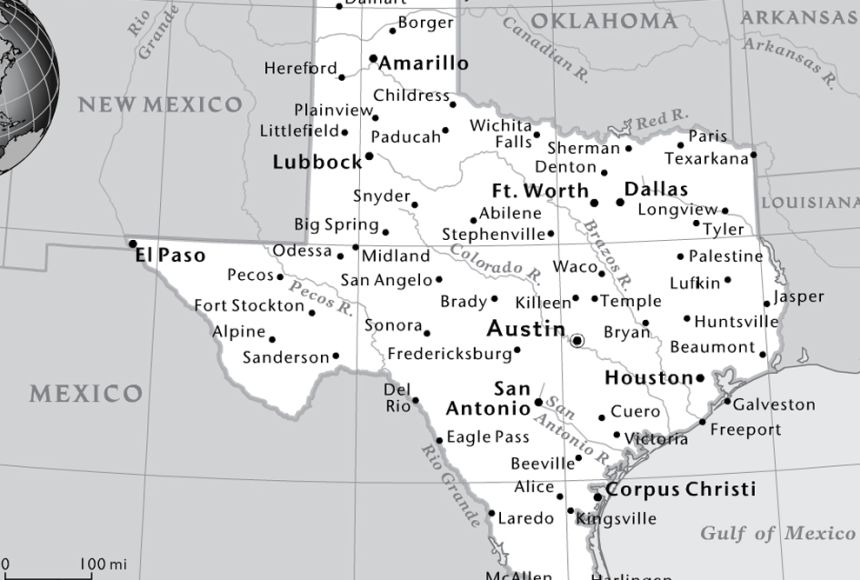
Following the Alamo and the Goliad Massacre, where hundreds of Texan prisoners were executed, the Texan forces, under General Sam Houston, retreated eastward. This “Runaway Scrape” culminated in the decisive Battle of San Jacinto on April 21, 1836. In a stunning victory that lasted only 18 minutes, Houston’s forces routed Santa Anna’s army, capturing the Mexican general and securing Texas’ independence.
The San Jacinto Battleground State Historic Site near Houston is another must-see landmark. The towering San Jacinto Monument commemorates this victory, offering panoramic views from its observation deck, while the adjacent museum provides detailed exhibits on the battle and the revolution. It’s an ideal destination for families and history buffs, blending outdoor exploration with educational insights.
The Lone Star Republic: A Decade of Sovereignty
With independence secured, Texas embarked on a ten-year journey as an independent nation, the Republic of Texas. This period was marked by both triumph and tribulation as the young republic grappled with its identity, finances, and future.
Challenges of a Young Nation
The newly formed Republic of Texas faced immense challenges. Its treasury was empty, its borders were insecure, and the threat of renewed conflict with Mexico, which refused to recognize Texas’ independence, loomed large. Leaders like Sam Houston, the republic’s first president, worked to establish a functioning government, foster economic growth, and secure international recognition.
The capital of the republic moved several times before settling in Austin, named after Stephen F. Austin. During this decade, the republic also engaged in diplomatic efforts, securing treaties with various Native American tribes and establishing trade relations. The diverse population of the republic—Anglo-Americans, Tejanos, African Americans (both free and enslaved), and various Native American groups—contributed to a complex social and cultural landscape.
Visitors can explore the Texas State Capitol in Austin, an impressive architectural marvel that stands as a symbol of the state’s sovereignty, both past and present. The surrounding areas of Austin offer a plethora of accommodation options, from luxury resorts overlooking Lake Travis to trendy downtown hotels, perfect for experiencing Texas’ capital city, a hub for live music and vibrant culture.
The Road to Annexation
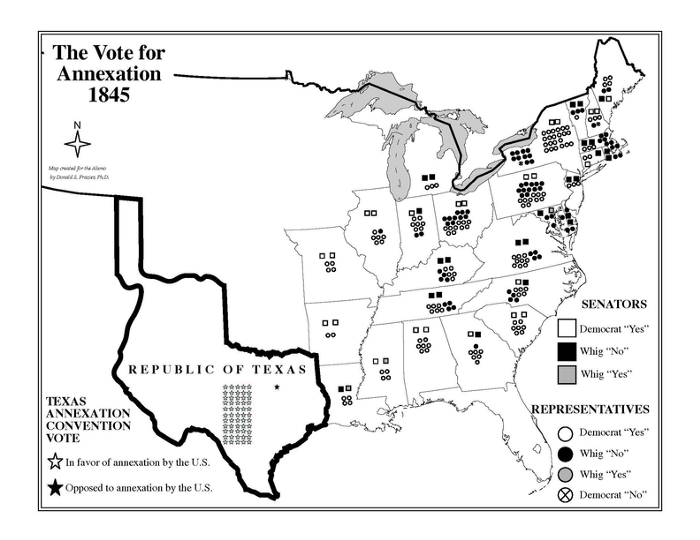
From its inception, many Texans, and indeed many Americans, envisioned Texas as part of the United States. Annexation was a recurring topic throughout the republic’s existence, driven by economic necessity, shared cultural ties, and the strategic interests of both nations. However, the issue was highly controversial within the United States, primarily due to concerns over slavery and the potential for war with Mexico. Admitting Texas as a slave state would upset the delicate balance between free and slave states in Congress, intensifying sectional tensions.
Despite these obstacles, the allure of Manifest Destiny—the belief in America’s divinely ordained expansion across the continent—proved powerful. By the mid-1840s, political tides shifted in the United States. President James K. Polk, a strong advocate for expansion, made the annexation of Texas a key objective of his presidency.
In 1845, after years of debate and negotiation, the United States Congress passed a resolution offering to admit Texas into the Union. The citizens of Texas overwhelmingly voted in favor of annexation, and on December 29, 1845, Texas officially became the 28th state. This act fulfilled the aspirations of many Texans and represented a significant expansion of American territory, but it also directly precipitated a new and more expansive conflict.
Joining the Union: A Divisive Decision
The annexation of Texas by the United States was a landmark event that completed one chapter of its history while immediately opening another: a full-scale war with Mexico.
The Mexican-American War and its Aftermath
Mexico had consistently warned that annexation would be considered an act of war. The primary point of contention was the border between Texas and Mexico. While Texas claimed its southern border was the Rio Grande, Mexico maintained that the boundary was the Nueces River, further north. When U.S. troops, led by General Zachary Taylor, advanced to the Rio Grande in early 1846, skirmishes erupted, providing President Polk with the casus belli he sought.
The Mexican-American War (1846-1848) was a swift and decisive conflict. American forces invaded Mexico on multiple fronts, ultimately capturing Mexico City. The war concluded with the signing of the Treaty of Guadalupe Hidalgo in February 1848. Under the terms of the treaty, Mexico formally recognized the annexation of Texas with the Rio Grande as its boundary and ceded vast territories, including present-day California, Nevada, Utah, Arizona, and parts of Colorado, Wyoming, and New Mexico, to the United States in exchange for $15 million. This massive land transfer, known as the Mexican Cession, fundamentally reshaped the map of North America and fulfilled the dream of Manifest Destiny.
For those interested in this chapter, the Palo Alto Battlefield National Historical Park and the Resaca de la Palma Battlefield, both near Brownsville, offer compelling opportunities to explore the sites of the first major battles of the Mexican-American War. These parks provide walking trails, interpretive exhibits, and ranger programs that bring the history to life.

Texas Today: A Legacy of Resilience
The complex history of Texas’ acquisition has forged a state with a fiercely independent spirit, a diverse cultural tapestry, and an enduring sense of its unique identity. From its Spanish missions to its Anglo settlements, and through its revolution and its time as a republic, each era contributed to the distinctive Texan character.
Today, Texas is a premier travel destination, offering an incredible array of experiences that cater to every interest. History buffs can follow the “Independence Trail,” visiting the Alamo, San Jacinto, Goliad, and Washington-on-the-Brazos. Art and culture enthusiasts will revel in the museums of Houston, the live music scene in Austin, and the rich Tejano heritage of San Antonio. Foodies can savor everything from authentic Mexican cuisine and Tex-Mex to legendary barbecue and innovative fine dining.
For those seeking outdoor adventures, Texas boasts stunning natural beauty, from the rugged mountains of Big Bend National Park to the serene beaches of Galveston and South Padre Island. The state’s vibrant cities like Dallas and Fort Worth offer world-class shopping, entertainment, and a blend of modern sophistication with true Western charm.
Accommodation options across Texas are as varied as its landscapes, from luxury suites in metropolitan high-rises to quaint bed-and-breakfasts in historic towns, and family-friendly resorts near popular attractions. Whether planning a budget-friendly road trip or a lavish cultural immersion, Texas offers an unforgettable journey into American history, a place where the past is not just remembered but actively lived and celebrated. “How did us get Texas?” It’s a story of extraordinary courage, complex diplomacy, and a relentless pursuit of destiny that continues to inspire and captivate.
LifeOutOfTheBox is a participant in the Amazon Services LLC Associates Program, an affiliate advertising program designed to provide a means for sites to earn advertising fees by advertising and linking to Amazon.com. Amazon, the Amazon logo, AmazonSupply, and the AmazonSupply logo are trademarks of Amazon.com, Inc. or its affiliates. As an Amazon Associate we earn affiliate commissions from qualifying purchases.