
Navigating the vibrant landscapes and bustling cities of Texas offers an incredible experience for any traveler, whether you’re exploring the historic depths of San Antonio’s Alamo, marveling at the vastness of Big Bend National Park, or delving into the cosmic wonders at Space Center Houston. For individuals with disabilities, ensuring seamless access to these incredible destinations often starts with one crucial element: accessible parking. In a state as expansive and diverse as Texas, understanding the specific requirements and processes for obtaining handicap parking permits is not just a convenience; it’s a gateway to greater independence and enjoyment of all the state has to offer.

This comprehensive guide will walk you through everything you need to know about securing a handicap parking permit in Texas, empowering you to travel, explore, and live life to the fullest. We’ll cover eligibility criteria, the application process, the different types of permits available, and crucial tips for both residents and visitors, all designed to make your Texas adventures more accessible and enjoyable.
Understanding Eligibility and Application in Texas
The foundation of acquiring a disability parking permit in Texas rests on a clear understanding of who qualifies and what medical conditions necessitate such an accommodation. The system is designed to provide parking privileges to individuals whose mobility is significantly impaired, ensuring they can access essential services, attractions, and accommodations without undue hardship.
Who Qualifies for a Handicap Parking Permit?
Eligibility for a disability parking permit in Texas is primarily determined by medical criteria established by state law. The overarching goal is to assist individuals who face substantial challenges in walking specific distances without assistance or experiencing severe pain. According to the Texas Department of Motor Vehicles (TxDMV), a person is considered to have a “mobility problem” if they:
- Cannot walk without the aid of a walking device, such as a brace, cane, crutch, another person, prosthetic device, or wheelchair. This covers a broad range of physical limitations where independent ambulation is compromised.
- Are restricted by lung disease to such an extent that their forced expiratory volume for one second, when measured by spirometry, is less than one liter, or their arterial oxygen tension is less than 60 mm/Hg on room air at rest. This addresses significant respiratory impairments.
- Use portable oxygen. The need for supplementary oxygen indicates a severe respiratory or cardiovascular condition that impacts mobility.
- Have a cardiac condition to the extent that their functional limitations are classified in severity as Class III or Class IV according to standards set by the American Heart Association. This category covers significant cardiovascular disabilities that severely restrict physical activity.
- Are severely limited in their ability to walk due to an arthritic, neurological, or orthopedic condition. This broad category encompasses conditions like severe arthritis, multiple sclerosis, paralysis, or significant musculoskeletal injuries that impede walking.
- Are blind, as defined by Texas law. This acknowledges visual impairment as a significant disability affecting independent mobility and safety in parking areas.
- Have a disability that prevents the person from being able to ambulate 200 feet without stopping to rest. This is a common benchmark used to assess the severity of mobility impairment across various conditions.
It’s crucial to understand that these conditions must be certified by a licensed medical professional. This ensures that permits are issued to those genuinely in need, upholding the integrity of the accessible parking system.
Navigating the Application Process: Step-by-Step
The process for applying for a handicap parking permit in Texas is designed to be straightforward, primarily involving completing a form and obtaining medical certification. While it may seem daunting at first, breaking it down into manageable steps makes it much easier to navigate.
Essential Documents for Your Application
Before you begin, gather the necessary documents and information. The primary document you’ll need is the Application for Persons with Disabilities Parking Placard and/or License Plates (Form VTR-214). This form is available on the TxDMV website or at your local county tax assessor-collector’s office.
Here’s a breakdown of what the form requires and the supporting documentation:
-
Applicant Information: You will need to provide your personal details, including your full name, address, driver’s license number (or Texas ID number), and contact information.
-
Medical Certification: This is the most critical part of the application. A licensed medical professional must complete and sign a specific section of the form, certifying your disability. The medical professional must be one of the following:
- A physician licensed to practice medicine in Texas or a state contiguous to Texas.
- A podiatrist licensed to practice in Texas.
- An optometrist licensed to practice in Texas.
- A physician assistant licensed to practice in Texas.
- An advanced practice nurse licensed to practice in Texas.
- A chiropractor licensed to practice in Texas.
- A veteran’s administration official with knowledge of the applicant’s service-connected disability.
The medical professional will need to indicate whether the disability is temporary or permanent, and if temporary, the expected duration. They will also certify that the applicant meets one or more of the “mobility problem” criteria.
-
Proof of Identity and Residency: While not explicitly listed as a separate requirement on the form, it’s always good practice to have your Texas driver’s license or ID card handy when submitting the application. This verifies your identity and residency.
The Application Steps:
Once you have your completed Form VTR-214 with the medical certification, the application process is relatively simple:
- Submit the Application: Take your completed form to your local county tax assessor-collector’s office. You can find the nearest office by searching on the TxDMV website.
- Payment (if applicable):
- Permanent Placards: If you are applying for a permanent disability placard, there is generally no fee for the initial two placards.
- Temporary Placards: A fee typically applies for temporary placards. Check with your local tax assessor-collector’s office for the current fee amount.
- Special License Plates: If you are opting for disability license plates, standard vehicle registration fees and any additional plate fees will apply. The specific plate you choose (e.g., Disabled Veteran plates) might have different fee structures.
- Receive Your Permit:
- Placards: If you are approved for a placard, it is usually issued on the spot at the county tax assessor-collector’s office. You will receive either one or two placards, depending on your application.
- License Plates: If you applied for disability license plates, these would be mailed to you, similar to standard license plates, after your application is processed and approved.
Important Note for Businesses/Organizations: Organizations that transport individuals with disabilities may also apply for placards. The process is similar, requiring certification that the organization regularly transports persons with disabilities.
Types of Disability Parking Permits and Their Use
Texas offers different types of disability parking permits to cater to varying needs and durations of mobility impairment. Understanding the distinctions between these permits – placards versus license plates, and temporary versus permanent – is crucial for proper use and renewal.
Temporary vs. Permanent Permits
The duration of your mobility impairment dictates whether you apply for a temporary or permanent permit.
-
Temporary Placard: Issued to individuals whose mobility problem is expected to last for a limited period.
- Duration: Valid for a maximum of six months. If the disability persists beyond this period, a new application with updated medical certification is required for renewal.
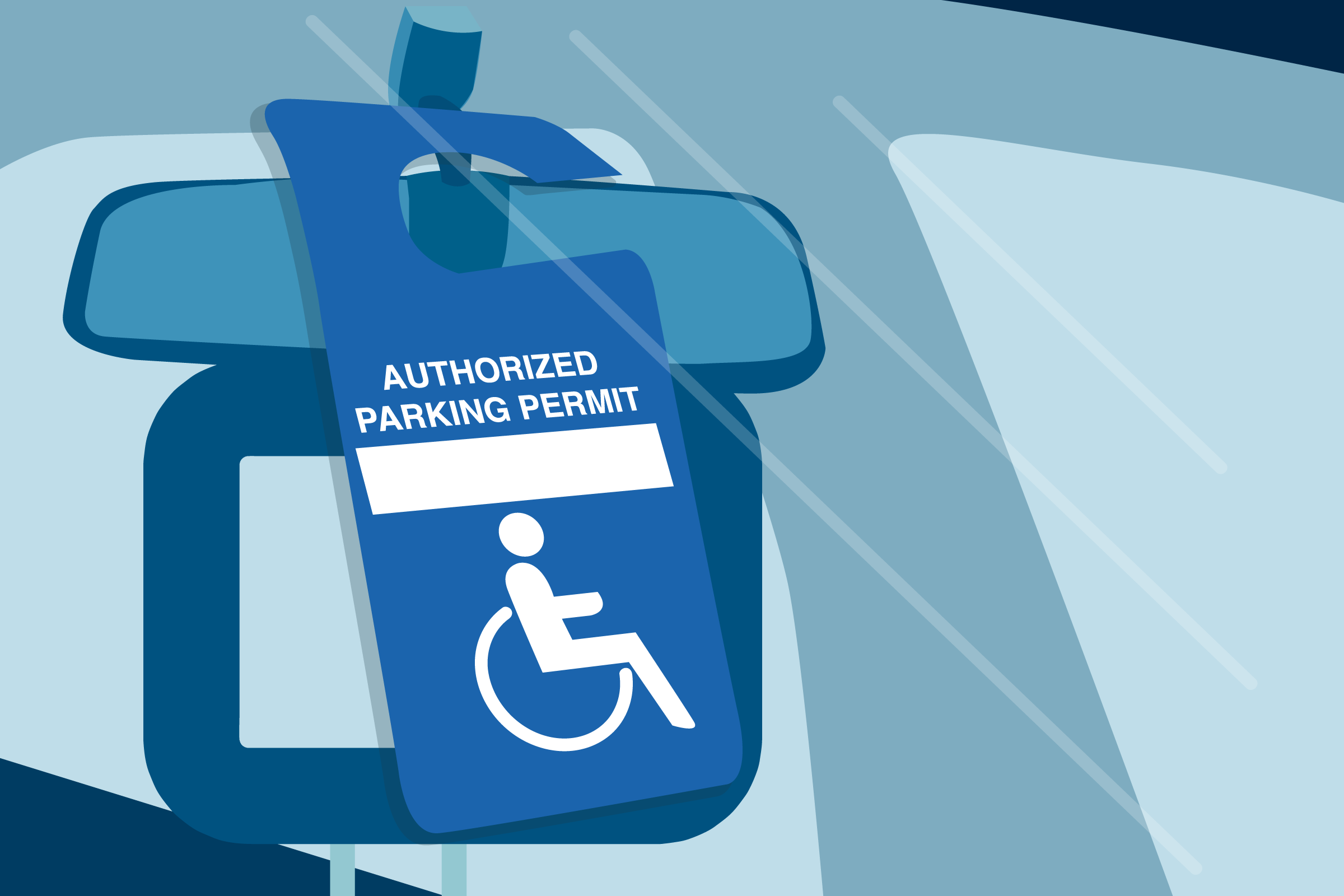
- Usage: A temporary placard must be displayed from the rearview mirror when the vehicle is parked in a designated accessible parking space. It must be removed when the vehicle is in motion.
- Cost: There is typically a small fee associated with temporary placards.
- Renewal: Requires a new Form VTR-214 with a current medical certification from a licensed professional.
-
Permanent Placard: Issued to individuals with a mobility problem that is expected to be lifelong or for an indefinite period.
- Duration: Valid for up to four years, expiring on the individual’s birth month. It automatically renews every four years without the need for a new medical certification, provided the individual’s eligibility can be verified through existing records. If the TxDMV cannot verify eligibility, a new medical certification may be requested.
- Usage: Similar to temporary placards, permanent placards must be displayed from the rearview mirror when parked in an accessible space and removed when driving.
- Cost: No fee for the initial two permanent placards.
- Renewal: For automatic renewal, ensure your address with TxDMV is current. You will receive a renewal notice, and if eligible, new placards will be mailed to you.
Placards vs. License Plates
In addition to the duration, you also have the option of displaying your disability parking privilege via a placard or through specialized license plates.
-
Disability Parking Placards:
- Flexibility: These are portable and can be transferred between any vehicle in which the permit holder is traveling, whether as a driver or a passenger. This flexibility is particularly useful for individuals who don’t always drive their own vehicle or who frequently travel with family and friends.
- Display: Hang the placard from the rearview mirror so it’s visible through the windshield when parked. Remove it when driving.
- Issuance: Up to two placards may be issued to a qualifying individual.
-
Disability License Plates:
- Vehicle-Specific: These plates are affixed to a specific vehicle and are valid only for that vehicle. They are ideal for individuals who primarily drive their own vehicle or have a dedicated accessible vehicle.
- Types: Texas offers “Disabled Person” license plates for those who qualify due to a mobility problem, and “Disabled Veteran” plates for veterans with a service-connected disability.
- Display: The accessible parking symbol is integrated into the license plate design, negating the need for a separate placard to be displayed when that specific vehicle is parked.
- Combined Use: A person who qualifies for disability license plates may also apply for one permanent placard. This can be useful if they occasionally travel in a different vehicle.
Choosing between a placard and license plates, or opting for both, depends on your individual travel habits and needs. Many prefer the portability of placards, especially when traveling to various Texas attractions like the River Walk in San Antonio or the vibrant downtown areas of Austin and Dallas, where you might be a passenger in different vehicles.
Responsible Use and Avoiding Misuse
The privilege of accessible parking is vital for individuals with mobility impairments, offering them necessary access and independence. To ensure the system remains effective and fair, responsible use is paramount, and state laws strictly prohibit misuse. Understanding these regulations is not just about compliance; it’s about respecting the needs of the disability community.
Rules for Using Your Disability Parking Permit
When you obtain a handicap parking permit in Texas, you are agreeing to adhere to specific rules designed to prevent abuse and maintain the integrity of accessible parking spaces.
- Only for the Permit Holder: The most critical rule is that the permit can only be used when the person to whom it was issued is present in the vehicle, either as the driver or a passenger. This means:
- A family member or friend cannot use the placard to park in an accessible spot if the disabled individual is not with them.
- You cannot “lend” your placard to someone else, even if they are running an errand for you.
- Proper Display:
- Placards: Must be hung from the rearview mirror so that the identification number and expiration date are clearly visible through the front windshield. It must be removed from the mirror when the vehicle is in motion.
- License Plates: The vehicle with disability license plates does not need to display a placard, as the accessible parking symbol is integrated into the plate design.
- Parking in Designated Spaces: A disability parking permit allows you to park in spaces marked with the international symbol of access. These spaces are typically wider to accommodate wheelchairs and other mobility devices.
- Metered Parking: In many Texas cities, vehicles displaying a valid disability placard or license plate are exempt from paying fees at metered parking spaces. However, this is a city ordinance, and it’s always wise to check local regulations, especially when visiting different municipalities like Houston, Fort Worth, or El Paso. Some private parking facilities or garages may still charge fees.
Penalties for Misuse
Misuse of a disability parking permit is a serious offense in Texas, carrying significant penalties to deter fraudulent use. Law enforcement agencies, including local police departments and the Texas Department of Public Safety (DPS), actively enforce these laws.
- Fines: Improper use of a placard or parking in a designated accessible space without a valid permit can result in a fine of up to $1,250.
- Impoundment: The vehicle involved in the misuse may be impounded.
- Confiscation of Placard: Law enforcement officers have the authority to confiscate a placard if it is being used fraudulently or by someone other than the rightful permit holder.
- Misdemeanor Charges: In some cases, fraudulent use can lead to misdemeanor charges, particularly if the offense is repeated or involves altering a permit.
- Impact on the Disability Community: Beyond legal penalties, misuse impacts the very people the system is designed to help. When accessible spaces are occupied by those who don’t legitimately need them, individuals with severe mobility impairments are denied safe and convenient access, creating significant barriers to their daily lives and ability to participate in public life, tourism, and travel.
It is every permit holder’s responsibility to understand and abide by these rules. By doing so, you contribute to a system that genuinely supports accessibility and inclusion for all.
Exploring Texas with Accessible Parking: Travel Tips
With your handicap parking permit in hand, the vast and varied attractions of Texas become significantly more accessible. From its expansive national parks to its bustling urban centers and serene coastal towns, Texas offers a wealth of experiences for every traveler. Accessible parking is a cornerstone of an enjoyable and stress-free trip for individuals with mobility challenges.
Out-of-State Visitors and Reciprocity
If you are visiting Texas from another state or country and have a valid disability parking permit issued by your home jurisdiction, you’re generally in luck.
- Reciprocity: Texas recognizes valid disability parking placards and license plates issued by other U.S. states, U.S. territories, and even some foreign countries. This means your out-of-state permit is typically honored in Texas, allowing you to park in designated accessible spaces.
- Display: Ensure your out-of-state placard is properly displayed from your rearview mirror, visible through the windshield, or that your vehicle has recognized disability license plates.
- Local Rules: While the permit itself is recognized, always be mindful of local parking ordinances regarding metered parking, time limits, and specific venue rules. For example, while many Texas cities offer free metered parking for disability permits, this is not universally guaranteed across all municipalities or private lots. Always look for signage.

Planning Accessible Trips Across Texas
Leveraging your accessible parking permit effectively can transform your travel experience throughout Texas. Here are some tips to help you plan:
- Research Destinations and Attractions: Before you embark on a trip to a specific Texas destination, whether it’s the historic Texas State Capitol in Austin, the sandy beaches of South Padre Island, or a museum in Dallas, research its accessibility features. Many attractions, hotels, and tourism boards provide detailed information on their websites regarding accessible entrances, restrooms, and parking availability. Look for mentions of the Americans with Disabilities Act (ADA) compliance.
- Call Ahead: For specific questions about parking, especially at popular landmarks or busy event venues like the AT&T Stadium in Arlington, a quick phone call to the venue’s guest services can provide precise information on accessible parking lots, drop-off points, and any special arrangements.
- Hotel and Accommodation Choices: When booking hotels or other accommodations in Texas, specifically inquire about accessible parking options. Many hotels, particularly those focused on travel and tourism, offer dedicated accessible parking near entrances. Consider staying at hotels that prominently advertise ADA compliant rooms and facilities.
- Utilize Online Resources and Apps: Many travel apps and websites now include filters for accessibility features, including parking. Using these resources can help you identify accessible routes and parking options in unfamiliar areas.
- Consider Transportation Alternatives: While accessible parking is invaluable, also be aware of other accessible transportation options in major Texas cities, such as accessible public transit or ride-sharing services with wheelchair-accessible vehicles. This can offer flexibility, especially in high-traffic urban centers where even accessible parking spaces might be limited during peak hours.
- Emergency Preparedness: Always have a plan for emergencies. Keep important medical information easily accessible, and be aware of nearby medical facilities. When traveling longer distances, plan rest stops with accessible facilities.
Obtaining a handicap parking permit in Texas is a straightforward process that unlocks a world of accessibility and independence. It allows individuals with mobility challenges to fully participate in the rich lifestyle and diverse opportunities that Texas offers, from historical landmarks to natural wonders. By understanding the eligibility requirements, meticulously following the application steps, and responsibly using your permit, you can ensure your journeys across the Lone Star State are as smooth, comfortable, and enjoyable as possible. This guide aims to be your essential companion on that journey, ensuring that accessibility is not just a right, but a reality for all.
LifeOutOfTheBox is a participant in the Amazon Services LLC Associates Program, an affiliate advertising program designed to provide a means for sites to earn advertising fees by advertising and linking to Amazon.com. Amazon, the Amazon logo, AmazonSupply, and the AmazonSupply logo are trademarks of Amazon.com, Inc. or its affiliates. As an Amazon Associate we earn affiliate commissions from qualifying purchases.