
The journey through life’s various phases often brings us to unexpected turns, some of which require navigating complex administrative processes. While our primary focus at Life Out of the Box often revolves around the joyous aspects of travel, exploring vibrant destinations, discovering luxurious accommodations, and embracing diverse lifestyles, there are moments when practical, albeit somber, tasks intersect with our ability to live fully and manage our affairs. Obtaining a death certificate in Texas is one such crucial administrative step, a document of profound legal and personal significance. For those who may be out-of-state, or even out-of-country, this task can necessitate travel and careful planning, tying directly into the logistical elements of our website’s core themes: travel, accommodation, and navigating the nuances of local regulations.
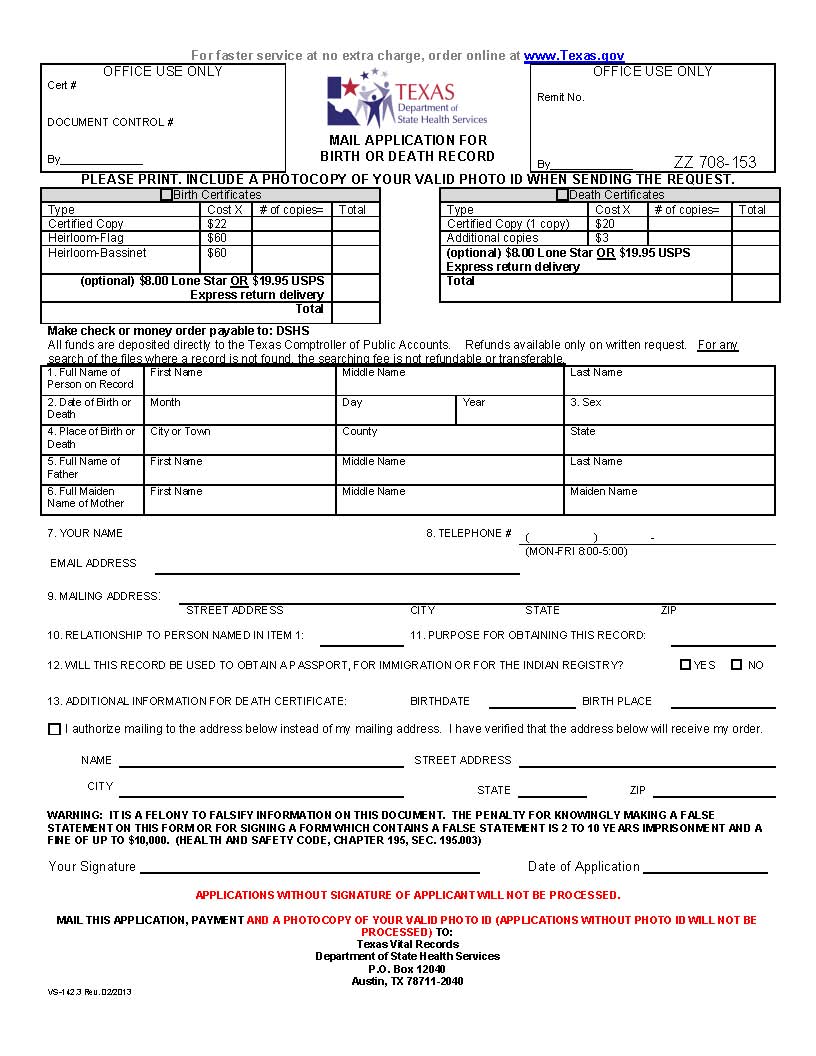
A death certificate serves as an official record of an individual’s passing, certifying the cause, date, and location of death. This seemingly simple document is, in fact, the linchpin for a multitude of subsequent legal, financial, and personal actions. Without it, beneficiaries cannot settle estates, claim life insurance, access bank accounts, transfer property, or even manage social security benefits. For global citizens or those with family members residing internationally, this document can be critical for cross-border estate management, visa applications, or proof of eligibility for certain international benefits, underscoring its relevance in a globally connected world. Whether you are a resident of the Lone Star State or an individual who needs to travel to Texas to acquire this vital record, understanding the precise steps and requirements is paramount to ensuring a smooth and efficient process during an undoubtedly challenging time. This comprehensive guide aims to demystify the procedure, providing practical insights, integrating travel tips, and highlighting lifestyle considerations for those undertaking this necessary task in Texas.
Understanding the Importance: More Than Just a Document
Before delving into the operational specifics, it’s essential to grasp the multifaceted importance of a death certificate. It is far more than a mere piece of paper; it’s a legal gateway, a historical record, and a necessary tool for numerous administrative and personal transitions. For individuals accustomed to a global lifestyle or those managing cross-cultural affairs, the implications of this document can extend far beyond state lines, impacting international travel, foreign investments, and familial connections across continents.
Legal and Financial Repercussions
The immediate and most significant role of a death certificate is its legal and financial utility. Upon the passing of a loved one, this document becomes the cornerstone for resolving their earthly affairs. It is universally required for:
- Estate Settlement: The probate court, whether in Texas or another state where the deceased held assets, will require a certified copy to begin the process of validating wills, appointing executors, and distributing assets according to the deceased’s wishes or state law.
- Life Insurance Claims: Insurance companies mandate a death certificate to process claims, providing beneficiaries with crucial financial support at a difficult time. Without it, these claims remain in limbo, preventing access to funds intended for funeral expenses, living costs, or future planning.
- Accessing Bank Accounts and Financial Assets: Banks, credit unions, and other financial institutions will need proof of death to release funds, close accounts, or transfer ownership to designated beneficiaries.
- Transferring Property and Titles: Real estate, vehicle titles, and other personal property cannot be legally transferred or sold without an official death certificate. This can be particularly relevant for those managing properties across multiple states or even countries, impacting their future accommodation and investment portfolios.
- Notifying Government Agencies: Agencies such as the Social Security Administration, the Department of Veterans Affairs, and the Internal Revenue Service require a death certificate to cease benefits, address outstanding tax issues, and manage pension plans. This directly affects the financial lifestyle and planning for surviving spouses or dependents.
For many, navigating these complex financial landscapes can be overwhelming. The swift and accurate acquisition of a death certificate can significantly alleviate the administrative burden, allowing families to focus on personal matters rather than prolonged bureaucratic hurdles.
International Considerations and Travel
For beneficiaries living abroad, or for those whose loved ones held assets or citizenship in multiple countries, the death certificate issued in Texas takes on an international dimension. This is where the themes of travel and global lifestyle intersect powerfully with administrative necessity.
- Cross-Border Estate Management: If the deceased owned property, maintained bank accounts, or had investments in other countries, an apostilled or internationally certified death certificate from Texas may be required by foreign legal systems. This often necessitates coordination with foreign consulates and can involve international travel for family members or legal representatives.
- Visa and Immigration Processes: In certain immigration or visa application scenarios, particularly for spouses or dependents, a death certificate may be required to prove a change in marital status or to support a new application.
- Repatriation of Remains: While highly sensitive, if the deceased is to be interred or cremated in a country other than the United States, the Texas death certificate is a fundamental document for the international transport of remains, a process that inherently involves significant travel and logistical planning.
- Family Travel and Support: The emotional toll of a loss often leads family members to travel from distant destinations to Texas to pay their respects and assist with arrangements. The period immediately following a death can involve significant travel, and the certificate plays a role in formalizing many subsequent steps that might require further journeys.
Understanding these broad implications highlights why securing a death certificate efficiently is a critical component of responsible life management, both locally and within a global context. It empowers individuals to move forward, whether that involves settling estates, planning future travels, or simply finding closure.
Navigating the Process: Key Steps in Texas
The procedure for obtaining a death certificate in Texas is standardized but requires attention to detail. For those who may be visiting the state specifically for this purpose, understanding each step is vital for a productive trip. Our aim is to guide you through the bureaucratic landscape, ensuring your visit is as efficient and stress-free as possible.
Who Can Apply and What You Need
Texas law restricts who can obtain a certified copy of a death certificate to protect privacy. Generally, only immediate family members or legal representatives are eligible.
Eligible Individuals (Qualified Applicants):
- The deceased’s spouse.
- A parent or guardian of the deceased.
- A child or sibling of the deceased.
- A grandparent of the deceased.
- A legal representative (e.g., an attorney) acting on behalf of an eligible person.
- Funeral directors (for a limited time after death, to assist families).
Required Information and Documents:
When you apply, whether in person or by mail, you will need to provide specific information and identification. If you are traveling to Texas, ensure you have these documents securely with you.
- Proof of Identity: A valid government-issued photo ID (e.g., driver’s license, passport). For out-of-state or international visitors, a passport is often the most universally accepted form of identification.
- Proof of Relationship: Documents establishing your relationship to the deceased (e.g., marriage certificate for a spouse, birth certificate for a child, or court order for a legal guardian).
- Information about the Deceased: Full name, date and place of death, and the names of the parents (including mother’s maiden name).
- Application Form: This must be completed accurately. While generally available at the issuing office, some agencies allow you to download and fill out the form in advance, saving time during your visit.
Gathering these documents before you embark on your journey to Texas can significantly streamline your experience. Consider creating a dedicated travel folder for all necessary paperwork.
Locating the Right Authority
In Texas, death certificates are primarily managed by two levels of government: the state vital statistics office and local county clerks. The choice of where to apply often depends on where the death occurred and your convenience.
- Texas Department of State Health Services (DSHS) – Vital Statistics Unit: This is the central repository for all vital records in Texas. If you are uncertain where the death was registered or prefer a single point of contact for the entire state, applying through the DSHS is an option. Their main office is located in Austin, the state capital. For those traveling to Austin, it offers a chance to stay in one of its renowned hotels and perhaps explore some of its vibrant tourism attractions, such as Barton Springs Pool or the Texas State Capitol, if time and emotional capacity allow.
- County Clerk’s Office: For deaths that occurred within a specific county, you can often obtain a certificate directly from the county clerk’s office in that county. This can sometimes be a quicker process, especially in less populated areas. Major cities like Houston, Dallas, San Antonio, and Fort Worth have well-staffed county clerk offices that handle these requests. If your travel takes you to Houston, you might find the process efficient, and consider staying near the Harris County offices. Similarly, in Dallas, the Dallas County Clerk’s office is the place to go.
Application Methods and Fees
There are generally three ways to apply for a death certificate, each with its own advantages, particularly for those with travel considerations.
- In-Person Application: This is often the fastest method, especially if you are physically in Texas. You can visit the DSHS office in Austin or the relevant county clerk’s office. You’ll complete the application, present your ID and proof of relationship, and pay the fee. Certified copies are often issued on the spot or within a few business days.
- Tip for Travelers: If you choose this method, plan your trip around the operating hours of the government offices. Most are open Monday to Friday, generally from 8 AM to 5 PM, but it’s always wise to check their specific websites for holiday hours or any temporary closures before traveling.
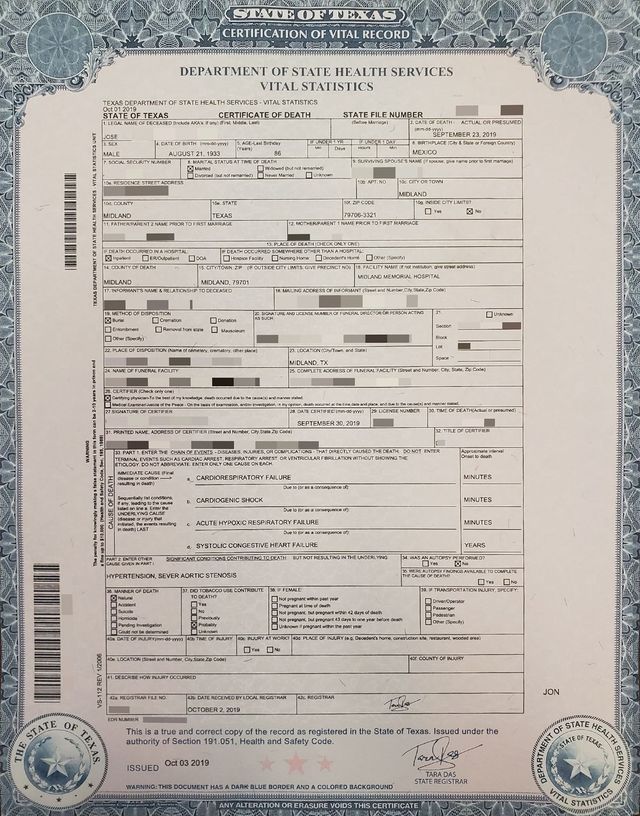
- Mail-In Application: If traveling to Texas is not feasible or desired, you can apply by mail. You’ll need to download the application form from the DSHS website or the relevant county clerk’s website, complete it, have your signature notarized, and mail it along with photocopies of your ID, proof of relationship, and a check or money order for the fees.
- Consideration: This method takes longer due to postal transit times and processing at the office, typically several weeks. For urgent matters, this might not be the best option.
- Online Application: While you cannot directly apply through the official Texas DSHS website for a death certificate, authorized third-party vendors often partner with the state to offer online application services. These services typically charge an additional processing fee but can be convenient for those unable to visit in person or mail documents.
- Caution: Always ensure you are using a reputable, state-authorized third-party vendor to protect your personal information and ensure the legitimacy of the certificate.
Fees: The cost for a death certificate can vary slightly between the state and county offices but is generally consistent. The initial certified copy costs approximately $21, with additional copies costing around $4 each. Payment methods typically include cash (for in-person), check, money order, or credit/debit card (though card payments may incur a service fee). Factor these fees into your travel budget, especially if you anticipate needing multiple copies.
Practical Considerations for Out-of-State Applicants and Visitors
For individuals residing outside of Texas, the process of obtaining a death certificate inherently involves elements of travel and accommodation. This section integrates practical advice for planning your trip, managing your stay, and even finding moments of solace or cultural engagement amidst a challenging time.
Planning Your Journey to Texas
Your journey to Texas will likely center around one of the state’s major metropolitan areas, depending on where the death occurred or where you choose to apply.
- Air Travel: Texas boasts several major international airports. If you’re heading to Dallas or Fort Worth, Dallas/Fort Worth International Airport (DFW) is a primary hub. For Houston, George Bush Intercontinental Airport (IAH) is the main gateway. Austin-Bergstrom International Airport (AUS) serves Austin, and San Antonio International Airport (SAT) caters to San Antonio. Consider booking flexible tickets during such sensitive times, as plans can change unexpectedly.
- Ground Transportation: Upon arrival, you’ll need to navigate to your accommodation and the relevant government offices. Ride-sharing services, taxis, and rental cars are readily available at all major airports. In cities like Austin and Houston, public transportation options exist but may not always be the most direct or efficient route to government buildings, which are often located in downtown areas.
Accommodation Options for Your Stay
Choosing the right accommodation can significantly impact your comfort and ease during what is likely a stressful period. Texas offers a vast range of hotels and accommodation types, catering to various budgets and preferences.
- Luxury and Comfort: If your lifestyle allows, opting for a higher-end hotel can provide a much-needed sanctuary. In Austin, consider the historic The Driskill or the modern elegance of the Omni Austin Hotel Downtown, both conveniently located near the Texas State Capitol and state offices. In Dallas, the Ritz-Carlton, Dallas or Hotel Crescent Court offer exceptional service.
- Mid-Range and Budget-Friendly: For those mindful of budget travel, numerous reputable chains offer comfortable stays. Brands like Courtyard by Marriott, Hilton Garden Inn, or La Quinta Inn & Suites can be found throughout all major cities, often with good proximity to business districts.
- Extended Stays and Apartments: If your stay might extend beyond a few days, consider accommodation options with kitchenettes and more space, such as Homewood Suites by Hilton, Residence Inn by Marriott, or even short-term rental apartments through platforms that align with your lifestyle. This can be particularly beneficial for families traveling together.
- Proximity to Offices: When booking, prioritize hotels or apartments that are a short drive or even walking distance from the specific Texas DSHS office or county clerk’s office you plan to visit. This minimizes stress related to traffic and parking.
Embracing Local Culture and Landmarks Amidst Difficult Times
While the primary purpose of your trip is solemn, allowing yourself a moment for quiet reflection or an appreciation of local culture can be therapeutic. Texas offers a wealth of landmarks and unique tourism experiences.
- Austin: After visiting the DSHS, a peaceful walk around Zilker Park or along Lady Bird Lake can offer a moment of tranquility. The city’s famous food truck scene also provides accessible and comforting meals.
- San Antonio: The historic Riverwalk offers a serene environment for an evening stroll, and a visit to The Alamo provides a connection to Texas’ rich history, a reminder of the enduring human spirit.
- Houston: The Museum District provides a quiet escape, with institutions like the Museum of Fine Arts or the Houston Museum of Natural Science. The city’s diverse culinary scene also offers opportunities for comfort food from various cultures.
- Dallas: A visit to the Dallas Arts District or a quiet moment at Klyde Warren Park can offer respite. The Sixth Floor Museum provides a profound historical experience for those inclined to reflect on national memory.
These brief engagements with the local environment can provide a much-needed break from the emotional and administrative burden, supporting mental well-being during your visit.
Working with Professionals and Expedited Services
Sometimes, the circumstances surrounding a death certificate request are complex, or the need is urgent. In these scenarios, professional assistance and expedited services become invaluable, particularly for those managing from a distance or with tight travel schedules.
The Role of Funeral Homes and Attorneys
For many families, funeral homes serve as the primary point of contact and assistance in the immediate aftermath of a death. They often initiate the death certificate process.
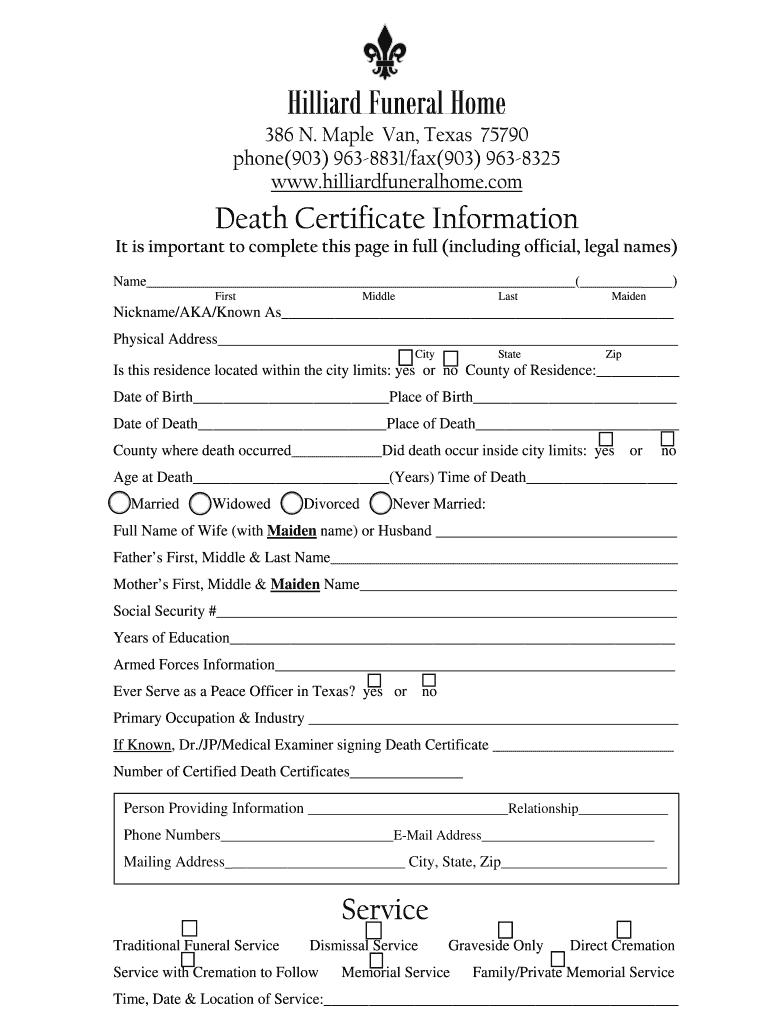
- Funeral Homes: In Texas, the funeral director is typically responsible for obtaining the pronouncement of death, gathering necessary information for the death certificate (such as personal details and cause of death from the attending physician or medical examiner), and submitting the initial application to the local registrar. They can usually order multiple certified copies on behalf of the family, simplifying the process for you. If you’re coordinating from afar, establishing clear communication with the funeral home can save you a trip or expedite the initial phase.
- Attorneys: For complex estates, beneficiaries residing overseas, or disputes, retaining a Texas-licensed attorney specializing in probate or estate law can be highly beneficial. An attorney can act as your legal representative, submitting the death certificate application on your behalf, navigating any legal intricacies, and ensuring all subsequent estate matters are handled correctly. This professional service can be an essential part of a “premium lifestyle” approach to managing difficult administrative tasks, freeing you to focus on family and emotional well-being without the added stress of bureaucracy.
Expedited Requests and Urgent Travel Needs
While standard processing times can take several weeks (especially for mail-in requests), there are provisions for expedited services, usually for an additional fee.
- Urgency for International Travel or Legal Matters: If you require the death certificate immediately for international travel (e.g., to repatriate remains, settle an overseas estate, or address an urgent visa issue), you can often request expedited processing.
- How to Request Expedited Service: Typically, you would indicate the need for expedited service on your application form and be prepared to pay the additional fee. For in-person applications, this means you might receive it within a day or two. For mail-in requests, it shortens the processing time significantly, though you still need to account for mailing time. Always verify with the DSHS or county clerk’s office the exact procedures and current fees for expedited services.
Navigating the loss of a loved one is undeniably one of life’s most challenging experiences. The administrative tasks that follow, particularly obtaining official documents like a death certificate, add another layer of complexity. However, by understanding the process, preparing adequately, and leveraging available resources—including the option to travel to Texas and utilize local amenities—you can manage this critical responsibility efficiently. Whether you are planning a focused administrative trip or are a Texas resident facing this task, equipping yourself with knowledge transforms a potentially daunting challenge into a manageable one, allowing you to honor the memory of your loved one and confidently move forward with the necessary life transitions.
LifeOutOfTheBox is a participant in the Amazon Services LLC Associates Program, an affiliate advertising program designed to provide a means for sites to earn advertising fees by advertising and linking to Amazon.com. Amazon, the Amazon logo, AmazonSupply, and the AmazonSupply logo are trademarks of Amazon.com, Inc. or its affiliates. As an Amazon Associate we earn affiliate commissions from qualifying purchases.