
The vibrant tapestry of the United States is woven with countless stories of discovery, struggle, independence, and integration. Among these, few narratives are as colorful and captivating as that of Texas. Today, Texas stands as a beacon of diverse culture, unparalleled natural beauty, and a fierce independent spirit, all of which are deeply rooted in its tumultuous journey to statehood. For any discerning traveler or history enthusiast planning a trip to this magnificent state, understanding its unique path into the Union is essential. It’s a story that not only explains the origins of its famous “Lone Star” identity but also enriches the experience of visiting its many historical landmarks, bustling cities, and serene landscapes.
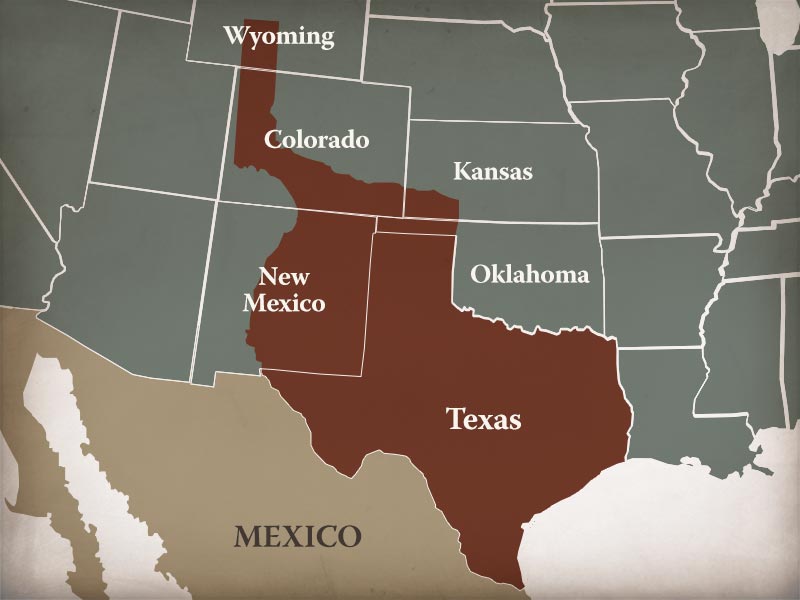
So, when did Texas officially become part of the United States? The answer, while seemingly straightforward – December 29, 1845 – belies a complex, dramatic, and pivotal period in North American history. This date marks the culmination of a decades-long saga involving multiple empires, a bloody revolution, and fervent political debate, ultimately shaping the face of the United States and leaving an indelible mark on the global stage. Exploring this history offers profound insights into the Texan character, its tourism appeal, and the very fabric of American expansion.
From Empires to Independence: The Genesis of the Lone Star State
To truly appreciate Texas’s entry into the United States, one must first journey back to its origins under various flags. Long before it was the 28th state, the land that would become Texas was a contested territory, molded by the ambitions of European powers and the resilience of indigenous peoples.
Under Spanish and Mexican Rule
For centuries, much of what is now Texas was claimed by Spain, forming a vast, sparsely populated frontier of New Spain. The Spanish left an enduring legacy, visible in the architecture of historic missions like those in San Antonio – most famously the Alamo – and the rich traditions woven into Texan culture and language. When Mexico won its independence from Spain in 1821, Texas became part of the new Mexican Empire, then later the Republic of Mexico.
During this period, to bolster development and create a buffer against indigenous tribes, Mexico encouraged immigration from the United States. This led to an influx of Anglo-American settlers, primarily from the southern U.S., drawn by generous land grants offered by impresarios like Stephen F. Austin, often referred to as the “Father of Texas.” These early settlers, while initially pledging loyalty to Mexico, brought with them distinct cultural practices, languages, and political expectations that would soon clash with Mexican governmental policies. Today, visitors can still explore sites like Washington-on-the-Brazos State Historic Site, where key decisions during this period were made, offering a poignant look at the birth of a new nation.
The Texas Revolution and the Republic of Texas
Tensions escalated throughout the 1830s as Mexico sought to centralize power and restrict the freedoms of its Texan population, particularly regarding slavery and self-governance. The spark ignited in 1835, leading to the Texas Revolution. Iconic battles unfolded, etching names like Gonzales, the Alamo, and Goliad into the annals of history.
The struggle for independence culminated dramatically on April 21, 1836, at the Battle of San Jacinto. Under the command of General Sam Houston, the Texan army achieved a decisive victory against General Santa Anna‘s Mexican forces, securing independence for Texas. The San Jacinto Battleground State Historic Site, with its towering monument, is a powerful landmark that allows visitors to step back in time and reflect on this pivotal moment.
For nearly a decade following the revolution, Texas existed as an independent nation: the Republic of Texas. This period (1836-1845) saw presidents like Sam Houston and Mirabeau B. Lamar navigate the challenges of nation-building, including establishing a government, securing borders, and attempting to gain international recognition. The Republic’s short but impactful existence shaped the independent spirit and unique cultural identity that still defines the “Lone Star State” today. For travelers interested in diving deeper into this era, the Texas State Capitol in Austin, though built after annexation, stands as a symbol of Texan pride and history, with numerous historical markers and exhibits throughout the city.
The Road to Annexation: Debates and Diplomacy
Even before its independence, many Texans harbored desires for annexation by the United States. The appeal was clear: economic stability, protection from Mexico, and a shared cultural heritage. However, the path to joining the Union was fraught with domestic and international complications.
U.S. Hesitation and Shifting Political Sands
The prospect of annexing Texas was a contentious issue within the United States for several reasons:
- Slavery Debate: Texas was a slaveholding territory, and its admission as a slave state would upset the delicate balance of power between free and slave states in the U.S. Congress. This issue fueled intense political battles, primarily along sectional lines.
- Fear of War with Mexico: Mexico consistently refused to recognize Texan independence and warned that annexation would be considered an act of war. U.S. Presidents were wary of engaging in a conflict with Mexico, especially given the significant costs and potential for territorial disputes.
- Economic Concerns: The Republic of Texas was in considerable debt, and some in the U.S. worried about inheriting these financial burdens.
Despite these hesitations, the idea of “Manifest Destiny”—the belief that the United States was destined to expand across the North American continent—gained significant traction. Supporters of annexation saw Texas as a crucial piece in this westward expansion, offering valuable land and a strategic position along the Gulf of Mexico.
The Final Push for Annexation
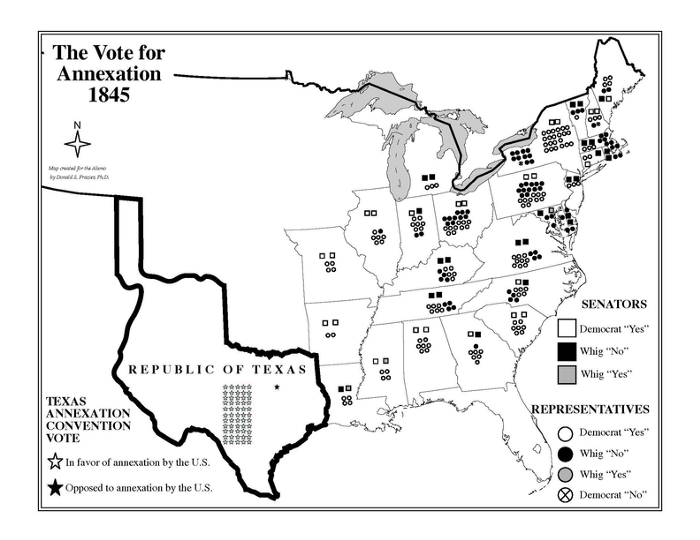
The political landscape shifted dramatically with the election of James K. Polk to the presidency in 1844. Polk, a staunch advocate of expansion, ran on a platform that included the annexation of Texas and the acquisition of Oregon. His victory was widely interpreted as a mandate for expansionist policies.
In a swift move before Polk even took office, outgoing President John Tyler used a joint resolution of Congress to offer annexation to Texas. This method avoided the two-thirds Senate vote required for a treaty, signaling the strong political will to bring Texas into the Union. The people of Texas overwhelmingly approved the annexation proposal, eager to escape their precarious independent status.
December 29, 1845: Texas Becomes the 28th State
The formal act of annexation occurred on December 29, 1845, when President James K. Polk signed the resolution admitting Texas to the Union as the 28th state. The final transfer of authority took place in Austin on February 19, 1846, with Anson Jones, the last president of the Republic of Texas, formally lowering the Lone Star flag and raising the U.S. flag. His poignant words, “The great drama is closed,” marked the end of an era and the beginning of another.
Immediate Aftermath: The Mexican-American War
As predicted, Mexico viewed the annexation as an invasion of its territory and an act of war. The border between Texas and Mexico became a major point of contention, with the U.S. claiming the Rio Grande as the boundary and Mexico asserting its claim to the Nueces River. This dispute, coupled with other territorial ambitions, ultimately led to the Mexican-American War (1846-1848). The war, largely fought on Mexican soil, resulted in a decisive U.S. victory and the acquisition of vast territories, significantly expanding the United States from the Atlantic to the Pacific. This dramatic expansion reshaped the North American map and laid the groundwork for future development, including the establishment of many iconic Western National Parks and vast swaths of prime travel destinations.
Exploring the Legacy: Texas Today for the Modern Traveler
The historical journey of Texas profoundly impacts its present-day appeal as a premier travel destination. From its distinct culture and cuisine to its impressive landmarks and diverse lifestyle offerings, every aspect of the state tells a story rooted in its unique past.
Historical Landmarks and Cultural Experiences
Visiting Texas is an immersion in living history. The sites associated with its journey to statehood are meticulously preserved and offer incredible experiences for tourists:
- The Alamo (San Antonio): This iconic mission-fortress is a must-see. Its hallowed grounds commemorate the fierce battle for Texan independence and serve as a powerful symbol of courage. While in San Antonio, explore the Riverwalk and the other Spanish Missions, a UNESCO World Heritage Site, to delve deeper into the region’s colonial past.
- San Jacinto Battleground State Historic Site (Houston): Home to the tallest masonry column in the world, this site marks the decisive victory of the Texas Revolution. The museum offers detailed exhibits, and visitors can ascend the monument for panoramic views.
- Washington-on-the-Brazos State Historic Site: Often called the “Birthplace of Texas,” this site allows visitors to explore the replica of the building where the Texas Declaration of Independence was signed.
- Texas State Capitol (Austin): One of the most impressive state capitols in the U.S., this national historic landmark offers free tours and insights into Texan governance and history.
Beyond these historical sites, Texan culture itself is a testament to its multifaceted past. The fusion of Mexican, Spanish, Native American, and Anglo-American influences creates a vibrant lifestyle. From the rich flavors of Tex-Mex cuisine and authentic BBQ to the sounds of country music and the enduring spirit of cowboy culture, these experiences are deeply embedded in the state’s historical narrative. Towns like Gruene and Fredericksburg offer unique glimpses into European settlement and a charming small-town Texas feel.
Accommodation and Travel Planning
For those planning a historical tour of Texas, a wide array of accommodation options awaits. Major cities like Houston, Dallas, San Antonio, and Austin boast world-class hotels ranging from luxury resorts (think Ritz-Carlton or Four Seasons) to boutique hotels and budget-friendly suites. Many of these are conveniently located near historical districts, providing easy access to landmarks.
- Luxury Hotels: For a grand experience, consider historic hotels in downtown Dallas or elegant properties along the San Antonio Riverwalk. These often blend modern amenities with classic charm.
- Boutique Stays: Austin’s vibrant districts offer unique boutique hotels that reflect the city’s artistic and independent spirit, perfect for travelers seeking local culture.
- Vacation Rentals: For families or longer stays, apartments and villas are available through platforms like Airbnb or VRBO, offering a home-away-from-home experience, especially in scenic areas like the Texas Hill Country.
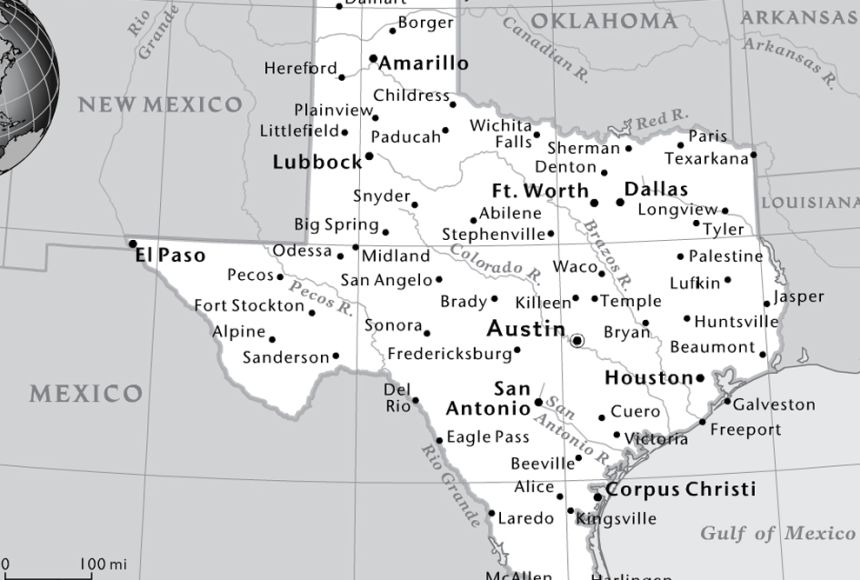
When planning your trip, consider a road trip itinerary that connects these historical landmarks, allowing you to appreciate the vastness and diversity of the Texan landscape. From the cultural richness of its cities to the wild beauty of Big Bend National Park in West Texas, the state offers something for every type of traveler. Whether you’re interested in luxury travel, a budget-friendly adventure, or a family trip steeped in history, Texas provides endless opportunities for exploration and discovery, all shaped by its incredible journey to become part of the United States.
In conclusion, Texas officially became part of the United States on December 29, 1845. This date represents not just a political act but the culmination of a dramatic historical narrative that continues to define the state’s vibrant identity. Understanding this past enriches every visit, turning a simple trip into a profound journey through time, culture, and the enduring spirit of the Lone Star State.
LifeOutOfTheBox is a participant in the Amazon Services LLC Associates Program, an affiliate advertising program designed to provide a means for sites to earn advertising fees by advertising and linking to Amazon.com. Amazon, the Amazon logo, AmazonSupply, and the AmazonSupply logo are trademarks of Amazon.com, Inc. or its affiliates. As an Amazon Associate we earn affiliate commissions from qualifying purchases.