
For many, the very notion of snow in Texas sounds like a paradox, a weather anomaly more akin to a fairytale than a frequent occurrence. The Lone Star State, synonymous with scorching summers, vast deserts, and a distinct Southern charm, isn’t typically associated with frosty landscapes or winter wonderland scenes. Yet, delve into its diverse climate history, and you’ll uncover moments when a rare white blanket transformed iconic cities and sprawling plains alike, much to the surprise and delight (or sometimes, disruption) of its inhabitants and visitors.
The question, “When was the last time it snowed in Texas?” is trickier than it seems, largely because Texas is a land of incredible geographical and climatic diversity. What might be a regular winter occurrence in the northern Panhandle is a once-in-a-decade spectacle for residents in Houston or San Antonio. For travelers planning a winter escape to Texas, understanding this nuanced weather pattern is key to setting expectations and packing the right gear – whether that’s for mild, sunny days or the rare, magical snowfall.
This article will delve into the meteorological marvels of Texas snow, exploring its frequency across different regions, recounting significant recent snowfall events in major cities, and discussing the unique impact these occurrences have on local life, travel, and tourism. We’ll also provide insights into experiencing Texas during the winter months, offering guidance for those looking to explore its myriad attractions, from bustling urban centers to serene natural landmarks, regardless of whether snowflakes are falling.
The Elusive White Blanket: Understanding Snow in Texas
The perception of Texas as perpetually warm isn’t entirely unfounded. Its vast southern expanse, particularly along the Gulf Coast, experiences subtropical climates characterized by mild winters and high humidity. This proximity to the warm waters of the Gulf of Mexico plays a significant role in moderating temperatures, making widespread, accumulating snowfall a rarity in many parts of the state. For snow to fall and stick, a perfect alignment of cold air at the surface and throughout the atmospheric column, coupled with sufficient moisture, is required – a meteorological tightrope walk that often eludes the majority of Texas.
However, the size of Texas means that one region’s weather is not indicative of another’s. While south Texas basks in winter sunshine, the northern reaches, particularly the Texas Panhandle, regularly experience freezing temperatures and receive annual snowfall comparable to states much further north. This dramatic climatic variation creates distinct winter experiences across the state, influencing everything from local agriculture to travel patterns and the types of accommodations visitors seek out.
A Tale of Two Climates: North vs. South Texas Winters
The geographical divide within Texas creates vastly different winter landscapes. In the northern Panhandle, cities like Amarillo and Lubbock typically receive several inches of snow each winter, sometimes enduring significant blizzards. Here, snow is an expected part of the seasonal cycle, shaping local infrastructure, outdoor activities, and even the architectural styles of homes and businesses. For those seeking a genuine winter experience within the Lone Star State, the Panhandle offers the most reliable chance to see and play in the snow. Travelers might find cozy bed and breakfasts or modern hotels in Amarillo or Lubbock offering a comfortable base for exploring the region’s winter beauty, perhaps visiting the Palo Duro Canyon State Park under a dusting of white.
Conversely, in South Texas and along the Gulf Coast, a “winter” day might mean temperatures in the 60s or 70s Fahrenheit, perfect for a round of golf or a stroll along the beach at South Padre Island. Snowfall here is exceedingly rare, often melting on contact or accumulating only to trace amounts. When it does occur, it becomes a major news event, a shared community experience, and a unique talking point for visitors who happened to be in town. The anticipation and excitement around a potential snowfall are palpable, making any accumulation, no matter how brief, an unforgettable memory. This dichotomy underscores why the “last time it snowed” varies so wildly across the state, making a statewide answer nearly impossible without qualification.
Tracing Recent Snowfall: When Did Texas Last See Snow?
To truly answer the question, we must look at individual major metropolitan areas and regions, as their snowfall histories are distinct. While snow can fall anywhere in Texas, significant, measurable accumulation in the state’s largest cities is a noteworthy event that captures headlines and captures the imagination of millions.
Houston’s White Christmas and Other Memorable Moments
Houston, the fourth-largest city in the United States and a major global hub, rarely sees snow. When it does, it’s often a light dusting that melts quickly. One of the most iconic recent snowfalls in Houston’s history occurred on December 24, 2004, when the city experienced its first true White Christmas on record, with several inches accumulating. This magical event brought residents out in droves, creating temporary snow angels and impromptu snowball fights amidst palm trees and urban skyscrapers. It was a picturesque scene that momentarily transformed the city into an unexpected winter wonderland, a true boon for local tourism, as many families flocked to popular attractions like Discovery Green or the Museum District to witness the rare sight.
More recently, on December 8, 2017, Houston received another significant snowfall, with parts of the city seeing 1-2 inches. While not as extensive as the 2004 event, it was enough to cover vehicles and lawns, creating stunning photo opportunities and briefly disrupting morning commutes. These rare events underscore the unpredictable charm of Houston winters and become cherished memories for those who experience them. For travelers, staying at one of Houston’s luxurious hotels like the Post Oak Hotel at Uptown Houston or a boutique apartment rental near the Galleria during such an event would offer a truly unique perspective on the city.
Dallas and Fort Worth: Unexpected Winter Wonders
The Dallas-Fort Worth Metroplex, situated further north than Houston and San Antonio, experiences colder winters and a slightly higher chance of snow. However, significant accumulation is still an event. The most recent widespread and impactful snowfall event for DFW occurred as part of the Great Texas Freeze of February 2021. While primarily known for its extreme cold temperatures and power outages, this event also brought several inches of snow, ice, and sleet to the region. Snowfall in Dallas measured upwards of 4 inches in some areas, contributing to impassable roads and extended disruptions.
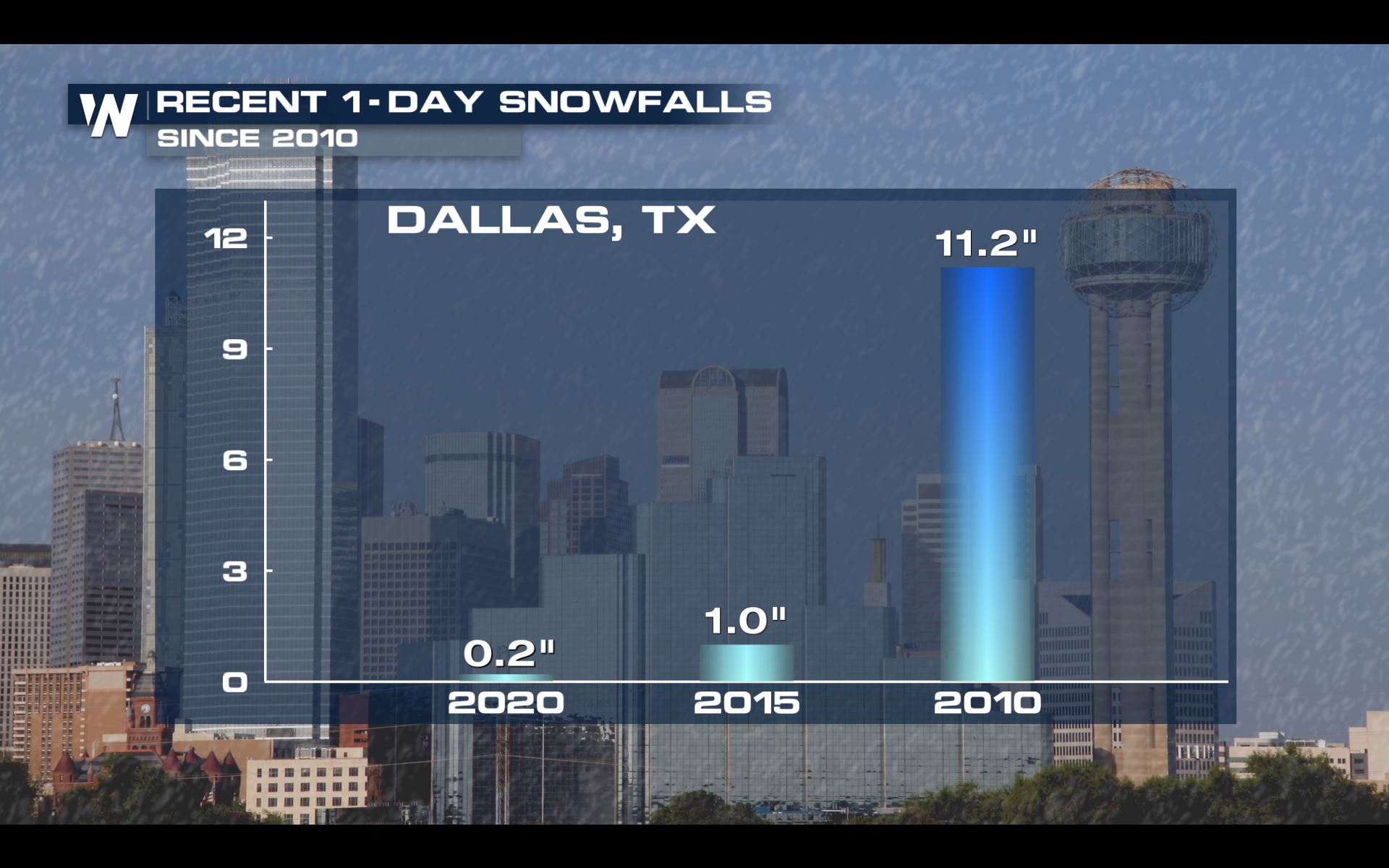
Prior to 2021, Dallas and Fort Worth saw notable snow in February 2010, when a significant winter storm dropped several inches of snow and ice across the metroplex, leading to closures and travel advisories. These events, while memorable, highlight the challenges snow can pose for urban infrastructure not typically designed for such conditions. For those visiting Dallas during a snow event, the Dallas Arts District or Klyde Warren Park take on a serene, almost European charm. Accommodation options, from high-rise hotels in Downtown Dallas to charming Airbnbs in Bishop Arts District, would suddenly offer a front-row seat to a rare and beautiful spectacle.
Austin and San Antonio: A Rare Spectacle
In Central Texas, encompassing cities like Austin, and South Central Texas where San Antonio lies, snow is an even rarer and more celebrated occurrence. Both cities were significantly impacted by the Great Texas Freeze of February 2021, which delivered several inches of snow and ice, causing widespread power outages and water issues. In Austin, snowfall totals ranged from 4-6 inches, transforming the city’s iconic Capitol Building and the University of Texas campus into picturesque winter scenes. San Antonio also saw significant accumulation, with the Riverwalk momentarily silenced and adorned with a rare white coating.
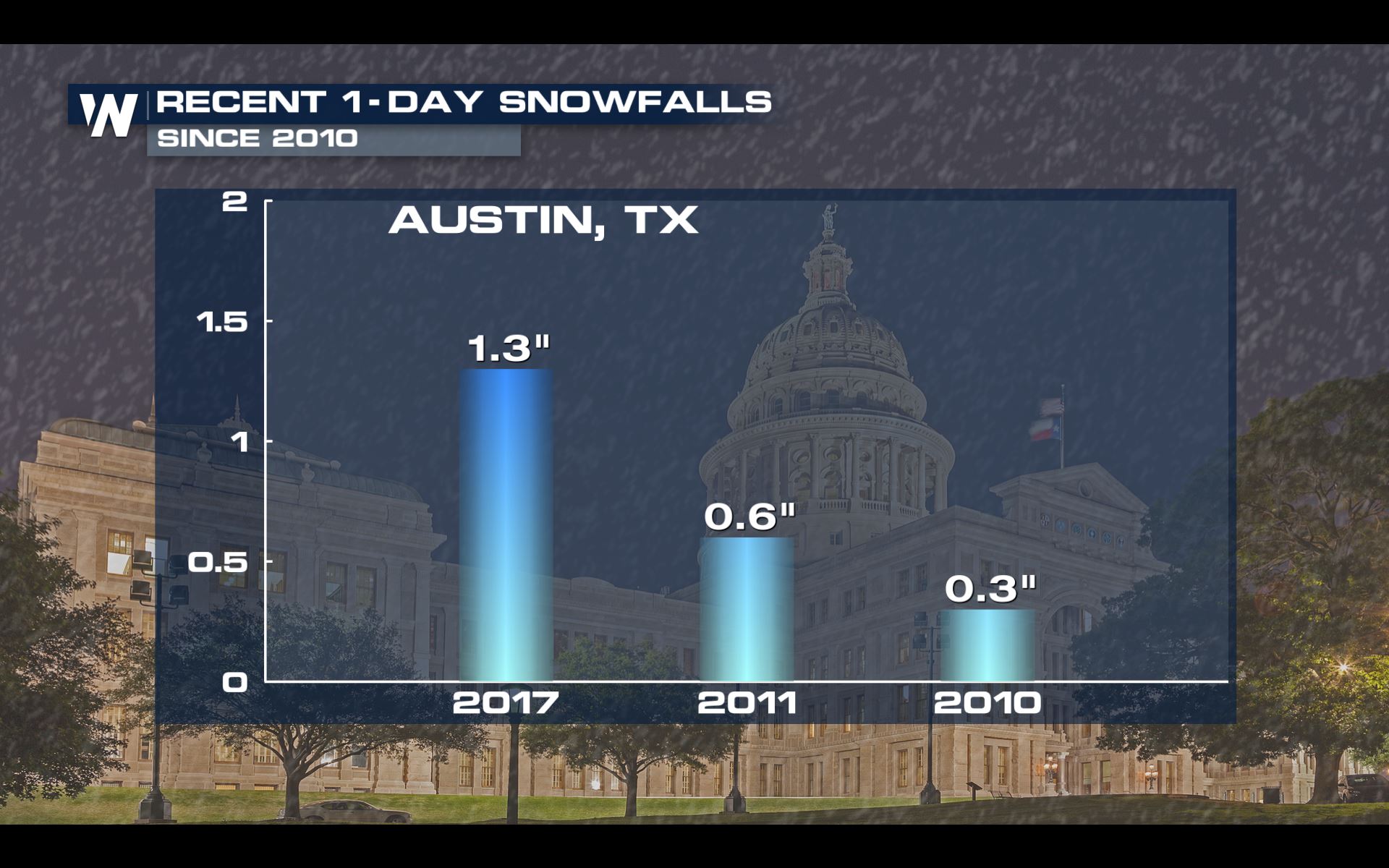
Before 2021, San Antonio experienced a notable snowfall on December 8, 2017, mirroring Houston’s event, with light accumulation that delighted residents. Austin’s last significant snowfall prior to 2021 was in January 2017, a light dusting, and before that, a more substantial event in February 2011. These events, while disruptive, are often met with immense excitement, turning parks into makeshift sledding hills and landmarks like The Alamo or Zilker Park into unique photo opportunities. Tourists staying in Austin’s vibrant downtown hotels or San Antonio’s historic Hotel Contessa along the Riverwalk would find themselves immersed in a once-in-a-lifetime local experience.
The Panhandle’s Regular Rendezvous with Snow
In contrast to the rarity in the major urban centers, the Texas Panhandle often sees snow multiple times each winter. Cities like Amarillo and Lubbock typically receive their first snowfall in late November or December, with additional storms throughout January and February. For example, Amarillo often averages around 17 inches of snow annually, making it a reliable destination for those within Texas seeking winter activities. The last significant snowfall in the Panhandle region could be as recent as February 2024, or any given winter month, depending on the specific weather patterns. This region truly offers a contrasting lifestyle experience to the rest of the state, where winter sports and snow-related activities are more ingrained in the local culture. Travelers interested in experiencing snow can head to the Panhandle, potentially staying at one of the many comfortable hotels or motels, and explore natural attractions like the Caprock Canyon State Park & Trailway under a blanket of white.
The Impact of Snow on the Lone Star State
When snow does grace the landscapes of Texas, particularly in areas unaccustomed to it, the impact is immediate and multifaceted. Beyond the initial awe and excitement, a host of practical challenges and unique social dynamics emerge, affecting everything from infrastructure to the daily lives of residents and the experience of tourists.
The Great Texas Freeze of February 2021 stands as a stark reminder of snow and ice’s potential disruption. The extreme cold, coupled with ice and snow accumulation, pushed the state’s power grid to its limits, leading to widespread outages, water shortages, and significant property damage. Roads became treacherous, and grocery store shelves emptied as residents hunkered down. This event highlighted the critical need for resilient infrastructure and emergency preparedness, especially in a state where such extreme winter weather is typically rare.
However, outside of such extreme scenarios, a moderate snowfall in Texas is often met with a collective sense of joy and wonder. Schools often close, offering children an unexpected day of play. Adults venture out, cameras in hand, to capture the ephemeral beauty of their familiar surroundings transformed. Impromptu sledding hills appear in local parks, and social media fills with images of Texans embracing the rare winter magic. It’s a testament to the state’s resilient and spirited lifestyle, where even a brief encounter with snow becomes a community-wide celebration.
Travel, Accommodation, and Local Culture During a Texas Snow Event
For travelers, an unexpected snow event in Texas can be a mixed blessing. While it offers unparalleled photographic opportunities and a unique travel narrative, it can also lead to significant disruptions. Airports might close or experience extensive delays, roads can become impassable, and local services may be temporarily unavailable. For those already in Texas during such an event, flexibility is key.
Accommodation during a snow event can become a critical factor. Hotels in major cities like Dallas, Houston, and Austin might see a sudden surge in demand from stranded travelers or locals seeking warmth and power. Having a confirmed booking at a reliable hotel or resort with good amenities (especially heating and backup power) becomes invaluable. Boutique hotels in historic districts or luxury suites offering panoramic city views can provide a comfortable, memorable vantage point to watch the rare snowfall. Reviewing accommodation options with robust cancellation policies beforehand is a smart travel tip for any winter journey in Texas.
From a tourism perspective, a snowfall can temporarily alter local culture and activities. Outdoor attractions might be inaccessible, but indoor landmarks like Houston’s Space Center Houston, Dallas’s Perot Museum of Nature and Science, or San Antonio’s numerous Missions (indoors parts) become even more appealing. Local eateries might offer warming specials, and the simple act of sharing hot chocolate with locals can create genuine, heartwarming experiences. Experiencing a Texas city under a blanket of snow is an undeniably unique lifestyle experience, offering a different perspective on its famous places and bustling urban life.
Beyond the Flakes: Experiencing Texas in Winter
While the allure of catching a rare Texas snowfall is undeniable, the state offers a wealth of diverse and engaging experiences during the winter months, even without a single flake in sight. For many, winter is actually the ideal time to explore Texas, offering cooler, more comfortable temperatures for outdoor activities and fewer crowds at popular attractions.
In South Texas and the Rio Grande Valley, winter transforms into a haven for “winter Texans” – visitors escaping colder northern climates. Destinations like South Padre Island offer pleasant beachfront strolls, birdwatching, and fishing, all under mild, often sunny skies. Resorts and apartment rentals along the coast provide excellent long-term stay options for snowbirds, focusing on relaxation and outdoor enjoyment.
West Texas, with its rugged desert landscapes, offers a unique winter adventure. Big Bend National Park and Big Bend Ranch State Park become prime spots for hiking and stargazing, with crisp air and dramatically clear night skies. While snow can occasionally dust the higher elevations of the Chisos Mountains, the region primarily offers a peaceful, mild-weather escape, contrasting starkly with the more humid east. These natural landmarks provide unparalleled opportunities for nature photography and immersive outdoor experiences.
The major cities – Dallas, Houston, Austin, and San Antonio – truly shine in winter. The cooler weather is perfect for exploring their vibrant culinary scenes, world-class museums, historical sites, and bustling shopping districts. San Antonio’s Riverwalk gleams with festive lights, Austin’s live music venues offer cozy warmth, and Dallas and Houston host an array of cultural events, theater productions, and holiday festivals throughout the season. Whether you’re interested in luxury travel with stays at five-star hotels, budget-friendly trips exploring local food trucks, or family adventures visiting theme parks, Texas offers something for every lifestyle.
Planning Your Texas Winter Escape: Tips for Travelers
When planning a winter trip to Texas, keep these tips in mind:
- Check Regional Forecasts: Don’t rely on a single state-wide forecast. Be specific about your destination (e.g., Dallas vs. South Padre Island).
- Pack Layers: Even if snow isn’t expected, winter temperatures can fluctuate dramatically. Be prepared for warm days and surprisingly chilly nights.
- Book Accommodations Flexibly: If traveling during late December through February, consider booking hotels or suites with generous cancellation policies, especially if severe weather is a possibility. Researching hotel reviews and amenities like heated pools or robust Wi-Fi can enhance your stay.
- Road Conditions: If driving through the Panhandle or West Texas in winter, monitor road conditions, as ice and snow can make travel hazardous.
- Embrace the Unexpected: Whether it’s a rare snowfall or a surprisingly warm day in January, Texas in winter often delivers delightful surprises. Be open to adjusting your plans and enjoying the unique experience.
- Explore Local Culture: Take advantage of the pleasant weather to engage with local culture, whether it’s through food tours, historical landmark visits, or exploring vibrant neighborhoods.
In conclusion, while a blanket of snow in Texas remains a relatively rare spectacle for most of the state, it’s a phenomenon that leaves a lasting impression when it does occur. From the regular snowfalls in the Panhandle to the fleeting, magical dustings in Houston or San Antonio, these moments highlight the vast and varied nature of the Lone Star State. For travelers, a winter trip to Texas promises diverse experiences, from sunny beaches to crisp desert trails, with the added, enchanting possibility of witnessing one of nature’s most beautiful, and unexpected, performances.
LifeOutOfTheBox is a participant in the Amazon Services LLC Associates Program, an affiliate advertising program designed to provide a means for sites to earn advertising fees by advertising and linking to Amazon.com. Amazon, the Amazon logo, AmazonSupply, and the AmazonSupply logo are trademarks of Amazon.com, Inc. or its affiliates. As an Amazon Associate we earn affiliate commissions from qualifying purchases.