
For motorcycle riders across the United States and around the world, the question of lane splitting legality is a common one, often stirring debate and confusion. It’s a practice that, depending on your perspective and location, is either seen as a smart way to alleviate traffic congestion and improve rider safety, or a reckless maneuver that endangers everyone on the road. When planning a trip, especially one that involves two wheels, understanding the local traffic laws is paramount. If your journey takes you through the beautiful landscapes and vibrant cities of Alabama, a state renowned for its Southern charm, rich history, and stunning natural beauty, you’ll naturally wonder about its stance on lane splitting.
Alabama, a gem of the Southeast, offers an incredible array of experiences for travelers. From the white-sand beaches of Gulf Shores and the historical significance of Montgomery to the vibrant culture of Birmingham and the space exploration wonders of Huntsville, there’s a destination for every type of traveler. Motorcycle touring is an increasingly popular way to explore these diverse attractions, offering a unique sense of freedom and immersion. However, this freedom comes with the responsibility of adhering to local traffic regulations, including those governing how motorcyclists navigate congested roadways.
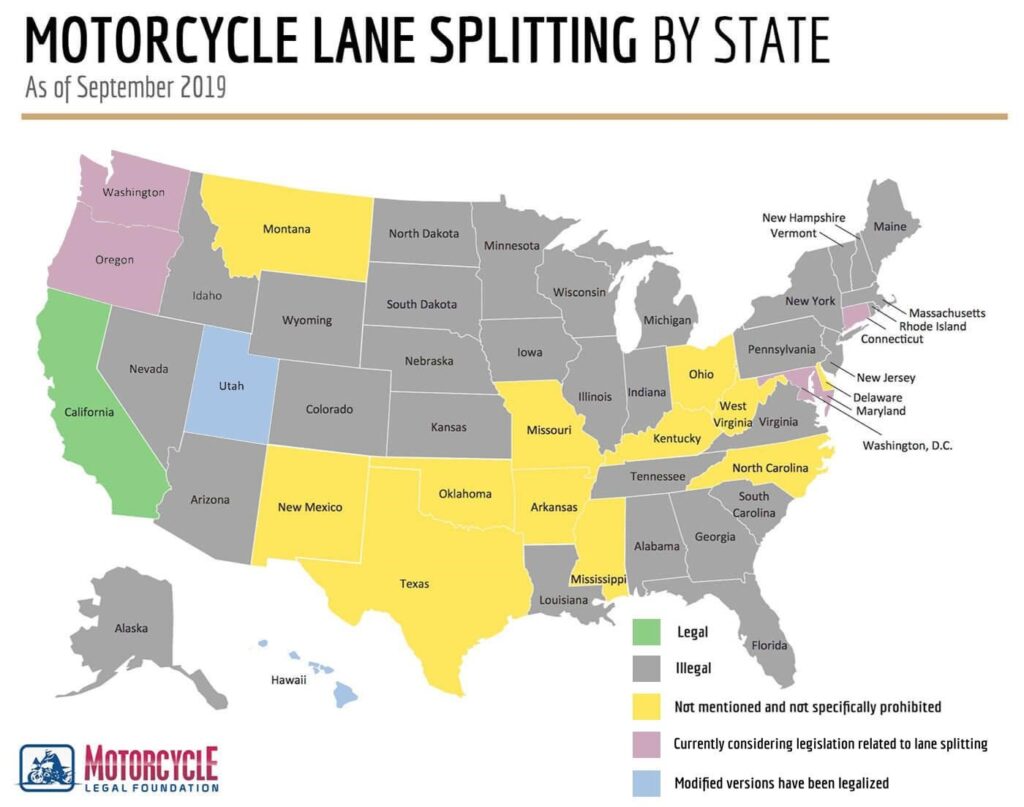
The short answer to whether lane splitting is legal in Alabama is generally no. Alabama law, like that of many other states, does not explicitly permit lane splitting. Instead, its statutes regarding vehicles operating in lanes implicitly prohibit the practice. For any motorcyclist considering a ride through the Heart of Dixie, understanding these regulations is crucial not only for avoiding citations but also for ensuring personal safety and the safety of others on the road.
Understanding Lane Splitting: A Global Perspective
Before delving deeper into Alabama’s specific laws, it’s helpful to first clarify what lane splitting is and why it’s such a frequently discussed topic among the motorcycle community and traffic planners alike. The concept isn’t unique to the United States; variations of it are common practice in many parts of the world, often for reasons of efficiency and safety.
Defining the Practice: Lane Splitting vs. Lane Filtering
At its core, lane splitting refers to the act of a motorcyclist riding between lanes of stopped or slow-moving traffic, usually on multi-lane highways or roads. The rider typically navigates the space between two adjacent lanes of vehicles that are moving at a slower speed than the motorcycle, or are completely stationary.
It’s important to differentiate lane splitting from lane filtering. While often used interchangeably, there’s a subtle but significant distinction. Lane filtering typically refers to a more controlled and slower movement of a motorcycle between stopped vehicles up to the front of a traffic light or intersection. This is often done at low speeds (e.g., under 10-15 mph) and in specific scenarios, often with regulatory permission. Lane splitting, on the other hand, can imply higher speeds and a wider range of traffic conditions, which is where much of the controversy arises. In discussions about legality, however, many states treat both practices under the same umbrella of prohibited “lane sharing” or “driving between lanes.”
The Rationale Behind Lane Splitting Debates
The arguments for and against lane splitting are numerous and often deeply held.
Arguments in favor often cite:
- Reduced Traffic Congestion: Motorcyclists can move through stalled traffic, effectively taking up less space on the road and helping to alleviate bottlenecks. This can be particularly beneficial in densely populated areas or during peak travel times, making cities like Birmingham or Mobile more navigable.
- Enhanced Rider Safety: One of the most compelling arguments is the “rear-end collision” theory. Motorcyclists are highly vulnerable to being rear-ended by other vehicles in stopped or slow-moving traffic. By allowing them to move to the front or filter between lanes, they are less exposed to this common and often severe type of accident.
- Fuel Efficiency and Reduced Emissions: When motorcycles are stationary in traffic, their engines still run, consuming fuel and emitting pollutants. Lane splitting allows them to keep moving, potentially improving fuel efficiency and reducing idling emissions.
- Fairness and Efficiency: Proponents argue that motorcycles, being smaller vehicles, should be allowed to use the available space more efficiently, especially when cars are already occupying more road space than their passenger count might dictate.
Arguments against, or concerns raised, include:
- Increased Accident Risk: Opponents argue that lane splitting introduces new risks, such as side-swipe collisions with inattentive drivers, unexpected lane changes by other vehicles, or opening car doors. The unpredictable nature of traffic flow and human behavior makes navigating tight spaces inherently dangerous.
- Driver Frustration and “Road Rage”: Some car drivers perceive lane splitting as unfair or aggressive, which can lead to negative interactions or even intentional obstruction, creating hazardous situations.
- Lack of Visibility: Motorcyclists are already less visible than larger vehicles. When splitting lanes, they might appear suddenly in drivers’ blind spots, increasing the risk of an accident.
- Difficulty in Emergency Situations: Should an emergency vehicle need to pass, motorcyclists in a lane-splitting scenario might not have sufficient room to move out of the way, impeding first responders.
- Legal Ambiguity: In states where it’s not explicitly allowed, the lack of clear guidelines or enforcement can lead to confusion and inconsistent application of the law.
The debate is complex, balancing rider safety, traffic efficiency, and the concerns of other road users. This global context helps to understand why individual states like Alabama have taken specific legislative stances.
Alabama’s Stance: Navigating the Legal Landscape
Now, let’s focus on the specifics of Alabama law. For any traveler, especially those on two wheels, understanding the legal framework of your destination is crucial for a smooth and enjoyable experience.
The Letter of the Law: What Alabama Statutes Say
Alabama does not have a specific statute that explicitly uses the term “lane splitting” to prohibit or permit the practice. Instead, the legality is inferred from existing traffic laws that govern how vehicles, including motorcycles, must operate within traffic lanes.
The relevant statutes typically include provisions similar to the following, which are common in many states:
- Alabama Code Section 32-5A-80 (Driving on right side of roadway; exceptions): This section generally mandates that vehicles must drive on the right half of the roadway. While it primarily addresses general road use, the spirit of the law emphasizes orderly traffic flow within designated lanes.
- Alabama Code Section 32-5A-81 (Passing vehicles proceeding in opposite directions): While not directly about lane splitting, it speaks to proper passing procedures.
- Alabama Code Section 32-5A-82 (Overtaking and passing vehicles proceeding in same direction): This is perhaps the most pertinent section. It generally requires that “the driver of a vehicle overtaking another vehicle proceeding in the same direction shall pass to the left thereof at a safe distance and shall not again drive to the right side of the roadway until safely clear of the overtaken vehicle.” Crucially, it also states that “the driver of a vehicle may overtake and pass another vehicle upon the right only under conditions stated in this section.” Lane splitting does not generally fall under the permitted conditions for passing on the right.
More directly, laws related to lane usage are often interpreted to prohibit lane splitting. These typically stipulate that vehicles must remain entirely within a single lane and not occupy parts of two lanes. For example, if a motorcyclist rides between two lanes of traffic, they are technically not adhering to the requirement of staying within a single designated lane.
Therefore, under current Alabama law, a motorcyclist who engages in lane splitting could potentially be cited for various infractions, including:
- Unsafe lane changes.
- Driving outside of marked lanes.
- Reckless driving, depending on the speed and manner of the maneuver.
- Improper passing.
The lack of explicit permission means that any movement between lanes of traffic, even at low speeds, is typically viewed as a violation of existing traffic laws designed for conventional vehicle operation. This contrasts sharply with states like California, which explicitly legalized lane splitting, or Arizona, Utah, Montana, and Oklahoma which have legalized lane filtering under specific conditions.
Consequences and Enforcement
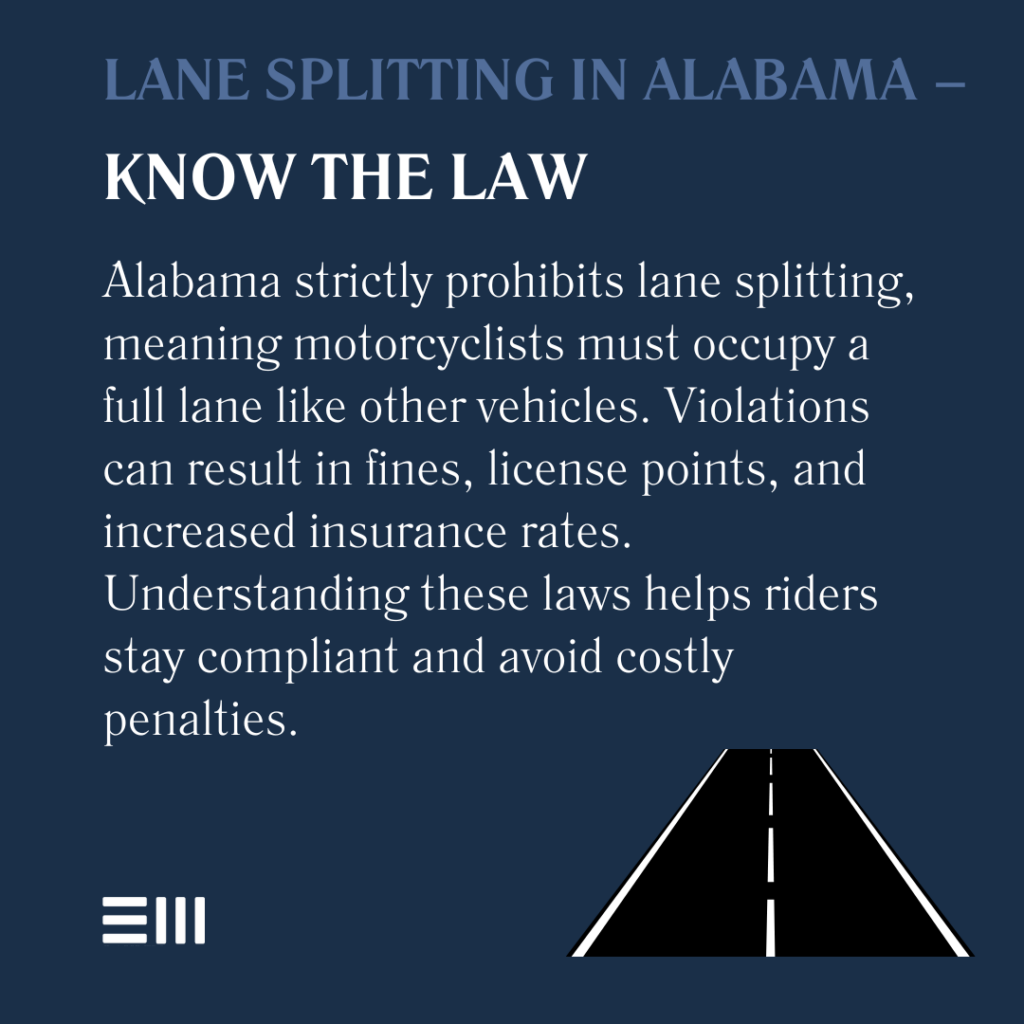
For motorcyclists caught lane splitting in Alabama, the consequences can range from a traffic citation and associated fines to more severe penalties, especially if the maneuver is deemed reckless or contributes to an accident. Points could be added to one’s driving record, potentially leading to increased insurance premiums. In the event of an accident while lane splitting, even if another party is partially at fault, the motorcyclist could be found to be contributing to the collision due to an illegal maneuver, impacting liability and compensation.

Law enforcement officers in Alabama are generally aware of the state’s stance on lane splitting and will enforce existing traffic laws. While individual discretion may vary, the general expectation is that motorcyclists should operate their vehicles within the boundaries of a single lane, just like other vehicles. For visitors, this means that ignorance of the law is not a valid defense, and adherence to Alabama’s traffic code is essential.
Safety, Education, and the Rider’s Responsibility
Regardless of a state’s legal stance on lane splitting, safety should always be the top priority for any motorcyclist. When traveling through Alabama, where the practice is not permitted, understanding and mitigating risks becomes even more critical.
Mitigating Risks on Alabama Roads
Since lane splitting is generally illegal in Alabama, motorcyclists must adjust their riding habits to conform to the law, which inherently includes strategies for navigating traffic without splitting lanes.
- Maintain Safe Following Distances: This is fundamental for all drivers but particularly crucial for motorcyclists. Maintaining ample space between your motorcycle and the vehicle ahead provides more reaction time for unexpected stops or changes in traffic flow.
- Practice Defensive Riding: Always assume other drivers may not see you. Use your headlights, wear bright gear, and be constantly aware of your surroundings, especially in congested areas of cities like Mobile or Tuscaloosa. Anticipate potential hazards, such as sudden lane changes by other vehicles.
- Plan Your Routes: Utilize navigation tools to identify routes with potentially less congestion, especially during peak hours. This can help you avoid situations where the temptation to lane split might arise.
- Stay in Your Lane: Consistently operate your motorcycle fully within a single lane, just as a car would. Resist the urge to weave between vehicles or ride on the lane lines.
- Utilize Mirrors and Head Checks: Continuously check your mirrors and perform head checks before any lane change or maneuver to ensure your blind spots are clear.
For those planning extended motorcycle trips, consider investing in advanced riding courses that focus on hazard perception, emergency braking, and evasive maneuvers. These skills are invaluable regardless of local lane splitting laws.
Rider Education and Awareness
Motorcycle rider education programs, such as those endorsed by the Motorcycle Safety Foundation, are highly recommended for all riders, regardless of experience level. These courses provide critical skills and knowledge that promote safe riding practices. The American Motorcyclist Association (AMA) also advocates for rider education and awareness of laws.
When visiting a new state, it’s always wise to:
- Review Local Motor Vehicle Laws: Check the Alabama Law Enforcement Agency (ALEA) website or consult a local attorney for the most up-to-date and specific regulations pertaining to motorcycles.
- Consult Motorcycle Travel Guides: Many travel guides and online forums specifically for motorcyclists offer practical advice for navigating different regions, including tips on local laws and road conditions.
- Connect with Local Riders: If possible, reach out to local motorcycle clubs or communities in Alabama. They can offer invaluable insights into specific roads, traffic patterns, and informal advice on staying safe and legal.
By prioritizing safety and staying informed about Alabama’s specific traffic laws, motorcyclists can ensure their travels through the state are enjoyable and free from unnecessary legal or safety risks.
Motorcycle Travel in Alabama: Beyond the Law
While the legality of lane splitting is a practical concern, it shouldn’t overshadow the fantastic opportunities for motorcycle travel that Alabama offers. The state is a hidden gem for road trips, with diverse landscapes, historical routes, and welcoming communities. For those seeking adventure and a deeper connection with the destinations they visit, a motorcycle trip through Alabama promises memorable experiences.
Exploring Alabama’s Scenic Byways and Attractions
Alabama boasts a remarkable variety of scenic routes, perfect for motorcycle enthusiasts. From the mountainous terrain of the north to the coastal plains of the south, each region offers a unique riding experience.
- The Appalachian Foothills: In Northern Alabama, riders can explore winding roads through the foothills of the Appalachian Mountains. Areas around Little River Canyon National Preserve and Cheaha State Park (home to Alabama’s highest point) offer breathtaking vistas and challenging curves. The Cherokee Rock Village area also provides excellent riding opportunities.
- The Natchez Trace Parkway: While mostly in Mississippi and Tennessee, a small section of the historic Natchez Trace Parkway extends into northwestern Alabama, offering a serene ride through lush forests and historical sites.
- The Robert Trent Jones Golf Trail: Even if you’re not a golfer, the roads connecting the various courses of the Robert Trent Jones Golf Trail often wind through picturesque countryside, offering enjoyable rides.
- Coastal Rides: For a different experience, the coastal routes around Mobile Bay and Gulf Shores provide flat, scenic rides with ocean breezes and access to fresh seafood. A visit to the USS Alabama Battleship Memorial Park in Mobile is a must for history buffs.
- Motorcycle-Specific Attractions: The Barber Vintage Motorsports Museum near Birmingham is an absolute pilgrimage site for any motorcycle enthusiast. Housing the world’s largest collection of vintage motorcycles, it’s an unparalleled attraction and a fantastic reason to visit the state. Nearby, the Talladega Superspeedway also offers a different kind of motorsport thrill. In Huntsville, the U.S. Space & Rocket Center provides an out-of-this-world experience.
These routes and landmarks highlight Alabama’s rich potential as a premier destination for motorcycle tourism, where the journey itself becomes a significant part of the overall travel experience.
Planning Your Motorcycle Trip: Accommodations and Experiences
A successful motorcycle trip requires thoughtful planning, integrating elements of lifestyle travel, accommodation, and local culture.
- Motorcycle-Friendly Accommodation: When booking your stay, look for hotels or resorts that cater to motorcyclists. Many establishments, from budget-friendly motels to luxury resorts, offer amenities like secure, covered parking, wash-down areas, and sometimes even tools for minor repairs. In cities like Birmingham or Montgomery, you might find options like the Grand Hyatt Hotel or Embassy Suites that understand the needs of riders. For a more unique experience, consider boutique hotels or independent inns in smaller towns, where Southern hospitality shines through. Always check reviews for “motorcycle friendly” mentions.
- Local Culture and Cuisine: Alabama is famous for its distinctive Southern culture and mouth-watering cuisine. Plan stops to sample local barbecue, fresh Gulf seafood, and classic Southern comfort food. Engaging with local communities provides a richer travel experience, moving beyond just the scenic roads.
- Guided Tours and Experiences: For those who prefer a structured adventure, several companies offer guided motorcycle tours through Alabama or the broader Southeast region. These tours often take care of route planning, accommodation, and sometimes even provide support vehicles, allowing riders to simply enjoy the ride and the scenery.
- Packing and Preparation: Given Alabama’s climate, be prepared for varying weather conditions. Summers can be hot and humid, while spring and fall offer ideal riding temperatures. Always pack appropriate riding gear, including rain protection, and carry essential tools and a first-aid kit.
The lifestyle of motorcycle travel is about freedom, discovery, and community. Embracing Alabama’s unique offerings, from its charming hotels and diverse attractions to its rich history and vibrant food scene, ensures a fulfilling adventure on two wheels, all while staying compliant with local laws.
A Look Ahead: The Future of Lane Splitting Legislation
The debate over lane splitting is far from settled across the United States. As traffic congestion continues to be a challenge in urban areas, and as the popularity of motorcycling endures, the conversation around this practice is likely to continue and evolve.
In recent years, more states have begun to consider, and in some cases, pass legislation to legalize lane filtering or lane splitting under specific conditions. Texas, for instance, has had ongoing discussions. These legislative efforts are often driven by lobbying from motorcycle advocacy groups, which present data on safety benefits and congestion relief. They argue that with proper education and clear guidelines, lane splitting can be a safe and effective traffic management tool.
For Alabama, changes to the current legal status of lane splitting would require legislative action. This would involve lawmakers considering the arguments for and against, consulting with traffic safety experts and motorcycle organizations, and ultimately passing new statutes. Until such specific legislation is enacted, the current interpretation of Alabama law means that lane splitting remains prohibited.
Motorcyclists traveling through Alabama should always ride defensively, prioritize safety, and adhere strictly to all local traffic laws. While the open roads and scenic beauty beckon, a responsible approach to riding ensures a safe and enjoyable journey. Staying informed about any potential legislative changes is also a good practice for all riders, as traffic laws can and do evolve over time. For now, when riding in Alabama, remember to keep all wheels within a single lane.
LifeOutOfTheBox is a participant in the Amazon Services LLC Associates Program, an affiliate advertising program designed to provide a means for sites to earn advertising fees by advertising and linking to Amazon.com. Amazon, the Amazon logo, AmazonSupply, and the AmazonSupply logo are trademarks of Amazon.com, Inc. or its affiliates. As an Amazon Associate we earn affiliate commissions from qualifying purchases.