
The question “How close is Alaska to Russia?” often sparks a mix of fascination and disbelief. For many, the idea of two such vast and geopolitically significant nations being within spitting distance seems like a geographical quirk. Yet, the reality is astounding: these two global powers are separated by merely a handful of miles, a narrow stretch of water that conceals a rich tapestry of history, indigenous culture, and profound geopolitical implications. This remarkable proximity transforms Alaska into a unique destination for travelers, offering a glimpse into a world where continents almost touch, where “yesterday” and “tomorrow” coexist on neighboring islands, and where the echoes of ancient migrations blend with the modern-day allure of Arctic adventure.

This article delves deep into the geographical intricacies of the Bering Strait, exploring the exact distance, the islands that serve as stepping stones between the two nations, and the historical narratives that have shaped this frontier. We will uncover how this unique proximity influences travel and tourism in Western Alaska, discuss the accommodation options available for intrepid explorers, highlight the extraordinary landmarks and natural beauty of the region, and illuminate the distinct lifestyle forged by those who call this remote edge of the world home. Prepare to discover a part of the planet where the East truly meets the West in the most dramatic fashion imaginable.
The Geographical Reality: A Stone’s Throw Across the Bering Strait
The sheer proximity between Alaska and Russia is often understated in global maps, which tend to distort polar regions. Zooming in on the Bering Strait reveals a fascinating and surprisingly narrow divide.
A Narrow Divide: The Bering Strait’s Significance
At its narrowest point, the Bering Strait is only about 53 miles (85 kilometers) wide, stretching between the Chukotka Peninsula in Russia and the Seward Peninsula in Alaska, United States. This frigid waterway connects the Chukchi Sea (part of the Arctic Ocean) to the Bering Sea (part of the Pacific Ocean). However, the most iconic representation of this closeness comes in the form of the Diomede Islands.
These two isolated specks of land are the closest geographical points between the two nations. Little Diomede, also known as Igliq, belongs to the United States and is home to a small community of Inupiat people. Just 2.4 miles (3.8 kilometers) to the west lies Big Diomede, or Imaqliq, which is part of Russia and has no permanent civilian population. The channel separating these two islands is so narrow that on a clear day, the shores of Russia are clearly visible from Little Diomede.
Adding another layer of intrigue, the International Date Line runs precisely between Big Diomede and Little Diomede. This unique geographical phenomenon has earned them the nicknames “Tomorrow Island” (Big Diomede) and “Yesterday Island” (Little Diomede). When it’s noon on a Monday on Little Diomede, it’s already noon on a Tuesday on Big Diomede. This temporal divide underscores the stark reality of the political and cultural separation despite the visual proximity. In winter, the Bering Strait often freezes solid, theoretically allowing for a perilous walk across the ice, a feat that has been achieved by a few adventurers, though it remains highly dangerous and strictly illegal.
Beyond the Islands: Alaskan and Russian Shores
While the Diomede Islands represent the ultimate point of contact, the broader coastlines of Western Alaska and the Chukotka Peninsula in Russia share a distinct Arctic environment. This shared geography means a commonality in wildlife, ocean currents, and even indigenous migratory patterns. Polar bears, seals, whales, and various bird species traverse these waters and icy expanses, largely oblivious to the invisible lines drawn by humans.
The rugged coastlines, characterized by tundra, permafrost, and dramatic cliffs, present formidable challenges to human settlement and travel. However, for those seeking genuine adventure, these extreme environments offer unparalleled natural beauty and a chance to witness ecosystems thriving at the edge of the world. The absence of extensive infrastructure on both sides maintains the wild, untouched character of the region, making it a prime destination for specialized expedition cruises and wilderness travel.
A Window into History and Geopolitics
The proximity of Alaska to Russia is not just a geographical curiosity; it’s a profound historical and geopolitical focal point, shaping human migration, international relations, and indigenous cultures for millennia.
From Land Bridge to Cold War Frontier
The story of Alaska and Russia’s connection begins deep in prehistory with the Bering Land Bridge. During the Ice Ages, lower sea levels exposed a vast landmass connecting Asia and North America, facilitating the migration of early humans into the Americas. This land bridge, now submerged beneath the Bering Strait, is one of the most significant landmarks in human history, albeit an invisible one.
Centuries later, the region became a frontier for European exploration and colonization. Vitus Bering, a Danish explorer in Russian service, was among the first to formally chart parts of the strait in 1728, solidifying Russia’s claim to Alaska as “Russian America.” For over a century, Russian fur traders and missionaries established outposts, impacting local culture and traditions. However, the vast distance from Moscow, logistical challenges, and the prospect of war led Russia to sell Alaska to the United States in 1867 for $7.2 million, an event famously known as “Seward’s Folly.” This transaction forever shifted the geopolitical landscape, placing the United States directly across from Russia.
The Cold War transformed the Bering Strait into a highly sensitive military frontier. The skies and waters above and below the strait became areas of intense surveillance, with both sides maintaining military bases and conducting patrols. Civilian travel between the Diomede Islands was virtually nonexistent, and the indigenous communities living there found themselves split by an impenetrable political barrier. While tensions have eased since the end of the Cold War, the strategic importance of this region persists, influencing international shipping routes, resource extraction, and global security.
Cultural Connections and Indigenous Heritage
Despite the political divisions, the peoples indigenous to both sides of the Bering Strait share deep cultural and linguistic ties that predate any national borders. Groups such as the Yup’ik, Inupiat, and Chukchi have traditionally navigated these waters for hunting, fishing, and trade for thousands of years. Their traditional lifestyles and survival strategies are remarkably similar, adapted to the harsh Arctic environment.
Before the Cold War erected an “Ice Curtain,” families and communities frequently crossed the strait to visit relatives, participate in ceremonies, and engage in trade. While modern political realities have significantly curtailed these interactions, efforts by cultural organizations and indigenous groups persist to bridge the divide, fostering understanding and preserving shared heritage. The rich tapestry of local culture in Western Alaska is a direct reflection of this ancestral connection, offering travelers a unique opportunity to learn about traditional Arctic food, art, and storytelling.
Traveling to the Edge: Experiencing the Proximity
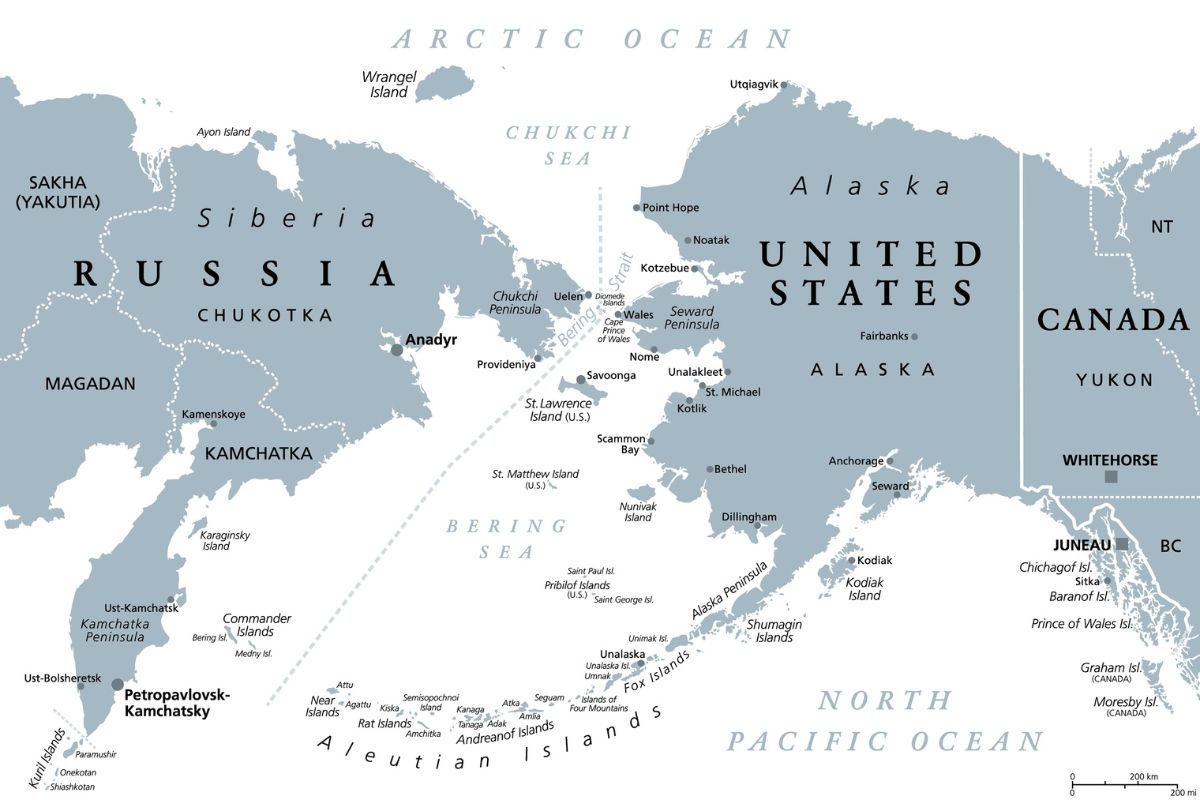
For the adventurous traveler, Western Alaska presents an unparalleled destination. It’s a place where the feeling of being at the very edge of the world is palpable, and the proximity to Russia adds an extra layer of intrigue to every experience.
Alaskan Destinations Near the Frontier
The major hubs for exploring this frontier region are towns like Nome and Kotzebue. These remote communities, while small, serve as gateways to the vast Bering Strait area and offer a fascinating glimpse into authentic Alaskan life.
Nome, famous as the finish line for the Iditarod Trail Sled Dog Race, is a historic gold rush town situated on the Bering Sea coast. Visitors here can explore its unique history, try their hand at gold panning, and witness the rugged beauty of the Seward Peninsula. Accommodation in Nome typically consists of cozy local hotels and guesthouses like the Nome Nugget Inn or the Aurora Inn and Suites, offering essential comforts in a remote setting. These facilities provide warmth, basic amenities, and often a hearty breakfast to fuel your day’s explorations.
Kotzebue, located north of the Arctic Circle, is one of Alaska’s largest Inupiat communities. It’s an excellent place to immerse oneself in indigenous Arctic culture and learn about traditional subsistence lifestyles. Accommodation options might include locally owned hotels or bed and breakfasts that provide a genuine connection to the community. From these towns, bush plane tours can take you closer to the Bering Strait and even over Little Diomede, offering breathtaking views of the Russian coast in the distance – a truly unforgettable experience. Other tourism activities include fishing, wildlife viewing (caribou, muskoxen, Arctic birds), and engaging with local guides who can share stories and insights into Alaskan culture. For those seeking an even deeper immersion into the wilderness, there are a few remote wilderness lodges that cater to adventure travelers and provide an authentic Arctic experience.
Challenges and Opportunities for Cross-Bering Travel
While the visual proximity is undeniable, physically crossing the Bering Strait between Alaska and Russia remains a significant challenge. Current political tensions and stringent visa requirements, particularly since 2022, have made official cross-border travel between the two countries virtually impossible for regular civilians. Historically, there have been brief periods of relaxed visa regimes and cultural exchanges, but these have been intermittent.
The dream of a “Bering Strait tunnel” or bridge, a monumental infrastructure project connecting the continents, has been discussed for over a century. While technologically feasible, the immense cost, extreme environmental conditions, and geopolitical complexities mean it remains a distant vision.
For now, the primary way to “experience” the closeness is from the Alaskan side. Expedition cruises frequently sail the waters of the Bering Sea and Chukchi Sea, sometimes even circling Little Diomede to give passengers a view of Big Diomede and the Russian mainland without formally entering Russian territory. These cruises offer a luxury travel experience with onboard experts, comfortable suites, and often include zodiac landings to explore remote Alaskan coastal areas and observe incredible Arctic wildlife. For the ultimate adventure traveler, a trip to Western Alaska is not just about the destination; it’s about the journey to a place few ever reach, where the geographic boundary of two worlds is a tangible, awe-inspiring reality.
Lifestyle at the Edge of the World
Life in Western Alaska, particularly in communities near the Bering Strait, is a testament to human resilience and adaptation. It’s a lifestyle deeply intertwined with the raw power of the Arctic environment, offering insights into traditional cultures and modern survival in extreme conditions.
Living in Western Alaska
The communities of Western Alaska like Nome, Kotzebue, and the tiny village on Little Diomede exemplify a unique lifestyle. These are places where traditional subsistence hunting and fishing for marine mammals (like seal and walrus) and fish (like salmon and cod) remain vital for survival and cultural identity. The rhythm of life is dictated by the seasons, the movement of wildlife, and the unpredictable nature of the Bering Sea ice.
Residents face significant challenges: extremely harsh winters, high costs of living due to reliance on imported goods, and limited infrastructure. Basic needs like fresh produce are often flown in, making them prohibitively expensive. Yet, the people of this region demonstrate incredible resourcefulness, strong community bonds, and a deep respect for their environment. Their local culture is rich in oral traditions, intricate artwork, and a profound connection to the land and sea. Food plays a central role, with traditional dishes made from caribou, moose, fish, and berries offering a unique culinary experience that reflects the bounty of the Arctic wilderness.
For visitors, experiencing this lifestyle offers more than just sightseeing; it’s an opportunity for cultural immersion. Staying in a local hotel or guesthouse and engaging with residents provides invaluable experiences and insights into adapting to one of the world’s most extreme environments.
A Niche in Luxury Travel and Adventure Tourism?
While Western Alaska is undoubtedly rugged, its unique geographical and cultural appeal is increasingly attracting a niche segment of travelers, including those seeking both adventure tourism and specialized luxury travel experiences.
For the adventure traveler, the region offers unparalleled opportunities for dog sledding (especially around Nome), snowmobiling, ice fishing, and wildlife photography. Bush plane tours provide access to truly remote wilderness areas and offer stunning aerial views of the Bering Strait and the distant Russian coastline. Companies specializing in Arctic expeditions can arrange customized trips with expert guides, ensuring safety and maximizing cultural and natural experiences.
On the luxury travel front, expedition cruises stand out. These typically offer comfortable suites, gourmet dining, and a range of amenities while navigating the Bering Sea. Passengers can enjoy lectures from naturalists and historians, participate in zodiac excursions to remote islands for birdwatching and wildlife viewing, and witness firsthand the dramatic landscapes that define the Arctic. While not directly crossing into Russia, these experiences provide the closest legal and comfortable way to appreciate the geographic intimacy between these two mighty nations. The allure lies in visiting the “edge of the world,” a place of profound beauty, historical significance, and challenging but rewarding exploration.

Conclusion
The question “How close is Alaska to Russia?” is answered not just in miles, but in the rich layers of geography, history, and culture that converge at the Bering Strait. From the mere 2.4 miles separating the Diomede Islands to the vast Bering Land Bridge that once connected continents, this region serves as a powerful reminder of our interconnected world. It’s a place where ancient indigenous traditions persist, where the echoes of the Cold War still resonate, and where the raw beauty of the Arctic wilderness dominates.
For the intrepid traveler, Western Alaska offers a truly unique destination. Whether you’re seeking to explore the historic gold rush trails of Nome, immerse yourself in Inupiat culture in Kotzebue, or embark on an expedition cruise through the Bering Sea, the experience of standing on the frontier of two worlds is unparalleled. The accommodation options, while often rustic, provide authentic insights into the local lifestyle, and the tourism activities promise adventure and discovery amidst stunning natural landmarks. While direct cross-border travel may be restricted, the opportunity to witness Russia from Alaskan shores offers a profound sense of perspective. Alaska is not just close to Russia; it is a vibrant, living testament to their shared history and intertwined destiny, waiting to be explored by those bold enough to venture to the edge.
LifeOutOfTheBox is a participant in the Amazon Services LLC Associates Program, an affiliate advertising program designed to provide a means for sites to earn advertising fees by advertising and linking to Amazon.com. Amazon, the Amazon logo, AmazonSupply, and the AmazonSupply logo are trademarks of Amazon.com, Inc. or its affiliates. As an Amazon Associate we earn affiliate commissions from qualifying purchases.