
Alaska, the largest state in the United States, is a land of unparalleled natural beauty, characterized by vast wilderness, towering mountain ranges, sprawling glaciers, and an active, dynamic landscape shaped by powerful geological forces. For many travelers and nature enthusiasts, the allure of Alaska lies in its dramatic features, and among the most captivating are its volcanoes. These majestic, often snow-capped peaks stand as silent sentinels, yet beneath their serene exteriors, they pulse with the raw energy of the Earth. Understanding the volcanic landscape of Alaska is not just about counting mountains; it’s about appreciating a vital aspect of the state’s geography, its rich history, and the incredible opportunities it presents for adventure, tourism, and scientific exploration.

The question of “how many volcanoes are in Alaska?” is more complex than it might initially seem, as it delves into the definition of what constitutes a “volcano” and the various states of activity. However, one thing is clear: Alaska is a volcanic hotspot, boasting a significant portion of the world’s active volcanoes and offering a unique window into the planet’s geological heart. This article will guide you through the fiery realm of the Last Frontier, exploring the sheer number of its volcanoes, highlighting iconic peaks, and providing essential insights for those looking to experience this incredible natural phenomenon.
The Fiery Heart of the Last Frontier: Understanding Alaska’s Volcanic Landscape
Alaska’s extensive volcanic activity is no coincidence; it’s a direct consequence of its geographical position along one of the most geologically dynamic regions on Earth. The state serves as a critical segment of the Pacific Ring of Fire, a horseshoe-shaped belt around the Pacific Ocean known for its intense seismic and volcanic activity. Here, multiple tectonic plates converge, with the Pacific Plate subducting beneath the North American Plate, creating the ideal conditions for magma to rise and form volcanoes. This geological drama has shaped Alaska’s terrain for millions of years, resulting in a landscape unlike any other.
A Belt of Fire: The Pacific Ring of Fire’s Influence
The Pacific Ring of Fire stretches approximately 40,000 kilometers (25,000 miles) and is home to about 75% of the world’s active and dormant volcanoes. It’s also where about 90% of the world’s earthquakes occur. Alaska’s position within this ring, particularly its long chain of Aleutian Islands and the Alaska Peninsula, makes it one of the most volcanically active regions globally. The subduction process creates a volcanic arc, a chain of volcanoes formed on the overriding tectonic plate. In Alaska’s case, this arc is manifested as the Aleutian Range and the Aleutian Islands, extending thousands of miles into the Pacific Ocean.
This continuous geological process means that Alaska is constantly being reshaped. Volcanic eruptions, though sometimes destructive, are also creative forces, depositing rich soil, forming new land, and contributing to the dramatic topography that draws travelers from around the globe. The interaction between fire and ice – glaciers carving through volcanic rock – creates a uniquely Alaskan landscape, blending rugged beauty with an inherent sense of power and unpredictability.
Defining “Volcano”: Active, Dormant, Extinct
To accurately answer “how many volcanoes are in Alaska?”, it’s crucial to understand the classifications of volcanoes. Geologists generally categorize volcanoes into three main types:
- Active Volcanoes: These are volcanoes that have erupted in historical times (typically within the last 10,000 years) or are currently showing signs of unrest, such as seismic activity or gas emissions. Alaska is famously home to many active volcanoes, some of which erupt frequently.
- Dormant Volcanoes: These volcanoes have not erupted in historical times but are still considered capable of erupting again. They retain a potential for future activity, even if centuries or millennia have passed since their last eruption.
- Extinct Volcanoes: These are volcanoes that scientists believe are highly unlikely to erupt again. Their magma supply has been cut off, or their geological context has changed such that they no longer pose a threat of eruption.
The challenge in counting lies in accurately distinguishing between dormant and extinct, especially in remote regions where historical records are scarce. The Alaska Volcano Observatory (AVO) plays a crucial role in monitoring these giants, providing vital data and warnings that protect both residents and air traffic, which frequently flies over the volcanic chains.
The Sheer Number: Unveiling Alaska’s Volcanic Count
Considering all active and potentially active volcanoes, Alaska is home to an astonishing number of these geological wonders. According to the Alaska Volcano Observatory, there are approximately 130 volcanoes and volcanic fields in Alaska that have been active in the last 2 million years. Of these, around 50 are considered historically active, meaning they have erupted within recorded human history (the last 200-300 years). This makes Alaska the state with the most active volcanoes in the United States by a significant margin.
These volcanoes stretch across the Aleutian Islands, the Alaska Peninsula, and into mainland Alaska, forming a dramatic chain that defines much of the southwestern and south-central parts of the state. Each peak contributes to the unique character of Alaska’s landscape, offering breathtaking vistas and a constant reminder of the powerful forces at play beneath the surface.
Iconic Alaskan Volcanoes and Their Unique Charms
While 130 volcanoes might seem an overwhelming number, several stand out for their frequent activity, striking appearance, or accessibility, making them significant landmarks and tourist attractions. These peaks offer a blend of geological intrigue and unparalleled natural beauty, drawing adventure seekers, photographers, and curious travelers.
Majestic Peaks and Adventurous Escapes: Notable Volcanoes to Explore
Among the most famous and frequently monitored Alaskan volcanoes are:
- Mount Redoubt: A stratovolcano located in the Aleutian Range on the west side of Cook Inlet, about 180 kilometers (110 miles) southwest of Anchorage. It stands tall at 3,108 meters (10,197 feet) and is one of the most active volcanoes in the Aleutian Arc. Its eruptions often send ash plumes high into the atmosphere, impacting air travel. Despite its active nature, it’s a stunning sight, especially from the air, and its surrounding areas offer remote wilderness experiences for intrepid adventurers.
- Mount Spurr: Also a stratovolcano, located north of Mount Redoubt and about 125 kilometers (78 miles) west of Anchorage. Mount Spurr has two peaks, with the higher peak reaching 3,374 meters (11,070 feet). Its last major eruption was in 1992, dusting Anchorage with ash. It’s another iconic landmark visible on clear days from Anchorage and a prime subject for flightseeing tours.
- Pavlof Volcano: Situated on the Alaska Peninsula, Pavlof Volcano is one of the most consistently active volcanoes in the Aleutian Arc. It’s a symmetric cone standing at 2,518 meters (8,261 feet) and is known for its frequent, short-lived eruptions of ash and lava flows. Its remote location makes it a challenging but rewarding destination for serious hikers and photographers, often accessed via charters from towns like Cold Bay.
- Augustine Volcano: Located on an island in Cook Inlet, Augustine Volcano is a beautiful, dome-shaped stratovolcano, rising 1,252 meters (4,108 feet) above sea level. Its island setting adds to its dramatic appeal. Like other Cook Inlet volcanoes, its eruptions can affect Anchorage and the surrounding region.
- Akutan Volcano: On Akutan Island in the eastern Aleutian Islands, near the community of Akutan, this volcano is one of the most active in the Aleutian Arc. It’s noted for its summit Crater Lake and active fumaroles, making it a hotspot for geothermal activity.
- Katmai National Park and Preserve: While not a single volcano, this preserve on the Alaska Peninsula is famous for its 1912 eruption of Novarupta, one of the 20th century’s largest volcanic events. The eruption created the breathtaking Valley of Ten Thousand Smokes, a vast ash-filled canyon still steaming in places, and transformed the landscape. It’s also renowned for its bear viewing opportunities at Brooks Falls, making it a dual attraction for wildlife and geology enthusiasts.
- Aniakchak National Monument and Preserve: Another gem on the Alaska Peninsula, this remote preserve is centered around a stunning 10-kilometer (6-mile) wide volcanic caldera formed by a massive eruption thousands of years ago. Inside the caldera lies Aniakchak Lake and a younger cinder cone. Its extreme remoteness makes it one of the least-visited national park units, offering an unparalleled wilderness experience for the truly adventurous.
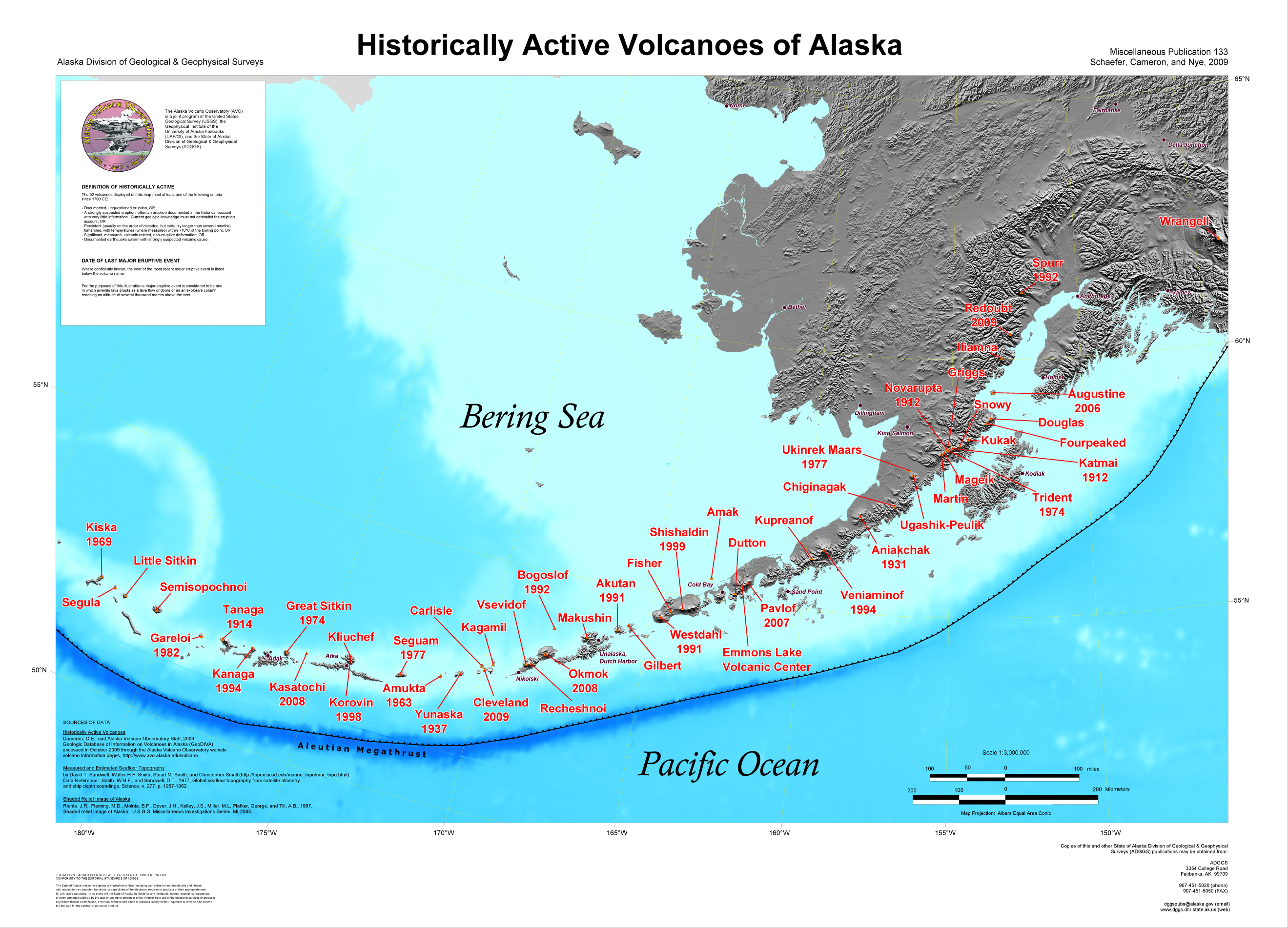
Beyond these, countless other volcanoes dot the Alaskan landscape, each with its own story, from the continuously degassing Great Sitkin Volcano to the historically very active Semisopochnoi Volcano and the newly formed Bogoslof Island.
Volcanic Activity and Its Impact on Travel and Local Life
The constant vigilance required for Alaska’s volcanoes is managed by the Alaska Volcano Observatory (AVO), a joint program of the U.S. Geological Survey, the University of Alaska Fairbanks Geophysical Institute, and the Alaska Division of Geological and Geophysical Surveys. AVO monitors the volcanoes with seismometers, webcams, and satellite imagery, issuing alerts to the public and, critically, to the aviation industry.
Ash plumes, a common byproduct of Alaskan eruptions, pose a significant hazard to aircraft engines, which can stall when exposed to volcanic ash. Given that many major international flight paths between North America and Asia traverse Alaskan airspace, volcanic eruptions can lead to widespread flight cancellations and diversions, impacting global travel. For local communities, particularly those on the Aleutian Islands and Alaska Peninsula, ashfall can disrupt daily life, contaminate water sources, and affect fishing and hunting activities.
Despite these challenges, Alaskans have learned to live with their fiery neighbors. The dramatic landscape forged by volcanism also underpins unique ecosystems, provides rich fishing grounds, and offers incredible hot springs, making the volcanoes an integral part of Alaska’s natural heritage and a draw for adventurous tourists.
Beyond the Peaks: Geothermal Wonders and Wildlife Sanctuaries
The volcanic activity in Alaska extends beyond the visible peaks. Geothermal features like hot springs are scattered across the state, offering therapeutic retreats in remote settings. These natural spas, heated by the Earth’s internal warmth, provide a stark contrast to the often frigid Alaskan climate and are beloved by locals and visitors alike.
Moreover, the nutrient-rich soils produced by volcanic ash contribute to unique flora and fauna, creating unexpected wildlife sanctuaries. The coastal regions, particularly the Alaska Peninsula and Aleutian Islands, are vital habitats for diverse marine life, seabirds, and large land mammals like brown bears, which thrive in the salmon-rich volcanic rivers. Exploring these regions often means combining volcano viewing with world-class wildlife photography and observation, creating a truly unforgettable travel experience.
Experiencing Alaska’s Volcanic Regions: Travel and Accommodation Insights
For travelers seeking to witness Alaska’s volcanic might, careful planning is key. The remoteness of many volcanic areas adds to their allure but also necessitates thorough preparation, especially concerning transportation and accommodation.
Planning Your Volcanic Adventure: Getting There and Around
Experiencing Alaska’s volcanoes primarily revolves around two methods: flightseeing and expeditionary travel.
- Flightseeing Tours: This is arguably the most popular and accessible way to see Alaska’s volcanoes. Operators based in cities like Anchorage, Homer, and King Salmon offer fixed-wing aircraft or helicopter tours that fly past magnificent peaks like Mount Redoubt, [Mount Spurr](https://lifeoutofthebox.com/mount spur), and into regions like Katmai National Park and Preserve. These tours provide unparalleled aerial views of the volcanic landscape, glaciers, and wildlife, often landing in remote areas for short excursions. Companies like Alaska Airlines, Delta Airlines, and United Airlines offer flights into key hubs like Anchorage and Fairbanks, from which smaller charter flights can take you closer to the volcanic zones.
- Expeditionary Travel/Remote Lodges: For the truly adventurous, guided expeditions offer opportunities for multi-day trips to remote volcanic regions. This might involve small boat charters to the Aleutian Islands or fly-in access to wilderness lodges near volcanic areas. Activities can include hiking to calderas, exploring geothermal features, and wildlife viewing. Destinations like Aniakchak National Monument and Preserve and parts of the Alaska Peninsula are best experienced this way, often requiring specialized gear and experienced guides.
- Driving Access: While many volcanoes are remote, some, particularly those visible from major road systems or the Cook Inlet area (like Mount Redoubt and Mount Spurr), can be appreciated from a distance during scenic drives along routes like the Sterling Highway on the Kenai Peninsula. For an even better view, consider ferries in Southcentral Alaska which offer panoramic vistas.
Where to Stay: Lodging Options Near Volcanic Hotspots
Accommodation options vary greatly depending on the proximity to volcanic areas:
- Urban Hubs: For those planning flightseeing tours, major cities like Anchorage offer a wide range of hotels, from luxury resorts like Hotel Captain Cook or The Lakefront Anchorage to more budget-friendly options. These cities serve as excellent bases for day trips.
- Gateway Towns: Smaller towns closer to volcanic regions, such as Homer on the Kenai Peninsula, Seward, Girdwood (home to Alyeska Resort), or King Salmon (for Katmai), provide local lodges, cabins, and bed-and-breakfasts. These accommodations often specialize in outdoor activities and can assist with local tour bookings.
- Remote Wilderness Lodges: For deep immersion, select wilderness lodges offer all-inclusive packages that often include guided excursions to nearby natural wonders, including volcanic features. These tend to be luxury experiences, providing comfort in incredibly remote settings, allowing for long-term stays focused on exploration.
- Camping: For the truly self-sufficient and budget-conscious traveler, designated campgrounds are available in some national parks and preserves, though permits and extensive backcountry experience are often required for truly remote volcanic areas.
Booking in advance is highly recommended, especially during Alaska’s peak summer season, as unique accommodations and flightseeing tours fill up quickly.

Safety First: Tips for Exploring Volcanic Landscapes
Exploring Alaska’s volcanic regions requires a strong emphasis on safety:
- Stay Informed: Always check the latest activity reports from the Alaska Volcano Observatory before venturing into volcanic areas. Conditions can change rapidly.
- Use Experienced Guides: For any ground-based exploration of active or potentially active volcanic areas, hiring a local, experienced guide is highly advisable. They possess crucial knowledge of the terrain, weather patterns, and safety protocols.
- Be Prepared for Wilderness: Alaska’s volcanic regions are often remote wilderness. Be prepared for harsh weather, lack of services, and potential wildlife encounters. Carry appropriate gear, food, water, and communication devices.
- Respect the Environment: Volcanic landscapes are fragile. Stick to marked trails, do not disturb geothermal features, and practice Leave No Trace principles.
- Aviation Safety: If taking a flightseeing tour, choose reputable operators with strong safety records.
- Travel Insurance: Given the unpredictable nature of volcanic activity and Alaska’s remote destinations, comprehensive travel insurance is a wise investment, covering potential cancellations, medical emergencies, and evacuation.
In conclusion, Alaska is undeniably a land of volcanoes, boasting over 130 volcanic fields and around 50 historically active peaks that make it one of the most dynamic geological regions on Earth. From the dramatic Aleutian Islands to the mainland’s iconic Mount Redoubt and Mount Spurr, these fiery mountains offer breathtaking natural beauty and unparalleled adventure. Whether viewed from the air on a thrilling flightseeing tour or explored on an intrepid expedition, Alaska’s volcanoes invite travelers to witness the raw power of nature, explore unique ecosystems, and create unforgettable memories in the heart of the Last Frontier. Planning your journey with an awareness of the volcanic landscape, prioritizing safety, and choosing suitable accommodation will ensure a truly spectacular and enriching Alaskan adventure.
LifeOutOfTheBox is a participant in the Amazon Services LLC Associates Program, an affiliate advertising program designed to provide a means for sites to earn advertising fees by advertising and linking to Amazon.com. Amazon, the Amazon logo, AmazonSupply, and the AmazonSupply logo are trademarks of Amazon.com, Inc. or its affiliates. As an Amazon Associate we earn affiliate commissions from qualifying purchases.