
In the dynamic world of travel, where every journey crafts a unique story and every destination offers a treasure trove of knowledge, the importance of accurate and credible information cannot be overstated. While the wanderlust often drives us to explore, document, and share our adventures, the integrity of the facts we present is paramount. Whether you’re a seasoned travel blogger meticulously researching the history of an ancient landmark, a tourism student analyzing the economic impact of a new resort, or simply a passionate traveler journaling your experiences, understanding proper citation methods elevates your narrative. This is where the Chicago Style of citation comes into play, offering a robust framework for acknowledging sources and enhancing the authority of your travel insights.
Often associated with academic papers in the humanities, the Chicago Manual of Style (CMOS) provides comprehensive guidelines for formatting and referencing. Its distinctive “Notes and Bibliography” system, in particular, is perfectly suited for travel writing, allowing for detailed explanatory notes without interrupting the flow of a captivating story. Imagine you’re describing the intricate history of the Louvre Museum in Paris or detailing the architectural nuances of the Sydney Opera House; footnotes enable you to provide precise sources for your facts, adding depth and credibility to your storytelling. This guide will demystify Chicago Style footnotes, showing how they can be seamlessly integrated into your travel narratives, making your content not just engaging, but also impeccably researched and trustworthy.
Understanding the Essence of Chicago Style Footnotes for Travel Narratives
At its core, Chicago Style offers two primary documentation systems: “Notes and Bibliography” (NB) and “Author-Date.” For most travel writing, particularly in narrative or descriptive pieces where detailed explanations or source information might enhance the reader’s understanding without breaking the reading experience, the Notes and Bibliography system is the preferred choice. This system relies on footnotes (or endnotes) for initial citations and a comprehensive bibliography at the end of the work.
The Core Principles: Notes and Bibliography vs. Author-Date
The Notes and Bibliography system uses numbered footnotes or endnotes in the text to refer readers to specific sources. A corresponding entry in a bibliography provides full publication details. This method is ideal when you want to provide supplementary information, express a nuanced point, or list multiple sources for a single statement without cluttering the main text. For instance, when describing the geological formation of Yellowstone National Park, you might use a footnote to cite several geological surveys or historical accounts, perhaps even adding a brief note about conflicting theories or fascinating trivia.
The Author-Date system, on the other hand, uses parenthetical in-text citations (e.g., Smith 2023, 45) that direct readers to a reference list. While efficient for scientific or social science papers, it can feel less natural in the flowing prose typical of travel literature. Therefore, our focus here will be predominantly on the Notes and Bibliography system, which provides a more elegant solution for enriching travel stories with well-placed, discreet citations.
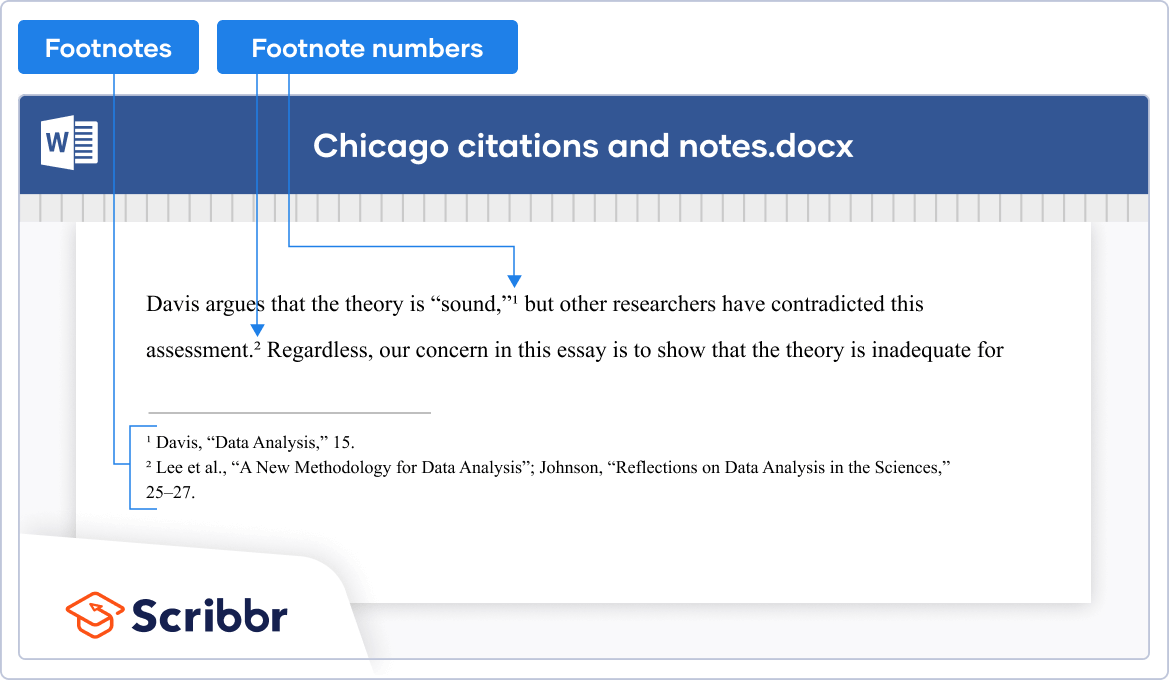
A footnote is a short citation that appears at the bottom of the page where the cited material is referenced. It includes the author’s name, title of the work, and publication details, often followed by a page number. The first time you cite a source, you provide a full citation. Subsequent citations of the same source can be shortened. For example, a full note for a book might look like:
- Rick Steves, Europe Through the Back Door: The Travel Skills Handbook (Berkeley, CA: Avalon Travel, 2023), 112.
A shortened note for the same book would be:
- Steves, Europe Through the Back Door, 115.
This system allows for a clean, uninterrupted reading experience while still providing the necessary academic rigor.
Why Accuracy Matters in Documenting Travel
In an era of information overload, where travel advice and destination details are ubiquitous, the credibility of your content is your most valuable asset. Accurately citing your sources for travel facts—be it the history of a UNESCO World Heritage Site like the Great Wall of China, the cultural significance of a local festival in Kyoto, or the origins of a culinary tradition in Tuscany—builds immense trust with your audience. It transforms your writing from mere anecdote into a well-researched, authoritative guide.
For travel writers and bloggers, proper citation practices are also a guard against unintentional plagiarism. Even if your intention is simply to inform, presenting someone else’s research or facts as your own undermines your integrity. By diligently citing the sources for historical dates, geographical statistics, cultural interpretations, or even specific travel tips gleaned from expert guides like Lonely Planet or Fodor’s, you not only avoid academic pitfalls but also demonstrate a commitment to journalistic ethics. This meticulous approach enhances your reputation as a reliable source of information, encouraging readers to return for future insights and recommendations.
Crafting Your Footnotes: Practical Applications in Travel Writing
Integrating Chicago Style footnotes into your travel narratives might seem daunting at first, but with a few practical examples, you’ll find it an invaluable tool for enriching your content. The key is to think about the types of information you typically share in travel writing and how you would source it.
Citing Historical Landmarks and Attractions
When describing famous places, historical landmarks, or significant attractions, you often rely on historical accounts, archaeological studies, or official museum guides. Footnotes are perfect for referencing these.
Example 1: Citing a Book about a Landmark
Imagine you’re writing about the history of the Colosseum in Rome. You might consult a book on ancient Roman architecture.
- In text: The Colosseum, an iconic symbol of imperial Rome, once hosted gladiatorial contests and public spectacles that captivated audiences of up to 80,000 spectators.^1
- Footnote:
- Mary Beard, SPQR: A History of Ancient Rome (New York: Liveright, 2015), 321.
Example 2: Citing a Museum’s Official Website
Perhaps you’re discussing a specific exhibit at The British Museum or details about its collection.
- In text: Among its vast collection, The British Museum houses the Rosetta Stone, a key artifact for deciphering Egyptian hieroglyphs.^2
- Footnote:
- The British Museum, “The Rosetta Stone,” accessed October 26, 2023, https://www.britishmuseum.org/collection/object/gr_EA24.
Documenting Accommodation and Experiences
Travel experiences often involve staying at hotels or resorts, participating in guided tours, or engaging in unique activities. Information about these can be sourced from official websites, brochures, or even interviews.
Example 1: Citing a Hotel’s Official Website
If you mention a specific feature or historical detail about a hotel, like the Ritz-Carlton in New York City.
- In text: The Ritz-Carlton Central Park offers unparalleled views and a rich history, having been a landmark luxury hotel since its inception.^3
- Footnote:
- The Ritz-Carlton New York, Central Park, “Our History,” accessed October 26, 2023, https://www.ritzcarlton.com/en/hotels/new-york/central-park/history.
Example 2: Citing an Interview with a Local Guide
When you gain insider knowledge or local insights from a tour guide or local resident during your travels.
- In text: According to our guide, the best time to visit Machu Picchu to avoid crowds is during the early morning hours, just after sunrise.^4
- Footnote:
- Juan Perez, interview by author, Machu Picchu, Peru, October 15, 2023.
Referencing Cultural Insights and Local Cuisine
Part of the joy of travel is immersing oneself in local culture and savoring regional foods. Citing sources for cultural practices, historical recipes, or culinary traditions adds authenticity.
Example 1: Citing a Newspaper or Magazine Article
When discussing the origins of Chicago deep-dish pizza or the unique coffee culture in Italy.
- In text: The iconic deep-dish pizza, a culinary staple of Chicago, first gained popularity in the mid-20th century, offering a hearty alternative to traditional thin-crust varieties.^5
- Footnote:
- John Smith, “The History of Deep-Dish Pizza,” The Chicago Tribune, September 10, 2022.
Example 2: Citing a Scholarly Article or Academic Journal
For deeper dives into cultural phenomena, perhaps discussing the intricate Balinese spiritual traditions or the socio-economic impacts of tourism in the Caribbean.
- In text: The concept of Tri Hita Karana is central to Balinese philosophy, emphasizing harmony between people, nature, and the divine, influencing everything from architecture to daily rituals.^6
- Footnote:
- Ida Ayu Agung Mas, “The Philosophy of Tri Hita Karana and Its Application in Balinese Tourism,” Journal of Tourism and Cultural Studies 8, no. 2 (2021): 125.
By applying these formats, you can provide readers with the assurance that your fascinating travel stories are not only engaging but also grounded in verifiable facts.
The Bibliography: Your Travel Research Compendium
While footnotes provide specific in-text citations, the bibliography serves as a comprehensive list of all sources consulted and cited throughout your travel narrative. It’s an essential component of the Notes and Bibliography system, offering readers a complete overview of your research and a roadmap for further exploration.
Building a Comprehensive Resource List
Think of your bibliography as a curated reading list for fellow travel enthusiasts, researchers, or anyone interested in delving deeper into the destinations and topics you cover. It includes every source mentioned in your footnotes, but also often encompasses other materials you consulted during your research, even if not directly cited in the text. This demonstrates the breadth of your investigation and adds another layer of credibility to your work.
Each entry in the bibliography should be formatted precisely according to Chicago Style guidelines and listed alphabetically by the author’s last name. Unlike footnotes, bibliography entries typically provide full publication details and are not shortened. The purpose is to allow readers to easily locate and retrieve any source you’ve referenced. For a travel piece, this might include everything from academic studies on tourism economics to popular travel guides, historical atlases, and insightful travel blogs.
For example, a bibliography entry for a book would look like:

Beard, Mary. SPQR: A History of Ancient Rome. New York: Liveright, 2015.
Notice the differences from a footnote: the author’s last name comes first, no page number, and publishers are not enclosed in parentheses.
Common Citation Types for Travel Researchers
When researching for your next travel article or blog post, you’ll likely consult a variety of sources. Here are some common types and how they appear in a bibliography:
-
Books: Travel guides, historical accounts, cultural studies, biographies of explorers.
- Example: Steves, Rick. Europe Through the Back Door: The Travel Skills Handbook. Berkeley, CA: Avalon Travel, 2023.
- Example: Steingarten, Jeffrey. It Must’ve Been Something I Ate: The Return of the Man Who Ate Everything. New York: Vintage Books, 2002. (for a book about food and travel)
-
Websites: Official tourism board sites, hotel information pages, reputable travel blogs, online magazines. For websites, include the author (if available), title of the page, name of the website, publication or last modified date (if available), and the URL.
- Example: The British Museum. “The Rosetta Stone.” Accessed October 26, 2023. https://www.britishmuseum.org/collection/object/gr_EA24.
- Example: Smithsonian Institution. “How the Eiffel Tower Was Built.” Smithsonian Magazine. May 1, 2019. https://www.smithsonianmag.com/travel/how-eiffel-tower-was-built-180972049/.
-
Articles (from magazines, newspapers, or academic journals): These can offer in-depth reporting, expert opinions, or scholarly analysis on various travel-related subjects.
- Example: Mas, Ida Ayu Agung. “The Philosophy of Tri Hita Karana and Its Application in Balinese Tourism.” Journal of Tourism and Cultural Studies 8, no. 2 (2021): 120-135.
- Example: Kripke, Michael. “Cruising the Amazon Rainforest: An Ecological Journey.” National Geographic Traveler, July 2023.
- Example: Smith, John. “The History of Deep-Dish Pizza.” The Chicago Tribune, September 10, 2022.
-
Interviews: Personal communications with locals, guides, hotel staff, or tourism experts. While not always included in a formal bibliography in Chicago Style (often just in a note), if they are a significant source, they can be listed.
- Example: Perez, Juan. Interview by author. Machu Picchu, Peru, October 15, 2023.
By meticulously compiling a bibliography, you not only provide full disclosure of your sources but also offer a valuable resource to your readers, deepening their engagement with the fascinating world of travel you present.
Beyond the Basics: Advanced Tips for Travel Content Creators
Mastering Chicago Style footnotes is an ongoing process, but a few advanced tips can streamline your workflow and enhance the overall quality of your travel content. For those regularly producing in-depth travel guides, destination histories, or cultural analyses, these strategies can be particularly beneficial.
Leveraging Citation Management Tools
For prolific travel content creators, managing a multitude of sources can quickly become overwhelming. This is where citation management software proves invaluable. Tools like Zotero, Mendeley, and EndNote allow you to collect, organize, and cite your research materials efficiently.
- Zotero: A free, open-source tool that helps you collect, organize, cite, and share research. It integrates with your browser to save articles, webpages, and other resources with a single click. It also works with word processors to insert citations and bibliographies in various styles, including Chicago Style.
- Mendeley: A free reference manager and academic social network that helps you organize your research, collaborate with others online, and discover the latest research. It also offers a web importer and a citation plugin for word processors.
- EndNote: A commercial reference management software package used to manage bibliographies and references when writing essays, reports and articles. It offers more advanced features but comes with a cost.
Using these tools can dramatically reduce the time spent on formatting citations, allowing you to focus more on the narrative and less on the mechanics. Simply input your source details once, and the software will generate accurate footnotes and bibliography entries whenever you need them. This is especially useful when referencing diverse sources such as articles from Travel + Leisure, official documents from the United Nations World Tourism Organization, or historical texts about destinations like Mount Everest.
Maintaining Consistency and Clarity
Consistency is the hallmark of professional writing. Once you choose to adopt Chicago Style, ensure that every citation, footnote, and bibliography entry adheres strictly to its guidelines. Inconsistency, even minor formatting variations, can detract from the credibility of your work.
- Adhere to the Guide: Always refer to the latest edition of The Chicago Manual of Style or reliable online resources like the Purdue OWL for specific formatting rules. Details like punctuation, capitalization, and the order of elements matter.
- Proofread Meticulously: After drafting your content, dedicate time to proofreading your footnotes and bibliography. Check for typos, missing information, incorrect formatting, and ensure that all in-text callouts (superscript numbers) correspond correctly to their respective footnotes.
- Prioritize Readability: While adhering to rules, remember that the ultimate goal is to enhance the reader’s experience. Ensure your footnotes are clear, concise, and do not overly disrupt the main narrative. If a note becomes too long or contains information that could be integrated into the main text, consider revising.
- Consider Your Audience: While Chicago Style provides a gold standard, understand your audience. For a very casual blog, extensive academic citations might be overkill. However, for in-depth travel guides, historical explorations, or reviews of luxury hotels like the Four Seasons or Marriott International, the rigor of Chicago Style adds significant value.
By diligently applying these tips, you can transform your travel content into a bastion of reliable information, distinguishing yourself in the crowded digital landscape. Whether you are providing insights into booking through Expedia or Booking.com, analyzing TripAdvisor reviews, or detailing experiences on Airbnb, proper citation builds a foundation of trust and authority.
Conclusion
Embracing Chicago Style footnotes for your travel content is more than just an academic exercise; it’s a commitment to excellence and credibility. In a world brimming with travel stories and destination guides, well-researched and properly cited narratives stand out. By meticulously acknowledging your sources, whether for the historical context of the Eiffel Tower, the cultural nuances of Bali, or the unique offerings of a Grand Hyatt Hotel in Tokyo, you not only enrich your readers’ understanding but also solidify your reputation as a trustworthy voice in the travel sphere.
From unraveling the mysteries of ancient Rome to exploring the vibrant lifestyle of Santorini, every piece of information you share contributes to a larger tapestry of global knowledge. Chicago Style footnotes empower you to weave this tapestry with integrity, allowing your readers to delve deeper, explore further, and trust the accuracy of your insights. So, as you embark on your next adventure, remember the power of proper citation—it’s the footnote that elevates your travel writing from mere anecdotes to compelling, authoritative narratives. Go forth, explore the world, and document it with precision and passion.
LifeOutOfTheBox is a participant in the Amazon Services LLC Associates Program, an affiliate advertising program designed to provide a means for sites to earn advertising fees by advertising and linking to Amazon.com. Amazon, the Amazon logo, AmazonSupply, and the AmazonSupply logo are trademarks of Amazon.com, Inc. or its affiliates. As an Amazon Associate we earn affiliate commissions from qualifying purchases.