
California, a land of unparalleled beauty, from the sun-drenched beaches of Santa Monica Pier to the majestic peaks of Yosemite National Park, offers an endless array of experiences for every traveler. For individuals with disabilities, ensuring seamless access to these incredible destinations is paramount. A disabled person parking placard, often referred to as a handicap placard, is more than just a piece of plastic; it’s a key to unlocking greater independence, convenience, and the freedom to explore the Golden State’s diverse landscapes and vibrant cities. At Life Out Of The Box, we believe that travel should be accessible to everyone, and understanding the process of obtaining a handicap placard in California is a crucial step for many.

This comprehensive guide will walk you through everything you need to know about securing a disabled person parking placard in California. We’ll cover eligibility, the application process, types of placards, and how these valuable permits enhance your travel and lifestyle choices, allowing you to fully immerse yourself in the rich culture, stunning natural wonders, and world-class attractions that California has to offer. Whether you’re planning a scenic drive along the Pacific Coast Highway, a magical visit to Disneyland in Anaheim, or a cultural exploration of San Francisco’s iconic landmarks, understanding your parking privileges is the first step towards an unforgettable journey.
Navigating California’s Accessible Travel Landscape
California is a global leader in tourism, drawing millions each year to its iconic cities like Los Angeles, San Diego, and San Francisco, as well as its breathtaking national parks and picturesque coastal towns such as Monterey and Carmel-by-the-Sea. For those with mobility challenges, a disabled person parking placard transforms the travel experience, turning potential logistical hurdles into opportunities for exploration. Imagine easily finding parking near the Hollywood Walk of Fame, securing a spot close to your hotel in Beverly Hills, or accessing a prime viewing location at the Golden Gate Bridge. These are the freedoms a placard provides, ensuring that your focus remains on the joy of discovery rather than the stress of parking.
The benefits extend beyond mere convenience. They enable deeper engagement with local culture, make spontaneous excursions more feasible, and open up doors to destinations that might otherwise feel out of reach. From touring the historic missions like Mission San Juan Capistrano to enjoying the vibrant art scene at the Getty Center, accessible parking is a fundamental component of an enriching travel itinerary.
Who Qualifies? Understanding Eligibility for a California Disabled Person Parking Placard
The California Department of Motor Vehicles (DMV) issues disabled person parking placards to individuals who meet specific medical criteria. Understanding these qualifications is the first crucial step in the application process. The state recognizes a range of conditions that impair mobility, ensuring that those with legitimate needs receive the necessary accommodations.
Eligibility criteria generally include:
- Loss of use of one or more lower extremities, or both hands: This covers a wide spectrum of physical limitations, from paralysis to severe weakness or absence of limbs, impacting the ability to walk or use a wheelchair without difficulty.
- Diagnosed disease that substantially impairs or interferes with mobility: Conditions such as severe arthritis, multiple sclerosis, muscular dystrophy, or cardiovascular diseases that cause extreme fatigue or shortness of breath when walking are often considered.
- Severe visual impairment: Low vision, specifically “low-vision acuity of 20/200 or less with corrective lenses, or visual field of 20 degrees or less,” qualifies an individual. This includes conditions that significantly impact an individual’s ability to safely navigate parking areas.
- Specific lung disease: Requiring the use of a portable oxygen tank or experiencing severe respiratory limitations.
- Cardiac condition: Classified as Class III or IV (per American Heart Association standards), meaning there is significant limitation in physical activity.
- A disease or disorder that makes it difficult or impossible to walk without the aid of a walking device: This includes walkers, crutches, canes, or other assistive mobility devices.
It’s important to note that the qualifying condition must be severe enough to substantially impair mobility, not just cause minor inconvenience. For travelers, this permit represents not just a parking privilege, but the ability to pursue an active lifestyle, visit famous landmarks, and enjoy various tourist attractions without undue physical strain. For instance, exploring the vast grounds of the Ronald Reagan Presidential Library or navigating the bustling streets around Universal Studios Hollywood becomes significantly less challenging with accessible parking options.
The Application Journey: Steps to Secure Your Placard
Once you’ve determined your eligibility, the next step is to navigate the application process. The California DMV has streamlined this procedure to make it as accessible as possible. While it requires attention to detail and coordination with a medical professional, the payoff in terms of travel freedom is immense.
Essential Documents and Medical Certification
The cornerstone of your application is the medical certification from a licensed professional. This is where your physician, surgeon, chiropractor, or optometrist confirms your qualifying condition.
- Obtain Form REG 195, Application for Disabled Person Placard or Plates: This form is readily available online through the DMV website or at any DMV office. You can search for “REG 195 California DMV” to find the most current version.
- Complete Your Section of the Form: Fill out your personal information accurately.
- Medical Certification: The critical part of Form REG 195 is the section to be completed and signed by your licensed medical professional. They must attest to your specific disability and confirm that it meets the state’s criteria. It’s advisable to discuss your travel aspirations and how your condition impacts your mobility with your doctor, as this context can help them accurately describe your needs. This medical certification is vital for both permanent and temporary placards. For a permanent placard, a new certification is generally not needed for subsequent renewals, but for temporary placards, a new certification is required each time you apply.
- No Fee for Placards: Notably, there is no fee to apply for a disabled person parking placard in California. This policy reflects the state’s commitment to accessibility and encourages eligible individuals to obtain the necessary permits without financial burden.
Preparing these documents thoroughly ensures a smooth review process by the DMV. This step, though administrative, is the gateway to exploring popular tourist destinations like Joshua Tree National Park or visiting attractions in San Jose or Sacramento with ease.
Submitting Your Application: Online, Mail, or In-Person
Once Form REG 195 is fully completed and signed by both you and your medical professional, you have several convenient options for submission:
- Mail: The most common and often easiest method is to mail the completed form to the address specified on the DMV website or directly on the form itself. This is particularly convenient for those planning travel from afar or with limited mobility.
- Online: For some renewals or specific situations, the DMV may offer an online submission portal. Check the official DMV website for the most current options.
- In-Person: You can submit your application at any local DMV field office. While this offers immediate verification, it often involves waiting times. If choosing this option, it’s wise to make an appointment online beforehand to minimize delays.
After submission, the DMV will process your application. If approved, your placard will typically be mailed to you within a few weeks. The anticipation of receiving your placard is exciting, as it signifies greater freedom for your upcoming travels, whether you’re exploring the vineyards of Napa Valley or the pristine beaches of Laguna Niguel.
Types of Placards and Their Benefits for Travelers
California offers different types of disabled person parking permits to cater to varying needs and durations of disability. Understanding these distinctions is crucial for selecting the appropriate option that aligns with your travel plans and lifestyle.
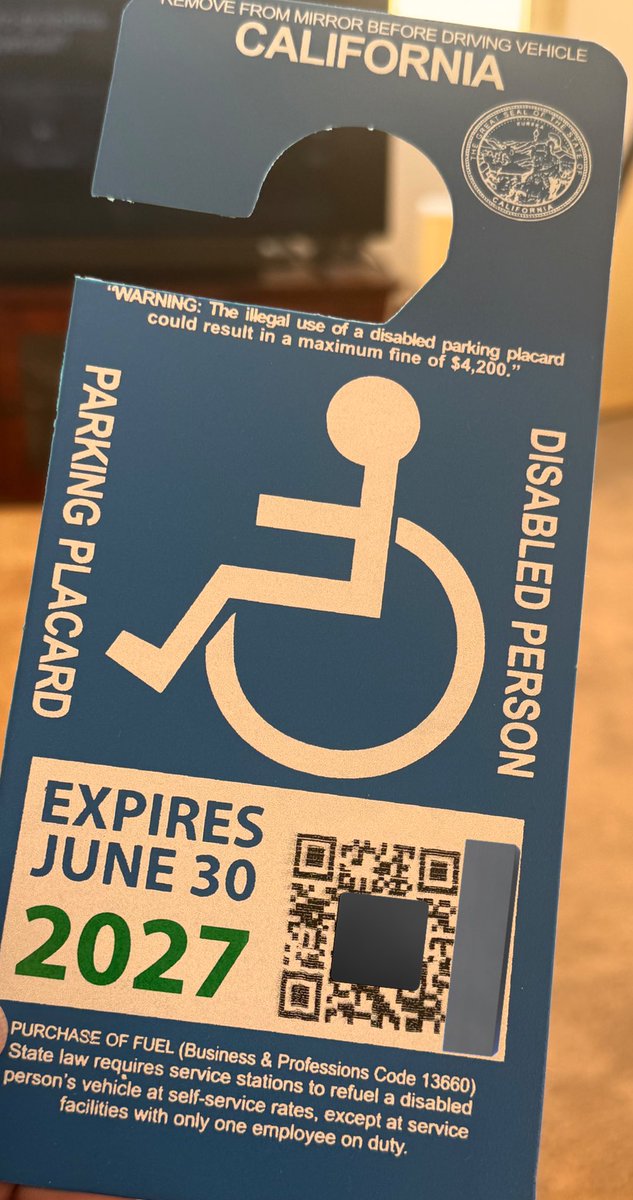
- Permanent Placard (Blue): This is issued to individuals with a permanent qualifying disability. It is valid for two years and automatically expires on June 30th of odd-numbered years. Crucially, permanent placards are renewable by mail, often without requiring a new medical certification, making it very convenient for long-term residents and frequent visitors.
- Temporary Placard (Red): Intended for individuals with a temporary disability that is expected to last for a specific period. These are valid for a maximum of six months or the date indicated by your medical professional, whichever is shorter. A new medical certification is required for each temporary placard application or renewal. This option is ideal for those recovering from surgery, injuries, or other short-term conditions that temporarily impair mobility, allowing them to continue their travel plans during recovery.
- Travel Placard (Paper): This is a temporary placard specifically designed for out-of-state residents who possess a disabled parking placard or license plate from their home state or country. It allows them to enjoy the same parking privileges as California residents for up to 90 days. This is a fantastic resource for tourists visiting California from other parts of the United States or internationally, ensuring their travels remain unhindered.
- Disabled Person (DP) License Plates: For vehicles primarily used to transport a person with a permanent disability, special license plates can be issued instead of a placard. These plates offer the same parking privileges and eliminate the need to display a separate placard. This is a great option for residents whose primary mode of transportation is their own vehicle.
Maximizing Your Placard: Parking Privileges and Beyond
Possessing a disabled person parking placard in California grants significant parking privileges, vastly improving the accessibility of your travel and daily life. These privileges are designed to reduce walking distances and provide safer, more convenient access to destinations.
Key Parking Privileges:
- Blue Curbs: You can park in spaces designated for disabled persons, marked with a blue curb and the international symbol of access. These spots are strategically located near entrances to businesses, attractions, and public facilities.
- Green Curbs: You can park for an unlimited amount of time in spaces designated for limited-time parking (green curbs). This is a game-changer for exploring areas with time restrictions, like bustling downtowns or popular shopping districts in cities such as San Luis Obispo or Palm Springs.
- Metered Parking: You can park in metered spaces without paying any fees. This eliminates the hassle of carrying coins or using parking apps, allowing you to focus on your experience, whether it’s enjoying a meal in Fisherman’s Wharf or exploring the shops in Hollywood.
- “No Parking” or “No Standing” Zones: While generally not allowed, your placard might permit parking in certain “no parking” or “no standing” zones for short periods, specifically for loading or unloading passengers or luggage, as long as you do not impede traffic.
- Residential Permit Parking: Your placard typically exempts you from residential permit parking restrictions, giving you more flexibility when visiting friends, family, or staying in residential areas.
These privileges are invaluable for any traveler. Imagine the convenience of parking directly at the entrance of the California Academy of Sciences in San Francisco, easily accessing the exhibits at the Getty Center in Los Angeles, or securing a close spot to enjoy the beauty of Lake Tahoe. This reduces physical exertion, conserves energy, and allows for more comfortable exploration of California’s myriad attractions.
However, it’s crucial to use your placard responsibly. It is illegal to lend your placard to anyone, even a family member, and misuse can lead to hefty fines and revocation of the placard. Always ensure the placard is displayed correctly (hanging from the rearview mirror when parked, removed when driving) and that the person to whom it was issued is present when using the parking privileges.
Maintaining and Renewing Your Placard: Ensuring Uninterrupted Access
To continue enjoying the benefits of your disabled person parking placard, it’s essential to understand the renewal process and how to handle common issues like loss or theft. Uninterrupted access ensures that your travel plans, whether to Pismo Beach, Santa Barbara, or Big Sur, remain seamless.
Renewal Process for Permanent and Temporary Placards
- Permanent Placard (Blue): These placards expire on June 30th of odd-numbered years. The DMV will typically mail a renewal notice to your address on file approximately 60-90 days before the expiration date. For permanent placards, a new medical certification is usually not required for renewal, making the process straightforward and often achievable by mail or online. Simply follow the instructions on the renewal notice, confirm your details, and return it to the DMV.
- Temporary Placard (Red): As these are for temporary conditions, they cannot be renewed in the same way. If your temporary condition persists beyond the initial six-month (or shorter) validity period, you will need to apply for a new temporary placard from scratch, including a new medical certification from your licensed professional. This ensures that the placard remains valid for the actual duration of your temporary disability.
Keeping your address updated with the DMV is vital to ensure you receive renewal notices in a timely manner. Missing a renewal can temporarily disrupt your ability to use accessible parking, which could impact travel plans to places like Redwood National Park or a visit to Hearst Castle.
Reporting Lost, Stolen, or Damaged Placards
If your placard is lost, stolen, or becomes damaged, you can apply for a replacement. You will need to complete a new Form REG 195, checking the box indicating it’s a replacement request. You do not need a new medical certification for a replacement, assuming your original eligibility is still valid. There is usually no fee for a replacement placard. Promptly reporting a lost or stolen placard helps prevent misuse and ensures you can quickly regain your parking privileges.
Out-of-State Visitors: Using Your Home State Placard in California
For travelers visiting California from other states or countries, it’s important to know that California recognizes disabled parking placards and license plates issued by other United States states, territories, or foreign countries. This means you can generally use your existing placard to access the same parking privileges as California-issued placards. This is a significant advantage, allowing visitors to seamlessly explore destinations such as Death Valley National Park or the vibrant attractions of Venice Beach without needing to obtain a new permit. However, for extended stays beyond 90 days, or if you prefer a California-specific permit, you may apply for a temporary travel placard (paper) as mentioned earlier.
Beyond the Placard: A Commitment to Accessible Travel with Life Out Of The Box
Obtaining a disabled person parking placard in California is a crucial step towards maximizing your travel potential and enjoying the state’s wonders with greater ease and independence. But accessible travel is about more than just parking; it encompasses the entire journey, from accommodation to attractions and dining. At Life Out Of The Box, we are dedicated to helping you plan and experience truly inclusive adventures.
With your placard in hand, you unlock a world of possibilities across California. You can more easily visit theme parks like Legoland California or Knotts Berry Farm, explore the famous Alcatraz Island and its surrounding areas, or take a scenic drive to Malibu’s beautiful beaches. The convenience of accessible parking allows you to choose your own pace, linger longer at places that captivate you, and reduce the physical demands often associated with navigating popular tourist spots.
Planning for an accessible trip involves several considerations beyond just parking:
- Accessible Accommodation: Look for hotels and resorts that offer truly accessible rooms with features like roll-in showers, grab bars, and wider doorways. Websites like Life Out Of The Box frequently highlight such properties, from luxury resorts like The Ritz-Carlton, Laguna Niguel to well-located city hotels such as the Hyatt Regency San Francisco. Always confirm specific accessibility features when booking.
- Researching Attractions: Before visiting an attraction, check its website or call ahead to inquire about specific accessibility features, such as ramps, elevators, accessible restrooms, and wheelchair rentals. Many California landmarks and attractions are committed to accessibility, but understanding their specific provisions in advance can save time and frustration. For instance, Griffith Observatory offers stunning views and is designed to be largely accessible, but knowing elevator locations beforehand is helpful.
- Transportation: While your placard helps with private vehicle parking, consider other accessible transportation options like paratransit services, accessible taxis, or public transit equipped for wheelchairs in major cities.
- Travel Insurance: For individuals with pre-existing conditions, comprehensive travel insurance is always a wise investment to cover any unexpected medical needs during your travels.
In conclusion, obtaining a disabled person parking placard in California is a straightforward process that yields significant rewards for those seeking to explore the state independently and comfortably. It’s a testament to California’s commitment to inclusivity, providing essential tools for travelers to access its vast and varied offerings. By following the steps outlined in this guide and leveraging resources like Life Out Of The Box for comprehensive travel planning, you can transform your travel dreams into accessible realities, ensuring every journey is filled with discovery and enjoyment. Embrace the freedom, explore the wonders, and make your mark on the Golden State.
LifeOutOfTheBox is a participant in the Amazon Services LLC Associates Program, an affiliate advertising program designed to provide a means for sites to earn advertising fees by advertising and linking to Amazon.com. Amazon, the Amazon logo, AmazonSupply, and the AmazonSupply logo are trademarks of Amazon.com, Inc. or its affiliates. As an Amazon Associate we earn affiliate commissions from qualifying purchases.