
Planning a magical escape to Southern California often involves a quintessential debate: Disneyland or Universal Studios California? For many avid travelers, the answer is a resounding “both!” These two iconic theme parks offer distinct, immersive experiences, each promising unforgettable adventures. Disneyland Resort, nestled in Anaheim, Orange County, transports visitors into classic fairytale narratives and beloved Disney franchises. Meanwhile, Universal Studios California, located in Universal City within Los Angeles County, thrusts guests into the heart of movie magic, from thrilling rides inspired by blockbuster films to behind-the-scenes studio tours. The allure of experiencing both worlds on a single trip is undeniable, but it naturally leads to a crucial logistical question: How far apart are they, and how feasible is it to combine them into one seamless travel itinerary?
This comprehensive guide aims to demystify the journey between these two California landmarks, providing essential insights into distances, estimated travel times, transportation options, and strategic planning tips to help you maximize your dual-park adventure. Whether you’re considering a grand family trip, a romantic getaway, or an exciting solo exploration, understanding the logistics is the first step toward crafting an extraordinary Southern California experience.
The Distance and Drive: What to Expect Between the Parks
The journey between the enchanting realms of Disneyland and the cinematic universe of Universal Studios California is a commonly navigated path for millions of tourists each year. Geographically, these two major attractions are situated in different counties, requiring a notable commute.
Approximate Distance:
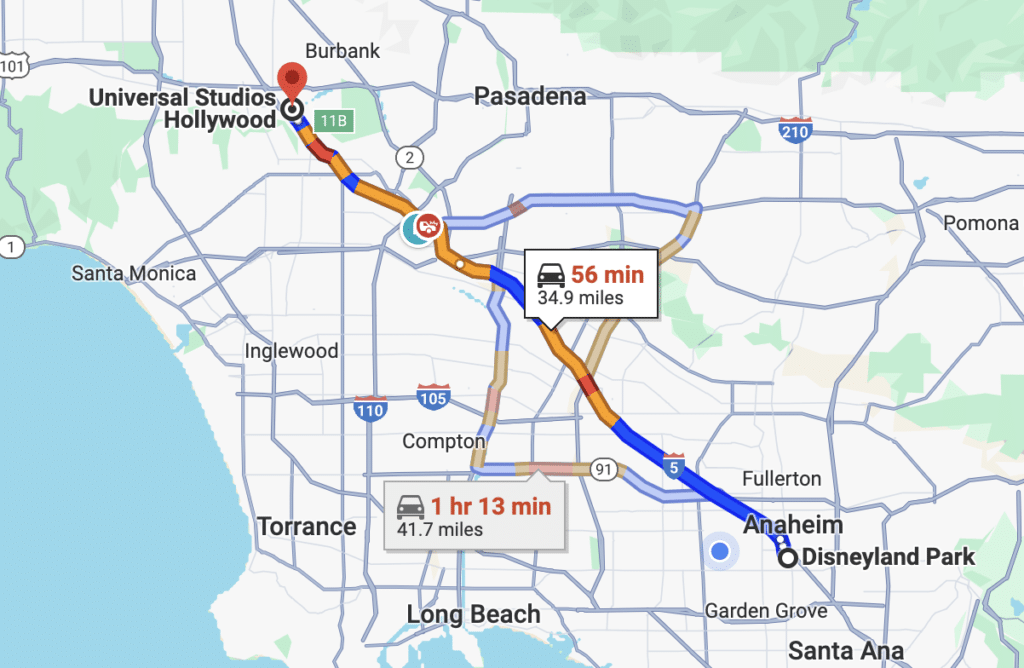
The driving distance between Disneyland Resort in Anaheim and Universal Studios California in Universal City is generally between 30 to 40 miles (48 to 64 kilometers), depending on the specific routes taken. The most common and direct route involves utilizing Interstate 5 (I-5) and then connecting to other major freeways like US-101 North or SR-170 North as you approach Hollywood and Universal City.
Estimated Travel Time:
While the mileage might seem manageable, the estimated travel time is heavily influenced by Los Angeles’s infamous traffic patterns.
- Without Traffic (Ideal Conditions): Under optimal conditions, typically very early morning or late at night, the drive can take anywhere from 45 minutes to 1 hour.
- With Moderate Traffic: During typical daytime hours, especially outside of peak rush hour, expect the journey to take 1 hour to 1 hour and 30 minutes.
- During Peak Rush Hour: This is where the challenge truly lies. Weekday mornings (6:00 AM – 9:00 AM) and evenings (3:00 PM – 7:00 PM) can see travel times extend dramatically, often reaching 1 hour and 30 minutes to 2 hours or even more. Weekends can also experience significant congestion, particularly around popular times for theme park arrivals and departures.
Understanding these variables is crucial for planning your days. A common strategy is to allocate a full day for each park, ideally with a travel day in between, or to plan your transfers during off-peak hours to minimize time spent in transit. The allure of exploring both Disneyland Park, Disney California Adventure Park, and Universal Studios California is immense, making the journey a worthwhile part of the overall experience.
Navigating Between the Parks: Your Transportation Options
Once you’ve grasped the distance and potential travel times, the next step is to choose the best mode of transportation for your group and lifestyle. Southern California offers a variety of options, each with its own advantages and considerations regarding cost, convenience, and comfort.
Driving Yourself: Convenience and Considerations
For many visitors, especially those on a family trip with children or those who prefer maximum flexibility, renting a car is a popular choice. Having your own vehicle allows for spontaneity and the freedom to explore other Southern California attractions beyond the theme parks.
- Pros:
- Flexibility: Depart and arrive on your own schedule.
- Comfort: Control over your environment, especially useful for families.
- Exploration: Easy access to nearby destinations like Hollywood, Santa Monica, or other local culture spots.
- Cons:
- Traffic Stress: Navigating Los Angeles freeways can be daunting, especially during rush hour.
- Parking Fees: Both Disneyland Resort and Universal Studios California charge significant daily parking fees (typically $30-$35+ per day). Factor this into your budget.
- Navigation: Relying on GPS apps is essential, but be prepared for unexpected detours due to traffic.
If you opt to drive, it’s advisable to factor in extra time for parking, walking from the parking structures, and security checks at each park. Early departures are key to beating the worst of the morning traffic.
Rideshares & Taxis: On-Demand Solutions
Services like Uber and Lyft, along with traditional taxis, offer a convenient and increasingly popular alternative to driving yourself. They eliminate the stress of navigation and parking.
- Pros:
- Door-to-Door Service: Pick-up and drop-off directly at the park entrances (or designated rideshare zones).
- No Parking Worries: Avoid parking fees and the hassle of finding a spot.
- Relaxation: Allows passengers to relax, check phones, or enjoy the scenery.
- Cons:
- Cost Variability: Fares can fluctuate significantly due to demand (surge pricing), time of day, and traffic. A one-way trip can range from $50-$90, potentially more during peak times.
- Availability: While generally abundant, wait times can increase during very busy periods.
- Limited Stops: Not ideal if you plan to make multiple stops between the parks.
When considering rideshares, always check the estimated fare before confirming your ride. This option is often ideal for couples or smaller groups seeking convenience without the commitment of a rental car.
Public Transportation: Budget-Friendly Exploration
For the budget-conscious traveler or those looking for a more immersive local culture experience, public transportation is a viable, albeit more time-consuming, option. It typically involves a combination of trains and buses.
- Route Overview:
- From Disneyland (using Anaheim Resort Transportation (ART) or a short rideshare to the Anaheim Regional Transportation Intermodal Center – ARTIC).
- Take a Metrolink train from ARTIC to L.A. Union Station in Downtown Los Angeles.
- From L.A. Union Station, transfer to the LA Metro Red Line subway, heading towards North Hollywood or Burbank.
- Exit at the Universal City/Studio City station.
- From there, a free tram (Universal Shuttle) or a short walk will take you up the hill to Universal Studios California and Universal CityWalk Hollywood.
- Pros:
- Cost-Effective: Significantly cheaper than driving or rideshares.
- Authentic Experience: Offers a glimpse into local daily life and helps avoid traffic congestion.
- Cons:
- Time-Consuming: The entire journey can take 2.5 to 3 hours or more, including transfers and waiting times.
- Multiple Transfers: Requires navigating different public transport systems.
- Limited Operating Hours: Public transport might not run as frequently late at night, which could be an issue after a full day at the parks.

This option is best suited for intrepid travelers with flexible schedules and a willingness to navigate unfamiliar routes. Always check schedules and plan your journey in advance using apps like Google Maps or the official LA Metro website.
Shuttle Services & Guided Tours: Hassle-Free Transfers
Several private shuttle companies and tour operators offer direct transfers between Anaheim and Universal Studios California. These can range from shared-ride vans to private luxury sedans or buses, often bundling transportation with park tickets or other tourist activities.
- Pros:
- Convenience: Many services offer hotel pick-up and drop-off.
- Comfort: Often provide comfortable vehicles.
- No Navigation Stress: Drivers handle the route and traffic.
- Packaged Deals: Some tours offer combined tickets and transportation, simplifying booking.
- Cons:
- Fixed Schedules: Shared shuttles operate on set schedules, which might not align perfectly with your plans.
- Cost: Generally more expensive than public transport, but potentially less than two one-way rideshares, especially for larger groups.
- Potential Delays: Shared shuttles may make multiple stops, adding to travel time.
Research reputable tour operators and shuttle services, comparing reviews and prices to find the best fit for your needs. This option is excellent for those who prioritize ease and a guided experience.
Planning Your Dual-Park Adventure: Tips for a Seamless Trip
Successfully visiting both Disneyland and Universal Studios California on one trip requires thoughtful planning beyond just transportation. Considerations such as where to stay, how to structure your itinerary, and leveraging park-specific tools can significantly enhance your experience and help manage the complexities of a multi-park vacation.
Where to Stay: Strategic Accommodation Choices
Your choice of accommodation can greatly impact the efficiency and enjoyment of your trip. There are several approaches:
- Stay Near Disneyland (Anaheim):
- Pros: Proximity to numerous hotels and resorts catering to Disney guests, often within walking distance or a short shuttle ride to the park gates. Anaheim offers a wide range of accommodation options from budget-friendly hotels to luxury suites with various amenities.
- Cons: Requires a longer commute on your Universal Studios California day.
- Stay Near Universal Studios (Hollywood/Burbank):
- Pros: Convenient for Universal Studios California and exploring other Hollywood attractions. Many hotels in this area offer excellent city views and easy access to diverse food and entertainment options.
- Cons: Longer commute to Disneyland.
- Split Your Stay:
- Pros: Minimizes daily commute times. Allows you to fully immerse yourself in the ambiance of each park’s surrounding area.
- Cons: Involves checking in and out of two hotels, packing and unpacking twice, which can be disruptive for some travelers.
- Stay Centrally (e.g., Downtown Los Angeles):
- Pros: Could be a good option if you plan to visit many other Los Angeles landmarks and destinations in addition to the parks. Downtown LA offers a vibrant local culture, food, and accommodation scene, including modern apartments and boutique hotels.
- Cons: Still requires a significant commute to both parks, albeit somewhat balanced.
When choosing, consider the overall length of your trip, the number of park days you have, and your personal preferences for daily travel. Always check reviews and compare hotel prices and amenities before booking. Many resorts and hotels offer specialized packages for theme park visitors.
Optimizing Your Itinerary: Tips for a Seamless Trip
Beyond accommodation and transportation, thoughtful planning of your daily activities will make all the difference.
- Allocate Full Days: It’s highly recommended to dedicate a full day to Disneyland Park and/or Disney California Adventure Park, and another full day to Universal Studios California. Trying to do both in one day is exceptionally challenging due to travel time and the sheer size of each park.
- Book in Advance: Purchase park tickets, hotel accommodations, and any rental cars or shuttle services well in advance, especially during peak seasons. This can often save money and guarantee availability.
- Consider Park-Hopper Options (Disneyland): If you wish to visit both Disneyland Park and Disney California Adventure Park on the same day, a Park Hopper ticket is necessary. However, remember these are right across from each other, unlike the commute to Universal Studios California.
- Leverage Fast Passes & Express Passes:
- Disneyland: Consider purchasing Genie+ or individual Lightning Lane selections to bypass standby lines for popular attractions like Star Wars: Galaxy’s Edge.
- Universal Studios California: Universal Express allows you to skip regular lines once per ride. For highly anticipated areas like The Wizarding World of Harry Potter or Super Nintendo World, this can be a valuable investment, especially on crowded days.
- Factor in Dining and Breaks: Don’t underestimate the time needed for meals, snacks, and rest periods. Mobile ordering through park apps can save valuable time.
- Monitor Park Hours & Traffic Apps: Stay updated on park operating hours, which can vary by season, and use real-time traffic apps to plan your commutes efficiently.
- Visit During Off-Peak Times: If possible, consider visiting in the off-season (e.g., late January, February, or September after Labor Day) to enjoy lighter crowds and potentially shorter lines at attractions. This also helps with traffic conditions.

Beyond the Parks: Exploring More of Southern California
While Disneyland and Universal Studios California are undoubtedly star attractions, Southern California is a treasure trove of diverse destinations waiting to be explored. Integrating a few additional landmarks or cultural experiences can enrich your travel story and provide a more holistic view of the region.
If your base is near Universal Studios California in Hollywood or Burbank, you’re ideally positioned to delve into the heart of entertainment and culture. A stroll down Hollywood Boulevard allows you to admire the Walk of Fame, put your hands and feet into the imprints at TCL Chinese Theatre, and soak in the vibrant, historical ambiance of the area. For breathtaking panoramic views of Los Angeles, the Hollywood Sign, and the cosmos, a visit to the Griffith Observatory is a must-do. Perched in the Hollywood Hills, it offers not just stunning vistas but also fascinating exhibits on astronomy.
Venturing further west, the iconic beach town of Santa Monica awaits. Here, you can unwind on the sandy shores, ride the Ferris wheel at the historic Santa Monica Pier, or cycle along the scenic coastline. The atmosphere is distinctly different from the bustling theme parks, offering a serene contrast with its vibrant promenade, street performers, and diverse food scene. A drive along a portion of the Pacific Coast Highway to get there can be an experience in itself, showcasing California’s stunning coastal beauty.
For those interested in luxury and celebrity culture, a short detour to Beverly Hills provides a glimpse into opulent lifestyles with its designer boutiques on Rodeo Drive and magnificent estates. Art enthusiasts might consider a visit to the Getty Center, renowned not only for its impressive art collection but also for its architecture, gardens, and sweeping city views.
Even if your primary focus remains the theme parks, carving out time for one or two of these additional destinations can transform your vacation into a richer, more diverse Southern California experience. This thoughtful expansion beyond the gates of Disneyland and Universal Studios California aligns perfectly with the comprehensive travel guides and tourism tips that aim to provide a deeper understanding of local culture and all that a region has to offer.
In conclusion, the distance between Disneyland and Universal Studios California is a manageable journey, typically ranging from 30 to 40 miles and taking 45 minutes to 2 hours depending on traffic and transportation method. While it requires careful planning, combining these two world-class theme parks into one vacation is not only feasible but highly rewarding. By choosing the right mode of transportation, strategically selecting your accommodation, and optimizing your itinerary with efficiency tips, you can seamlessly transition from the magic of Disney to the excitement of Hollywood blockbusters. Whether you opt for the freedom of a rental car, the convenience of a rideshare, the budget-friendliness of public transit, or the ease of a shuttle service, a dual-park adventure in Southern California promises a collection of cherished memories that will last a lifetime. Prepare for an unforgettable journey where fantasy meets reality, and every moment is an experience to savor.
LifeOutOfTheBox is a participant in the Amazon Services LLC Associates Program, an affiliate advertising program designed to provide a means for sites to earn advertising fees by advertising and linking to Amazon.com. Amazon, the Amazon logo, AmazonSupply, and the AmazonSupply logo are trademarks of Amazon.com, Inc. or its affiliates. As an Amazon Associate we earn affiliate commissions from qualifying purchases.