
Embarking on a journey to the vast and diverse Texas involves more than just packing your bags and planning your route; it often requires a keen understanding of its unique geographical and temporal landscape. As one of the largest states in the United States, Texas spans an impressive area, leading many to wonder: what time is it there right now? While a significant majority of the state observes one primary time zone, a crucial exception exists, making time awareness an indispensable aspect of effective travel planning and an enriched tourism experience.
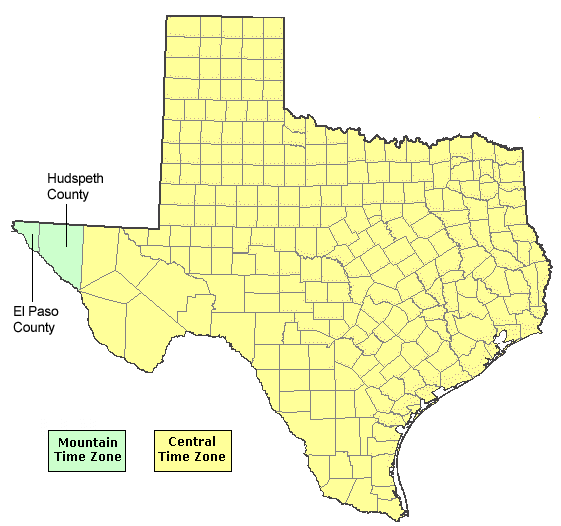
For most of Texas, the answer is straightforward: it’s Central Time Zone (CT). This applies to major metropolitan hubs like Houston, Dallas, Austin, and San Antonio, along with the vast majority of its charming towns and sprawling landscapes. However, a small yet notable portion of westernmost Texas, specifically the vibrant city of El Paso and its surrounding Hudspeth County, operates on Mountain Time Zone (MT). This seemingly minor detail can have significant ramifications for visitors, from coordinating meeting times and flight schedules to ensuring you don’t miss that crucial dinner reservation or sunset view at a remote landmark. Understanding these time distinctions is key to a seamless exploration of the Lone Star State, ensuring every aspect of your accommodation, travel, and lifestyle plans unfolds without a hitch.
Navigating the Lone Star State’s Time Zones
The sheer size of Texas dictates the necessity of understanding its time zones. While most visitors will find themselves operating on Central Time Zone, being aware of the western exception is crucial, especially for those venturing off the beaten path or traveling across the state’s expansive breadth. This knowledge forms the bedrock of efficient itinerary planning, impacting everything from hotel bookings to restaurant reservations and scheduled visits to iconic attractions.
The Dominant Central Time Zone (CT)
The Central Time Zone (CT) encompasses the overwhelming majority of Texas. When you check the time in major cities like Houston, renowned for its Space Center Houston and bustling energy industry, or Dallas, a hub of commerce and culture home to the impressive Dallas Arts District, you’ll be seeing Central Time Zone. The same applies to the live music capital of Austin, with its vibrant Lady Bird Lake and eclectic atmosphere, and the historic San Antonio, famous for the Alamo and its picturesque River Walk.
During standard time, Central Time Zone is observed as GMT-6 (Greenwich Mean Time minus six hours). However, like much of the United States, Texas observes Daylight Saving Time (DST). From early March to early November, clocks spring forward an hour, moving to Central Daylight Time (CDT), which is GMT-5. This shift means that sunrise and sunset occur later, providing more daylight in the evenings – a boon for travelers wishing to extend their exploration of Texas destinations or enjoy outdoor activities such as visiting state parks or dining al fresco. It’s a key factor when scheduling outdoor experiences or planning evening entertainment.
The Unique Case of Mountain Time Zone (MT) in Texas
While the vast majority of Texas operates on CT, an exception lies in the far western reaches of the state. The bustling city of El Paso, situated right on the border with New Mexico and Mexico, and a small portion of Hudspeth County to its east, observe Mountain Time Zone (MT). During standard time, Mountain Time Zone is GMT-7. When Daylight Saving Time is in effect, it shifts to Mountain Daylight Time (MDT), which is GMT-6. This means that El Paso is always one hour behind the rest of Texas that operates on Central Time Zone.
For travelers, this time zone shift is incredibly important. Imagine driving from Midland (CT) to El Paso (MT) for a hotel check-in. If you depart at 9:00 AM CT and the drive is, say, five hours, you’d expect to arrive at 2:00 PM CT. However, upon crossing into the Mountain Time Zone, your local time would actually be 1:00 PM MT. This “gain” of an hour can be a pleasant surprise or a logistical headache if not accounted for, especially when dealing with pre-booked tours, flight departures from El Paso International Airport, or even just meeting friends for dinner. Similarly, travelers exploring remote national parks like Guadalupe Mountains National Park or Big Bend National Park, while generally within the Central Time Zone themselves, might approach from or depart to El Paso, making time zone awareness critical for accurate planning.

Time-Sensitive Travel: Planning Your Texas Itinerary
Effective time management is a cornerstone of successful travel, and in a state as vast and temporally diverse as Texas, this rings especially true. Every aspect of your journey, from the initial booking to the final farewell, can be influenced by the clock. Precision in scheduling is not merely about punctuality; it’s about maximizing your enjoyment, avoiding unnecessary stress, and ensuring a seamless experience across all touchpoints of your visit.
Booking Accommodations and Flights with Confidence
When planning your Texas adventure, the timing of your bookings for hotels, flights, and other accommodation types is paramount. Flights are always listed in local time, so a flight from Dallas to El Paso will show a departure time in CT and an arrival time in MT. Be mindful of the actual duration versus the elapsed time shown on your ticket. For instance, a flight taking two hours might show a three-hour “elapsed” time if you’re flying west from CT to MT.
Hotels and resorts typically adhere strictly to their local time for check-in and check-out. Whether you’re staying in a luxurious suite in Houston, a quaint apartment in Austin, or a charming villa near the Gulf Coast, ensuring your arrival time aligns with their policy is vital. Early arrivals or late departures, especially when compounded by a miscalculated time zone shift, can lead to unexpected fees or delays. Many hotels offer amenities like early check-in or late check-out, but these often depend on availability and local time. Always confirm the local time zone of your chosen accommodation well in advance, whether it’s a bustling resort in San Antonio or a serene long-term stay apartment in Fort Worth.
Maximizing Your Tourism Experiences and Landmark Visits
Texas boasts an incredible array of landmarks, attractions, and unique tourism experiences. From the historic Alamo in San Antonio to the vast wilderness of Big Bend National Park, each offers distinct opportunities that are often time-dependent. Attraction opening and closing times are always stated in local time. Missing the last entry to Space Center Houston or arriving after sunset at Enchanted Rock State Natural Area due to a time zone miscalculation can be a significant disappointment.
For those eager to dive into Texas’s local culture, timing is also crucial. Consider the vibrant food scene: reservations at popular Austin eateries, Dallas steakhouses, or San Antonio River Walk restaurants should all be made with local time in mind. If you’re attending a special event, concert, or sports game — perhaps catching the Texas Rangers at Globe Life Field or the Dallas Cowboys at AT&T Stadium — verifying the start time in the local zone of the venue is non-negotiable. Many organized tours, whether historical walking tours in Galveston or nature guides in the Texas Hill Country, operate on strict schedules. A misstep in time can mean missing your group and potentially forfeiting your booking. Always double-check and set your devices to automatically update to the local time zone to avoid such pitfalls.

Lifestyle and Leisure: Embracing the Texas Rhythm
The question of “What time is it in Texas right now?” extends beyond logistical planning to how you experience the very fabric of your lifestyle during your visit. Whether you’re on a crucial business stay, embarking on a memorable family trip, or indulging in luxury travel, understanding the local time ensures that your rhythms align with the state’s, allowing for deeper immersion and greater enjoyment.
From Business Stays to Family Adventures: Time Management
For individuals on business stays in Texas, time zone awareness is paramount. Coordinating conference calls with colleagues in different time zones, making punctual appearances at meetings in Houston’s energy corridor or Dallas’s financial district, and managing remote work schedules all demand precise timekeeping. A one-hour difference can impact productivity and professionalism. Ensuring your laptop and phone are set to the correct local time is a simple yet vital step in maintaining your professional cadence.
Family trips also benefit immensely from careful time planning. Children thrive on routine, and sudden, unexpected shifts can disrupt their sleep and mood. Planning activities that account for time changes, such as early morning visits to theme parks or zoos to beat the heat and crowds, or scheduling meal times that align with local customs but also suit the family’s internal clock, contributes to a smoother, more enjoyable vacation. Whether you’re on a budget travel adventure exploring free parks or indulging in luxury travel at a sprawling resort, time management directly impacts the overall quality of your family’s experience. Understanding how much daylight you have left or when the local shops close influences your flexibility and options.
Enjoying Texas Landmarks and Attractions Across Time
Texas’s natural and man-made landmarks offer distinct experiences that are often enhanced or limited by the time of day. Consider stargazing in the remote and dark skies of Big Bend National Park. Knowing the precise local time for sunset and astronomical twilight is crucial for capturing the best celestial views. Similarly, if you plan to hike Enchanted Rock State Natural Area at sunrise, you’ll need to know the exact local sunrise time to plan your ascent.
For urban landmarks like the San Antonio River Walk, timing your visit can mean the difference between enjoying a peaceful stroll and navigating dense crowds. Visiting the Dallas Arts District requires awareness of museum hours and performance schedules. Even something as simple as wanting to photograph the historic buildings of Galveston in the best light requires an understanding of the sun’s position throughout the day, which is directly tied to the local time. Sporting events, a huge part of the Texas lifestyle, from high school football to professional games with the Dallas Cowboys or Houston Texans, are always scheduled in the local time of their respective venues, making real-time accuracy essential for fans.
Essential Tips for a Seamless Texas Visit
A truly memorable Texas experience is built on careful preparation, and that includes mastering the intricacies of its time zones. By adopting a few simple habits, you can ensure your journey through the Lone Star State is as smooth and enjoyable as possible, free from any temporal disruptions. These practical tips, culled from years of travel expertise, will serve as your essential guides.
Staying Synchronized: Practical Advice
The simplest and most effective tip for staying synchronized is to always double-check reservation times. Whether it’s for your flight, hotel check-in, a guided tour, or a restaurant booking, confirm the time zone specifically. Many online booking platforms will specify “local time,” but a quick mental check or an explicit confirmation call can prevent mishaps, especially when dealing with the El Paso / Central Time Zone divide.
Secondly, leverage technology. Most modern smartphones, smartwatches, and even laptops automatically update their time zone based on your geographical location. Ensure this feature is enabled on all your devices. However, a manual cross-reference with a reliable local source (like asking a local, checking a public clock, or verifying online with a specific city’s time) upon arrival in a new time zone is always a good practice. Having a watch set to your home time zone can also be helpful for quick comparisons if you’re frequently communicating with people outside Texas.
Lastly, be mindful of “Texas time” for local events. While most commercial establishments adhere to strict schedules, local community events, festivals, or smaller, independently run operations might occasionally operate with a slightly more relaxed interpretation of time. While not a direct time zone issue, it’s part of understanding local rhythm and can be a charming aspect of Texas culture.
The Impact of Daylight Saving Time
As mentioned, Texas observes Daylight Saving Time. This means that on the second Sunday in March, clocks “spring forward” one hour, and on the first Sunday in November, they “fall back” one hour. For the majority of the state, this means transitioning between Central Time Zone (CT) and Central Daylight Time (CDT). For El Paso and western Hudspeth County, it’s a shift between Mountain Time Zone (MT) and Mountain Daylight Time (MDT).
The primary impact on travelers is simply the change in the clock itself. If you arrive in Texas around these transition dates, confirm which time setting is currently in effect. Most digital devices will handle this automatically, but mechanical clocks or older car systems might need manual adjustment. The shift particularly affects morning schedules, potentially making an early flight feel even earlier or granting an extra hour of sleep when clocks fall back. Being aware of these bi-annual changes is part of a complete tourism guide to the state.
In conclusion, understanding “What time is it in Texas right now?” is more than a trivial detail; it’s a fundamental aspect of navigating this magnificent state effectively. From the bustling metropolises in Central Time Zone to the unique Mountain Time Zone of El Paso, time impacts every facet of your travel, accommodation, and lifestyle plans. By staying informed and utilizing simple planning strategies, you can ensure your Texas experience is as rich, relaxing, and memorable as the Lone Star State itself. So, set your watch, embrace the journey, and dive into the diverse destinations and vibrant culture that await you.
LifeOutOfTheBox is a participant in the Amazon Services LLC Associates Program, an affiliate advertising program designed to provide a means for sites to earn advertising fees by advertising and linking to Amazon.com. Amazon, the Amazon logo, AmazonSupply, and the AmazonSupply logo are trademarks of Amazon.com, Inc. or its affiliates. As an Amazon Associate we earn affiliate commissions from qualifying purchases.