
The question of whether the United States “bought” California from Mexico often surfaces in discussions about the region’s rich and complex history. While the simple answer might lean towards a yes, acknowledging a financial transaction, the truth is far more nuanced, deeply embedded in a historical narrative of expansion, conflict, and a transformative treaty. Understanding this past is not merely an academic exercise; it provides invaluable context for appreciating the vibrant culture, diverse landscapes, and iconic landmarks that make modern California a premier global destination.
From the sun-drenched beaches of San Diego to the bustling streets of San Francisco, and from the historical missions that dot the coastline to the remnants of Gold Rush towns in the Sierra Nevada, California’s story is a tapestry woven with threads from Indigenous heritage, Spanish colonization, Mexican rule, and American ambition. This article will delve into the historical events that led to California’s transfer of sovereignty, exploring the war that preceded it, the treaty that formalized it, and the lasting legacy that continues to shape the Golden State’s appeal for travelers and residents alike. By understanding its origins, we can better appreciate the unique blend of traditions, cuisines, and architectural styles that beckon millions to explore California every year, offering everything from luxury accommodation in world-class resorts to immersive cultural experiences.
The Dawn of a New Era: California Before the American Arrival
Before the mid-19th century, the vast territory known as California was a land undergoing profound transformations, transitioning from indigenous control to Spanish colonization, and then to a fledgling Mexican republic. This period laid the groundwork for the cultural complexities and territorial ambitions that would eventually define its future. For modern visitors, these early chapters reveal the origins of many of the state’s most cherished historical landmarks and cultural traditions.
A Land of Indigenous Heritage and Spanish Missions
Long before European contact, California was home to a diverse array of indigenous peoples, numbering in the hundreds of thousands, each with distinct languages, cultures, and spiritual traditions. Tribes like the Chumash, Miwok, Ohlone, and Tongva thrived, developing sophisticated societies adapted to the region’s varied ecosystems, from coastal plains to arid deserts and towering mountains. Their deep connection to the land and intricate social structures represented centuries of unbroken heritage.
The arrival of Spanish explorers in the 16th century marked the beginning of a new era, but it was not until the late 18th century that Spain began its serious colonization efforts, driven by fears of Russian and British encroachment on its northern territories. Under the leadership of figures like Father Junípero Serra and Gaspar de Portolá, a chain of twenty-one Spanish Missions was established along the coast, stretching from San Diego to Sonoma. These missions, alongside presidios (military forts) and pueblos (civilian towns), formed the backbone of colonial Alta California.
The mission system profoundly impacted the indigenous populations, often forcibly converting them to Catholicism and integrating them into a forced labor system. While controversial, these missions undeniably shaped the early architecture, agriculture, and cultural landscape of the region, introducing European crops, livestock, and building techniques. Today, many of these meticulously preserved missions stand as poignant historical landmarks, offering visitors a glimpse into California’s colonial past and serving as popular tourist attractions that combine historical learning with architectural beauty. They are essential stops for those interested in local culture and the origins of California’s diverse heritage.
Mexican Rule and Emerging Aspirations
Spain’s dominion over California came to an end in 1821 with Mexico’s successful war for independence. Alta California, along with Baja California and vast territories to the east, became a remote, sparsely populated northern province of the new Mexican Republic. The Mexican government inherited a challenging task: governing a frontier region far from its capital, Mexico City, with limited resources and often conflicting local interests.
Under Mexican rule, the mission lands were secularized, meaning they were transferred from church control to private ownership. This led to the rise of large ranchos, vast estates granted by the Mexican government to influential families. These ranchos became the economic and social centers of California, focusing on cattle ranching and hide and tallow trade. The rancho era is often romanticized for its distinctive Californio culture, characterized by horsemanship, hospitality, and a relatively relaxed lifestyle, distinct from the more centrally governed regions of Mexico.
During this period, American trappers, traders, and settlers began to trickle into California, drawn by its fertile lands, mild climate, and strategic location on the Pacific Ocean. While some integrated into Californio society, others harbored ambitions aligned with the expansionist ideology prevalent in the United States at the time – “Manifest Destiny.” These newcomers, alongside some disaffected Californios, began to chafe under what they perceived as distant and ineffective Mexican governance, setting the stage for the dramatic conflicts and territorial shifts that were soon to follow. This unique blend of Mexican and early American influence is still evident in many historical sites, contributing to the rich tourism experience of modern California.
The Seeds of Conflict: Manifest Destiny and Border Disputes
The seemingly peaceful ranchos of California belied the growing storm on the horizon, fueled by powerful geopolitical forces. The concept of “Manifest Destiny” in the United States, coupled with unresolved border disputes following the annexation of Texas, created an explosive situation that would inevitably draw Mexico and the United States into a defining conflict.
Texas Annexation and Rising Tensions
“Manifest Destiny” was the widespread belief in 19th-century America that the United States was destined by God to expand its dominion and spread democracy across the North American continent, from the Atlantic to the Pacific Ocean. This ideology profoundly influenced American foreign policy and public sentiment, particularly towards the sparsely populated and resource-rich territories held by Mexico, including California, New Mexico, and Arizona.
A crucial flashpoint in this expansionist drive was Texas. After winning its independence from Mexico in 1836, the Republic of Texas spent nearly a decade as an independent nation. The debate over its annexation into the United States was contentious, largely due to issues of slavery and maintaining a balance of power within the Union. However, driven by expansionist fervor, the United States officially annexed Texas in 1845.
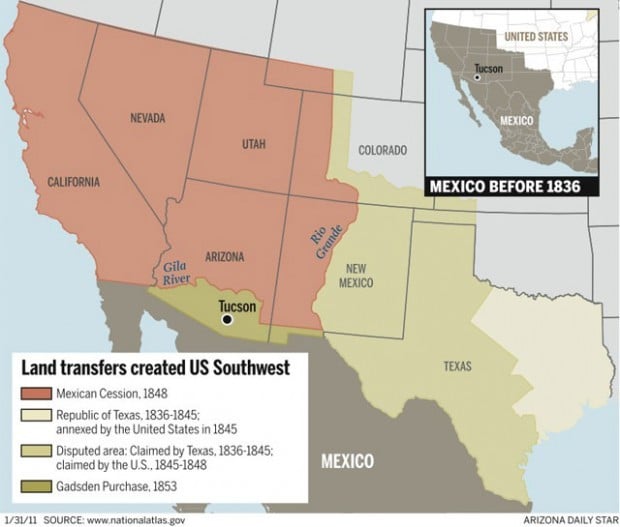
This annexation immediately escalated tensions with Mexico, which still considered Texas a rebellious province and viewed the annexation as an act of aggression. A major point of contention was the precise border between Texas and Mexico. The United States asserted the border was the Rio Grande, a claim that effectively doubled the size of Texas beyond what Mexico recognized. Mexico, on the other hand, insisted the border lay at the Nueces River, much further north. This unresolved territorial dispute, fueled by American desires for more land, particularly California, pushed the two nations to the brink of war.
The Mexican-American War: A Defining Struggle
With James K. Polk in the White House, a staunch believer in Manifest Destiny, the stage was set for conflict. Polk had explicitly campaigned on a platform of territorial expansion, particularly the acquisition of California. Despite diplomatic efforts to purchase the territories, Mexico staunchly refused to sell land it considered its sovereign territory.
In early 1846, President Polk ordered American troops, led by General Zachary Taylor, into the disputed territory between the Nueces River and the Rio Grande. When Mexican forces crossed the Rio Grande and engaged American troops, Polk seized the opportunity to declare that Mexico had “shed American blood upon American soil,” thus initiating the Mexican-American War in May 1846.
The war was fought on multiple fronts. In California, American settlers, with the backing of a small contingent of US military officers and explorers like John C. Frémont, staged the Bear Flag Revolt in June 1846. They declared the California Republic for a brief period before US naval and military forces formally took control of the region. Meanwhile, major American offensives pushed deep into Mexico, capturing key cities, including Veracruz and eventually Mexico City in September 1847.
The Mexican-American War was a decisive victory for the United States, but it came at a significant cost in lives and resources for both nations. Crucially, it was a war of conquest and territorial acquisition, not a voluntary sale or simple purchase negotiation, which would culminate in the significant land transfer outlined in the subsequent peace treaty. This period of intense conflict dramatically reshaped the geopolitical map of North America, laying the foundation for California’s eventual integration into the United States.

The Price of Peace: The Treaty of Guadalupe Hidalgo
The conclusion of the Mexican-American War brought about a moment of profound change, not just for Mexico and the United States, but especially for the vast territories caught in the middle. The ensuing peace treaty marked one of the largest land transfers in history, forever altering the geopolitical landscape and defining the modern borders of the American Southwest. It also included a payment that often fuels the misconception of California being “bought.”
Cession, Compensation, and Citizenship
After the fall of Mexico City in September 1847, a defeated Mexico was compelled to negotiate a peace settlement. The resulting agreement, the Treaty of Guadalupe Hidalgo, was signed on February 2, 1848, at Villa de Guadalupe Hidalgo (now part of Mexico City). This treaty fundamentally redefined the territorial boundaries of North America.
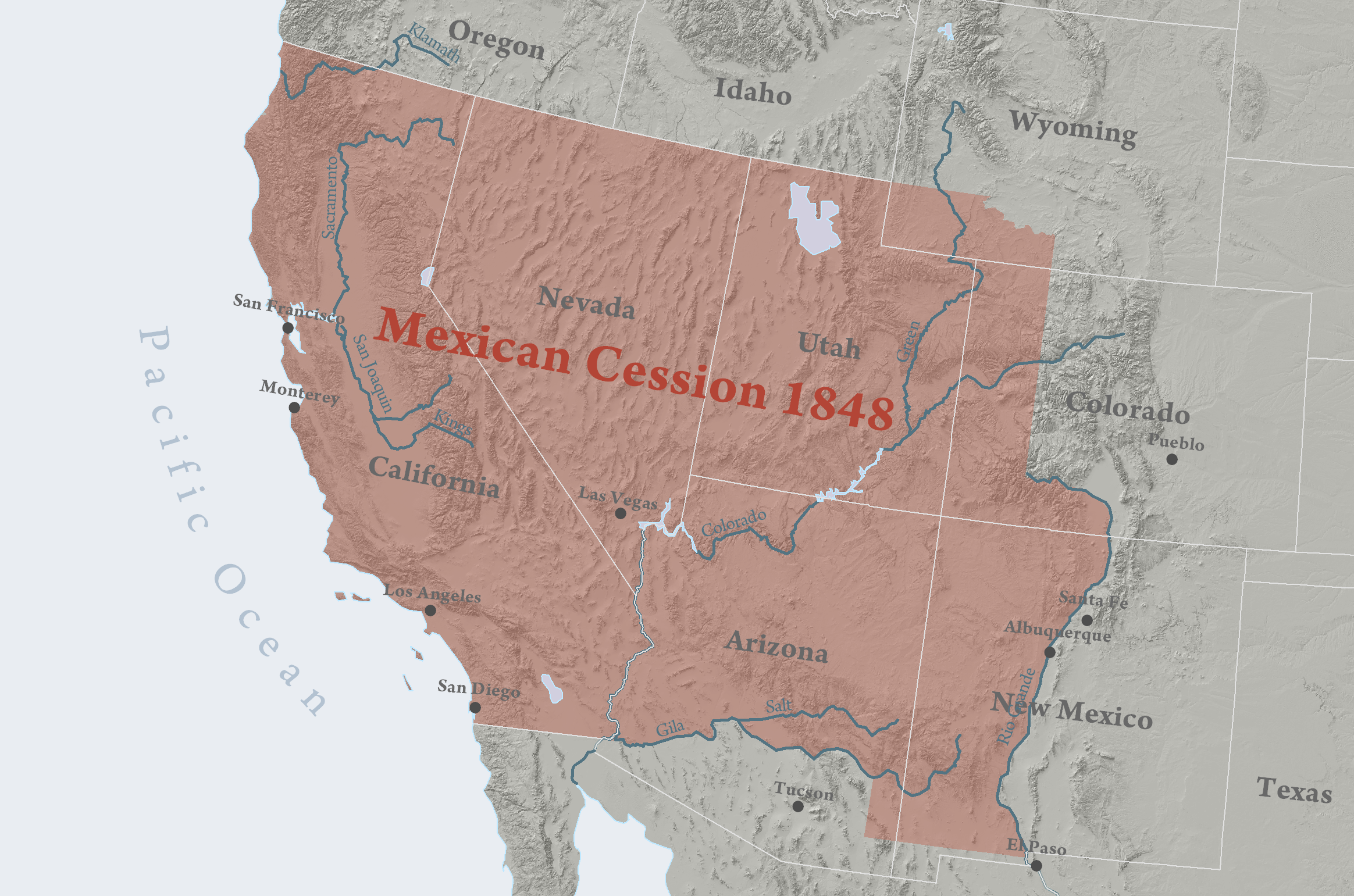
Under the terms of the Treaty of Guadalupe Hidalgo, Mexico formally ceded approximately 525,000 square miles of its northern territory to the United States. This immense land acquisition included the entirety of present-day California, Nevada, and Utah, most of Arizona and New Mexico, and parts of Colorado and Wyoming. In return for this vast territorial cession, the United States agreed to pay Mexico $15 million. Additionally, the US agreed to assume approximately $3.25 million in claims by American citizens against the Mexican government.
This payment is where the idea of “buying” California (and other territories) originates. However, it’s crucial to understand that this was not a voluntary transaction between two eager sellers and buyers. It was an indemnity payment for land that had been conquered in a war initiated by the United States with the explicit goal of acquiring these territories. The $15 million was less a purchase price and more a conciliatory sum, meant to soften the blow of a forced cession following a military defeat.
The treaty also included provisions for the protection of property and civil rights of Mexican citizens living in the ceded territories. They were given the option to retain their Mexican citizenship or become US citizens within one year. This aspect of the treaty highlights the human dimension of such large-scale geopolitical shifts, as thousands of individuals found themselves living under a new flag, with their cultural identities and legal status in transition.
The Golden Rush and Rapid Transformation
Remarkably, just days before the Treaty of Guadalupe Hidalgo was signed, gold was discovered by James W. Marshall at Sutter’s Mill near Coloma, California, on January 24, 1848. The news of this discovery, initially kept quiet, soon exploded, leading to the legendary California Gold Rush. This event triggered one of the largest mass migrations in human history.
Within months, hundreds of thousands of “forty-niners” from across the United States and around the world flocked to California, dreaming of striking it rich. This unprecedented influx of people had a profound and immediate impact on the newly acquired territory. Small settlements rapidly transformed into bustling cities, like San Francisco and Sacramento, which became vital hubs for miners and merchants. The demand for goods and services fueled an economic boom, driving the construction of roads, infrastructure, and a nascent industrial sector.
The Gold Rush accelerated California’s development at an astonishing pace, far outstripping what might have occurred under more typical frontier expansion. Its population skyrocketed, creating immediate pressure for organized governance. Within two short years of the treaty and the gold discovery, California achieved statehood in 1850, bypassing the traditional territorial phase. The rapid growth also created a unique social melting pot, with people from diverse backgrounds converging in search of opportunity, contributing to California’s enduring reputation for innovation and cultural diversity. Today, remnants of the Gold Rush era can still be explored in numerous historical towns and museums, offering fascinating insights for tourists into this pivotal period of California’s transformation.
California Today: A Legacy Forged in History and a Premier Destination
The complex history of California’s acquisition, from Indigenous roots to Spanish missions, Mexican ranchos, and the dramatic events of the Mexican-American War and Gold Rush, has forged a state unlike any other. Today, California stands as a testament to this layered past, manifesting in its unique cultural identity and its undeniable appeal as a world-class travel destination.
Cultural Fusion and Modern Marvels
Modern California is a vibrant mosaic, where the echoes of its past resonate alongside cutting-edge innovation. The historical influences of Spain and Mexico are palpable in its architecture, particularly in cities like San Diego with its charming Old Town, or the mission-style buildings that evoke a bygone era. Mexican cuisine has become a staple, deeply ingrained in the state’s culinary landscape, from street tacos to upscale eateries, reflecting centuries of shared history. The very names of many of its major cities – Los Angeles, San Francisco, Sacramento, San Jose – are enduring linguistic legacies of its Spanish and Mexican heritage.
Beyond its historical roots, California has evolved into a global epicenter of innovation, entertainment, and modern lifestyle. Hollywood defines the global film industry, while Silicon Valley is the birthplace of technological revolutions. Its major cities offer a dynamic urban experience, from the iconic Golden Gate Bridge and diverse neighborhoods of San Francisco to the sprawling metropolis of Los Angeles with its world-class museums, culinary scenes, and vibrant arts community. This cultural fusion creates a unique atmosphere that captivates visitors, offering an unparalleled blend of history, progress, and diverse experiences.
Exploring California’s Diverse Landscapes and Landmarks
One of California’s greatest draws for travelers is its astonishing geographical diversity. The state boasts an incredible array of natural wonders, from the majestic peaks of the Sierra Nevada mountains, home to Yosemite National Park and Lake Tahoe, to the scorching deserts of Death Valley. Its nearly 840 miles of coastline along the Pacific Ocean offer picturesque beaches, dramatic cliffs, and iconic drives like Highway 1. Inland, the fertile Central Valley is a agricultural powerhouse, while regions like Napa Valley and Sonoma are world-renowned for their vineyards and wine tourism.
Beyond its natural beauty, California is replete with landmarks that tell its story. Visitors can explore the preserved Spanish Missions that initiated European settlement, delve into the gritty realities of the Gold Rush era in towns like Columbia State Historic Park, or trace the paths of early settlers in historical parks and museums. For families, attractions like Disneyland Resort in Anaheim offer magical experiences, while adventurers can hike, surf, ski, or explore the state’s numerous national and state parks. The lifestyle offerings cater to every preference, from luxury travel experiences in Beverly Hills to budget-friendly backpacking trips through stunning wilderness.
Planning Your California Adventure: Travel, Accommodation, and Experiences
For anyone considering a trip to California, understanding its rich past adds an extra layer of appreciation to the journey. The state’s extensive network of highways makes road trips a popular and highly recommended way to experience its diverse regions, linking iconic cities and breathtaking natural sites. Whether you’re planning a family vacation, a romantic getaway, or a solo adventure, California offers an unparalleled range of experiences.
Accommodation options abound, catering to every budget and style. From luxurious five-star resorts and boutique hotels in metropolitan areas like Los Angeles and San Francisco to charming bed and breakfasts in wine country, modern apartments in vibrant neighborhoods, or rustic cabins near national parks, finding the perfect place to stay is part of the adventure. Websites for booking, reviews, and comparison tools make planning seamless, ensuring visitors find ideal hotels or long-term stays.
Beyond sightseeing, California offers a lifestyle of endless activities. Indulge in farm-to-table cuisine, explore bustling farmers’ markets, enjoy world-class shopping, attend cultural festivals, or immerse yourself in the arts scene. The state’s tourism sector is geared towards providing unforgettable experiences, whether it’s a wine-tasting tour in Napa, surfing lessons in Malibu, or a historical walking tour of Monterey.
In conclusion, the question “Did the US buy California from Mexico?” reveals a complex narrative. While a payment was made, it was an indemnity for conquered land following a war, not a simple purchase. This historical foundation, however, has ultimately created the magnificent California we know today – a land of compelling history, dynamic culture, and boundless travel opportunities. Its past is not just history; it is an integral part of its present identity, inviting visitors to explore, learn, and experience a truly unique corner of the world.
LifeOutOfTheBox is a participant in the Amazon Services LLC Associates Program, an affiliate advertising program designed to provide a means for sites to earn advertising fees by advertising and linking to Amazon.com. Amazon, the Amazon logo, AmazonSupply, and the AmazonSupply logo are trademarks of Amazon.com, Inc. or its affiliates. As an Amazon Associate we earn affiliate commissions from qualifying purchases.