
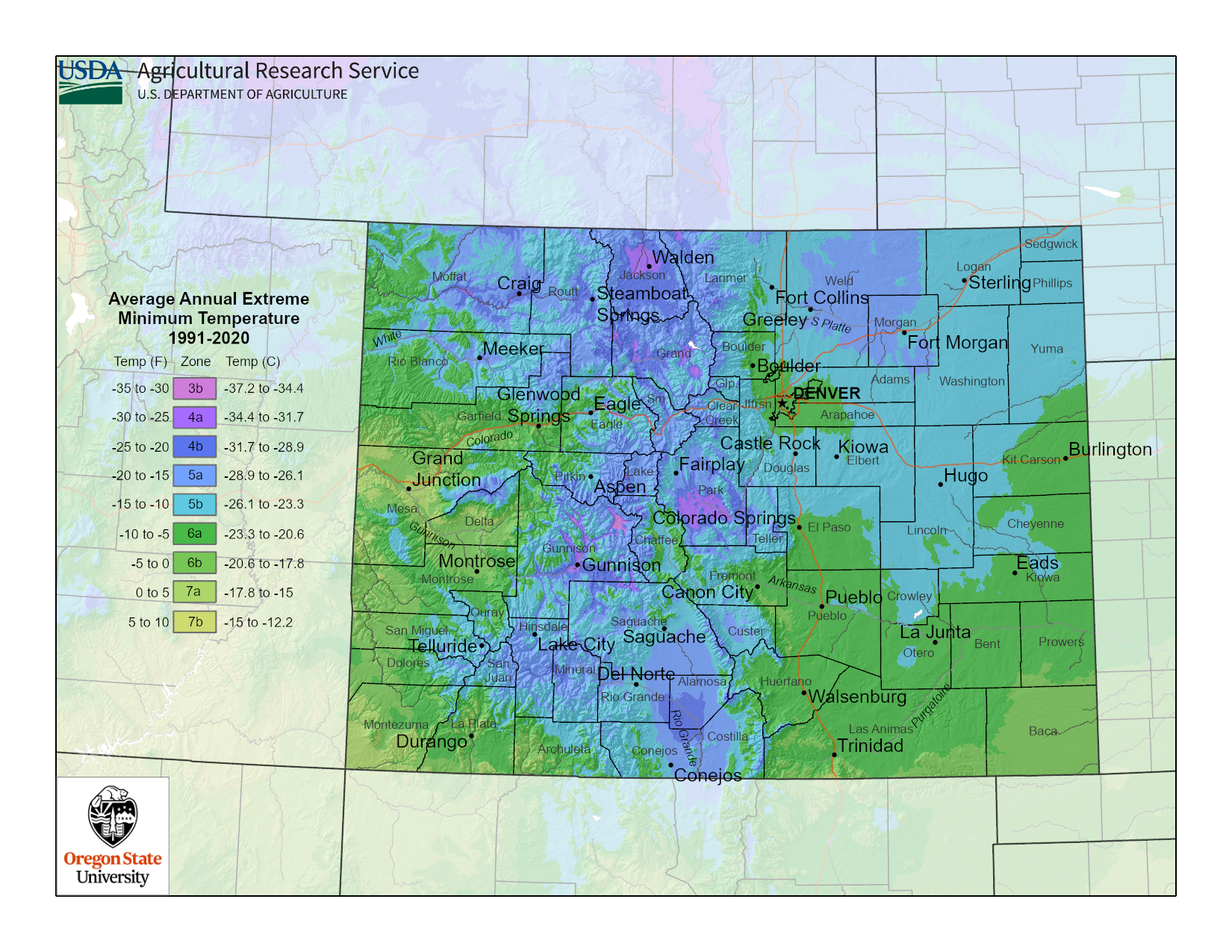
Understanding USDA Plant Hardiness Zones in Colorado
The concept of a “gardening zone” might sound technical, but its implications are remarkably practical, especially in a state as geographically complex as [Colorado]. These zones are a fundamental guide for gardeners and agriculturalists, indicating which plants are most likely to survive the winter in a particular location.
The Basics of Plant Hardiness Zones
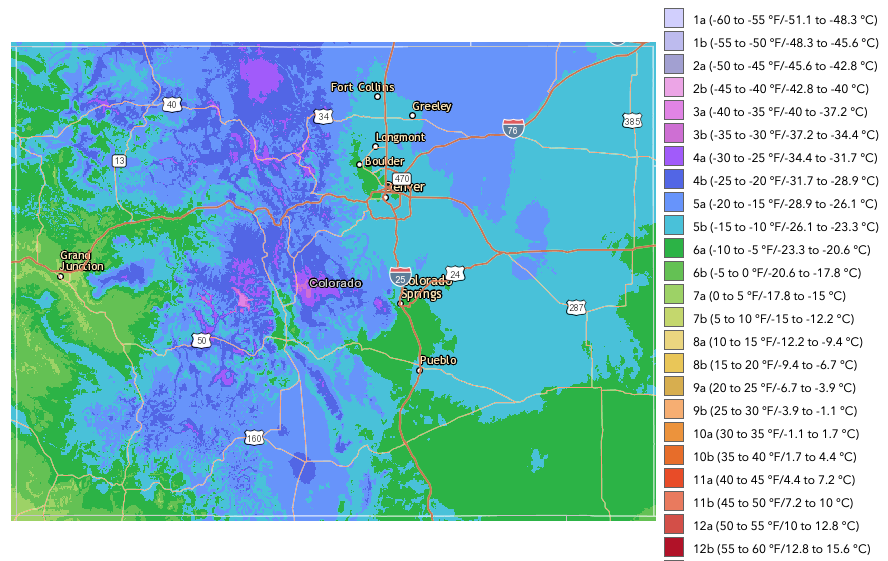
The [USDA Plant Hardiness Zone Map] is the standard by which gardeners and growers determine which plants are most likely to thrive at a given location. This map divides North America into 13 zones based on the average annual extreme minimum winter temperature. Each zone represents a 10°F range, further divided into ‘a’ and ‘b’ subzones, which represent a 5°F difference. For instance, Zone 5a experiences average minimum winter temperatures between -20°F and -15°F, while Zone 5b ranges from -15°F to -10°F.
Understanding these zones is vital because a plant’s hardiness refers to its ability to withstand cold temperatures. Planting a species not hardy enough for a specific zone means it’s unlikely to survive the winter, leading to disappointment and wasted effort. While the map is a powerful tool, it’s important to remember it’s based on averages and doesn’t account for microclimates, which are small areas with slightly different climates than their surroundings due to factors like elevation changes, proximity to bodies of water, or urban heat islands.
Factors Influencing Colorado’s Diverse Zones
[Colorado]’s geography is the primary driver of its astonishing range of hardiness zones, which span from Zone 3a in the harshest mountain regions to Zone 7a in some of the warmer, lower-elevation areas of the [Western Slope]. Several key factors contribute to this diversity:- Altitude: [Colorado] boasts an average elevation of 6,800 feet, the highest of any state. As elevation increases, temperatures generally drop, and the growing season shortens. For example, a high-altitude mountain town like [Gunnison] (elevation 7,700 feet) will be significantly colder than a city on the plains like [Denver] (elevation 5,280 feet), resulting in vastly different hardiness zones.
- Topography: The dramatic transition from the flat [Eastern Plains] to the abrupt rise of the [Front Range Urban Corridor] and then the towering [Rocky Mountains] creates distinct climatic regions. Mountains block weather patterns, create rain shadows, and influence wind direction and intensity, all of which impact local temperatures. The [Continental Divide], running through the state, creates a stark contrast between the climates on its eastern and western sides.
- Microclimates: These localized climatic conditions are particularly prevalent in [Colorado]. Urban heat islands, created by concrete and asphalt in cities like [Denver] or [Colorado Springs], can elevate temperatures slightly, effectively pushing an area into a warmer subzone. South-facing slopes receive more direct sunlight and retain heat better than north-facing ones, impacting plant growth. Proximity to large bodies of water (though limited in [Colorado]) or even large rocks and buildings can also create warmer pockets.
- Weather Patterns: [Colorado]’s weather is notoriously unpredictable. The state experiences significant temperature swings, especially in spring and fall, and can receive “Chinook” winds that rapidly raise temperatures. Late spring frosts and early fall freezes are common, making the effective growing season shorter than the zone might suggest.
This intricate interplay of altitude, topography, and weather means that within a relatively short distance, one can encounter multiple hardiness zones, making a precise understanding essential for successful gardening and for appreciating the natural ecosystems and human endeavors across the state.
A Geographical Tour of Colorado’s Hardiness Zones
To truly grasp [Colorado]’s gardening zones, it’s helpful to embark on a virtual tour across its distinct geographical regions. Each area offers unique challenges and opportunities for both horticulture and human activity.
The Eastern Plains: Zones 4a to 5b
Stretching from the foothills of the [Front Range] eastward to the borders of [Kansas] and [Nebraska], the [Eastern Plains] are characterized by their relatively flat topography, vast agricultural lands, and open skies. Here, the climate is typically drier and experiences more extreme temperature fluctuations than the mountain regions. Winter winds can be harsh, and summer days are hot. Cities like [Fort Collins], located near the edge of the plains and the [Front Range], often experience Zone 5b, while more exposed areas further east might dip into 4a.
For gardeners in the [Eastern Plains], selecting drought-tolerant plants that can withstand strong winds and significant temperature swings is key. This region is a major agricultural hub for wheat, corn, and other dryland crops, thanks to its rich soils and generally reliable (though sometimes sparse) precipitation. Visitors to the [Eastern Plains] can experience wide-open spaces, iconic [Colorado] sunsets, and a glimpse into the state’s agricultural heritage. Accommodation options range from traditional motels in towns to unique farm stays that offer an authentic local experience.
The Front Range Urban Corridor: Zones 5a to 6a
This densely populated strip, running from [Fort Collins] in the north through [Denver], [Boulder], and [Colorado Springs] to [Pueblo] in the south, presents a slightly milder microclimate compared to the open plains. While still experiencing four distinct seasons, the urban heat island effect often pushes these areas into Zones 5b or even 6a, particularly in city centers. This slight warmth extends the growing season, making a wider variety of plants viable.
Cities like [Denver] (Zone 5b to 6a) and [Colorado Springs] (Zone 5b) benefit from their proximity to the mountains, which offer some protection from extreme weather, and the presence of extensive infrastructure that retains heat. Public spaces like the [Denver Botanic Gardens] beautifully showcase what can thrive in these zones, featuring a mix of native plants and adapted species. For travelers, this corridor is the gateway to many of [Colorado]’s most famous landmarks, including the [Garden of the Gods] in [Colorado Springs] and the vibrant cultural attractions of [Denver]. Accommodation here is diverse, from luxury hotels like the [Grand Hyatt Denver] to boutique offerings and budget-friendly options, catering to every travel style.
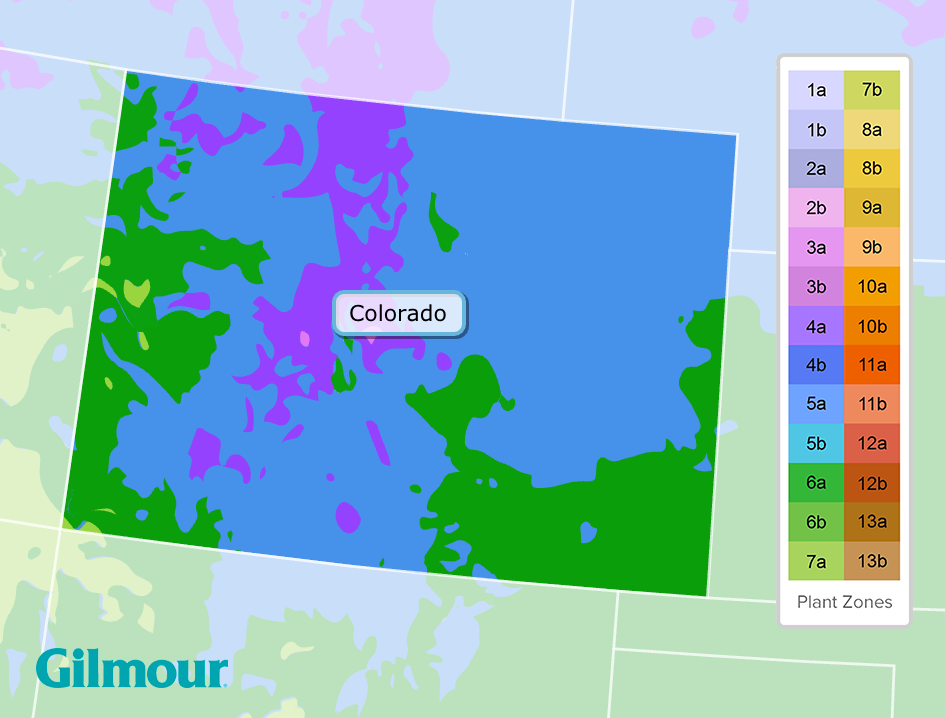
The Rocky Mountains: Zones 3a to 5a
The majestic [Rocky Mountains] dominate the central and western parts of [Colorado], offering some of the most dramatic landscapes and the coldest hardiness zones in the state. Elevations here range from 7,000 feet to over 14,000 feet, resulting in short growing seasons, heavy snowfall, and extremely low winter temperatures. Areas above treeline can be effectively Zone 2 or even colder, with only alpine tundra vegetation able to survive. Mountain towns like [Aspen], [Vail], [Telluride], and [Breckenridge] typically fall into Zones 3a to 5a, depending on their specific elevation and sheltered microclimates.
Gardening in the mountains requires extreme resilience and specific plant choices, often favoring native evergreens, hardy perennials, and cold-tolerant vegetables grown in raised beds or greenhouses. The primary draw of the [Rocky Mountains] for visitors is outdoor recreation, from world-class [ski resorts] like [Vail Resort] and [Aspen Snowmass] in winter to hiking, fishing, and climbing in summer. Landmarks like [Rocky Mountain National Park] showcase the rugged beauty of these high-altitude zones. Accommodation here often consists of luxurious ski chalets, rustic cabins, and charming mountain lodges such as [The Stanley Hotel] in [Estes Park], designed to offer comfort amidst the harsh, yet stunning, environment.
Western Slope and Canyons: Zones 4b to 7a
West of the [Continental Divide], [Colorado]’s climate begins to change, influenced by warmer air masses from the west. This region, often referred to as the [Western Slope], is characterized by mesas, canyons, and river valleys. While still experiencing cold winters at higher elevations, lower valley areas like those around [Grand Junction] and [Palisade] are surprisingly warm, reaching Zones 6a or even 7a. These warmer pockets are ideal for growing tender fruit crops that would perish on the [Eastern Plains] or in the mountains.
The unique climate of the [Western Slope] is evident in its agricultural bounty, particularly the famous [Palisade] peaches and an emerging wine industry. The desert-like landscapes, though stark, possess their own unique beauty, featuring landmarks such as [Colorado National Monument] and the [Black Canyon of the Gunnison National Park]. [Mesa Verde National Park] to the southwest, renowned for its [Anasazi Cliff Dwellings], offers a glimpse into ancient cultures that adapted to this unique environment. Travel to the [Western Slope] often involves scenic drives, outdoor adventures, and culinary tourism focused on local produce and wines. Accommodation varies from comfortable hotels in [Grand Junction] to charming bed and breakfasts in agricultural communities, providing a more relaxed pace of travel.
Beyond Gardening: Lifestyle, Travel, and Tourism in Colorado’s Diverse Climates
The intricate mosaic of [Colorado]’s gardening zones doesn’t just inform what you can plant; it profoundly shapes the state’s lifestyle, influences travel patterns, and defines its unique tourism offerings.
Cultivating a Colorado Lifestyle
For residents, understanding their local hardiness zone is more than a horticultural detail; it’s a part of the [Colorado] lifestyle. Many Coloradans embrace gardening, whether it’s cultivating small urban plots in [Denver] or maintaining expansive vegetable gardens in rural areas. This connection to the land fosters a vibrant local food scene, with farmers’ markets thriving in every season (weather permitting) and a strong farm-to-table movement across the state. The knowledge of what grows best locally also informs community planning, landscaping choices for parks and public spaces, and even the architectural design of homes to cope with specific climatic conditions.
Moreover, the diverse climates support a wide array of outdoor activities that are central to the [Colorado] way of life. Skiing and snowboarding dominate the mountain zones in winter, while hiking, mountain biking, and whitewater rafting are popular in warmer months across all regions. The contrast between lush mountain valleys and arid canyon lands creates endless opportunities for exploration and adventure, influencing residents’ recreational choices and drawing in visitors seeking specific types of outdoor experiences.
Travel and Tourism Through the Zones
For visitors, [Colorado]’s hardiness zones offer a roadmap to understanding the varying experiences available across the state. A winter trip to [Vail] (Zone 4a) promises pristine snow and world-class skiing, while a summer visit to [Palisade] (Zone 7a) provides a chance to indulge in fresh peaches and explore vineyards.
- Mountain Adventures: The high-altitude zones are synonymous with winter sports and summer alpine activities. [Ski resorts] like [Breckenridge Ski Resort], [Winter Park Resort], and [Steamboat Springs] are prime destinations for snow enthusiasts. In summer, landmarks like [Rocky Mountain National Park] and the [Maroon Bells] near [Aspen] offer unparalleled hiking, camping, and wildlife viewing amidst stunning scenery. Hotels and resorts in these areas are often designed with ski-in/ski-out access or offer luxury spa services, catering to a specific kind of adventurous yet comfortable travel.
- Urban Explorations: The milder zones of the [Front Range Urban Corridor] provide year-round access to cultural attractions, dining, and vibrant city life. Tourists can explore museums in [Denver], visit the [United States Air Force Academy] in [Colorado Springs], or enjoy the lively atmosphere of [Boulder]. These cities serve as excellent bases for day trips to nearby natural wonders like [Garden of the Gods] or for accessing mountain trails.
- Agricultural and Scenic Tours: The warmer zones of the [Western Slope] and parts of the [Eastern Plains] invite agricultural tourism. Visitors can tour wineries and orchards in [Palisade], sample local produce, or explore the unique desert landscapes of [Colorado National Monument]. The [Arkansas River Valley] near [Pueblo], though technically in the [Front Range] zone, also offers rich agricultural history and opportunities for white-water rafting. This allows for travel experiences focused on local food, culture, and nature’s quiet beauty.
Each zone contributes distinct offerings to [Colorado]’s tourism portfolio, from high-adrenaline adventures to peaceful rural retreats, ensuring there’s something for every traveler.
Accommodation Choices Across Colorado
The diversity of [Colorado]’s zones also significantly influences accommodation options, reflecting the local climate and popular activities.
- Mountain Resorts: In zones 3a-5a, particularly in popular ski towns, accommodations often feature rustic-luxury resorts such as [The Broadmoor Hotel] or [The St. Regis Aspen Resort], or cozy cabins and condos designed to withstand heavy snowfall and provide immediate access to outdoor activities. Amenities might include heated pools, roaring fireplaces, and ski storage.
- Urban Hotels: In the 5a-6a zones of the [Front Range], you’ll find a wide array of hotels, from international chains like the [Grand Hyatt Denver] to boutique hotels, apartments, and vacation rentals, catering to business travelers, convention attendees, and tourists exploring city attractions. These often feature modern amenities, easy access to transportation, and sophisticated dining options.
- Rural Lodges and Farm Stays: In the more agricultural and less developed areas of the [Eastern Plains] and [Western Slope], accommodation might include charming bed and breakfasts, family-run lodges, or unique farm stays, offering a more intimate and local experience. These options often emphasize local cuisine and outdoor activities like stargazing or wildlife viewing.
From luxury suites designed for high-altitude comfort to practical motels for road-trippers, [Colorado]’s accommodation sector is as varied as its gardening zones, each reflecting the unique demands and attractions of its specific climatic region.
In conclusion, [Colorado]’s identity as a state is profoundly intertwined with its diverse gardening zones. These zones, dictated by a complex interplay of altitude, topography, and microclimates, not only inform horticultural practices but also shape the very essence of [Colorado]’s lifestyle, its travel industry, and the myriad experiences it offers. Whether you’re planning to cultivate a high-altitude garden, embark on a skiing adventure, explore an urban landscape, or savor the fruits of the [Western Slope], understanding “What Gardening Zone Is Colorado?” provides a vital lens through which to appreciate the richness and complexity of this magnificent state.
LifeOutOfTheBox is a participant in the Amazon Services LLC Associates Program, an affiliate advertising program designed to provide a means for sites to earn advertising fees by advertising and linking to Amazon.com. Amazon, the Amazon logo, AmazonSupply, and the AmazonSupply logo are trademarks of Amazon.com, Inc. or its affiliates. As an Amazon Associate we earn affiliate commissions from qualifying purchases.