
The vast, wild, and breathtaking expanse that is Alaska officially joined the United States as its 49th state on January 3, 1959. This momentous occasion marked the culmination of a fascinating journey spanning nearly a century, transforming a remote frontier into a strategic and resource-rich jewel in the nation’s crown. For travelers and history enthusiasts alike, understanding Alaska’s path to statehood offers invaluable insight into its unique culture, rugged independence, and unparalleled natural beauty, shaping the very experiences that draw millions to its shores each year. From the echoes of its Russian past to the boom of the gold rush and its pivotal role in global conflicts, every chapter of Alaska’s history has contributed to the distinctive appeal that makes it a premier destination for adventure, cultural immersion, and awe-inspiring natural encounters.
The Road to Statehood: A Journey Through Time
The story of Alaska’s statehood is not a simple narrative but a complex tapestry woven with threads of international diplomacy, economic opportunity, and the enduring spirit of its residents. Long before it became a part of the United States, this northern land was home to diverse Native Alaskan peoples, whose cultures and traditions continue to thrive and enrich the state’s identity. European contact began with Russian explorers in the 18th century, leading to a period of Russian colonization focused primarily on fur trading.
From Russian America to Seward’s Folly
For nearly 126 years, Alaska was known as Russian America, a remote outpost of the Russian Empire. However, by the mid-19th century, Russia found its North American colony to be an economic burden, difficult to defend, and susceptible to British encroachment. Sensing an opportunity, United States Secretary of State William H. Seward negotiated the purchase of Alaska from Russia in 1867. The price tag was $7.2 million, or approximately two cents per acre, a deal that, at the time, was widely mocked by critics as “Seward’s Folly” or “Seward’s Icebox.” Many in the continental United States saw little value in the vast, frozen territory.
Despite the initial skepticism, Seward’s strategic foresight would prove invaluable. The formal transfer ceremony took place in Sitka, the capital of Russian America, on October 18, 1867. This moment transitioned Alaska from a Russian colony to a United States territory, though it would be decades before its true potential began to be realized. The early American administration was largely indifferent, often leaving Alaska under military rule, which fueled a growing desire among its residents for greater self-governance and recognition.
The Gold Rush and Early Development
The late 19th and early 20th centuries brought transformative changes to Alaska, largely driven by the discovery of vast mineral wealth. The legendary Klondike Gold Rush in the neighboring Yukon Territory of Canada in 1896, and subsequent discoveries within Alaska itself (notably near Nome and Fairbanks), triggered a massive influx of prospectors and adventurers. These gold rushes, while short-lived in their most intense phases, fundamentally reshaped the territory. They spurred the development of infrastructure, including transportation routes, towns, and supply networks, and brought significant population growth. Cities like Juneau and Fairbanks rapidly grew from mining camps into vibrant communities, laying the groundwork for more permanent settlement and economic activity.
This period also saw the rise of salmon canning and other industries, further diversifying Alaska’s economic base beyond furs. As the population grew and economic activity intensified, the call for more formal governance and representation in the United States Congress grew louder. In 1912, Alaska was officially designated an organized territory, granting it a measure of self-rule and a non-voting delegate in Congress, a significant step towards full statehood.
Wartime Significance and the Drive for Self-Governance
The mid-20th century, particularly the tumultuous years of World War II, irrevocably altered Alaska’s status and accelerated its journey towards statehood. Its strategic location, bordering the Soviet Union (now Russia) and offering a potential jumping-off point for attacks on North America, became terrifyingly clear after the Japanese invasion of the Aleutian Islands in 1942.
This threat spurred massive investment in military infrastructure, transforming Alaska into a critical defense outpost. Thousands of soldiers, engineers, and support staff poured into the territory, building airfields, naval bases, and the monumental Alaska Highway, which connected Alaska to the contiguous United States through Canada for the first time. The wartime boom brought modern conveniences, increased the population, and instilled a stronger sense of shared identity and purpose among Alaskans. They had defended the nation’s frontier and felt deserving of full partnership in the Union.
Post-war, the argument for statehood became irrefutable. Alaskans resented being governed from Washington, D.C., without full representation, especially given their vital contributions and the complex issues facing the territory. The post-war era saw intense lobbying efforts, including the drafting of the Alaska Constitution in 1955-1956, a document considered one of the most progressive of its time. These efforts, combined with sustained political advocacy, finally convinced the United States Congress and the President that it was time for Alaska to join the ranks of sovereign states.

The Official Date: January 3, 1959
After decades of petitions, political maneuvering, and a growing consensus on its strategic and economic importance, the goal of statehood for Alaska finally materialized. The wheels of federal government turned, and the necessary legislative steps were completed.
A New Star on the Flag
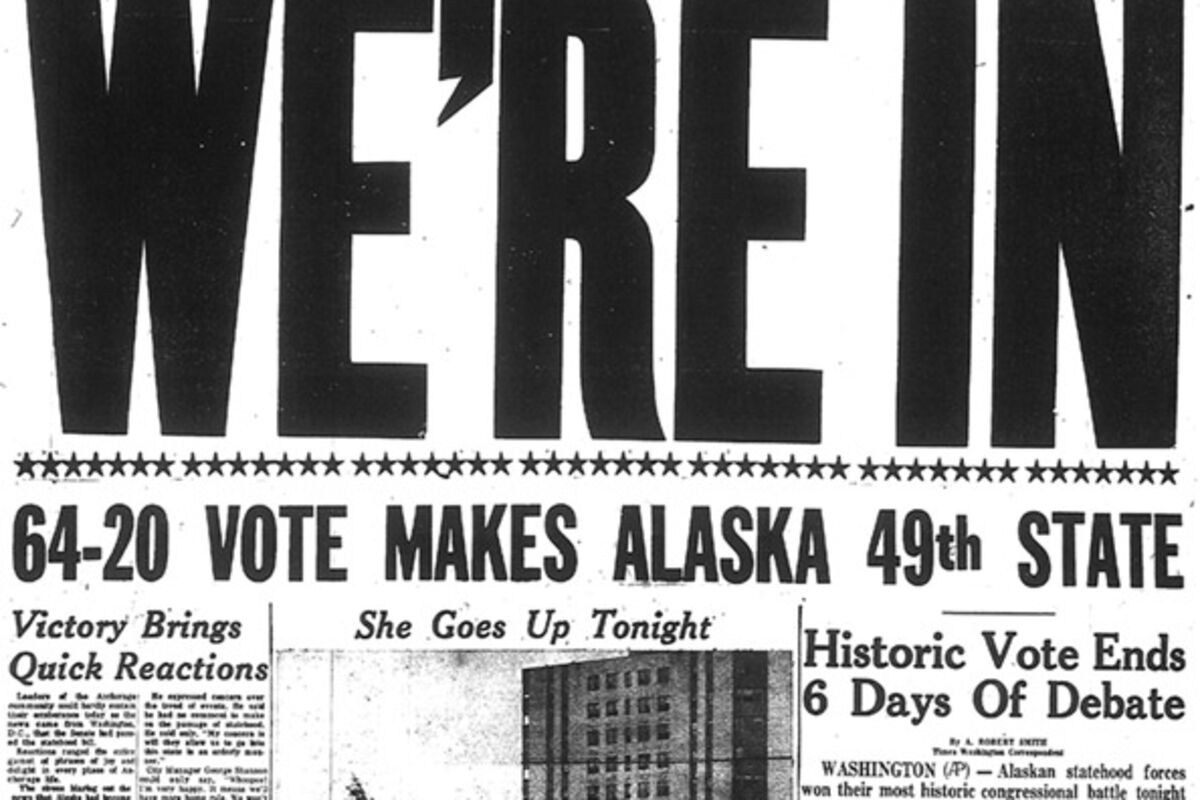
On June 30, 1958, the United States Congress passed the Alaska Statehood Act, officially inviting the territory to become a state. The act was signed into law by President Dwight D. Eisenhower on July 7, 1958. However, the process wasn’t immediately complete. Alaskans still needed to vote on the proposition in a general election, which they did overwhelmingly in August 1958, approving statehood by a margin of 5 to 1.
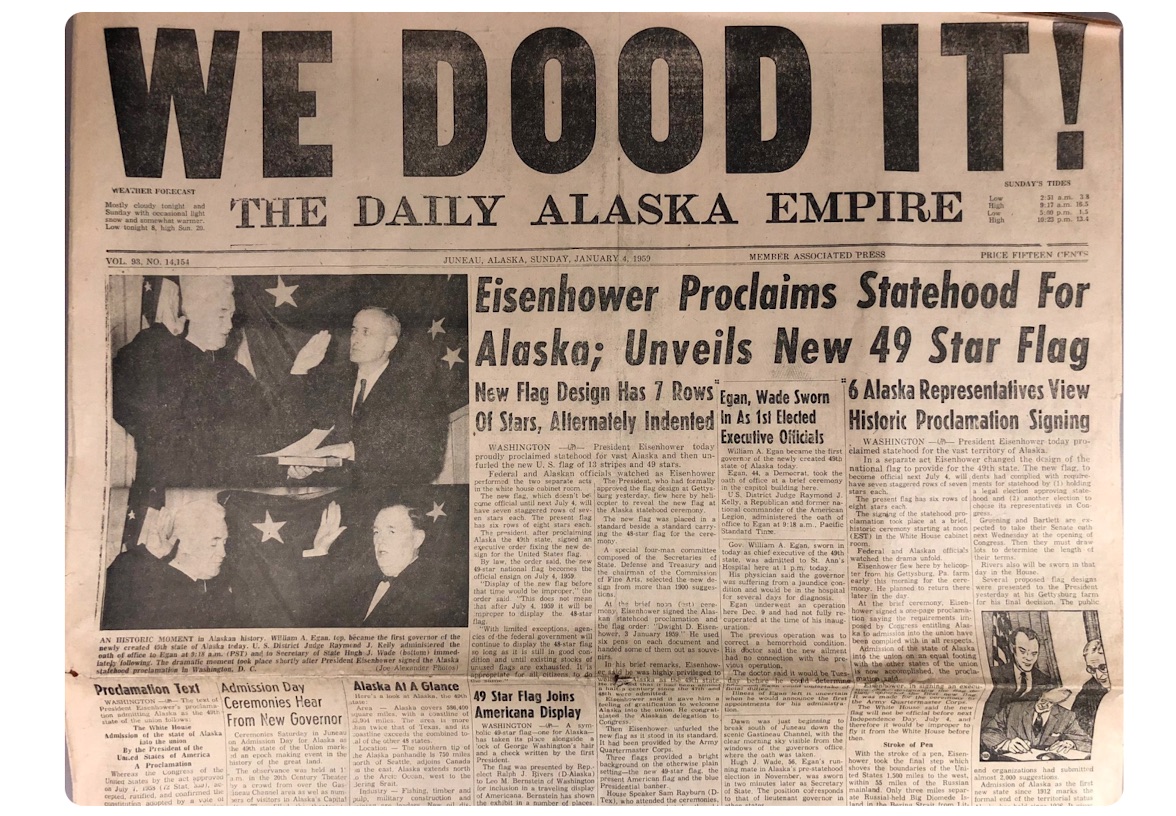
Following this popular vote, President Dwight D. Eisenhower issued Presidential Proclamation 3269 on January 3, 1959, formally admitting Alaska to the Union as the 49th state. This date is etched into American history, signifying the expansion of the United States and the recognition of a vast, distinct territory as an equal partner. The addition of Alaska necessitated a new design for the American flag, incorporating a 49th star, a change that was adopted on July 4, 1959.
Celebrating the 49th State
The news of statehood was met with widespread jubilation across Alaska. Celebrations erupted in communities from Juneau to Anchorage and Fairbanks, marking the end of a long struggle and the beginning of a new era. Alaskans could now elect their own full members of Congress, participate fully in national elections, and have greater control over their own destiny and vast natural resources.
Statehood opened doors for significant federal funding for infrastructure, education, and healthcare, further accelerating growth and development. It also brought renewed interest from tourism and industries looking to capitalize on Alaska’s immense untapped potential. The period immediately following statehood saw a surge in construction, population, and economic activity, as Alaska began to forge its identity as the “Last Frontier” state, a title it proudly holds to this day. This foundational event laid the groundwork for the modern Alaska that captivates travelers with its unique blend of history, culture, and untamed wilderness.
Exploring the 49th State: A Traveler’s Paradise Rooted in History
The rich history of Alaska’s journey to statehood is deeply intertwined with its appeal as a premier travel destination. From its Russian colonial past to its gold rush boomtowns and strategic military significance, every era has left an indelible mark, offering travelers a fascinating narrative to explore alongside its legendary natural wonders. For those planning an Alaskan adventure, understanding these historical layers enhances the experience, connecting modern attractions with the compelling stories of the past.
Historic Cities and Cultural Experiences
Alaska’s cities and towns are living museums, each offering a distinct window into its past.
- Juneau: The state capital, Juneau, provides a vibrant blend of historical charm and modern amenities. Nestled between towering mountains and the Gastineau Channel, it began as a gold mining camp and retains much of its frontier spirit. Visitors can explore its historic downtown, visit the Alaska State Museum to delve into the state’s natural and cultural history, or take a tram up Mount Roberts for panoramic views. A trip to the magnificent Mendenhall Glacier is a must, showcasing Alaska’s ongoing geological evolution.
- Sitka: As the former capital of Russian America and the site of the Alaska transfer ceremony, Sitka is steeped in history. Its architecture, like the iconic St. Michael’s Cathedral, reflects its Russian heritage, while the Sitka National Historical Park showcases stunning Tlingit totem poles and battle sites, offering profound insights into Native Alaskan culture and the conflicts that shaped the region.
- Anchorage: Alaska’s largest city, Anchorage, serves as a bustling hub for exploration. While relatively younger than Sitka or Juneau, its rapid growth during the 20th century, fueled by military presence and resource development, makes it a testament to Alaska’s frontier spirit. The Alaskan Native Heritage Center is an exceptional place to learn about the diverse cultures of Alaska’s indigenous peoples, including the Yup’ik, Inupiaq, Athabascan, Tlingit, Haida, and Tsimshian.
- Fairbanks: The “Golden Heart City,” Fairbanks, owes its existence to the gold rush. Today, it’s a prime location for experiencing the Northern Lights and exploring local history through attractions like the Fairbanks Ice Museum and gold panning tours, connecting visitors directly to the boom that helped drive Alaska towards statehood.
Beyond the urban centers, visitors can delve into local culture through unique festivals, savor fresh Alaskan seafood like king crab and salmon, and engage with the enduring legacy of the frontier.
Natural Wonders and Adventure Tourism
Alaska’s immense size and pristine wilderness are its most celebrated attributes, directly tied to its long history of isolation and resourcefulness. The state offers unparalleled opportunities for adventure tourism, from rugged expeditions to luxurious wilderness retreats.
- National Parks: The jewel in Alaska’s crown is Denali National Park and Preserve, home to Mount Denali, North America’s highest peak. Visitors can embark on wildlife viewing safaris, spot grizzly bears, moose, caribou, and wolves, or undertake challenging hikes. Other iconic parks include Glacier Bay National Park and Preserve, a UNESCO World Heritage site known for its tidewater glaciers and marine wildlife; Kenai Fjords National Park, where ice-capped mountains meet the ocean; and Katmai National Park and Preserve, famous for its brown bears fishing for salmon. The vast Arctic National Wildlife Refuge offers an even more remote and untouched experience.
- Cruises and Water Adventures: Exploring Alaska’s coastline via cruise ship is a popular way to witness its dramatic fjords, glaciers, and marine life. Routes through the Inside Passage or into Prince William Sound offer stunning vistas and opportunities for whale watching, kayaking, and glacier viewing.
- Unique Experiences: The state’s unique lifestyle offers activities not found anywhere else. Witnessing the spectacular Northern Lights in winter, experiencing the thrill of a dog sledding tour, or even attending the famous Iditarod Trail Sled Dog Race provide unforgettable memories. Scenic railway journeys on the Alaska Railroad also offer a comfortable way to see vast stretches of wilderness.
Planning Your Alaskan Adventure: Accommodation and Lifestyle
Alaska caters to a wide spectrum of travel preferences and budgets, ensuring that every visitor can find their ideal way to experience the Last Frontier.
- Accommodation Options: From luxurious wilderness lodges nestled deep in national parks to charming boutique hotels in historic towns, and from family-friendly resorts offering a plethora of amenities to cozy cabins perfect for a long-term stay, Alaska’s accommodation scene is as diverse as its landscape. High-end travelers might opt for resorts with private floatplane tours and gourmet dining, while budget-conscious adventurers can find comfortable inns, hostels, or opt for camping in designated areas. Booking in advance is always recommended, especially for peak season travel (June-August), and reading reviews can help comparison shop for the perfect fit.
- Lifestyle Travel: Alaska is a canvas for various travel lifestyles. For luxury travelers, exclusive cruises, heli-skiing adventures, and stays in opulent lodges offer unparalleled experiences. Family trips can focus on wildlife viewing, fishing charters, and educational visits to cultural centers. Budget travel might involve camping, hiking, and exploring the vast network of scenic drives. Business stays, while less common for tourism, are well-supported in major cities like Anchorage, with modern hotels and conference facilities. Regardless of your travel style, the spirit of adventure and discovery that defined Alaska’s path to statehood continues to infuse every journey.
In essence, when you visit Alaska today, you are not just exploring a magnificent landscape but also stepping into a vibrant history, a testament to resilience, strategic vision, and the enduring human spirit that ultimately led it to become the 49th state on January 3, 1959. It’s a journey through time and nature that promises unforgettable memories.
LifeOutOfTheBox is a participant in the Amazon Services LLC Associates Program, an affiliate advertising program designed to provide a means for sites to earn advertising fees by advertising and linking to Amazon.com. Amazon, the Amazon logo, AmazonSupply, and the AmazonSupply logo are trademarks of Amazon.com, Inc. or its affiliates. As an Amazon Associate we earn affiliate commissions from qualifying purchases.