
The shimmering horizon, the endless expanse of turquoise waters, and the tantalizing proximity of a forbidden island – the question “Can you see Cuba from Key West, Florida?” has captivated travelers and dreamers for generations. It’s a query steeped in history, geography, and a touch of romantic yearning. This vibrant island city, the southernmost point in the continental United States, feels like the edge of the world, a place where the air hums with tropical heat and a sense of alluring mystery. While the answer, in a strictly literal sense, leans towards no, the fascination with this geographical connection speaks volumes about Key West’s unique identity and its enduring allure as a travel destination.
Nestled at the very tip of the Florida Keys Overseas Highway, Key West serves as a captivating gateway to the Caribbean, blending rich history with a laid-back, eclectic lifestyle. For many, a visit to Key West isn’t just about the sun-drenched beaches or the lively Duval Street nightlife; it’s about experiencing a place where two distinct cultures, American and Cuban, have historically intertwined, despite political boundaries. From the tantalizing aroma of Cuban coffee wafting through old town streets to the architectural echoes found in its charming bungalows, the presence of Cuba is a subtle yet palpable thread woven into the fabric of Key West life. Understanding the visual impossibility of seeing the island nation only deepens the appreciation for the very real, tangible connections that persist, making Key West an essential stop for any traveler seeking a unique blend of history, culture, and undeniable island charm.
The Myth and the Reality: Distance and Visibility
The allure of seeing Cuba from Key West is a powerful one, often fueled by anecdotes and the sheer emotional impact of being at the southernmost point. However, geography and the laws of physics present a clear challenge to this romantic notion. To truly grasp why direct visual contact is virtually impossible, we must delve into the specifics of distance, the curvature of the Earth, and the atmospheric conditions that govern our line of sight.
The Geographical Proximity: How Close is Key West to Cuba?
The distance between Key West and Cuba is often quoted as being remarkably short, lending credence to the idea of visual contact. Indeed, the closest point between the United States and Cuba is not Key West itself, but a point just off its coast, marking a mere 90 miles (approximately 145 kilometers) to Havana. This stretch of water, known as the Straits of Florida, is a significant maritime passage, busy with boats traversing the Gulf of Mexico and the Atlantic Ocean.
While 90 miles might seem a small distance on a map, especially for an island as large as Cuba, it’s a substantial barrier when it comes to human eyesight. To put it in perspective, imagine standing on a beach and trying to see a small island 90 miles offshore – the task becomes immediately clear as impossible without aid. The sheer expanse of the ocean, despite being a mere fraction of the planet’s circumference, is enough to conceal landmasses beyond a certain very limited range due to the planet’s natural curvature. This inherent geographical fact is the primary reason why even on the clearest of days, the horizon from Key West remains an unbroken line of sea and sky.
The Science of Sight: Atmospheric Refraction and the Curvature of the Earth
The fundamental obstacle to seeing Cuba from Key West lies in the curvature of the Earth. For an average person standing at sea level, the visual horizon is approximately 3 miles (about 5 kilometers) away. Even from a slightly elevated vantage point, say 50 feet above sea level, the horizon only extends to about 8.6 miles (13.8 kilometers). To see an object 90 miles away, one would need to be at an extraordinary height, far beyond anything naturally available in Key West or even on Cuba’s northern coast.
Atmospheric refraction, the bending of light as it passes through different densities of air, can sometimes create optical illusions, making distant objects appear higher than they actually are. This phenomenon is responsible for mirages and can occasionally allow distant landmasses to be glimpsed under very specific and rare conditions, often known as “superior mirages.” However, for a landmass as far as Cuba from Key West, such conditions would need to be exceptionally strong and stable, far exceeding what is typically observed. The warm, humid air of South Florida and the Caribbean can sometimes create haze, which further reduces visibility, making any potential for atmospheric assistance negligible. In essence, while the atmosphere can play tricks on the eyes, it’s not enough to overcome the fundamental physics of the Earth’s spherical shape over such a vast distance.
Dispelling the Myth: Why Direct Sight is Virtually Impossible
In conclusion, the romantic notion of standing on the shores of Key West and gazing across the water to see the lights of Havana or the outline of Cuban mountains is, regrettably, a myth. The combination of the 90-mile distance, the Earth’s curvature, and typical atmospheric conditions makes direct visual contact an impossibility for the naked eye, and even with powerful binoculars, distinguishing anything beyond the immediate horizon is highly improbable. Travelers looking to witness a glimmer of Cuba will instead be greeted by the seemingly infinite expanse of the Straits of Florida, a beautiful but empty canvas stretching to a horizon that remains perpetually out of reach. This realization, however, doesn’t diminish the unique charm of Key West; instead, it shifts the focus from a literal visual connection to the deeper, more profound cultural and historical links that truly define the relationship between these two close yet distinct worlds.
What You Can See: Key West’s Unique Vantage Points
While the elusive view of Cuba may remain a tantalizing dream, Key West offers an abundance of breathtaking sights and experiences that more than compensate. The island’s strategic location provides stunning vistas of the vast ocean, dramatic sunsets, and an array of landmarks that underscore its position as the crossroads of the Caribbean and North America. Travelers to Key West are spoiled for choice when it comes to picturesque settings and memorable activities.
Iconic Landmarks: The Southernmost Point Buoy and Beyond
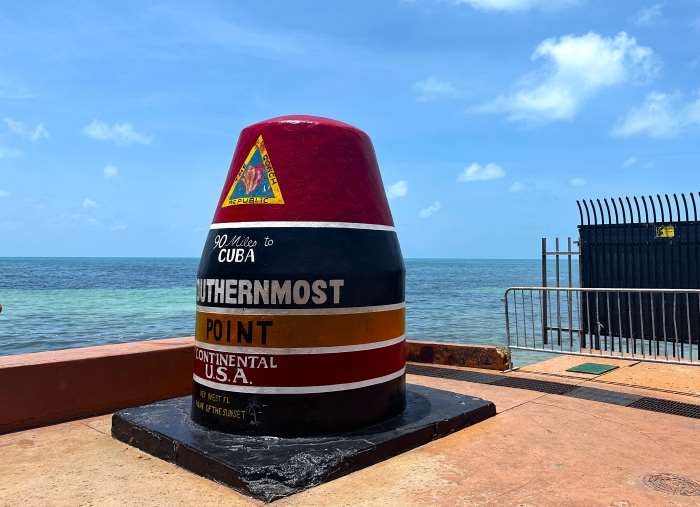
No visit to Key West is complete without a pilgrimage to the Southernmost Point Buoy. This iconic, brightly painted concrete buoy marks the lowest latitude accessible in the continental United States. Standing here, with the vast Atlantic Ocean stretching out before you, the sign famously declares “90 miles to Cuba,” perpetuating the myth while simultaneously celebrating the proximity. While you won’t see land, the view is spectacular – an endless expanse of blue, punctuated by passing boats and the occasional seabird. It’s a prime spot for photos and contemplation, allowing visitors to feel the geographic significance of their location.
Beyond the buoy, other elevated vantage points offer their own unique perspectives. The Key West Lighthouse and Keeper’s Quarters Museum, for example, provides panoramic views of the entire island and the surrounding waters. Climbing its 88 steps offers a historical journey as well as a visual reward, showcasing the intricate network of canals, the charming Old Town, and the open sea that surrounds this vibrant destination. Even from the elevated balconies of many Key West hotels, such as the historic Casa Marina Key West, Curio Collection by Hilton or the elegant The Reach Key West, Curio Collection by Hilton, guests can take in the endless horizon, perhaps imagining what lies just beyond their sight.

Experiencing the Horizon: Sunset Sails and Coastal Views
The horizon in Key West isn’t just a geographical line; it’s a spectacle. The island is world-renowned for its breathtaking sunsets, which are best experienced from the water. Sunset sails, departing nightly from various marinas, offer an unparalleled opportunity to witness the sun dip below the pristine waters, painting the sky in fiery hues of orange, pink, and purple. From the deck of a catamaran or a historic schooner, you can truly appreciate the vastness of the Straits of Florida, extending out into the Gulf of Mexico and the Atlantic. While Cuba remains unseen, the experience of being on the water, watching the day end in such a spectacular fashion, is a profound reminder of the beauty of our planet and the unique position of Key West.
Beyond formal excursions, simply strolling along the western waterfront, particularly around Mallory Square, offers equally impressive coastal views. The daily Sunset Celebration at Mallory Square is an institution, where street performers, food vendors, and eager spectators gather to bid farewell to the sun. Here, as the last rays vanish, one can feel connected to the history of sailors, explorers, and even those who might have dreamed of seeing Cuba from this very spot, their hopes carried on the evening breeze.
Cultural Echoes: Cuban Influence in Key West
While the physical landmass of Cuba might be invisible, its cultural influence in Key West is profoundly visible and palpable. For centuries, the two islands shared a close relationship, with frequent trade, migration, and cultural exchange. This historical bond is evident throughout Key West, making it a living testament to its Cuban heritage.
Wander through the streets of Old Town, particularly the historic Bahama Village, and you’ll encounter vibrant architecture, the aroma of strong coffee, and the rhythmic beats of Latin music. Cuban sandwiches are a local staple, found in countless cafes and eateries, prepared with an authenticity that transports you across the water. The famous Key West cigar factories, though few remain operational today, once thrived on the skills of Cuban artisans who brought their craft from Havana. Many families in Key West trace their ancestry back to Cuba, contributing to the island’s unique blend of American, Bahamian, and Cuban traditions. Exploring these cultural echoes offers a far more immersive and tangible connection to Cuba than any distant glimpse of its shores ever could, transforming the travel experience into a journey through shared history and vibrant heritage.
A Journey to Key West: Embracing the Island Vibe
Traveling to Key West is an experience in itself, offering more than just an attempt to peer across the ocean. It’s an invitation to immerse oneself in a destination that prides itself on its individuality, historical significance, and a lifestyle that’s truly one-of-a-kind. From its distinctive accommodations to its endless array of activities, Key West offers something for every type of traveler, whether they’re seeking luxury, adventure, or a simple escape.
Planning Your Visit: Where to Stay and What to Do
When planning your trip to Key West, accommodation is key to embracing the island’s unique atmosphere. The island boasts a diverse range of options, from charming guesthouses and boutique hotels nestled in historic Old Town to luxurious resorts offering oceanfront amenities. For those seeking a vibrant, central location, properties along or near Duval Street put you in the heart of the action. Hotels like Margaritaville Beach House Key West offer a blend of comfort and quintessential Key West spirit, while more secluded villas or apartments can provide a tranquil escape.
Beyond accommodation, the list of things to do in Key West is extensive. History buffs will revel in visits to the Ernest Hemingway Home and Museum, the Harry S. Truman Little White House, and the Audubon House & Tropical Gardens. Nature enthusiasts can explore the rich marine life through snorkeling or diving excursions to the world’s third-largest barrier reef, or take a day trip to the pristine and remote Dry Tortugas National Park, accessible by ferry or seaplane, which offers incredible birdwatching and historical fort exploration. For those who prefer to stay on land, cycling is a popular way to navigate the flat, scenic streets, allowing for spontaneous discoveries of hidden courtyards and colorful houses.
Beyond the Horizon: Exploring Key West’s Charms
Key West’s charm lies in its ability to transport visitors to a different pace of life. The island’s ethos, often summarized by “One Human Family,” promotes a welcoming and inclusive atmosphere. Beyond the popular tourist spots, take time to explore the quieter lanes, discover local art galleries, or enjoy fresh seafood at a waterfront restaurant. The experience of Key West is not just about what you see, but what you feel – the gentle sea breeze, the vibrant music, the scent of jasmine and frangipani, and the palpable sense of relaxation that pervades the air.
Whether you’re looking for a luxury travel experience with high-end resorts and gourmet dining, or a budget-friendly adventure exploring the island’s natural beauty and quirky street life, Key West caters to all. Family trips can involve educational visits to the Key West Aquarium or beach days at Fort Zachary Taylor Historic State Park, while business stays might combine conference facilities with opportunities to unwind in a tropical paradise. The true magic of Key West lies not in its ability to offer a glimpse of Cuba, but in its capacity to create an unforgettable escape, distinct and rich in its own right.

Connecting with Cuba: Historical and Modern Links
While the visual link to Cuba may be absent, the historical and cultural ties remain incredibly strong, shaping Key West’s identity. Historically, Key West served as a refuge for Cuban revolutionaries and a key hub for cigar manufacturing, heavily influenced by Cuban immigrants. This legacy continues to manifest in various ways, from the architecture to the cuisine and the names of local businesses.
Today, though direct travel remains complex, there’s a modern curiosity and respect for the neighbor just 90 miles away. Local establishments often pay homage to this connection, and discussions about Cuba’s past and future are common. Visitors can find themselves immersed in this ongoing dialogue, perhaps over a cafecito at a local spot that feels like a piece of Havana transported to Florida. This rich tapestry of shared history and continuous cultural resonance offers a much more profound and authentic “connection” to Cuba than any fleeting glimpse across the water.
In conclusion, while the question of seeing Cuba from Key West may lead to a definitive “no” from a purely optical standpoint, the spirit of Cuba is undeniably present in this enchanting island city. Key West offers a travel experience that transcends mere sightseeing, inviting visitors to explore a destination rich in history, vibrant culture, and unparalleled natural beauty. It’s a place where the horizon may hide one island, but reveals an endless world of experiences and connections, making it a truly exceptional choice for any discerning traveler.
LifeOutOfTheBox is a participant in the Amazon Services LLC Associates Program, an affiliate advertising program designed to provide a means for sites to earn advertising fees by advertising and linking to Amazon.com. Amazon, the Amazon logo, AmazonSupply, and the AmazonSupply logo are trademarks of Amazon.com, Inc. or its affiliates. As an Amazon Associate we earn affiliate commissions from qualifying purchases.