
The vast and diverse landscapes of the United States hold a particular allure for travelers, with regions offering vastly different experiences. Two such states, Virginia and Florida, are separated by a significant distance, making the journey between them a consideration for many vacationers and road-trippers. Understanding the geographical separation, the various travel options, and the potential stops along the way can transform a potentially daunting trip into an exciting adventure. Whether you’re planning a leisurely drive, a quick flight, or are simply curious about the sheer expanse of the eastern seaboard, this guide will delve into the specifics of traversing the miles between these two captivating states.
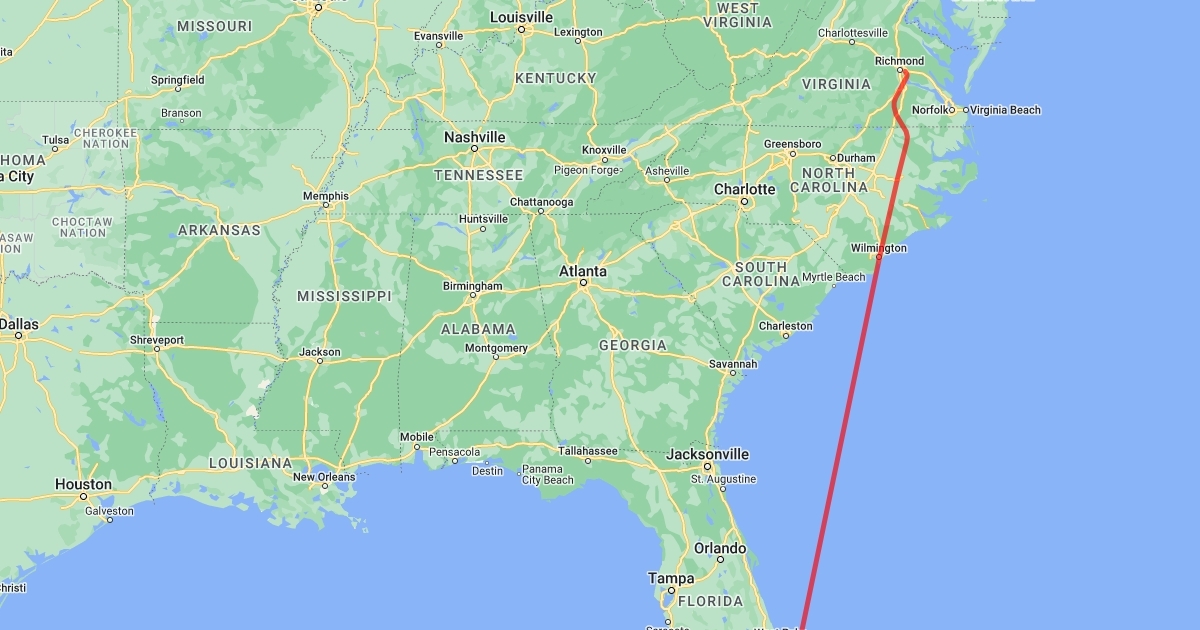
The question “How far is Virginia from Florida?” is not just about mileage; it’s about the planning, the anticipation, and the potential discoveries that lie between. These two states, while both integral to the fabric of American history and culture, offer distinct attractions. Virginia, with its rich colonial past, majestic mountains, and significant historical sites, contrasts sharply with Florida‘s sun-drenched beaches, vibrant theme parks, and subtropical allure. This geographical proximity, or rather, the distance, allows for a compelling journey that can encompass a wide spectrum of American experiences.
Understanding the Distance and Travel Options
The distance between Virginia and Florida is not a single, fixed number. It varies significantly depending on the specific starting and ending points within each state. For instance, the drive from Virginia Beach, Virginia, to Miami, Florida, will be considerably longer than a journey from, say, Abingdon, Virginia, to Jacksonville, Florida. However, for general planning purposes, we can establish a range.
Driving Distances and Times
The most common way to connect Virginia and Florida for many travelers is by car. This method offers the flexibility to explore at your own pace, discover hidden gems, and break up the journey with overnight stays. The primary driving route typically follows Interstate 95 (I-95), the major north-south highway on the East Coast.
-
Northern Virginia to Northern Florida: A typical drive from the Washington D.C. metropolitan area (often considered part of the Virginia sphere for travel purposes) to Jacksonville, Florida, covers approximately 650-700 miles. This journey can take anywhere from 10 to 12 hours of pure driving time, excluding stops for gas, food, and rest. It’s highly recommended to break this trip into at least two days to avoid driver fatigue and allow for some exploration.
-
Central/Southern Virginia to Central Florida: Traveling from cities like Richmond, Virginia, to Orlando, Florida, involves a distance of around 600-650 miles. This translates to roughly 9 to 11 hours of driving. Again, an overnight stop is strongly advised for safety and enjoyment.
-
Coastal Virginia to South Florida: The longest of the common driving routes, a trip from Virginia Beach, Virginia, to Miami, Florida, can span over 800-850 miles. This substantial distance will require a minimum of 12 to 14 hours of driving, making a two-day trip essential.
When planning a road trip, it’s crucial to account for potential traffic delays, especially around major metropolitan areas like Richmond, Raleigh, Charlotte, Atlanta (if taking an alternate route), and the various cities in South Carolina and Georgia. Weather conditions can also play a significant role, particularly during hurricane season in Florida or winter weather in Virginia.
Air Travel: The Fastest Option
For those prioritizing speed and convenience, air travel is the clear winner. Numerous flights operate daily between major airports in Virginia and Florida, making the journey a matter of a few hours.
-
Major Airports in Virginia: Key airports serving Virginia include Washington Dulles International Airport (IAD), Ronald Reagan Washington National Airport (DCA), Norfolk International Airport (ORF), and Richmond International Airport (RIC).
-
Major Airports in Florida: Florida boasts a vast network of airports, with the busiest and most relevant for this route including Orlando International Airport (MCO), Miami International Airport (MIA), Fort Lauderdale-Hollywood International Airport (FLL), Tampa International Airport (TPA), and Jacksonville International Airport (JAX).
The flight time between these states is typically between 1.5 to 2.5 hours, depending on the specific origin and destination. However, it’s important to factor in the time spent traveling to and from airports, check-in procedures, security, and baggage claim. All in all, a flight can often be completed within a single day, from door to door, much faster than driving. Airlines like Delta Air Lines, American Airlines, United Airlines, and budget carriers such as Spirit Airlines and Frontier Airlines offer frequent services on these routes.
Other Modes of Transportation
While driving and flying are the most popular, other options exist.
-
Bus Travel: Companies like Greyhound offer intercity bus services. This can be a budget-friendly option, but it is significantly slower than flying and often less comfortable than driving, with journeys frequently taking 15-20 hours or more, depending on the route and stops.
-
Train Travel: Amtrak provides train services along the East Coast. While scenic and potentially more relaxing than driving for some, train journeys from Virginia to Florida are often lengthy, taking upwards of 15-18 hours, and can be more expensive than bus travel. The routes may also involve transfers, adding to the overall travel time.
Exploring the Journey: Highlights and Stopovers
The distance between Virginia and Florida is an opportunity for exploration. The corridor of states between them – North Carolina, South Carolina, and Georgia – is rich with history, natural beauty, and cultural experiences. Planning strategic stopovers can transform the travel time into a memorable part of your vacation.
Heading South Through the Carolinas and Georgia

As you begin your southward journey from Virginia, you’ll quickly enter North Carolina.
-
North Carolina: This state offers a diverse range of attractions. For history buffs, the Outer Banks offer a glimpse into early American settlements, including the site of the first English colony at Roanoke Island and the Wright Brothers National Memorial at Kill Devil Hills. For those interested in urban exploration, Charlotte provides a bustling city environment with attractions like the NASCAR Hall of Fame. If you prefer nature, the Great Smoky Mountains National Park on the western border of North Carolina and Tennessee is a stunning destination, though it requires a detour from the most direct route. A more direct route might take you through cities like Greensboro or Raleigh.
-
South Carolina: Continuing south, South Carolina presents a charming blend of coastal beauty and historical significance. Charleston is a must-visit, renowned for its well-preserved antebellum architecture, cobblestone streets, and culinary scene. Take a carriage tour through the historic district or visit Fort Sumter, where the first shots of the Civil War were fired. Further inland, Columbia, the state capital, offers museums and the Riverbanks Zoo and Garden. For beach lovers, the Myrtle Beach area is a popular resort destination.
-
Georgia: Your journey will then lead you into Georgia. Savannah is another jewel of the South, famous for its picturesque squares, moss-draped oak trees, and hauntingly beautiful historic district. A visit to Tybee Island nearby offers a more relaxed coastal experience. If you’re heading towards central Florida, you might pass close to Atlanta, a major hub with attractions like the Georgia Aquarium, World of Coca-Cola, and the Martin Luther King, Jr. National Historical Park. Alternatively, a more easterly route keeps you closer to the coast, passing through areas like Jekyll Island and St. Simons Island, known for their natural beauty and historic charm.
Coastal Escapes and Inland Adventures
The choice of route can significantly influence your experience.
Coastal Route
Opting for a more easterly route allows for frequent stops at beach towns and coastal attractions.
- Virginia Beach, Virginia: Start your journey from the Atlantic coast of Virginia, a popular destination known for its boardwalk, beaches, and the Virginia Aquarium & Marine Science Center.
- Myrtle Beach, South Carolina: A classic East Coast beach resort town, Myrtle Beach offers a plethora of entertainment options, from amusement parks and live shows to championship golf courses.
- Outer Banks, North Carolina: If time permits and you prefer a more natural and historical experience, a detour to the Outer Banks is highly recommended. Explore the Cape Hatteras National Seashore and learn about the region’s infamous shipwrecks.
- St. Augustine, Florida: As the oldest continuously inhabited European-established settlement in the United States, St. Augustine offers a deep dive into colonial history with its impressive Castillo de San Marcos National Monument and charming historic district.
Inland Route
An inland route might be quicker or offer different types of attractions, often focusing on larger cities and historical sites.
- Richmond, Virginia: As the capital of Virginia and a significant city during the Civil War, Richmond boasts numerous historical sites, including the American Civil War Museum and the Virginia State Capitol.
- Charlotte, North Carolina: A major financial center, Charlotte offers a vibrant urban experience with attractions like the Discovery Place Science museum and the Mint Museum.
- Atlanta, Georgia: This bustling metropolis is a hub of culture and history. Visit the National Center for Civil and Human Rights or explore the birthplace of Coca-Cola.
- Jacksonville, Florida: Located in Northeast Florida, Jacksonville is a large city with a growing culinary scene and access to beautiful beaches like Atlantic Beach and Ponte Vedra Beach.
Accommodation and Lifestyle Considerations
The journey between Virginia and Florida can cater to a wide range of travel styles and budgets, from luxurious resort stays to economical road trip stops.
Hotels and Resorts Along the Way
The I-95 corridor is lined with a vast array of lodging options to suit every preference and budget.
- Budget-Friendly Motels: Numerous national chains like Motel 6, Super 8, and Days Inn offer affordable and convenient overnight stays in towns and cities along the route. These are ideal for travelers looking to simply rest and refresh before continuing their journey.
- Mid-Range Hotels: Brands such as Holiday Inn Express, Hampton Inn, and Comfort Inn provide comfortable accommodations with added amenities like complimentary breakfast and Wi-Fi, offering a good balance of price and comfort.
- Upscale Hotels and Resorts: For those seeking a more luxurious experience, larger cities along the route, such as Charlotte, Raleigh, Savannah, and Orlando, boast a selection of upscale hotels and resorts. Destinations like the Ritz-Carlton or Marriott properties offer premium services and amenities. In resort areas like Myrtle Beach or Orlando, you can find sprawling complexes with pools, spas, and various entertainment options.
- Unique Stays: Consider exploring boutique hotels in historic districts of cities like Charleston or Savannah for a more charming and immersive experience. Bed and breakfasts offer a personal touch and often provide local insights.
Lifestyle Travel: Making the Most of Your Trip
The distance between Virginia and Florida presents an excellent opportunity to tailor your travel experience to your specific lifestyle.
-
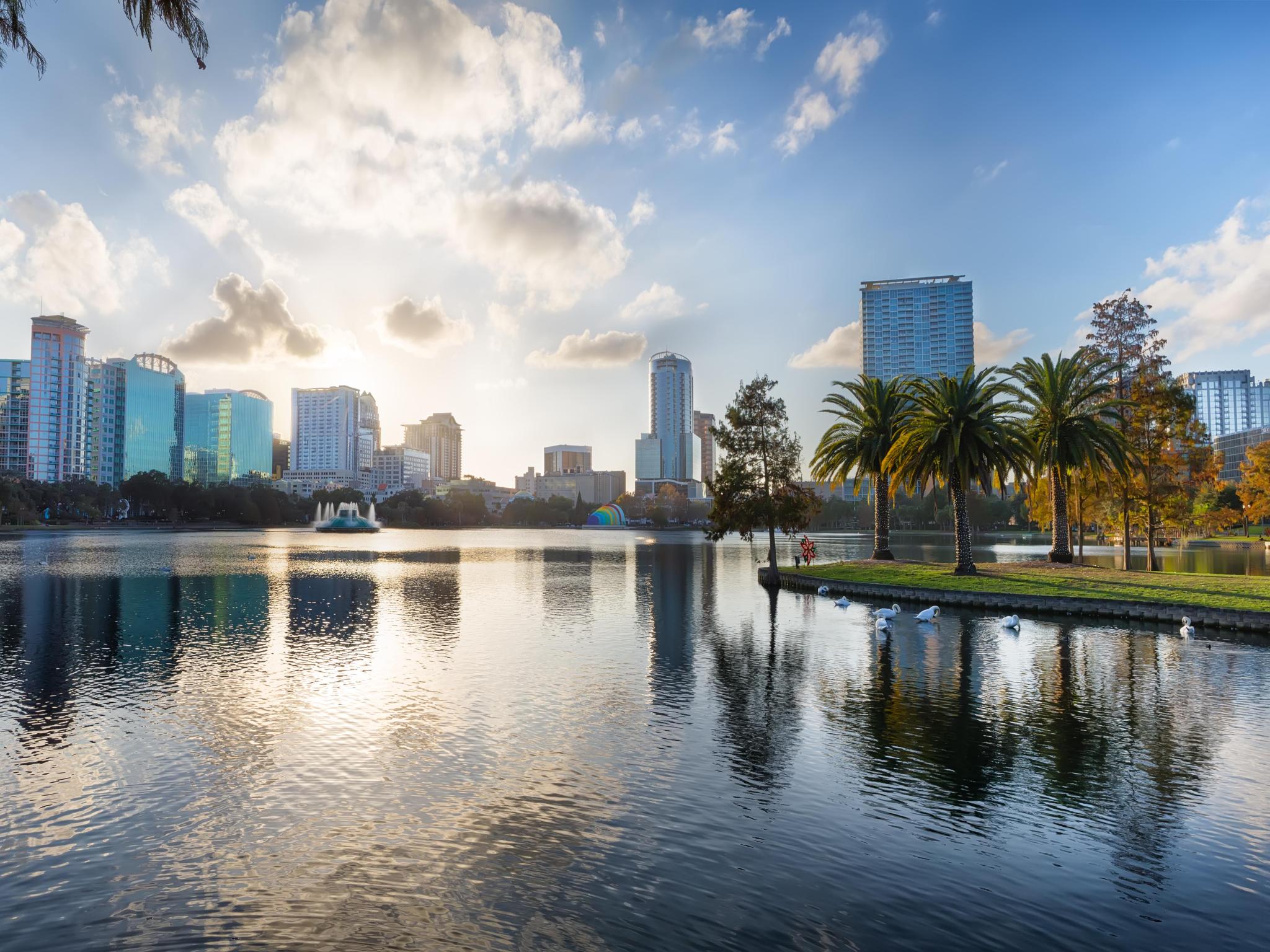
Family Trips: If traveling with children, consider stopovers that cater to family fun. Orlando, Florida, is famous for its theme parks like Walt Disney World and Universal Orlando Resort, which can be a primary destination or a significant stop on your journey. Zoos, aquariums, and interactive museums in cities like Charlotte and Atlanta are also great for kids.
-
Luxury Travel: For a more opulent journey, consider staying in high-end hotels or resorts in cities like Charleston or Savannah. Indulge in fine dining experiences, explore art galleries, and enjoy spa treatments. The coastal areas of South Carolina and Georgia also offer exclusive private villas and golf resorts.
-
Budget Travel: Backpackers or those on a tight budget can rely on hostels in larger cities, budget motels, and packing their own food for road trips. Prioritizing free attractions like scenic drives, state parks, and historical markers can significantly reduce costs.
-
Road Trip Experiences: The true essence of a road trip lies in the unplanned discoveries. Consider stopping at roadside attractions, exploring small towns off the beaten path, and sampling local cuisine. Look for antique shops, farmers’ markets, and local festivals that might be happening during your travel dates. The journey itself, with its changing landscapes and the anticipation of arrival, can be as rewarding as the destination.
In conclusion, the distance between Virginia and Florida is a dynamic measurement, influenced by your chosen mode of transport and specific starting and ending points. However, it is this very distance that opens up a corridor of rich experiences, from historical landmarks and vibrant cities to serene beaches and natural wonders. Whether you choose to fly in a matter of hours or embark on a multi-day road trip, the journey between these two iconic American states promises a diverse and unforgettable travel adventure.
LifeOutOfTheBox is a participant in the Amazon Services LLC Associates Program, an affiliate advertising program designed to provide a means for sites to earn advertising fees by advertising and linking to Amazon.com. Amazon, the Amazon logo, AmazonSupply, and the AmazonSupply logo are trademarks of Amazon.com, Inc. or its affiliates. As an Amazon Associate we earn affiliate commissions from qualifying purchases.