
Navigating the process of legally changing your name in Florida might seem daunting, but with a clear understanding of the steps involved, it can be a straightforward and manageable endeavor. Whether you’re embarking on a new chapter in your life, seeking to align your legal identity with your preferred name, or undergoing a significant personal transition, this guide will walk you through the essential requirements and procedures. While our focus at Life Out Of The Box often revolves around exploring the vibrant travel destinations, luxurious hotels, rich tourism, diverse accommodation options, iconic landmarks, and the exciting lifestyle that the Sunshine State offers, we also understand the importance of practical life administration. This article aims to provide you with the concrete information you need to successfully change your name in Florida.

The Sunshine State, with its sun-drenched beaches and bustling cities like Miami and Orlando, is a popular place for both residents and visitors. Understanding the legalities of personal identity, such as a name change, is a crucial aspect of settling in or simply managing your affairs while in Florida. This process is designed to ensure your identity is officially recognized by all relevant authorities, from your driver’s license to your financial records and any future travel plans you might make.
Understanding the Legal Framework for Name Changes in Florida
In Florida, the legal mechanism for changing your name is primarily through a court order. Unlike some states that may allow informal name changes through usage, Florida requires a formal petition to the court. This process ensures that the change is official and legally binding, providing you with a court-issued document that serves as proof of your new legal name. This is particularly important if you plan to update your identification documents, which is a necessary step after obtaining your court order.
The relevant statute governing name changes in Florida is Florida Statute Chapter 68. This chapter outlines the procedures and requirements for both adults and minors seeking a legal name change. It’s important to familiarize yourself with these statutes, or at least understand the core principles they represent, to ensure you meet all the necessary criteria.
Eligibility Requirements
Before you begin the application process, it’s essential to confirm your eligibility. Generally, to change your name legally in Florida, you must:
- Be a Resident of Florida: You need to demonstrate that you are a resident of the state. This typically involves providing proof of residency, such as a Florida driver’s license, Florida voter registration, or utility bills in your name at a Florida address. If you’re considering a long-term stay or a business stay in a city like Tampa, ensuring you meet residency requirements is key.
- Be of Legal Age or Have Parental Consent: Individuals 18 years or older can petition for a name change independently. For individuals under 18, a parent or legal guardian must petition on their behalf, and the consent of both parents is generally required unless specific circumstances apply (e.g., sole custody).
- Not Be Changing Your Name for Fraudulent Purposes: The court will not grant a name change if it’s perceived to be for deceptive or fraudulent reasons, such as evading debt, criminal prosecution, or other legal obligations.
It’s worth noting that a name change is a significant legal action. It impacts your entire identity and how you are recognized by the government and various institutions. Therefore, the courts take this process seriously to prevent misuse.
The Step-by-Step Process of Changing Your Name in Florida
The journey to a new legal name in Florida involves several distinct stages. Each step is crucial and requires attention to detail to ensure a smooth progression.
Step 1: Obtaining and Completing the Petition for Name Change
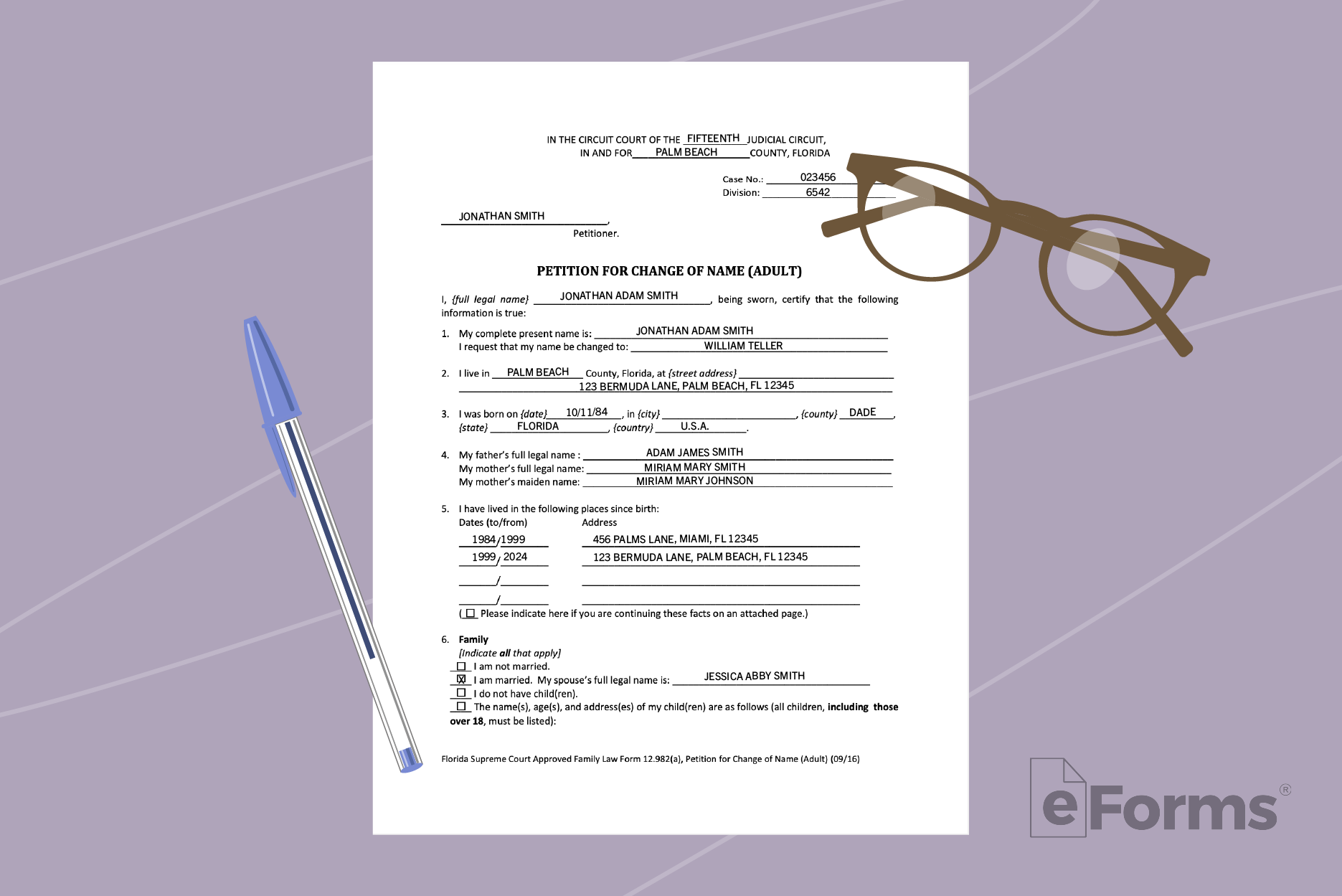
The initial and most critical step is to file a formal petition with the appropriate court. This is typically done in the county where you reside. The petition form, often referred to as a “Petition for Change of Name,” is usually available from the clerk of the circuit court in your county or can sometimes be found on the court’s website.
The petition will require you to provide specific information, including:
- Your Current Legal Name: The name you are legally known by.
- Your Proposed New Name: The name you wish to adopt.
- Your Date and Place of Birth: Essential identifying information.
- Your Current Address: Proof of residency.
- The Reason for the Name Change: You will need to state your justification for wanting to change your name. This can be for personal preference, marriage, divorce, or other valid reasons. For instance, if you’ve fallen in love with the culture and cuisine of New Orleans and are considering a move, officially changing your name might be part of your life transition.
- Information about Children (if applicable): If you are petitioning for a name change for yourself and also for minor children, you will need to provide their details.
You must complete this petition accurately and truthfully. Any omissions or misrepresentations could lead to delays or denial of your petition.
Step 2: Filing the Petition and Paying the Fees
Once the petition is filled out, you will need to file it with the Clerk of the Circuit Court in your county. Along with the petition, you will be required to pay a filing fee. The amount of this fee can vary by county, so it’s advisable to check with your local clerk’s office for the exact cost. If you cannot afford the filing fee, you may be eligible to apply for a waiver of fees by filing a “Petition to Sue or Defend as an Indigent.”
After filing, the clerk will assign a case number to your petition. This number will be essential for all future correspondence and filings related to your name change.
Step 3: Publication of Notice (for Adult Name Changes)
In most cases for adult name changes in Florida, there’s a requirement to publish a notice of your intention to change your name. This is done to inform the public and allow anyone who might have a legal objection to come forward. The notice typically needs to be published in a newspaper of general circulation in the county where you filed your petition, for a specific number of weeks as prescribed by law.
The clerk’s office can provide guidance on the specific publication requirements, including the newspaper to use and the duration of the publication. You will need to obtain an affidavit from the newspaper confirming that the notice has been published. This affidavit must then be filed with the court.

Step 4: The Court Hearing
After the publication period has passed (if applicable) and all necessary documents are filed, the court will typically schedule a hearing. In many cases, for straightforward adult name changes without objections, the hearing is brief. The judge will review your petition, the supporting documents, and ask you a few questions to confirm your identity and the legitimacy of your request.
During the hearing, you will be sworn in and asked to confirm your current name, the name you wish to adopt, and that you are not seeking the change for fraudulent purposes. If the judge is satisfied with your petition and has no concerns, they will sign an order granting your name change.
Step 5: Obtaining the Final Court Order
The “Final Judgment or Order for Change of Name” is the official document that legally changes your name. Once signed by the judge, you should obtain certified copies of this order from the clerk of the court. These certified copies are crucial as they will be required to update your identification and other legal documents. Keep these copies in a safe place, as you may need them for various purposes.
Post-Name Change Administrative Steps
Receiving your court order is a significant milestone, but it’s only the first part of the process. The next phase involves updating your identification and informing relevant institutions about your new legal name. This is where your travel aspirations might take a pause as you handle these administrative tasks.
Updating Your Identification Documents
You will need to present your certified court order to various agencies to update your legal identification. This typically includes:
- Social Security Administration (SSA): You must update your Social Security card to reflect your new name. This is usually the first step as many other agencies will verify your information with the SSA. You can do this by visiting a local SSA office with your court order and proof of identity.
- Driver’s License or State ID: Visit your local Florida Department of Highway Safety and Motor Vehicles (DHSMV) office. You will need to bring your court order, your existing driver’s license or ID, and other required documentation to get an updated license or ID.
- Passport: If you have a passport, you will need to apply for a new one with your updated name. The U.S. Department of State has specific procedures for name changes on passports.
- Other Identification: Don’t forget to update any other forms of identification you may possess, such as student IDs, professional licenses, etc.
Informing Other Important Institutions
Beyond official identification, you’ll need to update your name with a wide range of other entities:
- Banks and Financial Institutions: Inform your banks, credit card companies, and any other financial service providers about your name change. You’ll likely need to provide a certified copy of your court order.
- Employer: Notify your employer and human resources department so they can update your payroll and employee records.
- Insurance Providers: Update your insurance policies (auto, home, health, life) to reflect your new name.
- Utilities and Service Providers: Contact your utility companies (electricity, water, gas, internet, phone) to update your account information.
- Voter Registration: Update your voter registration with the supervisor of elections in your county.
- Landlord or Mortgage Company: If you rent or own property, inform your landlord or mortgage company.
- Post Office: Consider informing the U.S. Postal Service about your name change to ensure mail delivery continues without issues.
- Medical Providers: Update your records with your doctors, dentists, and other healthcare providers.
- Educational Institutions: If you are a student or alumnus, inform your school or university.
- Travel Companies and Loyalty Programs: If you are a frequent traveler, you’ll want to update your name on airline loyalty programs, hotel accounts (like your membership with a chain such as Marriott or Hilton), and with any travel agencies you use. This is crucial for booking flights or hotels under your new legal name, especially if you’re planning a dream vacation to Key West or a resort stay in the Florida Keys.
Considerations for Specific Situations
While the general process remains consistent, certain situations might have specific nuances.
Name Changes for Minors
When changing the name of a minor, the process requires the consent of both parents, unless one parent has sole legal custody, is deceased, or cannot be located. If one parent objects, the court will hold a hearing to determine the best interests of the child. The petition must clearly state the relationship between the petitioner and the minor and provide all necessary information about the child and both parents.
Name Changes Due to Marriage or Divorce
While many people change their names informally or through a simplified process associated with marriage or divorce decrees, Florida law still technically requires a formal name change process if you want the change to be legally recognized beyond the immediate context of the marriage certificate or divorce decree. However, a marriage certificate can serve as a valid document to change your name with the Social Security Administration and the Department of State for passport purposes. Similarly, a final judgment of divorce may allow for the restoration of a former name. It is always best to consult with the clerk of the court or an attorney to confirm the specific requirements based on your marital status and the documentation you have.
Reasons for Name Change and Court Scrutiny
As mentioned, courts require a legitimate reason for a name change. Common reasons include:
- Personal Preference: Simply disliking your current name or feeling it doesn’t represent you.
- Simplification: Changing a name that is difficult to spell or pronounce.
- Cultural or Religious Reasons: Adopting a name that aligns with cultural heritage or religious beliefs.
- Marriage: Taking a spouse’s surname.
- Divorce: Reverting to a maiden name or former surname.
- Gender Transition: Adopting a name that aligns with one’s gender identity.
The court will scrutinize requests that appear to be for fraudulent purposes, such as avoiding debt collectors or evading criminal charges. Providing a clear and honest explanation for your request is vital.
Changing your name in Florida is a significant legal step that allows you to officially align your identity with your chosen name. By understanding and diligently following the procedures outlined above, you can navigate this process effectively, ensuring your legal identity is updated accurately and smoothly. This will allow you to proceed with all your future endeavors, from exploring new travel experiences to settling into your chosen accommodation and embracing the lifestyle you desire.
LifeOutOfTheBox is a participant in the Amazon Services LLC Associates Program, an affiliate advertising program designed to provide a means for sites to earn advertising fees by advertising and linking to Amazon.com. Amazon, the Amazon logo, AmazonSupply, and the AmazonSupply logo are trademarks of Amazon.com, Inc. or its affiliates. As an Amazon Associate we earn affiliate commissions from qualifying purchases.