
The Sunshine State, a perennial favorite for travelers seeking sun-drenched beaches, vibrant theme parks, and a rich tapestry of culture, often sparks a curious question for those planning a visit or even for residents delving deeper into their state’s identity: “What Circuit Is Florida In?” While seemingly straightforward, this query can lead down a rabbit hole of legal, administrative, and even geographical interpretations. Understanding Florida’s “circuit” depends entirely on the context—whether we’re discussing its judicial system, its place within federal agencies, or its broader regional identity. This exploration will navigate these different layers, providing a comprehensive understanding of how Florida is categorized and organized within various frameworks, all while highlighting the incredible experiences the state offers.

Navigating Florida’s Judicial Circuits
When most people inquire about a state’s “circuit,” they are referring to its judicial system. In the United States, the judicial power is divided between the federal government and individual state governments. Each state, in turn, organizes its court system, and a crucial component of this organization is the establishment of judicial circuits. A judicial circuit is a geographical area that encompasses a specific set of counties, and within each circuit, a group of judges presides over the courts.
Understanding Florida’s Circuit Courts
Florida is no exception to this organizational structure. The state’s judicial power is vested in its Circuit Courts, which are the trial courts of general jurisdiction. This means that Circuit Courts have the authority to hear a vast array of cases, including felony criminal prosecutions, civil disputes involving significant amounts of money, family law matters such as divorce and child custody, probate cases, and juvenile delinquency cases.
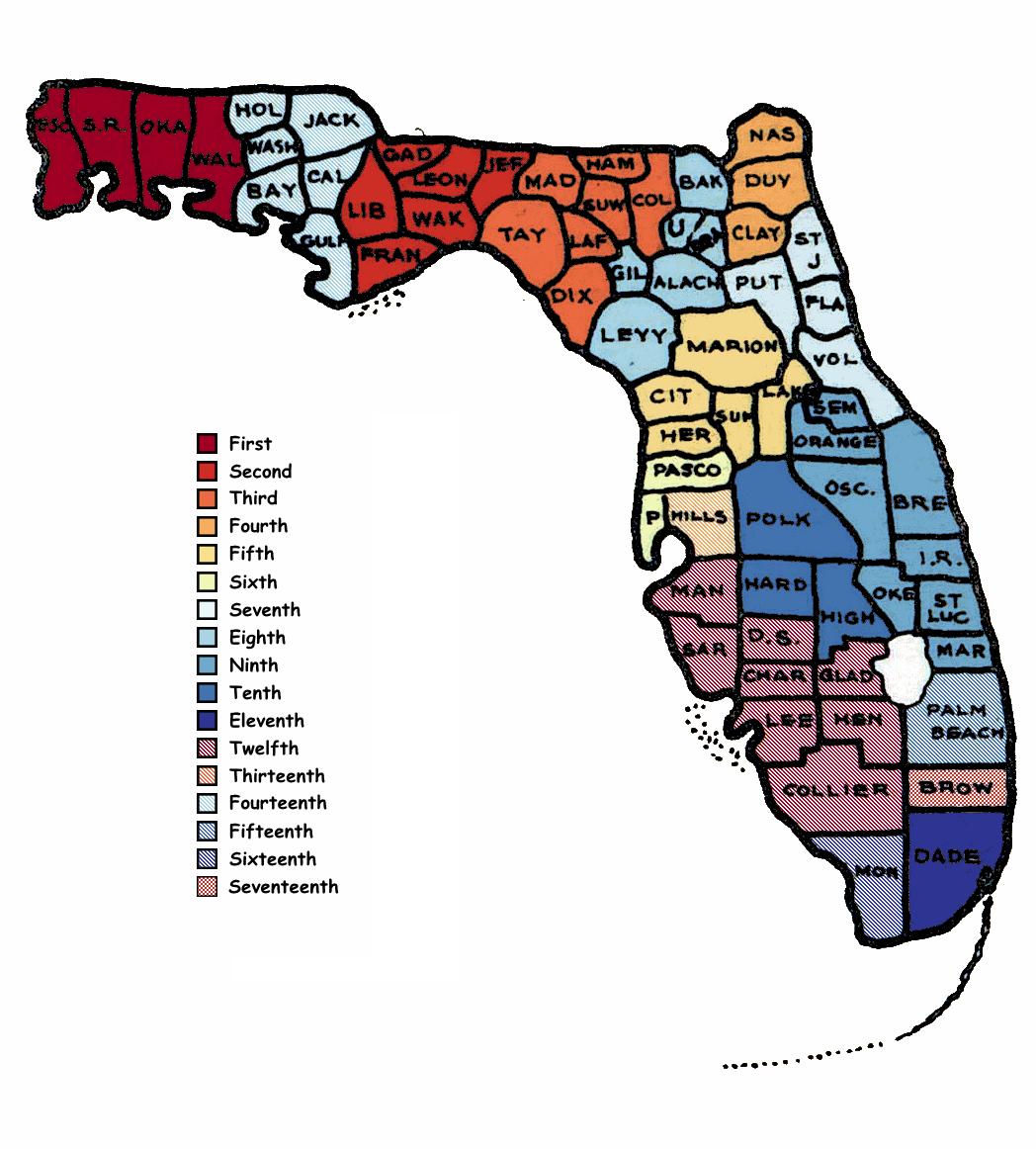
Florida is divided into twenty judicial circuits, each with its own designated circuit court. The number of judges assigned to each circuit varies depending on the population and caseload of the area. Some circuits are highly populated and thus have a larger judicial presence, while others are more sparsely populated and have fewer judges. For instance, the Miami-Dade County Circuit is one of the busiest, reflecting the immense volume of legal matters in the state’s most populous county. In contrast, smaller, more rural circuits might cover several counties with a shared bench of judges.
The specific circuit a particular county falls into is determined by state law. This division ensures that justice is administered efficiently and accessibly to all residents. When a legal case is filed in Florida, it is filed within the appropriate judicial circuit based on the location of the incident or the residency of the parties involved.
Examples of Florida’s Judicial Circuits:
To provide a clearer picture, let’s look at a few examples of Florida’s judicial circuits and the counties they encompass:
- First Judicial Circuit: This circuit includes the counties of Escambia, Okaloosa, Santa Rosa, and Walton. Known for its beautiful Gulf Coast beaches, this region is a popular tourist destination.
- Twelfth Judicial Circuit: Comprising Charlotte, DeSoto, Manatee, and Sarasota counties, this circuit is home to some of Florida’s most charming coastal cities and renowned arts and culture scenes.
- Thirteenth Judicial Circuit: This circuit covers the bustling metropolitan area of Hillsborough County, including the major city of Tampa.
- Fifteenth Judicial Circuit: Stretching across Palm Beach, Martin, St. Lucie, and Okeechobee counties, this circuit encompasses a diverse range of communities, from affluent coastal cities to more agricultural inland areas.
Understanding which circuit a particular area of Florida belongs to is essential for legal professionals, litigants, and anyone seeking to understand the administration of justice within the state.
Federal Circuits and Florida’s Appellate Jurisdiction
Beyond the state’s internal judicial organization, the concept of a “circuit” also applies to the federal court system. The United States is divided into twelve geographically defined federal judicial circuits, each with its own United States Court of Appeals. These appellate courts do not conduct trials but rather review decisions made by the federal district courts within their respective circuits.
The Eleventh Circuit Court of Appeals
Florida, along with Alabama and Georgia, falls under the jurisdiction of the United States Court of Appeals for the Eleventh Circuit. This means that appeals from federal district courts located in Florida are heard by the judges of the Eleventh Circuit. The court is headquartered in Atlanta, Georgia, and its decisions set precedent for federal law within these three states.
The establishment of federal judicial circuits is a fundamental aspect of the federal judiciary, designed to ensure that the appellate review process is manageable and that justice is administered consistently across the nation. When a federal case decided in a Florida district court is appealed, it will ascend to the Eleventh Circuit for review. This federal circuit structure is distinct from the state’s judicial circuits, though both play vital roles in the legal landscape.
Beyond the Law: Florida’s Regional and Tourism Circuits
While judicial circuits are the most formal interpretation of “what circuit is Florida in?”, the term can also be used more colloquially to describe the state’s integration into broader regional or tourism-focused frameworks.
Florida as a Key Player in Southeast Tourism
In the realm of travel and tourism, Florida is undeniably a central hub for the Southeastern United States. It acts as a significant draw for visitors from across the globe, often considered part of a broader “Southern” travel circuit that might include destinations like the Great Smoky Mountains, the historic cities of South Carolina, and the unique landscapes of Louisiana.
Florida’s diverse attractions contribute to its standing within this informal tourism circuit. From the world-famous theme parks of Orlando, such as Walt Disney World Resort and Universal Orlando Resort, to the pristine beaches of the Florida Keys and the vibrant cultural scene of Miami, the state offers a compelling mix of experiences that appeal to a wide range of travelers.
Experiencing Florida’s Diverse Attractions:
- Theme Park Adventures: For families and thrill-seekers, the sheer concentration of theme parks in Orlando is unparalleled. Visitors can immerse themselves in fantasy worlds, experience exhilarating rides, and enjoy live entertainment for days on end. Planning a trip to this area often involves booking accommodation in advance, considering options from budget-friendly hotels near the parks to luxurious resorts offering exclusive perks.
- Beach Escapes: Florida’s extensive coastline boasts some of the most beautiful beaches in the country. From the powdery white sands of Clearwater Beach to the vibrant energy of South Beach in Miami, there’s a stretch of sand for every preference. Water sports, sunbathing, and enjoying the stunning sunsets are quintessential Florida experiences.
- Cultural and Historical Immersion: Beyond the theme parks and beaches, Florida offers rich cultural and historical experiences. Visitors can explore the historic streets of St. Augustine, the nation’s oldest continuously inhabited European-established settlement, discover the unique ecosystem of the Everglades National Park, or delve into the art deco architecture of Miami.
- Culinary Delights: Florida’s culinary scene is as diverse as its landscape. From fresh seafood along the coast to Cuban influences in Miami and Southern comfort food inland, exploring local eateries and food tours is an integral part of the travel experience.
Florida’s status within this informal tourism circuit solidifies its position as a must-visit destination for many. Its accessibility, coupled with its vast array of attractions, makes it a pivotal point for travelers exploring the region.

Florida’s Role in Federal Agencies and Programs
While not typically referred to as a “circuit” in the same way as judicial systems, Florida is also part of various federal administrative and programmatic circuits. For example, federal agencies like the Environmental Protection Agency (EPA) or the Federal Emergency Management Agency (FEMA) often divide their operations into regional offices or response areas that may encompass Florida and neighboring states.
These administrative circuits ensure that federal resources and initiatives are managed effectively across the country. For instance, FEMA’s Region IV includes Florida, Alabama, Georgia, Kentucky, Mississippi, North Carolina, South Carolina, and Tennessee. This regional grouping is crucial for coordinating disaster response and preparedness efforts, as Florida is particularly susceptible to hurricanes and other natural disasters.
When considering federal programs related to conservation, infrastructure, or public health, understanding Florida’s position within these broader federal operational “circuits” provides insight into how the state interacts with national initiatives and receives support.
In conclusion, the question “What Circuit Is Florida In?” doesn’t have a single, simple answer. It requires an understanding of context. Legally, Florida is divided into twenty judicial circuits for its state courts and falls under the Eleventh Circuit Court of Appeals for federal matters. In the broader sense of travel and tourism, it stands as a leading destination within the Southeastern United States, drawing visitors into its own unique experiential circuits. Furthermore, its participation in various federal agency regional divisions highlights its integration into national operational frameworks. Whether you’re a legal scholar, a seasoned traveler, or a resident curious about state organization, understanding these different “circuits” offers a more complete picture of Florida’s multifaceted identity.
LifeOutOfTheBox is a participant in the Amazon Services LLC Associates Program, an affiliate advertising program designed to provide a means for sites to earn advertising fees by advertising and linking to Amazon.com. Amazon, the Amazon logo, AmazonSupply, and the AmazonSupply logo are trademarks of Amazon.com, Inc. or its affiliates. As an Amazon Associate we earn affiliate commissions from qualifying purchases.