
For travelers venturing to the Sunshine State, understanding the local time is more than just a matter of setting your watch; it’s a fundamental aspect of planning, enjoying, and maximizing your Florida experience. While the question seems straightforward, the answer for Florida comes with a crucial nuance: the state operates across two distinct time zones. The vast majority of Florida observes the Eastern Time Zone, aligning with major cities like Miami, Orlando, and Jacksonville. However, a significant portion of the Florida Panhandle falls within the Central Time Zone, introducing an hour’s difference that can profoundly impact everything from flight schedules to dinner reservations.
This guide delves into the intricacies of Florida’s time zones, offering essential insights for seamless travel and unforgettable adventures. From navigating the shift in the Panhandle to strategically timing your visits to world-famous attractions, understanding the clock is your first step towards an impeccably planned Florida getaway. Whether you’re chasing the sunrise over the Atlantic Ocean or witnessing a spectacular sunset over the Gulf of Mexico, knowing what time it truly is will ensure you’re always precisely where you need to be, when you need to be there.
Navigating Florida’s Time Zones: A Traveler’s Essential Guide
Understanding the geographical distribution of Florida’s time zones is paramount for any visitor, especially those planning to explore different regions of the state. The United States adheres to Daylight Saving Time, meaning clocks typically “spring forward” an hour in March and “fall back” an hour in November. This affects both of Florida’s time zones, so travelers should always confirm whether it’s Standard Time or Daylight Time during their visit.
The Eastern Time Zone Dominance
The vast majority of Florida, including its most iconic destinations and bustling urban centers, operates on Eastern Standard Time (EST) during winter months and Eastern Daylight Time (EDT) during Daylight Saving Time. This encompasses the entire peninsula, stretching from the tranquil shores of Key West in the south to the historic streets of St. Augustine in the northeast, and westwards past Tallahassee almost to the Alabama border.
Major cities and tourist hubs observing Eastern Time include:
- Miami and Fort Lauderdale in South Florida, famed for their vibrant nightlife, South Beach glamour, and luxury resorts.
- Orlando, the theme park capital, home to Walt Disney World Resort and Universal Orlando Resort.
- Tampa and St. Petersburg on the Gulf Coast, offering beautiful beaches like Clearwater Beach and cultural attractions.
- Jacksonville, Gainesville, Daytona Beach, Palm Beach, Naples, and Sarasota, each with their unique attractions and appeal for travelers seeking diverse experiences.
When planning your Florida itinerary, if your destination falls within these areas, you can rely on the Eastern Time Zone as your primary reference for all your travel arrangements and daily activities.
The Panhandle’s Central Time Zone Exception
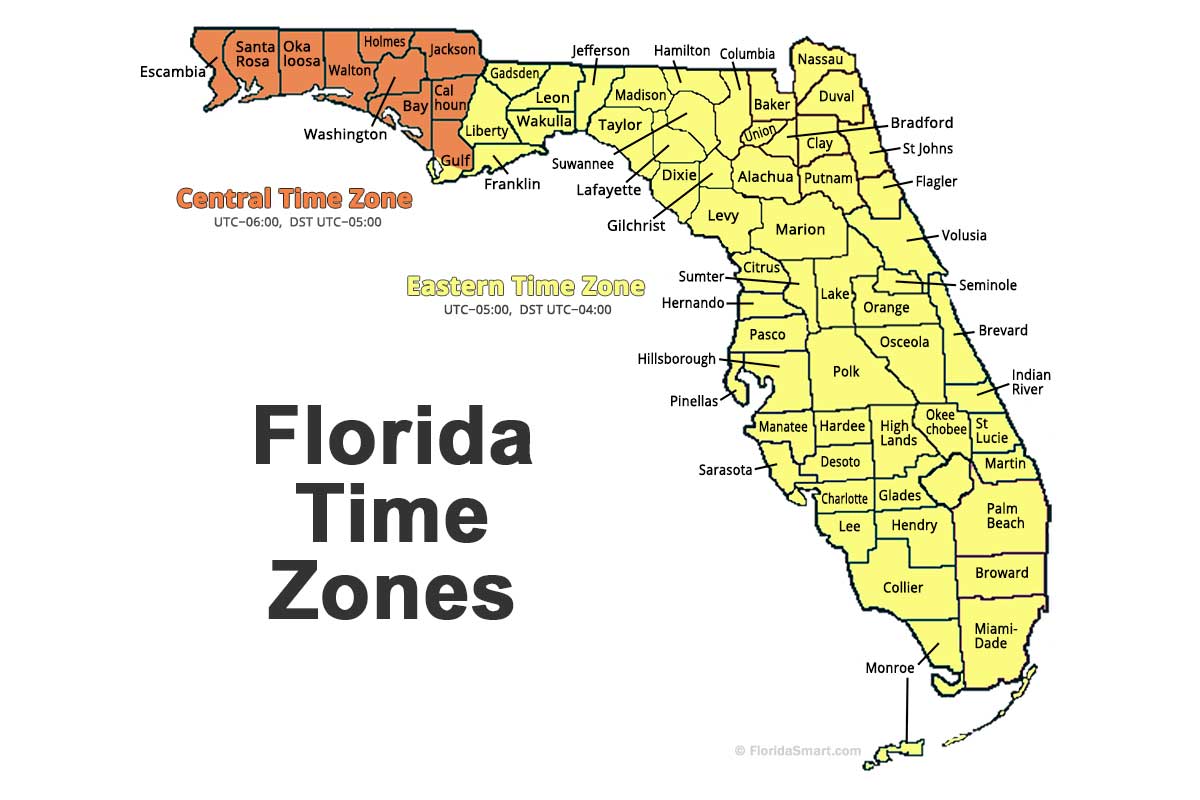
The significant exception to Florida’s Eastern Time rule lies in the western part of the Florida Panhandle. This region observes Central Standard Time (CST) during the winter and Central Daylight Time (CDT) during Daylight Saving Time, meaning it is consistently one hour behind the rest of the state.
The counties fully or partially operating on Central Time include:
- Escambia County (home to Pensacola)
- Santa Rosa County (including Navarre Beach)
- Okaloosa County (featuring Destin and Fort Walton Beach)
- Walton County (renowned for Santa Rosa Beach and the scenic highway 30A communities like Seaside and Rosemary Beach)
- Bay County (which includes the popular Panama City Beach)
- The majority of Gulf County (with towns like Port St. Joe and Mexico Beach)
- A small western portion of Franklin County (though most of it is Eastern Time).
This time zone split is particularly relevant for travelers driving across the Panhandle or flying into airports within this region. For example, if you’re flying into Pensacola International Airport from Orlando International Airport, remember that your destination will be an hour “behind” Orlando. Always double-check flight times, hotel check-in schedules, and any booked activities when crossing this time zone boundary. A simple miscalculation can lead to missed appointments or unnecessary delays, impacting your carefully planned tourism itinerary.

Practical Implications for Travel Planning
The existence of two time zones within Florida necessitates careful planning, particularly for those whose travel plans span across the state.
- Flights and Transportation: Pay close attention to arrival and departure times for flights, especially if you’re connecting between, for instance, Miami (Eastern) and Pensacola (Central). Ground transportation services, like shuttles or car rentals, will also operate on local time, so factor in the hour difference when estimating journey durations or pick-up times.
- Accommodations: When booking hotels, resorts, apartments, or villas in the Panhandle, confirm check-in and check-out times relative to your origin time zone to avoid any confusion or unexpected charges. Most accommodation providers will clearly state their local time.
- Tours and Attractions: If you’ve scheduled a specific tour, a fishing charter, or a dining experience, confirm the local time of the activity. Missing a crucial departure for a Dry Tortugas National Park ferry or an Everglades National Park airboat ride because of a time zone mix-up can be a significant disappointment. Always set your devices to update automatically or manually adjust them upon crossing the time zone line.
Time and Timing: Optimizing Your Florida Experience
Beyond just knowing the current time, strategic timing is a key component of a successful Florida trip. From avoiding crowds at popular landmarks to perfectly catching a sunset, how you manage your schedule can significantly enhance your experiences.
Planning Your Itinerary Around Time Zones
Effective itinerary planning goes hand-in-hand with understanding local time zones. For those arriving from outside the Eastern Time Zone, especially international visitors, a slight adjustment period might be needed. While “jet lag” might not be severe for domestic travelers, the mental shift can still impact your first day.
- Arrival Day Strategy: If arriving in the Eastern Time Zone from a western time zone, consider planning a lighter schedule for your arrival day. A leisurely beach walk or exploring your resort’s amenities might be more enjoyable than immediately tackling a major theme park. Conversely, those arriving in the Panhandle from further east might gain an hour, allowing for a slightly longer first day.
- Maximizing Daylight: Florida is renowned for its sunshine. Plan outdoor activities, like visiting Florida State Parks, snorkeling in the Florida Keys, or enjoying a round of golf, during the peak daylight hours. During summer, the sun rises early and sets late, offering ample time for adventure. In winter, days are shorter, making efficient scheduling even more important.
- Cross-State Journeys: If your travel guide includes destinations in both time zones, build in buffer time for the time change. For instance, a morning activity in Panama City Beach followed by an afternoon event near Tallahassee will involve an hour’s “loss” as you move east, impacting your arrival.
Beating the Crowds: Strategic Timing for Attractions
Florida’s popularity means many of its top attractions can get crowded. Strategic timing can make a huge difference in your enjoyment.
- Early Bird Gets the Worm (and Shorter Lines): For major theme parks like Walt Disney World or Universal Orlando, arriving at park opening (often called “rope drop”) is almost always the best strategy. You can experience several popular rides with minimal wait times before the midday crowds arrive. Similarly, historical landmarks like the Castillo de San Marcos in St. Augustine are best explored in the early morning to avoid both crowds and the midday heat.
- Afternoon Lulls: Some attractions, particularly those with a significant indoor component or museums, might experience a slight lull in the mid-afternoon as families with young children take breaks or head to water parks. This can be a good time to explore.
- Evening Magic: Many Florida attractions come alive in the evening. Fireworks at Magic Kingdom or Epcot, sunset strolls along Siesta Key Beach, or experiencing the vibrant Ybor City nightlife in Tampa are all time-sensitive experiences that require checking local schedules.
Dining and Entertainment: Aligning with Local Clocks
Dining and entertainment options in Florida are diverse, catering to every lifestyle. However, their operating hours are strictly governed by local time.
- Restaurant Reservations: Popular restaurants, especially those in bustling areas like Miami Beach’s South Beach or Orlando’s International Drive, often require reservations, particularly during peak dinner hours (usually 6:00 PM to 9:00 PM local time). If you’ve spent the day in a different time zone, ensure your reservation aligns with the restaurant’s local clock.
- Happy Hours and Early Bird Specials: Many establishments offer happy hour deals on food and drinks, typically in the late afternoon. This can be a budget-friendly way to enjoy local cuisine. Similarly, some restaurants offer “early bird” specials for diners who come before the main dinner rush.
- Nightlife and Shows: From live music venues in Jacksonville to comedy clubs in Tampa or elaborate shows at Walt Disney World and Universal Orlando, evening entertainment is plentiful. Always check showtimes and venue opening hours. Arriving early might secure better seats or reduce waiting times.
- Food Delivery and Takeaway: If you prefer a quiet night in your accommodation, remember that food delivery and takeaway services operate within local business hours, which can vary widely.
Beyond the Clock: Florida’s Diverse Lifestyle and Accommodation Options
The rhythm of life in Florida is as varied as its geography, with different regions embracing unique lifestyles that subtly influence daily schedules. Coupled with the vast array of accommodation choices, understanding these dynamics ensures your stay is not just timely, but truly immersive.
From Sunrise to Sunset: Lifestyle Rhythms Across Florida
Florida’s appeal spans various lifestyles, from bustling metropolitan energy to laid-back coastal serenity, and these dictate how time is spent.
- South Florida’s Energetic Pace: In cities like Miami, the day starts early for fitness enthusiasts on the beach, transitions into a dynamic business day, and often extends late into the night with vibrant dining and club scenes. A “late dinner” here might mean an 8:30 PM reservation, whereas in other regions, that could be the end of the evening. This caters to a luxury travel segment that often operates on a more flexible, later schedule.
- Central Florida’s Theme Park Marathon: The heart of Florida’s tourism industry, Central Florida, revolves around the extensive operating hours of Walt Disney World, Universal Orlando, SeaWorld Orlando, and LEGOLAND Florida Resort. Here, days are often packed from park opening to closing, necessitating early mornings and late nights to maximize attractions. Family trips especially need a well-timed approach to manage energy levels.
- The Gulf Coast’s Relaxed Vibes: Along the Gulf Coast in places like Sarasota or Naples, the rhythm is typically more relaxed. Mornings might involve beachcombing or gentle walks, afternoons for water activities, and evenings for enjoying glorious sunsets over the Gulf of Mexico with an earlier dinner. This pace often appeals to those seeking serene experiences or a budget travel approach focused on natural beauty.
- Panhandle’s Southern Charm: In the Florida Panhandle, particularly in cities like Pensacola and Tallahassee, a strong Southern influence means a slightly more leisurely pace compared to the bustling Eastern Time Zone counterparts. Early evenings might see families gathering for dinner, and local businesses might have slightly earlier closing times. The one-hour time difference here can subtly shift the perception of the day.
Understanding these regional rhythms allows you to blend in seamlessly and enjoy local culture more authentically, rather than being out of sync with the local clock.
Accommodations and Time: Checking In, Checking Out, and Maximizing Your Stay
The concept of time is intrinsically linked to your chosen accommodation. Whether you opt for a luxurious resort, a cozy apartment, or a spacious villa, standard check-in and check-out times are critical.
- Standard Timelines: Most hotels and resorts in Florida maintain a check-in time around 3:00 PM or 4:00 PM local time and a check-out time between 11:00 AM and 12:00 PM local time. These times are set to allow for proper cleaning and preparation of rooms for incoming guests.
- Early Check-in/Late Check-out: If your flight arrives early or departs late, consider requesting an early check-in or late check-out. While often subject to availability and sometimes an additional fee, this can be invaluable for maximizing your comfort and avoiding wasted hours. Some hotels, especially larger resorts, may offer luggage storage and access to amenities like pools or fitness centers even before your room is ready or after you’ve checked out. This is a valuable tip for those on business stays or with tight schedules.
- Vacation Rentals and Long-term Stay Options: For apartments and villas managed by individual owners or smaller companies, check-in and check-out procedures might be more flexible, but also require clearer communication. Always confirm exact times and key retrieval/drop-off instructions well in advance. Reading reviews on booking platforms often provides insight into the flexibility of the hosts.
- Time Zone Impact: For those arriving from a different time zone, especially to the Panhandle’s Central Time Zone, factor in the time difference when scheduling your arrival at your accommodation. An arrival scheduled for “4 PM” might mean 4 PM Eastern or 4 PM Central, so always clarify the local time to avoid confusion or a long wait.
Making Every Minute Count: Florida’s Iconic Landmarks and Experiences
Florida is brimming with iconic landmarks and unforgettable experiences, each with its own optimal timing for enjoyment. From ancient forts to thrilling rollercoasters, knowing when to visit can elevate your journey from good to extraordinary.
Coastal Wonders and Historic Sites: Timeless Allure
Many of Florida’s landmarks offer a timeless appeal, but the time of day can significantly affect your visit, impacting crowd levels, lighting for photography, and even wildlife viewing opportunities.
- St. Augustine’s Historic District: Exploring the nation’s oldest city, St. Augustine, is best done in the early morning or late afternoon. This avoids the midday heat and the largest crowds, particularly at the Castillo de San Marcos and along St. George Street. Evening ghost tours offer a different, time-sensitive perspective on the city’s rich history.
- Everglades National Park: For optimal wildlife viewing, particularly for alligators and various bird species, airboat tours and swamp walks in the Everglades National Park are best scheduled in the early morning or late afternoon when temperatures are cooler and animals are more active. The light at these times is also ideal for photography.
- Kennedy Space Center Visitor Complex: Timing is everything if you hope to witness a rocket launch at the Kennedy Space Center Visitor Complex. Launches are highly time-sensitive and subject to weather and technical delays, requiring flexibility in your schedule. Even without a launch, visiting earlier in the day allows more time to explore the vast complex, including the Space Shuttle Atlantis exhibit.
- Florida Keys Sunsets: The Florida Keys are famous for their spectacular sunsets. Mallory Square in Key West hosts a nightly sunset celebration, starting about two hours before the actual sunset. This is a quintessential Florida experience, entirely dictated by nature’s clock.
Theme Park Thrills: A Race Against the Clock
Florida’s theme parks are designed for full-day experiences, and making the most of your time is crucial.
- Walt Disney World Resort and Universal Orlando Resort: These colossal destinations demand strategic planning. Utilize official park apps to check real-time wait times, show schedules, and parade routes. Arrive at park opening for popular rides at Magic Kingdom, Epcot, Hollywood Studios, Animal Kingdom, Universal Studios Florida, and Islands of Adventure. Schedule character meet-and-greets, dining reservations, and evening fireworks or projection shows well in advance, paying close attention to their specific times.
- Busch Gardens Tampa Bay and SeaWorld Orlando: Similarly, these parks offer a mix of thrilling rides, animal encounters, and live shows. Planning your day around showtimes is key to ensuring you don’t miss performances, which often have limited showings.
- Water Parks: Florida’s numerous water parks, such as Disney’s Typhoon Lagoon or Universal’s Volcano Bay, are best enjoyed during their operating hours, typically from late morning to late afternoon, especially during warmer months. Arriving early can help secure prime lounging spots.
The Serenity of Nature: When Time Stands Still
While many Florida adventures involve careful timing, some of its most profound experiences encourage you to slow down and let time fade into the background.
- Florida’s Natural Springs: Places like Weeki Wachee Springs State Park, Homosassa Springs Wildlife State Park, Silver Springs State Park, or Blue Spring State Park offer crystalline waters perfect for swimming, snorkeling, or kayaking. While these parks have operating hours, once inside, the natural beauty often inspires a sense of timelessness. Early mornings can offer more solitude and better chances for manatee sightings.
- Beach Relaxation: Whether on Clearwater Beach, Siesta Key Beach, or the pristine shores of the Panhandle, beach days are often about setting your own pace. There’s no specific “right time” beyond general daylight hours, allowing for spontaneous enjoyment of the sun, sand, and surf.
- National and State Parks: Beyond the Everglades, Biscayne National Park, John Pennekamp Coral Reef State Park, and many other Florida State Parks invite exploration at a leisurely pace. Hiking trails, birdwatching, and kayaking are activities where a relaxed approach often yields the most rewarding discoveries.
In conclusion, knowing what time it is in Florida is the starting point, but understanding how to use time wisely – accounting for time zones, regional rhythms, and optimal visiting hours – is the key to unlocking the full potential of your Florida adventure. From the fast-paced thrills of Orlando to the tranquil retreats of the Gulf Coast and the historical depths of St. Augustine, every minute can be made to count with careful planning and a mindful approach to the clock.
LifeOutOfTheBox is a participant in the Amazon Services LLC Associates Program, an affiliate advertising program designed to provide a means for sites to earn advertising fees by advertising and linking to Amazon.com. Amazon, the Amazon logo, AmazonSupply, and the AmazonSupply logo are trademarks of Amazon.com, Inc. or its affiliates. As an Amazon Associate we earn affiliate commissions from qualifying purchases.