
Florida, a state synonymous with sunshine, sandy beaches, and perpetual summer, might seem like a place where time flows uniformly. However, the Sunshine State is not as temporally monolithic as one might initially assume. The question of “Where Does Time Change In Florida?” doesn’t refer to a mystical temporal anomaly or a sudden leap into a different era. Instead, it points to a very real and practical phenomenon: the existence of multiple time zones within the state. While most of Florida operates under Eastern Standard Time (EST), a small but significant portion adheres to Central Standard Time (CST). This geographical quirk can be a source of amusement, occasional confusion, and even strategic advantage for travelers, businesses, and residents alike.
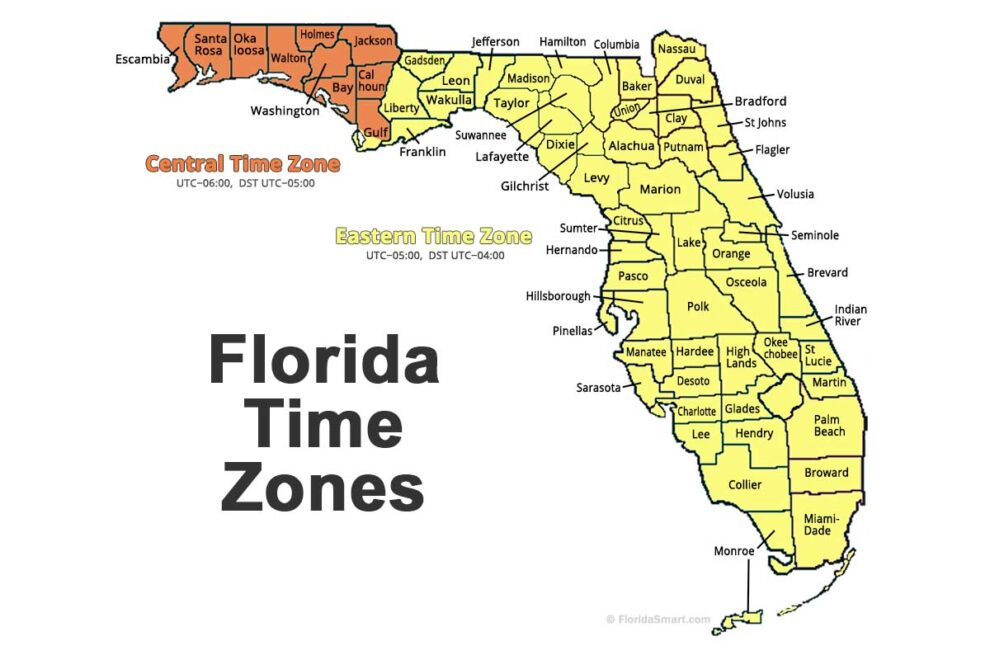
The primary driver behind this time zone divide is historical. The United States’ time zone system was established to standardize railway operations and communication across vast distances. The boundaries were often drawn based on longitude, but political and economic considerations also played a crucial role. In Florida, the dividing line between Eastern and Central Time is not a neat, straight line but rather a somewhat irregular path that carves through the western part of the panhandle.
The Eastern Standard Time Zone: The Dominant Clock
The overwhelming majority of Florida operates under the Eastern Time Zone (ET). This encompasses the bustling metropolises of Miami and Orlando, the historic charm of St. Augustine, and the pristine beaches of the Florida Keys. For most travelers, this is the Florida they experience – the one where sunrise paints the Atlantic coast and sunset dips below the Gulf shores within the familiar rhythm of ET.
Eastern Time in Action: A Glimpse into the Majority
When you land at Miami International Airport or check into a luxurious resort on South Beach, you’re stepping into Eastern Time. This zone observes Daylight Saving Time (DST), meaning clocks are advanced by an hour during the warmer months, generally from the second Sunday in March to the first Sunday in November. This practice is observed nationwide, aligning Florida with the majority of the eastern United States.
The implications of being in ET are far-reaching for the tourism industry. Major theme parks like Walt Disney World and Universal Orlando Resort meticulously schedule their parades, fireworks, and showtimes according to ET. Airlines and cruise lines operate on ET schedules for departures and arrivals from Florida’s major ports and airports. For accommodation providers, from quaint bed and breakfasts to sprawling Marriott properties, ET dictates check-in and check-out times, as well as dining hours.
Even the local culture is subtly influenced by the Eastern Time Zone. The rhythms of daily life – when businesses open, when schools start, when evening entertainment kicks off – are all calibrated to this dominant time. The sheer volume of tourism and economic activity centered in ET makes it the de facto time standard for most of the state.
The Central Standard Time Zone: A Pocket of Difference
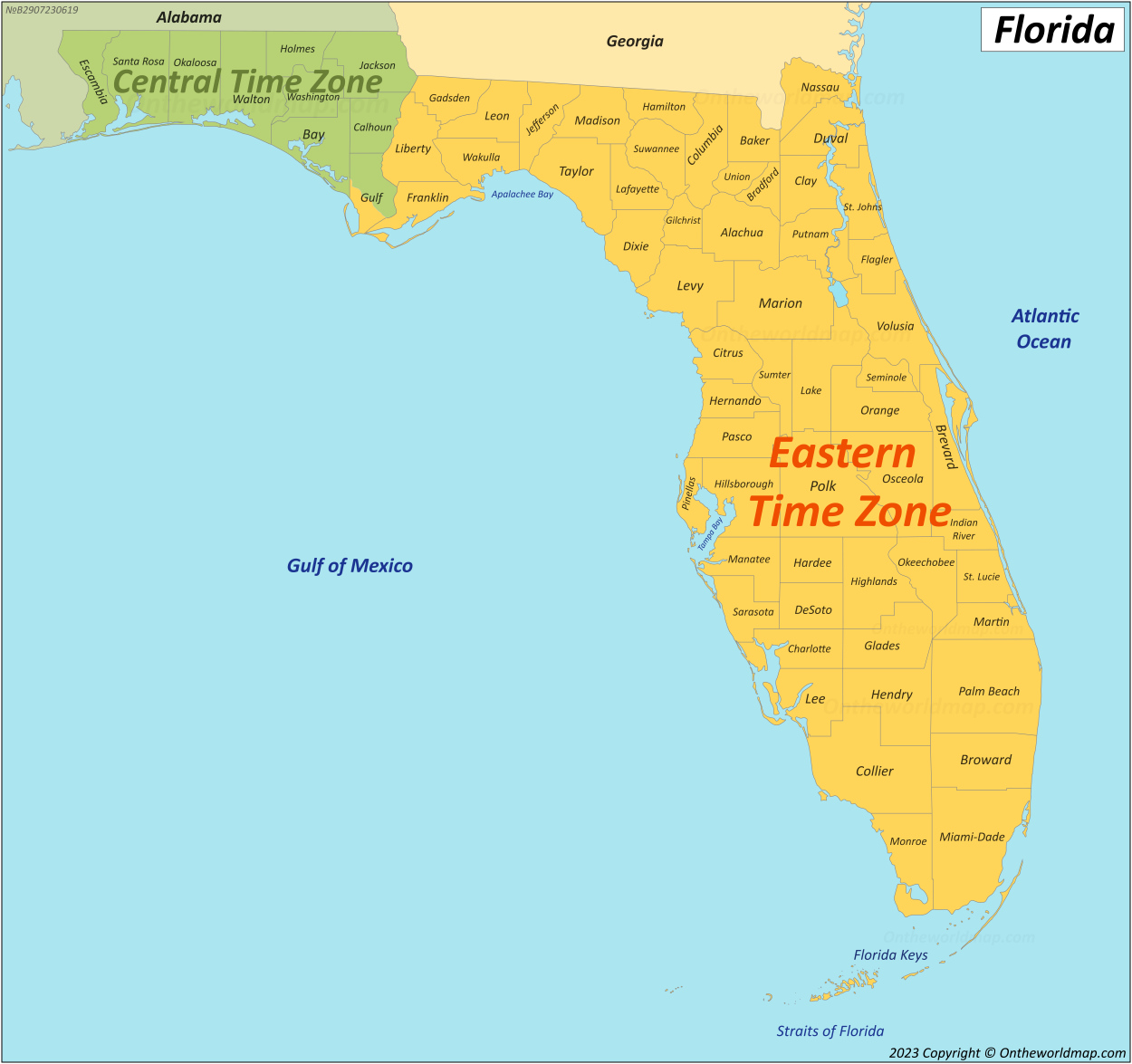
The anomaly in Florida’s temporal landscape lies in its western panhandle. Here, a stretch of counties, including those encompassing cities like Pensacola and Destin, falls within the Central Time Zone (CT). This means that when it’s 10:00 AM in Jacksonville, it’s 9:00 AM in Pensacola. This hour’s difference, while seemingly minor, can have tangible effects on travel plans and daily routines.
Central Time in the Panhandle: Navigating the Divide

The boundary between ET and CT in Florida is not as clearly defined as a state line. It’s an administrative division that cuts through counties, creating a unique situation. For example, the county seat of Bay County, Panama City, is in the Central Time Zone, while neighboring areas might be in the Eastern Time Zone. This can lead to fascinating local nuances.
Travelers driving westward into the panhandle will notice the change. Road signs may reflect different timings, and local businesses will operate on CT. This is particularly relevant for those planning a road trip that traverses the panhandle. Missing a flight or a scheduled activity because of a missed time zone change is a common, albeit avoidable, pitfall. Airports in the Central Time Zone portion of Florida, such as Pensacola International Airport, adhere to CT for their operations.
The tourism industry in this part of the panhandle also operates under CT. While the allure of the Gulf Coast beaches remains the same, the timing of events and activities will be an hour earlier than expected if one is coming from the eastern part of the state. For those seeking a slightly different rhythm, or perhaps an extra hour of morning daylight for fishing or exploring, the Central Time Zone offers a subtle shift.
The Impact on Tourism and Lifestyle
The time zone difference, though confined to a specific region, has several implications for tourism and lifestyle in Florida.
Strategic Planning for Travelers
For tourists, understanding the time zone divide is crucial for meticulous planning. If you’re embarking on a multi-city Florida adventure, especially one that includes both the eastern and western panhandle, double-checking flight times, hotel check-in/check-out, and tour bookings against the correct time zone is paramount. This is especially true for events like New Year’s Eve celebrations, where the anticipation of midnight might feel slightly different depending on your location within the state.
For budget travelers or those looking for unique experiences, the time zone can even offer a subtle advantage. If an attraction in the eastern time zone has extended hours, a visitor in the central time zone might technically have an earlier sunset, allowing for an extra hour of daylight for activities before the “official” end of the day in ET. Similarly, for those seeking a more relaxed morning, the ability to gain an hour can be a welcome perk. Luxury travel often involves precise scheduling, and being aware of the time zone can help ensure a seamless experience.
Business and Local Culture
Businesses operating across the time zone boundary often face logistical challenges. Communication, scheduling meetings, and coordinating deliveries require careful attention to ensure everyone is on the same page. For local communities, the time zone is simply a fact of life, ingrained in their daily routines. The local news broadcasts, school schedules, and community events in Pensacola, for instance, are all timed according to CT.
The historical reasons behind this division also offer a glimpse into the past. The time zone map of the United States has evolved over time, and Florida’s current division is a legacy of those earlier decisions. Understanding this history adds another layer to the appreciation of Florida’s diverse landscape and its unique temporal quirk.
The presence of two time zones in Florida, while not a major disruption for most, serves as a fascinating reminder that even in a seemingly uniform state, there can be subtle yet significant variations. It’s a testament to the complex history of standardization and the geographical realities that shape our daily lives. So, when you’re planning your next trip to the Sunshine State, remember to set your watch accordingly, especially as you venture into the charming western reaches of the panhandle. The answer to “Where Does Time Change In Florida?” is a geographical and historical one, a subtle but real shift that adds an intriguing dimension to this beloved vacation destination. Whether you’re a seasoned traveler or a first-time visitor, this temporal nuance is a small part of the rich tapestry that makes Florida so captivating. From the bustling energy of Tampa to the serene beauty of the Everglades, each region offers a unique experience, and acknowledging its place in the time zone can only enhance that experience. The distinct charm of hotels like the Ritz-Carlton Amelia Island or the historic significance of landmarks like Fort Zachary Taylor Historic State Park are all influenced by the prevailing time, yet their inherent allure remains timeless, bridging the gap between the clock and the experience.
LifeOutOfTheBox is a participant in the Amazon Services LLC Associates Program, an affiliate advertising program designed to provide a means for sites to earn advertising fees by advertising and linking to Amazon.com. Amazon, the Amazon logo, AmazonSupply, and the AmazonSupply logo are trademarks of Amazon.com, Inc. or its affiliates. As an Amazon Associate we earn affiliate commissions from qualifying purchases.