
The mesmerizing Hawaiian Islands, a paradise of emerald valleys, volcanic peaks, and turquoise waters, beckon travelers from around the globe. This archipelago, a string of islands in the vast Pacific Ocean, is not merely a breathtaking destination; it’s a geological marvel born from immense power deep within the Earth. Understanding how Hawaii was created unlocks a deeper appreciation for its unique landscapes, vibrant ecosystems, and rich cultural heritage. Our journey into the formation of these islands will touch upon the science behind their existence, the incredible natural forces at play, and how these processes have shaped not just the land but also the experiences awaiting visitors.

The story of Hawaii’s creation is a testament to the dynamic nature of our planet, a narrative written in molten rock and tectonic movement. It’s a process that unfolded over millions of years, far from the shores of any continent, and it continues to shape the islands even today. This article delves into the fascinating geological origins of this popular tourist hotspot, exploring the theories that explain its existence and the ongoing geological activity that defines its character. From the initial volcanic eruptions that pierced the ocean’s surface to the continuous shaping by wind, water, and human interaction, the creation of Hawaii is a story of fire, ice, and the relentless march of time.
The Fiery Birth of an Archipelago: Hotspots and Plate Tectonics
The prevailing scientific theory behind the formation of the Hawaiian Islands is the “hotspot” theory, a concept closely tied to the understanding of plate tectonics. Imagine the Earth’s crust as a giant, cracked eggshell, with these pieces, called tectonic plates, constantly shifting and moving over the semi-fluid mantle beneath. The Pacific Plate is one such colossal plate, and as it drifts across the Earth’s surface, it carries the Hawaiian chain with it.
Beneath the Surface: The Mantle Plume
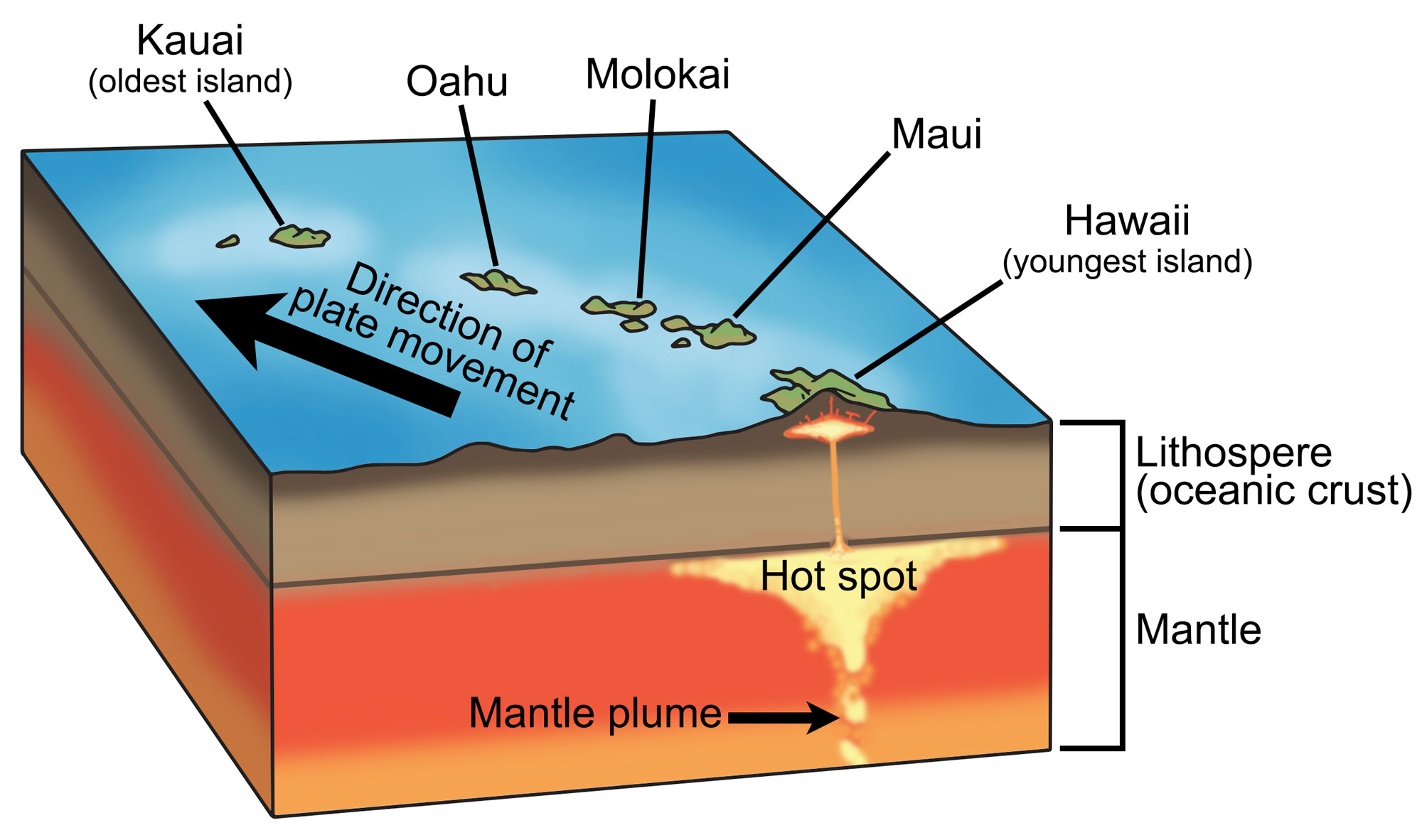
At the heart of the hotspot theory lies the concept of a mantle plume. This is a region deep within the Earth’s mantle where unusually hot rock rises towards the surface. Unlike volcanic activity at plate boundaries, which is driven by the movement and interaction of these plates, a hotspot is thought to be relatively stationary. As the Pacific Plate moves northwestward over this stationary mantle plume, the plume punches through the crust, erupting molten rock, known as magma, onto the ocean floor.
Over vast stretches of time, these undersea eruptions build up layer upon layer of volcanic rock. As the lava cools and solidifies, it forms new land. This process repeats continuously as the Pacific Plate inches along, with each eruption adding to the mass of the growing volcano. The result is a chain of islands, with the oldest islands located at the northwestern end of the archipelago and the youngest, still volcanically active islands, at the southeastern end.
The Island Chain Effect
This movement over the hotspot creates the distinctive island chain. The active volcanoes are found at the southeastern end, where the plate is currently situated above the mantle plume. The most prominent example of this ongoing activity is seen on the Island of Hawaii, often referred to as the “Big Island.” Here, volcanoes like Kīlauea and Mauna Loa are among the most active in the world, providing a dramatic and awe-inspiring spectacle of Earth’s creative power.
As the Pacific Plate continues its relentless journey, the islands are carried away from the hotspot. Once an island is no longer directly above the plume, its volcanic activity wanes and eventually ceases. Erosion begins to take its toll, wearing down the once-mighty volcanoes. This is why the islands to the northwest, such as Kauaʻi and Niʻihau, are older, more eroded, and lack the active volcanism found in the southeast. Kauaʻi, for instance, showcases deep canyons and lush valleys, testament to millions of years of weathering and erosion, a stark contrast to the fiery landscapes of Hawaii Island.
The Hawaiian archipelago, therefore, is a geological conveyor belt of volcanic creation. The hotspot is the engine, and the Pacific Plate is the conveyor belt, continuously producing new landmasses while carrying away the older ones. This dynamic process is responsible for the unique geological features and the diverse landscapes that make Hawaii such an extraordinary destination for travelers and nature enthusiasts alike.
From Submerged Peaks to Tropical Paradises: The Evolution of the Islands
The creation of Hawaii wasn’t an overnight event; it was a gradual, monumental process that transformed the ocean floor into thriving landmasses. The journey from submerged volcanic peaks to lush, tropical islands is a fascinating interplay of geological forces and environmental factors.
Submarine Volcanoes Erupting to the Surface
The initial stages of Hawaii‘s formation occurred deep beneath the ocean’s surface. The mantle plume fueled continuous eruptions of basaltic lava. This lava flowed from fissures and vents, accumulating on the seafloor. As more and more lava was deposited, the volcanic mountains grew taller and taller. Eventually, after thousands of years of eruptions, these massive undersea volcanoes rose above the ocean’s surface, marking the birth of new islands. The sheer scale of these eruptions is difficult to comprehend, with some of the Hawaiian volcanoes, like Mauna Kea and Mauna Loa on the Island of Hawaii, being among the tallest mountains in the world when measured from their bases on the ocean floor.
The Shaping Hand of Nature: Erosion and Weathering
Once an island emerged above sea level, a new set of forces began to shape it. The constant action of wind and waves started to erode the volcanic rock. Rainfall, often heavy in Hawaii’s tropical climate, carved out valleys and gullies, carrying sediment down to the sea. This erosion not only sculpted the mountains but also created fertile soil as volcanic rock weathered and broke down. Over time, this rich soil, combined with abundant rainfall and sunlight, allowed for the growth of lush vegetation, transforming barren volcanic rock into the verdant landscapes that Hawaii is famous for today.
Coral Reefs: The Coastal Architects
As the islands formed and settled, coral polyps began to colonize the shallow waters around their coasts. These tiny marine creatures, over generations, built intricate structures of calcium carbonate, forming vibrant coral reefs. These reefs play a crucial role in the Hawaiian landscape. They act as natural breakwaters, protecting the shorelines from the full force of ocean waves, thus reducing erosion and creating calm lagoons. The unique ecosystems that thrive within these reefs are a significant attraction for divers and snorkelers, offering incredible opportunities to explore a rich underwater world. Many of Hawaii‘s most picturesque beaches are found adjacent to these extensive coral reef systems, a direct result of this symbiotic relationship between volcanic landmass and marine life. The presence of these reefs also contributes to the clear, turquoise waters that are synonymous with a Hawaii vacation.
The evolution of the Hawaiian Islands is a dynamic process, a continuous dance between the fiery forces of creation and the patient, sculpting power of nature. This ongoing transformation is evident in the distinct characteristics of each island, from the raw, volcanic landscapes of Hawaii Island to the verdant, ancient mountains of Kauaʻi.
Experiencing the Geological Marvel: Travel and Discovery in Hawaii
The geological story of Hawaii‘s creation directly translates into the incredible travel experiences available to visitors. The very forces that birthed these islands have sculpted a destination that offers unparalleled natural beauty, diverse activities, and a deep connection to the Earth’s powerful processes.
Volcano Tourism: Witnessing Earth’s Power
The active volcanoes on the Island of Hawaii are perhaps the most direct manifestation of Hawaii‘s fiery origins. Destinations like Hawaiʻi Volcanoes National Park offer visitors the chance to witness volcanic activity firsthand. Exploring lava tubes, observing steam vents, and, when conditions permit, viewing flowing lava are unforgettable experiences. Hiking through Devastation Trail, which traverses land covered by ash from past eruptions, or marveling at the caldera of Kīlauea Iki provides a tangible connection to the immense geological forces at play. For those seeking an immersive experience, staying in a hotel or resort on the Island of Hawaii places you within easy reach of these natural wonders. Many tour operators offer guided excursions, providing expert insights into the volcanic landscape and its history.
Exploring Diverse Landscapes: From Beaches to Rainforests
The erosion and vegetation that followed the initial volcanic eruptions have created an astonishing diversity of landscapes. Visitors can travel from the black sand beaches of Punaluʻu on the Island of Hawaii, formed from pulverized lava, to the lush, emerald valleys of Kauaʻi. The dramatic cliffs of the Nā Pali Coast on Kauaʻi, carved by millennia of wind and rain, are a testament to the power of erosion. On the island of Maui, the dormant volcano Haleakalā offers a unique landscape resembling the surface of the moon, especially when explored at sunrise or sunset.
The varied topography supports rich ecosystems, from the vibrant coral reefs offshore to the dense rainforests inland. Activities abound for every type of traveler, whether you’re interested in luxury travel, budget-friendly adventures, or family trips. Snorkeling and diving in the clear waters off Maui or Oʻahu reveal a kaleidoscope of marine life, supported by the nutrient-rich waters and the protective coral reefs. Hiking trails wind through lush mountains, offering breathtaking vistas and the chance to discover hidden waterfalls. Exploring the natural beauty of Hawaii is an integral part of understanding its creation.

Understanding the Local Culture and History
The geological history of Hawaii is deeply intertwined with its human history and culture. The islands’ formation dictated the resources available to early settlers and influenced their way of life. The abundance of fertile volcanic soil supported agriculture, while the ocean provided sustenance. Understanding the geological underpinnings of Hawaii enriches the appreciation of its local culture, its traditions, and the profound respect the native Hawaiians have for the land (ʻāina) and the ocean (moana). Visiting historical landmarks, such as ancient heiau (temples) and fishponds, often situated in areas shaped by geological features, offers a glimpse into this enduring connection. Learning about the myths and legends that often explain natural phenomena, such as volcanic eruptions, further deepens the cultural understanding. This holistic approach, combining geological awareness with cultural immersion, transforms a typical vacation into a truly profound and educational experience. Whether you are looking for accommodation, planning your itinerary, or seeking unique local experiences, the geological genesis of Hawaii provides a captivating backdrop to every aspect of your visit.
LifeOutOfTheBox is a participant in the Amazon Services LLC Associates Program, an affiliate advertising program designed to provide a means for sites to earn advertising fees by advertising and linking to Amazon.com. Amazon, the Amazon logo, AmazonSupply, and the AmazonSupply logo are trademarks of Amazon.com, Inc. or its affiliates. As an Amazon Associate we earn affiliate commissions from qualifying purchases.