
Hawaii, a paradise renowned for its stunning beaches, vibrant culture, and lush landscapes, is also a strategically vital location for the United States military. Beyond the idyllic scenery that draws millions of tourists each year, the islands host a significant military presence, comprising eleven key installations. These bases play a crucial role in national defense and regional security, while also integrating into the fabric of local communities. For travelers and residents alike, understanding the presence and function of these military installations offers a more complete picture of the Hawaiian archipelago.
This article delves into the significance of these eleven military bases, offering insights into their locations, primary functions, and the impact they have on the islands. While the focus is on the military aspect, it’s important to acknowledge how these bases coexist with Hawaii’s thriving tourism industry, its unique cultural heritage, and the daily lives of its people. Whether you’re planning a vacation to explore the wonders of Maui or Oahu, or simply curious about the diverse facets of life in Hawaii, this guide will shed light on these important, though often unseen, aspects of the islands.
Understanding the Military Landscape of Hawaii
Hawaii’s geographical position in the Pacific makes it an indispensable strategic outpost. Its central location allows for rapid deployment and a strong command presence across the Indo-Pacific region. The presence of these military bases is not just about national security; it also significantly influences the local economy, creates employment opportunities, and shapes the communities in which they are situated. From naval operations to air combat commands and training facilities, the scope of military activity in Hawaii is broad and varied.
The relationship between the military and the civilian population in Hawaii is a complex tapestry, woven with threads of economic interdependence, cultural exchange, and sometimes, necessary adjustments. Many military personnel and their families become integral parts of the local communities, contributing to the vibrant, multicultural mosaic that defines Hawaii. Understanding the types of bases and their roles provides a deeper appreciation for the multifaceted nature of life on these islands, extending beyond the typical tourist brochure.
Key Branches and Their Installations
The eleven military bases in Hawaii are spread across several islands, with the majority concentrated on Oahu, often referred to as “The Gathering Place.” This island, home to the state capital, Honolulu, also serves as the primary hub for military operations. The branches represented include the U.S. Army, U.S. Navy, U.S. Marine Corps, U.S. Air Force, and the U.S. Coast Guard. Each branch has specific roles and facilities designed to support its mission objectives.
The presence of multiple branches on a single island, particularly Oahu, often leads to joint operations and shared resources, enhancing efficiency and readiness. This collaborative environment is a hallmark of modern military strategy and is particularly evident in the dense operational landscape of Hawaii.
Island Distribution and Significance
While Oahu hosts the most bases, other islands also contribute to Hawaii’s military infrastructure. Maui, Kauai, and the island of Hawaii (the Big Island) each have installations that serve distinct purposes, often related to training, research, or specialized operations. The distribution ensures that military assets are strategically positioned to cover the vast expanse of the Pacific and to respond effectively to any threats or humanitarian needs.
The unique environment of Hawaii, with its varied terrains and challenging natural conditions, also provides unparalleled opportunities for military training. From jungle warfare simulations to advanced aerial combat exercises and amphibious landing drills, the islands offer a realistic and demanding training ground for service members.
The Eleven Military Bases in Detail
Let’s explore each of the eleven military bases in Hawaii, understanding their location and primary role. This detailed look will highlight the extent of the military’s footprint across the islands.
Oahu: The Military Hub
Oahu, being the most populous island and the center of Hawaii’s government and economy, naturally hosts the largest number of military installations. These bases are critical for command and control, training, logistics, and power projection throughout the Indo-Pacific.
1. Joint Base Pearl Harbor-Hickam (JBPHH)
This is arguably the most historically significant military installation in Hawaii, and indeed, in the United States. Formed from the merger of Pearl Harbor Naval Base and Hickam Air Force Base, JBPHH is a premier joint operating base.
- Pearl Harbor Naval Base: Famous worldwide for the attack on December 7, 1941, which drew the United States into World War II, Pearl Harbor remains the homeport for numerous U.S. Navy ships, including submarines and destroyers. It’s a critical operational and logistical hub for naval forces in the Pacific. The Pearl Harbor National Memorial is a poignant reminder of its history and a significant tourist attraction.
- Hickam Air Force Base: Originally established as Hickam Field in 1937, it was a key installation during World War II and has since evolved into a major air force base. JBPHH is now home to the U.S. Pacific Air Forces headquarters and hosts a variety of aircraft, including transport planes and fighter jets. It’s a vital center for air mobility and strategic air command.
2. Marine Corps Base Hawaii (MCBH) – Kaneohe Bay
Located on the windward side of Oahu, MCBH is a significant base for the U.S. Marine Corps. It provides essential training and operational facilities for Marine Corps air and ground units.
- Kaneohe Bay: This base is strategically positioned to support amphibious operations and air combat training. It is home to the 1st Marine Aircraft Wing, 3rd Marine Expeditionary Brigade, and various other Marine Corps units. Its location on the beautiful Kaneohe Bay also makes it a visually striking installation, though access for civilians is restricted.
3. Schofield Barracks
Situated in the Wahiawa district of Oahu, Schofield Barracks is one of the largest and oldest U.S. Army installations in Hawaii. It has a storied history dating back to 1908.
- ** Schofield Barracks:** This base serves as the home of the 25th Infantry Division (Tropical Lightning), a major combat unit. The barracks are vital for training and maintaining readiness for Army forces in the Pacific. The landscape around Schofield Barracks is characterized by rolling hills and dense vegetation, providing a suitable environment for various military exercises.
4. Wheeler Army Airfield
Adjacent to Schofield Barracks, Wheeler Army Airfield is also an U.S. Army installation with a significant history, particularly from World War II.
- Wheeler Army Airfield: While its primary role has shifted over the years, it remains an important airfield for Army aviation assets, supporting training and operations for helicopter units and other rotary-wing aircraft. Its historical significance makes it a notable part of Oahu’s military past.
5. Fort Shafter
Located near Honolulu, Fort Shafter is the U.S. Army’s headquarters for U.S. Army Pacific (USARPAC).
- Fort Shafter: This post serves as the administrative and command center for Army operations throughout the Pacific theater. It houses a vast array of staff and support functions crucial for managing and coordinating military activities across a wide geographical area.
6. Tripler Army Medical Center
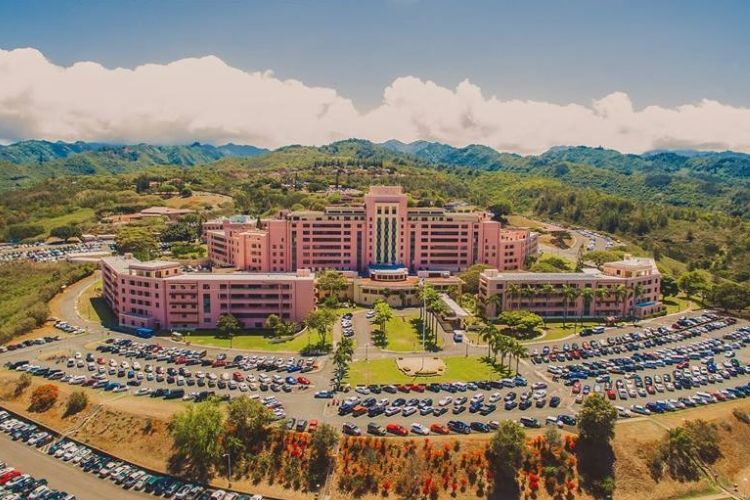
Perched on a hillside overlooking Honolulu and Pearl Harbor, Tripler is the largest and most decorated medical center in the U.S. Army.
- Tripler Army Medical Center: This state-of-the-art facility provides comprehensive medical care not only to active-duty military personnel and their families but also to veterans and retirees. It serves as a critical medical hub for the entire Pacific region.
7. Naval Computer and Telecommunications Area Master Station, Pacific (NCTAMS PAC)
Also located on Oahu, NCTAMS PAC is a crucial facility for military communications.
- NCTAMS PAC: This station is responsible for providing secure and reliable command, control, communications, and computer systems for naval forces operating in the Pacific. It is a vital component of the military’s global communication network.
8. Red Hill Bulk Fuel Storage Facility
This facility, though not a traditional “base” in terms of troop presence, is of immense strategic importance and is located near Pearl Harbor.
- Red Hill Bulk Fuel Storage Facility: This underground complex stores a significant amount of fuel essential for naval operations in the Pacific. Its strategic value is undeniable, though it has also been a subject of environmental and safety concerns.
Other Islands: Extending the Reach
Beyond Oahu, military installations on other islands contribute to Hawaii’s defense network and support specialized missions.
9. Marine Corps Training Area – Bellows Air Force Station (part of JBPHH)
While officially part of Joint Base Pearl Harbor-Hickam, the training area at Bellows on Oahu’s east side is a distinct operational zone.
- Bellows Air Force Station: This facility is used by all branches of the military for amphibious training, live-fire exercises, and other readiness-enhancing activities. Its coastal location makes it ideal for simulating landing operations.
10. Pacific Missile Range Facility (PMRF) – Barking Sands, Kauai
Located on the western side of Kauai, PMRF is the world’s largest instrumented aerial and subsurface proving ground.
- Pacific Missile Range Facility: This facility is crucial for testing and evaluating missile systems, electronic warfare, and other advanced technologies. Its vast, open ocean space and clear skies provide an ideal environment for complex military exercises. It supports training for U.S. Navy, U.S. Marine Corps, U.S. Air Force, and allied forces.
11. U.S. Coast Guard Air Station Barbers Point
Situated on Oahu’s southwest tip, Barbers Point is home to the U.S. Coast Guard air operations in Hawaii.
- U.S. Coast Guard Air Station Barbers Point: This station is vital for search and rescue missions, maritime law enforcement, and homeland security operations throughout the Hawaiian islands and beyond. It operates a fleet of aircraft, including helicopters and fixed-wing planes.
The Interplay of Military and Civilian Life
The presence of these eleven military bases inevitably shapes the Hawaiian experience. For tourists, the bases are often distant entities, their operational hum a subtle undercurrent to the sound of the waves. However, for the local population, and especially for those working in the tourism and hospitality sectors, the military represents a significant economic contributor. Many military families choose to reside off-base, integrating into local neighborhoods and contributing to the diverse cultural landscape.
Economic Impact and Local Integration
The military is a substantial employer in Hawaii, providing jobs not only for service members but also for civilian contractors and support staff. This economic injection is vital for the state’s economy. Moreover, military personnel and their families often become active participants in local community events, schools, and cultural activities. This integration fosters a unique bond between the military community and the broader Hawaiian population. Resorts and hotels across the islands often see bookings from military personnel on leave or from families visiting service members.
Tourism and Military History
While the primary draw for visitors to Hawaii is its natural beauty and cultural attractions like Waikiki Beach, the military’s historical significance, particularly at Pearl Harbor, is a powerful draw. The Pearl Harbor National Memorial is a solemn and essential stop for many tourists, offering a profound connection to a pivotal moment in world history. Understanding this aspect of Hawaii’s identity adds another layer to the travel experience, allowing visitors to appreciate the islands’ multifaceted past and present. Travel guides often include information about visiting these historical sites, alongside recommendations for exploring natural landmarks and experiencing local cuisine.

Lifestyle Considerations for Visitors and Residents
For those planning a visit, understanding the presence of military bases can offer a more nuanced perspective on Hawaii. While most tourist areas like Lahaina or Kailua-Kona are far removed from direct military operations, the infrastructure and logistical support provided by these bases are fundamental to the functioning of the islands. Luxury travel experiences, budget-friendly stays, and family trips can all be enjoyed with the awareness of this significant, yet often discreet, aspect of Hawaiian life.
The lifestyle in Hawaii is deeply influenced by its history, geography, and indeed, its military importance. From the bustling streets of Honolulu to the tranquil shores of Kauai, the islands offer a unique blend of natural splendor, rich culture, and a strategic global role. Recognizing the eleven military bases is not about highlighting conflict, but about acknowledging the comprehensive reality of this Pacific paradise. It’s a reminder that Hawaii is more than just stunning vistas; it’s a place of resilience, history, and a vital strategic position in the world.
LifeOutOfTheBox is a participant in the Amazon Services LLC Associates Program, an affiliate advertising program designed to provide a means for sites to earn advertising fees by advertising and linking to Amazon.com. Amazon, the Amazon logo, AmazonSupply, and the AmazonSupply logo are trademarks of Amazon.com, Inc. or its affiliates. As an Amazon Associate we earn affiliate commissions from qualifying purchases.