
The question of whether a state adheres to community property laws is a critical one, particularly when navigating marital finances, estate planning, divorce, or even considering a move to a new jurisdiction. For those contemplating relocation to the heartland of America, or who are already residents of the Sunflower State, understanding its property laws is paramount. So, is Kansas a community property state? The straightforward answer is no. Unlike the handful of states that operate under a community property system, Kansas follows the more traditional common-law property system.
This distinction might seem like a mere legal technicality, but its implications can be far-reaching, impacting how assets acquired during a marriage are owned and divided. For individuals planning a journey through Kansas, perhaps exploring its charming towns or iconic landmarks, understanding the legal framework of their potential new home adds another layer to their travel considerations. Whether you’re scouting out potential long-term stays in a cozy resort near the Flint Hills or simply researching your next adventure, knowing the local legal landscape is always a wise move.

Understanding Property Systems: Community Property vs. Common Law
To fully grasp why Kansas is not a community property state, it’s essential to understand the fundamental differences between the two dominant property systems in the United States. These systems dictate how property acquired during a marriage is treated, which can significantly influence financial decisions and legal outcomes.
The Community Property System
Community property is a legal regime where marital property is owned equally by both spouses. This concept originated from civil law traditions and is currently adopted by a minority of U.S. states, primarily in the western and southern parts of the country. The core principle is that anything acquired by either spouse during the marriage is considered jointly owned by both, regardless of whose name is on the title or who earned the money to purchase it.
In community property states, there are generally two types of property:
- Community Property: This includes all income earned by either spouse during the marriage, as well as all assets acquired with that income. Debts incurred by either spouse during the marriage are also typically considered community debts.
- Separate Property: This encompasses assets owned by a spouse before the marriage, or received during the marriage as a gift or inheritance. Separate property remains the sole property of the individual spouse.
Upon divorce in a community property state, community property is generally divided equally (50/50) between the spouses. In cases of death, the surviving spouse typically retains their half of the community property, and the deceased spouse’s half passes according to their will or by intestacy laws.
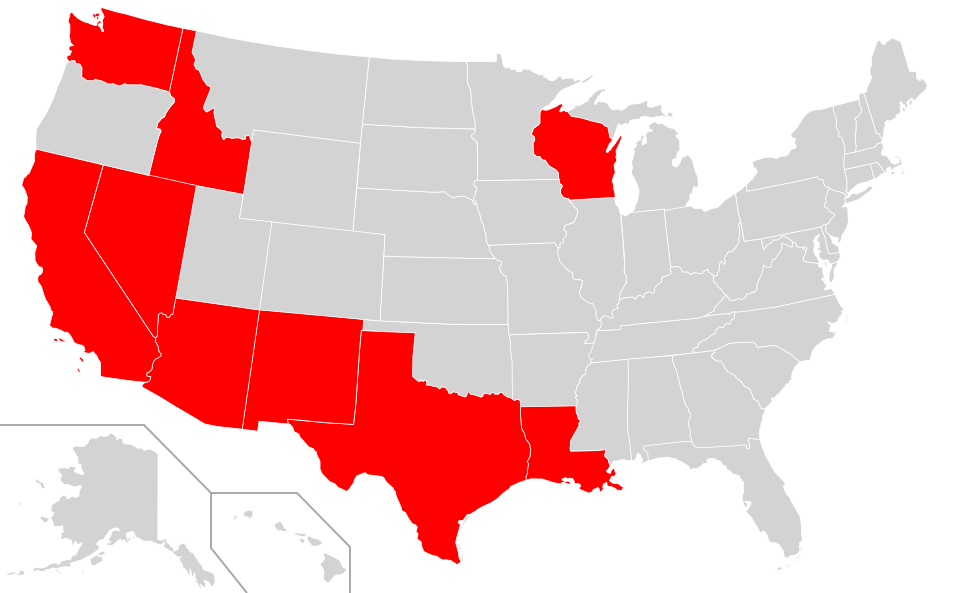
The states that currently operate under a community property system are: Arizona, California, Idaho, Louisiana, Nevada, New Mexico, Texas, Washington, and Wisconsin. Alaska also has an opt-in community property law.
The Common Law Property System
Kansas operates under the common-law property system, which is the prevailing system across most of the United States. In common-law states, property ownership is generally determined by title. This means that assets are typically considered the separate property of the spouse who acquired them or whose name is on the title.
Under common-law principles:
- Individual Ownership: Property acquired during the marriage is generally considered the separate property of the spouse who purchases it or whose name is listed on the deed or title. For example, if one spouse buys a car with their earnings and puts only their name on the registration, it is generally considered their separate property.
- Marital Property vs. Separate Property: While the system emphasizes individual ownership, divorce courts in common-law states still have the authority to divide “marital property” equitably. Marital property typically includes assets acquired by either spouse during the marriage, regardless of title, but the division is not necessarily an equal 50/50 split. Courts consider various factors, such as the duration of the marriage, each spouse’s contributions (both financial and non-financial), and the economic circumstances of each spouse.
- Spousal Support and Alimony: In common-law states, alimony or spousal support plays a significant role in addressing financial disparities after divorce. This can be a more substantial factor than in community property states, where the emphasis is on the equal division of marital assets.
- Inheritance and Gifts: Similar to community property states, property received as an inheritance or gift by one spouse during the marriage generally remains that spouse’s separate property in common-law states.
The common-law system, while seemingly straightforward, can lead to complex property disputes in divorce, especially when assets have been commingled or when one spouse has been a homemaker with no direct financial contribution to certain assets. However, the fundamental principle remains that ownership is tied to acquisition and title, not automatic equal co-ownership.
Implications of Kansas’s Common Law System
For residents and potential visitors to Kansas, understanding the state’s common-law property system has several key implications. This understanding is crucial for financial planning, particularly for married couples, and can influence decisions related to investments, real estate, and estate planning.
Property Ownership During Marriage
In Kansas, if a married couple purchases property, such as a house or a car, the ownership is determined by how the title is held. For instance, if a couple buys a home and the deed lists both of their names, they are joint owners. However, if one spouse buys a piece of land using their individual funds and solely their name is on the deed, it is legally considered their separate property. This is a significant departure from community property states where income earned during the marriage would automatically make that land marital property, regardless of title.
This individual ownership principle extends to income earned. If one spouse earns a salary, those earnings are generally considered their property unless they are deliberately combined into joint accounts or used to purchase joint assets. This doesn’t mean spouses can’t manage their finances jointly; many couples in Kansas maintain joint bank accounts and jointly own significant assets. However, the legal framework provides for individual ownership unless explicitly altered by the couple.
Divorce and Property Division in Kansas
When a marriage ends in Kansas, the division of property is governed by the state’s equitable distribution laws, which are rooted in the common-law system. This means that while the court aims for a fair distribution, it is not automatically a 50/50 split. The court will consider numerous factors when dividing marital property. These factors can include:
- The length of the marriage.
- The age and health of each spouse.
- The income and earning potential of each spouse.
- The contributions of each spouse to the marriage, including contributions as a homemaker.
- The value of the property owned by each spouse.
- The needs of any minor children.
- Whether one spouse has dissipated marital assets.
The court will first identify which property is separate and which is marital. Separate property, as defined earlier (owned before marriage, or received as a gift or inheritance), generally remains with the original owner. Marital property, which includes assets acquired by either spouse during the marriage through their efforts or earnings, is subject to equitable distribution. Even if an asset is titled in one spouse’s name, the court can still award a portion of it to the other spouse if it’s deemed marital property and fair to do so.
This contrasts with community property states, where the presumption is an equal division of community assets. In Kansas, the court has more discretion to deviate from an equal split if the circumstances warrant it, aiming for what is deemed equitable or fair under the specific facts of the case.
Estate Planning and Inheritance
The common-law property system also has implications for estate planning and inheritance. When a spouse dies, their separate property passes according to their will or, if they die intestate (without a will), according to Kansas intestacy laws. The surviving spouse in Kansas has certain rights to inherit from the deceased spouse’s estate, often referred to as the elective share. This elective share allows a surviving spouse to claim a portion of the deceased spouse’s estate, even if the will attempts to disinherit them. This is a statutory protection designed to ensure a surviving spouse is not left without financial support.
For married couples who wish to ensure their property is managed or distributed in a specific way, using joint titling for assets or creating trusts are common strategies in Kansas. These methods allow couples to explicitly define how their assets will be handled during their lifetime and after their death, providing clarity and potentially avoiding complex legal battles. For instance, a couple might decide to hold their primary residence as “joint tenants with right of survivorship,” meaning upon the death of one owner, the property automatically passes to the surviving owner, bypassing probate for that asset.
Travel Considerations for Kansas Residents and Visitors
While the legal intricacies of property law might seem distant from planning a vacation, understanding Kansas‘s common-law system can still inform travel decisions and experiences. For those planning an extended stay, perhaps to explore Wichita’s cultural attractions or enjoy the natural beauty of the Tallgrass Prairie National Preserve, knowledge of property ownership can be indirectly relevant.
Long-Term Stays and Accommodation Choices
If you are considering a long-term stay in Kansas, perhaps for a business trip, a sabbatical, or to explore job opportunities, your accommodation choices might be influenced by your marital status and how you choose to structure your finances. For example, if you are booking an apartment or a villa for an extended period, understanding how property is held and how rental agreements are structured can be important. While rental agreements are typically straightforward contracts between a tenant and a landlord, knowing the underlying property laws can provide a broader context for financial matters.
Many travelers seeking longer stays opt for places like the Eldorado Hotel or other serviced apartments that offer more of a home-like feel. In Kansas, these might be found in cities like Kansas City or Topeka. Understanding that property acquired during marriage is generally considered individual unless jointly titled or intended to be joint can be useful when discussing shared financial responsibilities with a partner during such stays.
Exploring Kansas Culture and Lifestyle
The legal framework of a state can subtly influence its cultural landscape and lifestyle. In a common-law property state like Kansas, there might be a greater emphasis on individual financial independence and responsibility within a marriage, though this is a generalization and societal norms vary greatly. This can manifest in how families approach budgeting, savings, and investments.
When exploring the local culture, visiting landmarks like the Old Cowtown Museum in Wichita or the Pony Express National Museum in St. Joseph, Missouri (though technically across the border, relevant for regional exploration), provides insights into the history and development of the region. These historical contexts often include economic structures and property rights that have evolved over time.
For those who appreciate luxury travel, Kansas offers its own unique experiences, from fine dining in Overland Park to boutique hotels. Understanding the state’s property laws provides a foundational knowledge of the legal and financial environment in which these businesses and lifestyles operate.
Planning for the Future: Relocation and Financial Security
For individuals contemplating a permanent move to Kansas, understanding the common-law property system is essential for long-term financial planning. This includes not just thinking about how assets will be divided in the unfortunate event of a divorce, but also how property will be passed down to heirs. For example, if you are moving from a community property state, you might need to adjust your estate planning strategies to align with Kansas law.
Consider the peace of mind that comes from knowing your financial affairs are in order. Whether you are settling into a new suite at the Overland Park Marriott, or have purchased a home, consulting with a legal professional in Kansas can help you navigate the specifics of property ownership and estate planning within the state’s common-law framework. This proactive approach ensures that your assets are protected and your wishes are respected, allowing you to fully enjoy your life in the Sunflower State.
In conclusion, Kansas is definitively a common-law property state, not a community property state. This fundamental legal distinction impacts how marital assets are owned, divided in divorce, and passed on through inheritance. For residents, visitors, and those considering relocation, understanding this legal framework is a crucial aspect of navigating financial matters and ensuring peace of mind. The Sunflower State, with its rich history, diverse attractions, and welcoming communities, offers a unique lifestyle, and being informed about its legal underpinnings adds a valuable dimension to the experience.
LifeOutOfTheBox is a participant in the Amazon Services LLC Associates Program, an affiliate advertising program designed to provide a means for sites to earn advertising fees by advertising and linking to Amazon.com. Amazon, the Amazon logo, AmazonSupply, and the AmazonSupply logo are trademarks of Amazon.com, Inc. or its affiliates. As an Amazon Associate we earn affiliate commissions from qualifying purchases.