
Idaho, the Gem State, offers an unparalleled blend of majestic landscapes, vibrant cities, and serene wilderness. From the rugged peaks of the Sawtooth Mountains to the fertile fields of the Palouse, its beauty is diverse and captivating. However, for those planning a visit, understanding the state’s unique geographical position across two distinct time zones is not just a trivial detail—it’s a fundamental aspect of effective trip planning, accommodation booking, and ensuring a seamless travel experience. Navigating Idaho’s time landscape impacts everything from flight schedules and dinner reservations to connecting with local activities and experiencing the full breadth of its attractions. This guide will delve into the intricacies of time in Idaho, offering invaluable insights for travelers, exploring how this affects various aspects of your journey, and helping you make the most of every precious moment in this stunning destination.

Navigating Idaho’s Unique Time Zone Landscape
Idaho’s geographical expanse is such that it doesn’t fit neatly into a single time zone. This creates a fascinating and sometimes challenging dynamic for both residents and visitors. The state is divided primarily between the Mountain Time Zone (MT) and the Pacific Time Zone (PT), a distinction that holds significant implications for scheduling, logistics, and even the pace of life in different regions. Understanding this division is the first step toward a well-planned and enjoyable Idaho adventure.
The Mountain-Pacific Divide
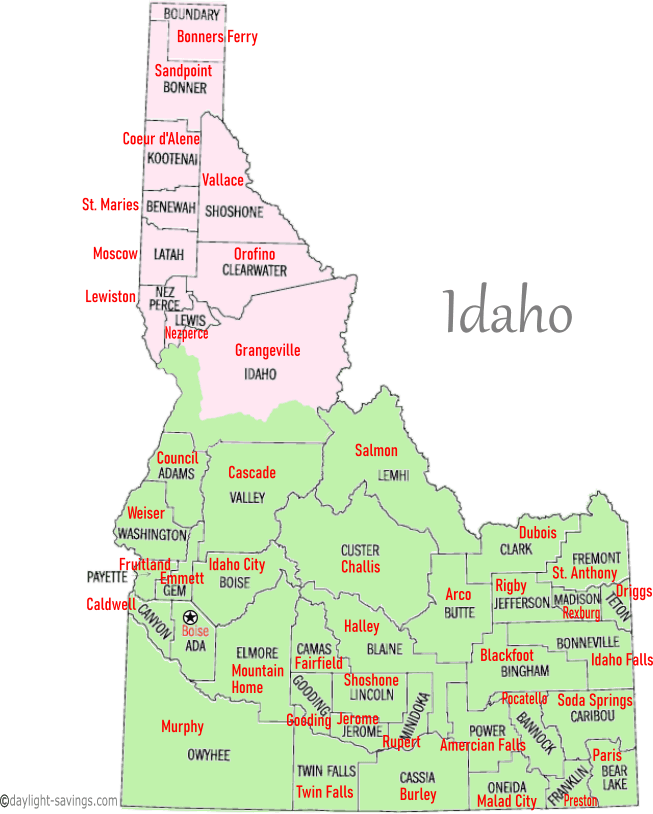
The vast majority of Idaho, particularly the southern and central portions, observes Mountain Time. This includes the capital city of Boise, the ski haven of Sun Valley, and agricultural hubs like Pocatello and Idaho Falls. These regions operate on Mountain Standard Time (MST) during the winter months and Mountain Daylight Time (MDT) when Daylight Saving Time is in effect. This places them generally one hour ahead of the Pacific Time Zone.
However, a significant portion of North Idaho, often referred to as the Idaho Panhandle, observes Pacific Time. This includes popular destinations such as Coeur d’Alene, Lewiston, and cities near the Washington border. These areas follow Pacific Standard Time (PST) and Pacific Daylight Time (PDT). The boundary between these two time zones generally follows the Salmon River for a significant stretch, and then extends north, effectively putting the entire panhandle on Pacific Time. This historical and geographical arrangement often surprises first-time visitors who might assume a uniform time zone across the state. The reason for this split is largely economic and social, as North Idaho has stronger ties and more frequent interactions with neighboring Washington State, which is entirely within the Pacific Time Zone. For instance, a drive from Spokane, Washington, to Coeur d’Alene involves no time change, while a drive from Boise to Coeur d’Alene necessitates adjusting your watch by an hour. This unique time zone configuration adds an intriguing layer of complexity to the state’s identity and demands careful attention from anyone planning to traverse its diverse regions. The convenience of staying on the same time as neighboring major economic centers often outweighs the consistency within the state for those northern communities.
Practical Implications for Travelers
The dual time zones in Idaho carry several practical implications that every traveler should consider. Ignoring this detail can lead to missed appointments, confusion over travel times, and an overall disrupted experience. Firstly, when booking flights or making travel arrangements, it’s crucial to confirm the local time of arrival and departure for each leg of your journey. A flight scheduled to depart Boise at 10:00 AM MDT and arrive in Lewiston at 10:30 AM PDT might appear to be a swift 30-minute flight on paper, but in reality, it’s a 90-minute journey when accounting for the time zone change. Always convert times to your current zone or the destination’s local time to avoid misunderstandings.
Secondly, for road trips crossing the time zone boundary, especially if you plan to visit both northern and southern Idaho, remember to adjust your clock. Many modern smartphones and GPS devices will automatically update, but it’s always wise to double-check manually. This is particularly important for timed events such as museum visits, restaurant reservations, or guided tours. Imagine missing a white-water rafting departure on the Snake River near Hells Canyon because you were operating on the wrong time! The time zone switch can also impact cellular service and internet connectivity in some remote areas, further emphasizing the need for manual confirmation of time. The mental adjustment required can also contribute to travel fatigue, especially if you’re frequently crossing the boundary. Therefore, building in buffer time for transitions and being mindful of local operating hours become essential strategies for a stress-free trip.

Planning Your Idaho Itinerary: Time-Sensitive Travel Tips
Planning an itinerary for Idaho requires more than just knowing where you want to go; it demands an awareness of when you need to be there, especially with the state’s time zone split. From coordinating activities to securing the perfect accommodation, timing is everything. Thoughtful preparation can transform potential logistical headaches into a seamless exploration of Idaho’s wonders.
Synchronizing Your Schedule with Idaho’s Attractions
Idaho boasts a myriad of attractions, from natural marvels to bustling cityscapes, each with its own operating hours. When crafting your itinerary, be meticulous about checking the local time for each attraction. For example, if you’re based in Boise (MT) and planning a day trip to explore the stunning vistas around Coeur d’Alene (PT), remember that a 9:00 AM tour in Coeur d’Alene will feel like 10:00 AM to your body clock. This hour difference can impact not only your arrival time but also your energy levels and hunger patterns. Early morning activities, like a sunrise hike in the Sawtooth Mountains (MT) or a fishing charter on Lake Coeur d’Alene (PT), will require different wake-up times depending on which time zone you spent the night in.
Consider the implications for local events as well. A harvest festival in the Palouse region (PT) might kick off at 10:00 AM PDT, while a concert in downtown Boise (MT) could start at 7:00 PM MDT. Missing these experiences due to a simple time zone oversight would be a regrettable loss. Utilizing a reliable multi-time zone clock or a travel app that automatically adjusts for local times can be incredibly helpful. Furthermore, attractions like Craters of the Moon National Monument and Preserve or Shoshone Falls, both in Mountain Time, might have specific ranger-led programs or optimal viewing times that align with their local clocks. Planning buffer time, especially when transitioning between regions, is a smart strategy, allowing for unexpected delays and giving you a moment to acclimate to the new time zone before diving into your next adventure.
Accommodation Choices Across Time Zones
Your choice of accommodation—be it a luxury resort, a cozy boutique hotel, or a spacious apartment rental—also plays a role in navigating Idaho’s time zones. When booking, always confirm check-in and check-out times with respect to the local time zone of the property. A resort in Coeur d’Alene (PT) might have a 3:00 PM check-in, which means 4:00 PM for someone arriving from Boise (MT). Conversely, a late check-out might give you an extra hour of sleep if you’re traveling eastward into Mountain Time.
Hotels and resorts often cater to travelers crossing time zones by offering amenities that ease adjustment. Look for properties with flexible dining hours, 24-hour fitness centers, or even rooms with blackout curtains to help reset your internal clock. For example, The Coeur d’Alene Resort, situated on the shores of Lake Coeur d’Alene, or the historic Sun Valley Resort in the heart of the Rocky Mountains, provide exceptional hospitality, but their services operate strictly on their respective local times. When planning a multi-day stay that involves crossing time zones, consider whether you want to book accommodation strategically to minimize time changes during your stay. Perhaps you’d prefer to spend several days exclusively in the Idaho Panhandle before moving south, or vice versa, to reduce the frequency of time adjustments. For longer stays or business trips, particularly for digital nomads, understanding which time zone your accommodation falls into is paramount for scheduling calls and meetings with clients or colleagues in other parts of the world. Booking platforms typically show local times, but it’s always prudent to double-check directly with the property.
Embracing Idaho’s Diverse Experiences, Hour by Hour
The very existence of two time zones within Idaho doesn’t just present logistical challenges; it also creates unique opportunities to experience the state’s diverse offerings. From watching the sun rise over the eastern peaks to chasing the sunset across western plains, the time differences can subtly enhance your journey, influencing the rhythm of your exploration and the memories you create.
From Sunrise in the Rockies to Sunset on the Palouse
Imagine the unique experience of witnessing a glorious sunrise over the rugged Rocky Mountains near McCall or in the Teton Valley while on Mountain Time, then later in the day, driving west into the Pacific Time Zone to enjoy an extended sunset over the rolling hills of the Palouse near Lewiston. This natural phenomenon, essentially “gaining” an hour by traveling westward, allows for more daylight hours in your day, maximizing opportunities for outdoor activities and sightseeing. Picture extending your afternoon hike, enjoying an extra hour of fishing on a tranquil lake, or savoring a leisurely outdoor dinner with lingering daylight.
Conversely, traveling eastward from the Idaho Panhandle to South Idaho means you “lose” an hour, making early morning starts even earlier. However, this can be an advantage for certain experiences. For instance, if you’re eager to be among the first on the slopes at Sun Valley Resort or Bogus Basin Mountain Recreation Area on a powder day, the shift might give you a slight edge. Similarly, for nature photographers, understanding these time shifts can be crucial for catching the golden hour light at iconic spots like Shoshone Falls or the lunar landscapes of Craters of the Moon National Monument and Preserve. Embracing these natural rhythms and planning around them can lead to truly unique and memorable photographic opportunities. The time zone transition becomes less of an inconvenience and more of a feature, allowing for a broader spectrum of experiences within a single trip.
Lifestyle Adjustments for an Optimal Idaho Adventure
Beyond simply knowing what time it is, understanding the lifestyle implications of Idaho’s time zones can significantly enhance your travel experience. For families traveling with young children, adjusting to time changes can be particularly challenging. Maintaining consistent sleep schedules becomes paramount, and a gradual adjustment of bedtime and meal times a day or two before crossing the time zone can ease the transition. Hotels offering suites with separate living areas or kitchenettes can be beneficial, allowing families to stick to their routines more easily. Budget travelers might find that early morning starts, facilitated by time zone changes, allow them to pack more free activities into their day before paid attractions open or before crowds gather.
Luxury travelers, on the other hand, might appreciate personalized services that account for time zone adjustments, such as flexible meal times, in-room spa treatments to combat jet lag, or concierge services that meticulously manage multi-time zone itineraries. For business stays, especially for remote workers or those attending conferences, it is absolutely vital to be aware of the local time zone when scheduling virtual meetings or coordinating with local contacts. The Boise Greenbelt, for example, offers a beautiful escape for an early morning jog, but its enjoyment depends on how your body is adjusting to Mountain Time. Similarly, enjoying the nightlife or local dining scene in Coeur d’Alene (PT) requires knowing that last call might come an hour earlier by your internal Mountain Time clock. Adapting your lifestyle and expectations to these temporal shifts allows for a more relaxed and fulfilling journey, transforming what could be a minor annoyance into an integral part of your Idaho story.
Making the Most of Every Minute in the Gem State
Idaho’s dual time zones are a unique characteristic that adds an intriguing layer to its identity. While initially seeming like a minor detail, understanding this geographical nuance is fundamental for any traveler seeking a truly immersive and smooth experience. From precisely timing your arrival at a charming resort in Sun Valley to ensuring you catch the last ski lift at Schweitzer Mountain Resort or Silver Mountain Resort in the Panhandle, the local time makes all the difference.
By proactively incorporating the time zone differences into your travel plans, from booking flights and accommodations to scheduling tours and dining experiences, you empower yourself to navigate the Gem State with confidence. This awareness not only prevents logistical mishaps but also opens up opportunities for unique experiences, such as witnessing two sunsets in a single day or extending your outdoor adventures. Idaho offers a spectacular canvas for travel, rich in natural beauty, diverse cultures, and unforgettable moments. With careful planning and an astute awareness of “What Time Is In Idaho,” you are well-equipped to savor every minute and create lasting memories, ensuring your journey through this magnificent state is nothing short of extraordinary.
LifeOutOfTheBox is a participant in the Amazon Services LLC Associates Program, an affiliate advertising program designed to provide a means for sites to earn advertising fees by advertising and linking to Amazon.com. Amazon, the Amazon logo, AmazonSupply, and the AmazonSupply logo are trademarks of Amazon.com, Inc. or its affiliates. As an Amazon Associate we earn affiliate commissions from qualifying purchases.