
When the United States presidential election rolls around every four years, the nation’s attention turns to the Electoral College. This unique system, which determines the winner of the presidency, often sparks debate and confusion. One of the most intriguing aspects of this system is how individual states allocate their electoral votes. While most states award all their electoral votes to the candidate who wins the popular vote within their borders, a select few have adopted a different approach. Among these is the picturesque state of Maine.
Maine’s Electoral Vote Allocation: A Closer Look
Unlike the winner-take-all system prevalent in 48 states and the District of Columbia, Maine employs a unique method for distributing its electoral votes. This system, established by state law, allows Maine to split its electoral votes between presidential candidates based on the outcome of the popular vote in each of its congressional districts, along with an additional vote for the statewide popular vote winner. This means that Maine can, and sometimes does, cast electoral votes for different candidates in the same presidential election.
The Mechanics of Maine’s Split Electoral Vote System
To truly understand how Maine operates in the Electoral College, it’s crucial to delve into the specifics of its allocation method. The state is divided into two congressional districts: the 1st Congressional District and the 2nd Congressional District. Additionally, Maine has a statewide popular vote. The Electoral College votes are then distributed as follows:
- One electoral vote is awarded to the candidate who wins the popular vote in the 1st Congressional District.
- One electoral vote is awarded to the candidate who wins the popular vote in the 2nd Congressional District.
- The remaining one electoral vote is awarded to the candidate who wins the statewide popular vote.
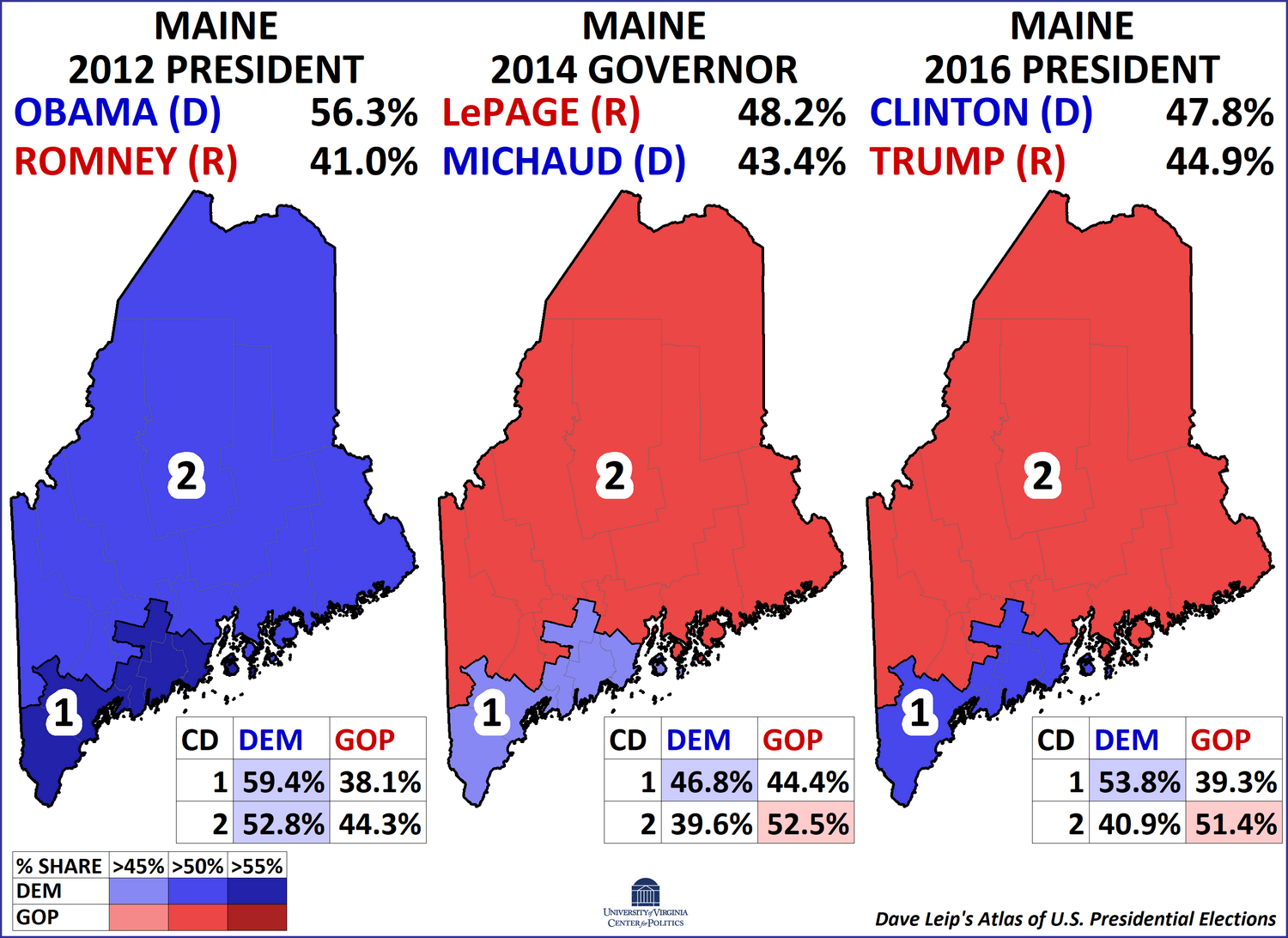
This system creates the possibility of a split outcome, where one candidate could win the popular vote in one district, and another candidate could win in the other district and the statewide vote. This was famously demonstrated in the 2016 presidential election, where Maine‘s electoral votes were split for the first time in history.
Historical Context and the 2016 Election
The 2016 presidential election marked a pivotal moment in Maine‘s electoral history. Prior to this election, Maine had consistently awarded all its electoral votes to the winner of the statewide popular vote, adhering to the winner-take-all principle. However, in 2016, Donald Trump won the popular vote in the 2nd Congressional District, while Hillary Clinton won the popular vote in the 1st Congressional District and the statewide popular vote.
This outcome resulted in Donald Trump receiving one electoral vote from Maine, and Hillary Clinton receiving two electoral votes. This split was the first time Maine had ever divided its electoral votes, highlighting the unique nature of its electoral allocation system. This event brought significant national attention to Maine‘s electoral process and sparked discussions about the implications of such systems in other states.
The 2016 election was not an isolated incident. In 2020, Maine again split its electoral votes, with Joe Biden winning the statewide popular vote and the 1st Congressional District, and Donald Trump securing victory in the 2nd Congressional District. This solidified the understanding that Maine‘s electoral split is a recurring possibility.
Implications of Maine’s System
Maine’s electoral vote allocation system has several significant implications, both for the state itself and for the broader presidential election landscape.

Impact on Presidential Campaigns
The split electoral vote system in Maine can influence presidential campaign strategies. Candidates recognize that they can potentially win a portion of Maine’s electoral votes by focusing their resources and attention on specific congressional districts, particularly the 2nd Congressional District, which has historically been more competitive and has leaned Republican in recent presidential elections.
This incentivizes campaigns to engage with voters in individual districts, rather than solely focusing on the statewide popular vote. It can lead to more targeted advertising, campaign rallies, and ground game efforts in these specific areas. For example, a campaign might heavily invest in outreach in areas of Maine that are known to be crucial for winning the 2nd Congressional District, even if the statewide polls suggest a different outcome. This can create opportunities for candidates who might otherwise struggle to win a winner-take-all state.
A Model for Other States?
The success and unique nature of Maine’s system have led to discussions about whether other states should consider adopting similar models. Proponents argue that a district-based allocation system more accurately reflects the diverse political landscape within a state. They believe it can lead to greater engagement from voters who might feel their vote is less impactful in a winner-take-all system where their preferred candidate loses statewide.
However, adopting such a system is not without its challenges. It requires legislative action at the state level, and there can be significant political opposition to changing established electoral processes. Furthermore, the potential for a highly fractured Electoral College outcome could be a concern for those who prefer a clearer mandate for the president-elect.
The National Popular Vote Interstate Compact is another initiative that aims to reform the presidential election process. This compact is an agreement among U.S. states to award their electoral votes to the candidate who wins the overall popular vote nationwide. While it operates independently of Maine’s district-based system, it represents a parallel effort to alter how electoral votes are cast.
Examining the 2nd Congressional District’s Significance
The 2nd Congressional District of Maine has become a focal point in presidential elections due to its distinct political leanings. While Maine as a whole has often voted for Democratic candidates in presidential elections, the 2nd Congressional District has a more mixed voting history, frequently opting for Republican candidates in recent decades.
This difference in political preference between the 1st Congressional District (which generally leans Democratic) and the 2nd Congressional District makes the 2nd Congressional District a particularly attractive target for presidential campaigns. A candidate can win the statewide popular vote and the 1st Congressional District, but still secure an electoral vote from Maine by winning the 2nd Congressional District. This dynamic adds a layer of complexity and strategic importance to campaigning within this specific congressional district.
For those interested in the electoral process, understanding the nuances of Maine’s system provides valuable insight into the intricate workings of American democracy. The state’s approach to allocating electoral votes offers a compelling case study in how different methodologies can impact election outcomes and campaign strategies.
Travel and Tourism Considerations in Maine
While the electoral process is a significant aspect of Maine’s identity, the state also offers a wealth of attractions for travelers. Known for its rugged coastline, charming lighthouses, and delicious seafood, Maine is a popular tourist destination. Visitors can explore the historic streets of Portland, hike in Acadia National Park, or enjoy the tranquility of the Kennebec River.
The state’s commitment to preserving its natural beauty and rich history is evident in its numerous landmarks and cultural sites. From the iconic Portland Head Light to the maritime museums that dot the coast, there are countless opportunities for exploration and discovery. Accommodation options range from luxurious resorts to cozy bed and breakfasts, catering to every type of traveler. Whether you’re seeking an adventure-filled getaway or a relaxing escape, Maine offers a memorable experience.
The unique electoral system of Maine, coupled with its inherent charm and appeal as a travel destination, makes it a state of particular interest. It demonstrates how a state can maintain its distinct political identity while also being a vibrant and welcoming place for visitors from all walks of life. The blend of political intrigue and natural beauty makes Maine a truly fascinating state to explore.
LifeOutOfTheBox is a participant in the Amazon Services LLC Associates Program, an affiliate advertising program designed to provide a means for sites to earn advertising fees by advertising and linking to Amazon.com. Amazon, the Amazon logo, AmazonSupply, and the AmazonSupply logo are trademarks of Amazon.com, Inc. or its affiliates. As an Amazon Associate we earn affiliate commissions from qualifying purchases.