
While the allure of exploring vibrant cities like New Orleans or relaxing in a luxurious resort in Hawaii often takes center stage in travel discussions, there’s a unique kind of excitement that can be found closer to home, perhaps even within the elegant confines of a casino while on vacation. For those who enjoy a blend of strategy and chance, card games offer a captivating diversion. Among the many available, Mississippi Stud has carved out a significant niche, offering a dynamic and engaging experience for players of all levels. This article delves into the intricacies of how to play Mississippi Stud, transforming a casual casino visit into an opportunity to test your strategic prowess.
The game is a popular table game found in many casinos across the United States, including those in bustling hubs like Las Vegas and historic gambling towns like Atlantic City. Its appeal lies in its relative simplicity, yet it offers enough strategic depth to keep seasoned gamblers engaged. Unlike many other poker-based casino games, Mississippi Stud doesn’t involve playing against other players or the dealer directly in the traditional sense. Instead, you are playing against the paytable, aiming to create the best possible five-card poker hand using your hole cards and community cards. This unique structure makes it an accessible yet challenging game, perfect for a relaxing evening after a day of sightseeing or exploring local attractions.
The Core Mechanics of Mississippi Stud
At its heart, Mississippi Stud is a three-card poker variant where players are dealt three cards face down. The objective is to achieve a winning poker hand by using these initial cards in combination with up to three additional community cards that are dealt face up throughout the game. The game’s name itself hints at its roots, with variations of stud poker being a staple in card rooms for generations. The strategic element comes into play as players decide how much to bet on each community card as it is revealed, based on the strength of their initial hand and their assessment of the potential for improvement.
Getting Started: The Initial Wager and First Card
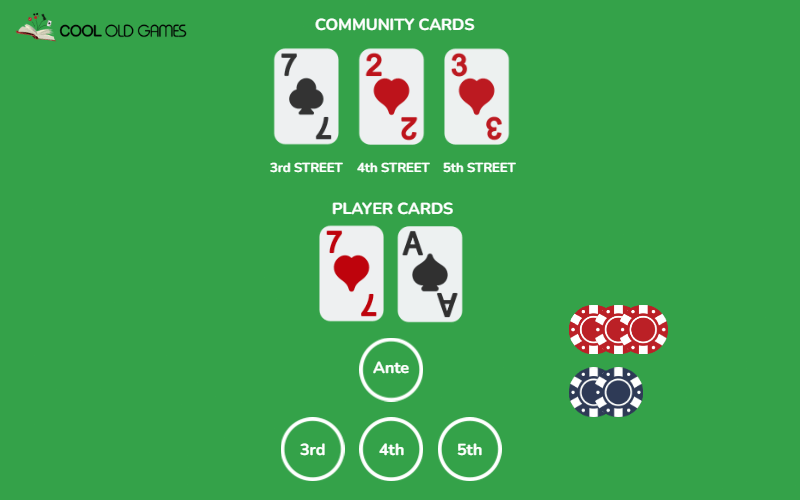
The game begins with the player making an initial bet, known as the “ante” or “initial bet.” This is the base amount you’re willing to wager on the hand. Once this bet is placed, you will be dealt three cards face down. These are your “hole cards,” and they are the foundation of your potential winning hand. After receiving your three cards, you get your first opportunity to make a strategic decision.
The dealer will then reveal the first community card, which is placed face up in the center of the table. This card is common to all players playing the game. Now, you have a choice: you can either fold your hand, forfeiting your initial bet, or you can make an “additional bet” equal to or less than your initial ante. This additional bet is placed in the designated betting circle for the first community card. The crucial aspect here is that this bet is only for the potential of improving your hand with this specific community card. If you choose to bet, your initial ante and this additional bet are now in play for this stage.
The Second Community Card and Further Decisions
Following the first community card and your decision on the additional bet, the dealer will reveal the second community card, also placed face up. This card, along with the first community card and your hole cards, forms a four-card hand. Once again, you are presented with a decision: fold or bet. If you choose to bet, this “additional bet” can be equal to your initial ante or any amount up to your initial ante. It’s important to remember that any additional bets you make are independent of each other and the initial ante. They are placed in separate betting areas corresponding to each community card.
The beauty of Mississippi Stud lies in this progressive betting system. It allows players to gauge the strength of their hand as it develops and make informed decisions about how much more they are willing to risk. A strong pair or three of a kind in your hole cards might entice you to bet more aggressively on the community cards, hoping to build a powerful flush or straight. Conversely, a weak starting hand might lead you to fold early to cut your losses. This interactive element makes the game far more engaging than simply being dealt a hand and seeing if it wins.
The Third Community Card and Hand Evaluation
The final community card is then dealt face up. At this point, your hand is complete, consisting of your three hole cards and the three community cards, forming a potential five-card poker hand. You will have one last opportunity to make an additional bet, again equal to or less than your initial ante, in the designated betting area for the third community card. After you have made your final decision, whether to bet or not, the dealer will reveal your hole cards.
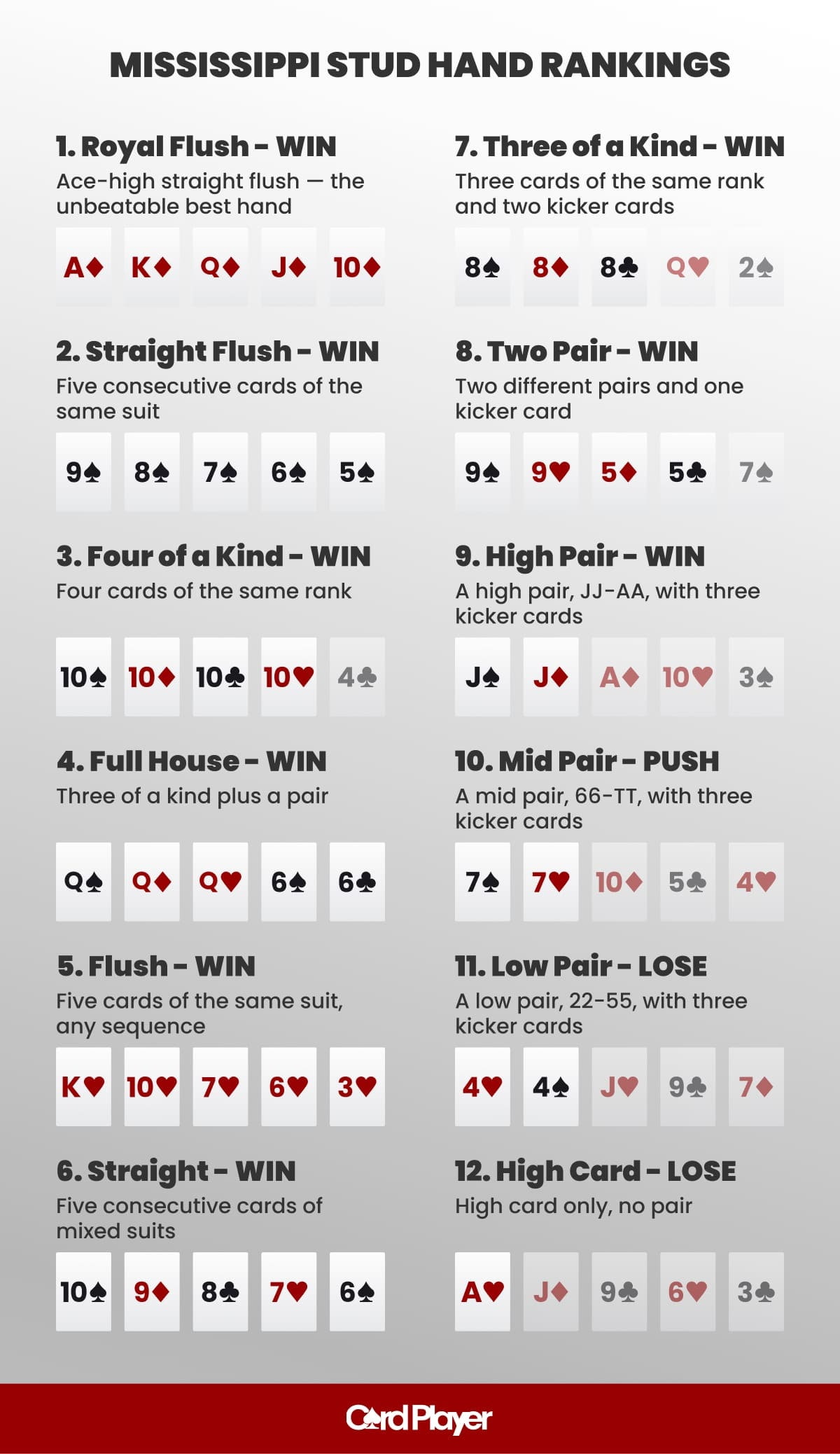
The dealer then evaluates your hand to determine if it qualifies for a payout based on the game’s paytable. Unlike many other casino games, the dealer in Mississippi Stud does not compete against you. The dealer’s role is simply to facilitate the game and pay out winning hands according to the established odds. Payouts are based on standard poker hand rankings, from a pair of Jacks or better all the way up to a Royal Flush. The higher your poker hand, the greater your payout will be.
Understanding the Payouts and Strategy
The paytable is the backbone of Mississippi Stud, dictating how much you win for each winning hand. These tables can vary slightly between casinos, so it’s always a good idea to check the specific paytable at the table you are playing. However, the general structure remains consistent, rewarding stronger poker hands with higher multipliers of your bets. Understanding these payouts is crucial for developing an effective strategy, whether you’re on a gambling holiday in Reno or enjoying a stay at a luxury hotel in Macau.
The Mississippi Stud Paytable Explained

A typical Mississippi Stud paytable might look something like this, listing the poker hand and its corresponding payout multiplier for each bet placed (initial ante and any additional bets):
- Royal Flush: 500 to 1
- Straight Flush: 100 to 1
- Four of a Kind: 40 to 1
- Full House: 10 to 1
- Flush: 5 to 1
- Straight: 4 to 1
- Three of a Kind: 3 to 1
- Two Pair: 2 to 1
- Pair of Jacks or Better: 1 to 1
- Anything else (below a pair of Jacks): Loss (the bets are returned if you fold, but lost if you bet on community cards and don’t make at least a pair of Jacks).
It’s important to note that you only get paid on hands that are a pair of Jacks or better. Any bets you make on the community cards are paid out independently if your final five-card hand qualifies. For instance, if you make an initial bet of $10, and then bet $10 on the first community card, $10 on the second, and $10 on the third, and you end up with a flush, you would win $50 for your initial $10 ante, and $50 for each of your $10 additional bets. This means a $50 total payout on a $30 wager. This potential for multiple payouts on a single hand is a significant part of the game’s appeal.
Strategic Considerations for Betting
The decision of when to bet and how much to bet is where the strategy of Mississippi Stud truly shines. While luck plays a significant role, sound decision-making can improve your odds and minimize your losses. This game is perfect for those who enjoy the lifestyle of a well-planned vacation, where every decision is part of a larger strategy.
Hole Card Strength: Your initial three hole cards are paramount.
- Strong Starting Hands: If you are dealt three cards that are already a strong poker hand (e.g., three of a kind, a made straight or flush), you should almost always bet on the community cards. The potential for improvement is high.
- Potential for Improvement: Even with a less impressive starting hand, consider the potential for improvement. If you have two suited cards, you might bet on the community cards hoping for a flush. If you have connected cards (like a 7, 8, 9), you might bet hoping for a straight.
- Weak Hands: If your three hole cards are very disparate and have little potential for making a strong hand, folding early is often the wisest move to preserve your initial bet.
Community Card Influence: As community cards are revealed, reassess your hand.
- First Community Card: If the first card significantly improves your hand, or if it completes a strong potential draw (like giving you four cards to a flush), it’s often worth making an additional bet.
- Second Community Card: By the time the second community card is revealed, you should have a good idea of your hand’s potential. If you have a good chance of making at least a pair of Jacks or better, consider betting again.
- Third Community Card: This is your final opportunity. If you have a strong hand developing, or if the last card completes a very valuable poker hand, a final bet can be lucrative.
Bet Sizing: The rules typically allow you to bet up to your initial ante on each community card. A common strategy is to bet the full ante if you feel the hand has good potential. Some players use a more conservative approach, betting less on the community cards if their hand is weaker but still has some potential. The key is to balance the desire for potential winnings with the risk of losing your bets.
Variations and Side Bets
While the core game of Mississippi Stud is straightforward, casinos often offer variations or optional side bets to add extra layers of excitement and potential payouts. These can be particularly appealing if you are staying at a casino resort that offers a wide range of activities and entertainment options.
The Mississippi Stud Progressive Jackpot
One of the most popular side bets available is the progressive jackpot. This is a separate wager, usually placed on a designated spot on the table, that contributes a small portion of your bet to a constantly growing jackpot. To qualify for the progressive jackpot, you typically need to achieve a very rare and high-ranking poker hand, such as a Royal Flush or a Straight Flush. The jackpot can reach substantial amounts, making it a tempting addition for players looking for a chance at a life-changing win. While the odds of hitting a progressive jackpot are extremely low, the allure of such a large payout can be a significant draw, adding an extra layer of thrill to the game, much like the excitement of discovering a hidden landmark on a travel guide.
Other Optional Bets
Beyond the progressive jackpot, some casinos may offer other optional side bets. These can include bets on specific hand combinations (e.g., a bet that you will get three of a kind in your hole cards) or bets based on the community cards themselves. It’s always advisable to understand the payouts and odds of any side bet before placing your wager, as they often have a higher house edge than the main game. However, for players who enjoy the thrill of more frequent, smaller payouts, these side bets can add an extra dimension to the game. Exploring these variations can be as interesting as exploring different cuisines in a new city or enjoying the unique architecture of a historic building.
Conclusion: Mississippi Stud for the Discerning Traveler
Mississippi Stud offers a compelling blend of strategy, luck, and the anticipation of a big payout. It’s a game that can be enjoyed by both novice and experienced card players, providing an engaging way to spend an evening at a casino, whether you’re on a dedicated gambling trip or simply looking for some entertainment during your vacation. The game’s accessible rules and dynamic betting structure make it a standout among casino card games.
For those who appreciate a well-thought-out strategy, much like planning a family trip or choosing the perfect accommodation, Mississippi Stud rewards careful decision-making. Understanding the paytable, assessing the potential of your hand, and making calculated bets on the community cards are key to maximizing your enjoyment and potential winnings. So, the next time you find yourself in a casino, perhaps after a day of exploring local culture or visiting a famous place, consider taking a seat at the Mississippi Stud table. You might just find your new favorite casino game. Whether you’re enjoying a serene villa in the Caribbean or seeking thrills in a bustling metropolis, the strategic simplicity of Mississippi Stud offers a universally appealing form of entertainment.
LifeOutOfTheBox is a participant in the Amazon Services LLC Associates Program, an affiliate advertising program designed to provide a means for sites to earn advertising fees by advertising and linking to Amazon.com. Amazon, the Amazon logo, AmazonSupply, and the AmazonSupply logo are trademarks of Amazon.com, Inc. or its affiliates. As an Amazon Associate we earn affiliate commissions from qualifying purchases.