
The very notion of a city as vibrant, resilient, and utterly unique as New Orleans grappling with the existential threat of sinking is a sobering one. For anyone who has ever been captivated by the soulful jazz, the intoxicating aroma of Creole cuisine, or the spectral beauty of its historic architecture, the question “Is New Orleans sinking?” can evoke a sense of unease. While the city has long been synonymous with its struggle against water, from devastating hurricanes to persistent flooding, the current discourse surrounding land subsidence and sea-level rise presents a more insidious, long-term challenge. This isn’t just about preparing for the next storm; it’s about the fundamental stability of the ground beneath the iconic French Quarter, the charming Garden District, and the lively streets of the Marigny.

The reasons behind New Orleans’s vulnerability are complex, a confluence of natural processes and human intervention. Understanding these factors is crucial to appreciating the ongoing efforts to safeguard this beloved American jewel. The Mississippi River, the very lifeblood of the region, has played a dual role: historically, its natural sediment deposition helped build the delta, but modern engineering, designed to control its flow and protect urban areas, has inadvertently disrupted this natural process, leading to land loss. Coupled with the extraction of groundwater and oil and gas from beneath the surface, which creates voids and causes compaction, the result is a gradual, relentless sinking. This geological reality, amplified by the accelerating impacts of climate change and rising sea levels, paints a stark picture for New Orleans’s future.
The Geological Canvas: Understanding Land Subsidence
The story of New Orleans sinking is deeply rooted in its geography. The city is built on the Mississippi River Delta, a vast expanse of land formed over thousands of years by the deposition of sediment carried by the river. This delta is inherently unstable, characterized by soft, compressible soils. Historically, the natural flooding of the Mississippi River was a vital process. When the river overflowed its banks, it would deposit nutrient-rich sediment across the floodplain, effectively replenishing the land and counteracting natural compaction. This constant cycle of deposition and compaction created a dynamic equilibrium that supported the delta’s elevation.
The Human Hand in Land Loss
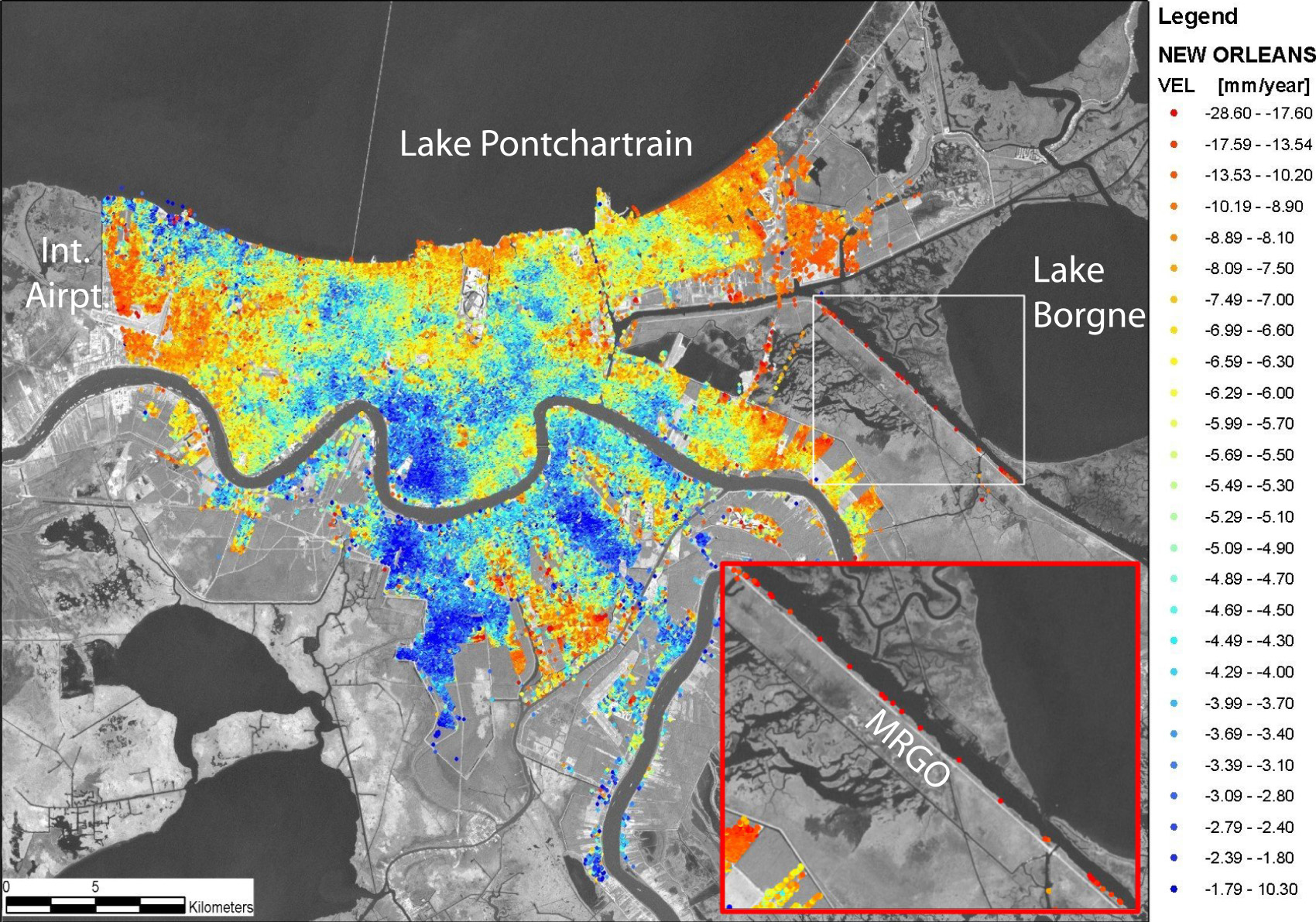
However, the course of the Mississippi River and the landscape of the delta have been dramatically altered by human engineering. The construction of levees, canals, and other flood control structures, while essential for protecting the growing population of New Orleans and enabling industrial development, has fundamentally changed the river’s behavior. By channeling the river’s flow and preventing natural flooding, these interventions have cut off the vital sediment supply that once nourished the delta. Without this regular replenishment, the underlying soils continue to compact under their own weight, a process known as subsidence. This natural compaction is exacerbated by the extensive withdrawal of groundwater and hydrocarbons (oil and gas) from beneath the Louisiana coast. As these fluids are extracted, the porous sediments they occupied collapse, leading to further sinking. Imagine squeezing a sponge; as you remove the water, the sponge compresses. The same principle applies, on a massive scale, to the geological formations beneath New Orleans.
This phenomenon is not unique to New Orleans, but the city’s densely populated and historically significant urban core, coupled with its low elevation, makes it particularly vulnerable. Areas of New Orleans have been found to be sinking at rates of several inches per decade. This is a significant amount in geological terms, and it directly contributes to the city’s increasing exposure to flooding. The cumulative effect of subsidence means that even if sea levels remained static, New Orleans would still be sinking further below the water.
The Ever-Present Threat: Rising Seas and Climate Change
The sinking of the land is only one half of the equation. The other, equally formidable, challenge facing New Orleans is the accelerating rise of global sea levels, a direct consequence of climate change. As the planet warms, glaciers and ice sheets melt, releasing vast amounts of water into the oceans, while warmer water itself expands. This phenomenon, known as thermal expansion, also contributes to rising sea levels. For low-lying coastal cities like New Orleans, which is already below sea level in many areas, even modest increases in sea level can have profound implications.
The Amplified Risk for New Orleans
The combined effects of land subsidence and sea-level rise create a perilous synergy for New Orleans. The sinking land effectively lowers the city’s elevation relative to the sea, while the rising sea level pushes the water higher. This means that storm surges from hurricanes, which are already a significant threat, can reach further inland and with greater destructive force. Furthermore, persistent tidal flooding, often referred to as “sunny-day flooding,” becomes more frequent and severe. These events, where streets are inundated even without heavy rainfall, are a visible and increasingly common manifestation of the city’s precarious relationship with water.
The impacts of these rising waters extend beyond the immediate threat of inundation. Saltwater intrusion into freshwater aquifers can threaten the city’s drinking water supply. The delicate coastal wetlands, which act as natural buffers against storm surges and are vital ecosystems, are being eroded and submerged at an alarming rate, further diminishing New Orleans’s natural defenses. This loss of wetlands also impacts the livelihoods of many in Louisiana, particularly those involved in fishing and shrimping. The cultural fabric of the region, so intrinsically linked to its coastal environment, is also at risk.
Navigating the Future: Resilience and Adaptation
Despite the daunting challenges, New Orleans is not passively accepting its fate. The city and its surrounding region have a long and storied history of resilience, having repeatedly bounced back from adversity. Today, a concerted effort is underway to adapt to these changing environmental conditions and build a more sustainable future. This involves a multi-pronged approach, combining engineering solutions, policy changes, and community engagement.
Engineering and Infrastructure Solutions
One of the most visible aspects of this adaptation is the ongoing investment in robust flood protection infrastructure. The Greater New Orleans Hurricane Protection Program, largely a response to the catastrophic failures during Hurricane Katrina, includes a comprehensive system of levees, floodwalls, and pumping stations designed to safeguard the city from storm surges and coastal flooding. These massive engineering projects are crucial for providing a baseline level of protection. Beyond these large-scale defenses, innovative approaches are being explored and implemented. This includes the use of porous pavements in urban areas to allow rainwater to infiltrate the ground, reducing runoff and the strain on drainage systems. Projects aimed at restoring and creating coastal wetlands are also a priority. These “living shorelines” provide a natural, adaptable defense against erosion and storm surge, and they also offer valuable ecological benefits. The Atchafalaya Basin and the vast network of bayous surrounding the city are crucial areas for such restoration efforts.

Policy, Planning, and Community Action
Beyond the physical infrastructure, policy and planning play a critical role in shaping New Orleans’s future. This includes stringent land-use planning that discourages development in the most vulnerable areas and promotes retreat from coastlines that can no longer be defended. Building codes are being updated to ensure new construction is more resilient to flooding and extreme weather. Importantly, there is a growing recognition that adaptation must be equitable, ensuring that the most vulnerable communities, often those historically marginalized, are not disproportionately impacted by environmental changes or the costs of adaptation. Community engagement is paramount. Local organizations, scientists, and residents are working together to raise awareness, develop localized solutions, and advocate for policies that support long-term resilience.
The question of whether New Orleans is sinking is not a simple yes or no. It is sinking, but the rate and the ultimate impact are influenced by a complex interplay of natural geological processes and human activities. The city’s fight against water is an ongoing, evolving battle. The spirit of New Orleans, however, is one of enduring optimism and creative adaptation. While the challenges are immense, the dedication to preserving its unique culture, its vibrant communities, and its irreplaceable heritage ensures that the city will continue to face the future, however uncertain, with the same resilience and flair that have defined it for centuries. The efforts to understand and mitigate the sinking, coupled with the embrace of new strategies for living with water, offer a hopeful, if still challenging, path forward for this extraordinary city.
LifeOutOfTheBox is a participant in the Amazon Services LLC Associates Program, an affiliate advertising program designed to provide a means for sites to earn advertising fees by advertising and linking to Amazon.com. Amazon, the Amazon logo, AmazonSupply, and the AmazonSupply logo are trademarks of Amazon.com, Inc. or its affiliates. As an Amazon Associate we earn affiliate commissions from qualifying purchases.