
Embarking on a journey through the United States often involves connecting its most iconic urban centers. Among the most popular and historically significant routes is the one between the bustling metropolis of New York City and the political powerhouse of Washington D.C.. While these two cities represent distinct facets of American life – one a global financial and cultural hub, the other a monumental testament to democracy and history – their relative proximity makes them a favored combination for travelers seeking diverse experiences within a single trip. The question “How far is New York to Washington D.C.?” isn’t just about a simple mileage count; it’s an invitation to explore a well-trodden path that offers a myriad of travel options, captivating landmarks, and unique cultural insights.
This comprehensive guide will delve into the distance, travel methods, and the rich tapestry of attractions and accommodations awaiting you in both destinations. Whether you’re planning a quick business trip, a family vacation, a romantic getaway, or a solo adventure, understanding the logistics and potential experiences along this corridor is key to crafting an unforgettable itinerary. We’ll explore everything from efficient train travel and scenic road trips to luxurious hotel stays and budget-friendly exploration, ensuring you’re well-equipped to navigate the journey from the Big Apple to the Nation’s Capital.
The Journey: Unveiling the Distance and Travel Time
The journey from New York to Washington D.C. is a quintessential East Coast experience, linking two of the United States’ most important cities. While the direct distance might seem manageable, the nuances of travel time can vary significantly based on your chosen mode of transport, time of day, and specific starting and end points within these expansive urban landscapes.
Geographic Proximity and Key Metrics
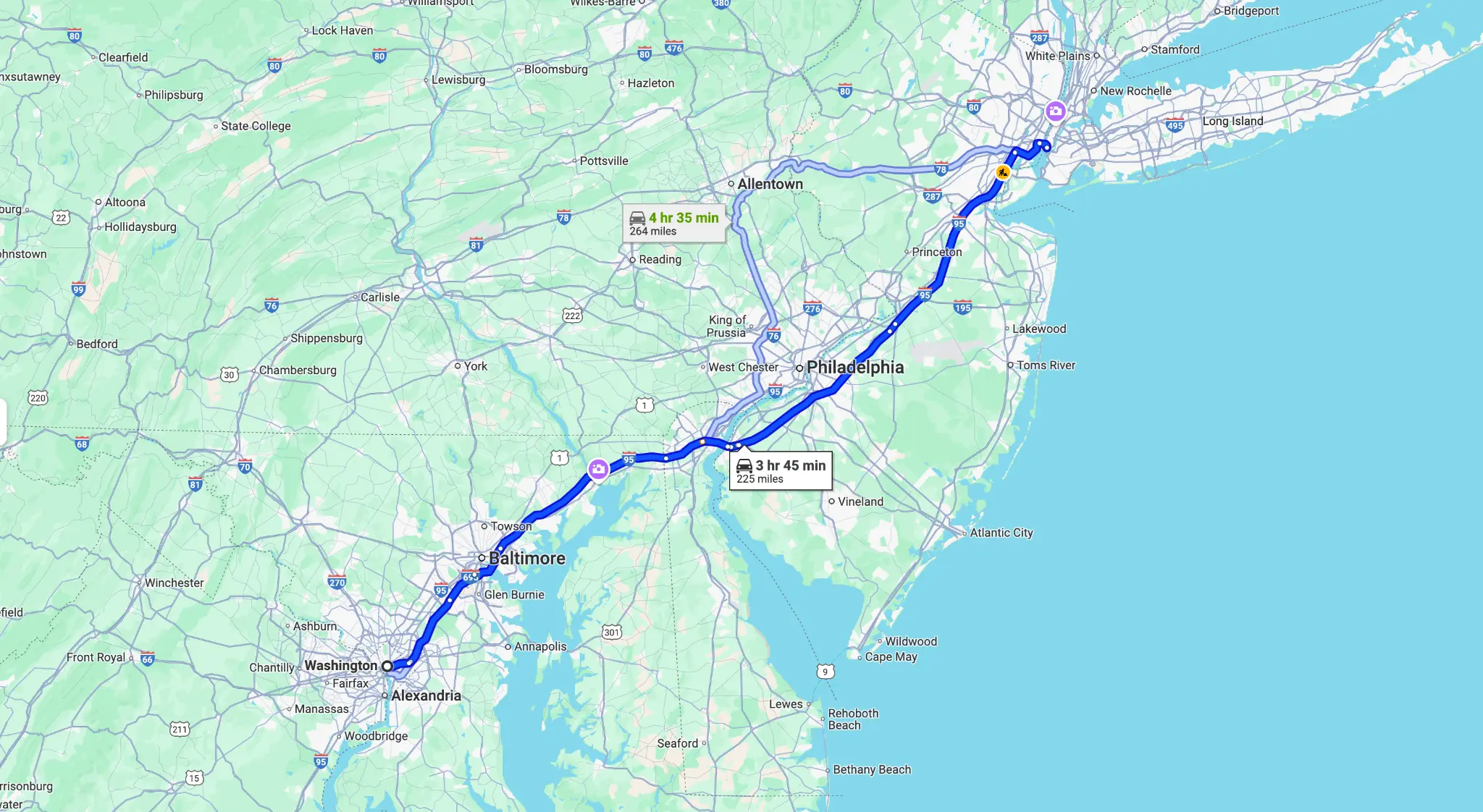
Geographically, the distance between New York City and Washington D.C. is approximately 200 to 230 miles (320 to 370 kilometers), depending on the exact route taken and whether you’re measuring city center to city center. This relatively short distance makes it an ideal corridor for a variety of travel purposes, from weekend getaways to multi-city tours.
- Driving Distance: The most common driving route typically covers around 225 miles (362 km).
- Air Distance: As the crow flies, the air distance is roughly 204 miles (328 km).
The travel time, however, is where the real planning comes into play:
- By Car: Without significant traffic, the drive can take 3.5 to 4.5 hours. However, peak travel times, especially Friday afternoons or Sunday evenings, can easily extend this to 5-7 hours or more.
- By Train: Amtrak offers some of the most consistent travel times. The high-speed Acela Express can complete the journey in approximately 2 hours and 50 minutes to 3 hours and 15 minutes. Slower services like the Northeast Regional typically take 3.5 to 4 hours.
- By Bus: Bus travel generally takes the longest due to more frequent stops and susceptibility to traffic. Expect a journey of 4.5 to 6 hours, sometimes longer during adverse conditions.
- By Plane: While flight time itself is only about 1 hour, the entire process – including travel to and from airports, security checks, and boarding – often means the door-to-door time is comparable to, or even longer than, the Acela Express train, usually around 3.5 to 5 hours.
The popularity of this route stems from its accessibility and the distinct attractions each city offers. Many travelers opt to experience both cities in a single trip, using one as a base or making it part of a longer East Coast exploration, showcasing the best of United States urban life and history.
Choosing Your Mode of Transport: A Comparative Guide
Selecting the right mode of transport between New York and Washington D.C. is crucial for a smooth and enjoyable journey. Each option presents a unique blend of cost, comfort, speed, and flexibility.
-
Driving:
- Pros: Unparalleled flexibility to set your own schedule, stop at interesting towns or attractions along the way (like Baltimore), and carry as much luggage as you need. It’s often cost-effective for groups or families. The primary route follows Interstate 95 through New Jersey Turnpike, Delaware, and Maryland.
- Cons: Highly susceptible to traffic congestion, especially in and around both cities. Tolls (e.g., George Washington Bridge, New Jersey Turnpike, Delaware Memorial Bridge) can add up. Parking in both cities is expensive and challenging to find.
-
Train (Amtrak):
- Pros: Often considered the most comfortable and stress-free option. Trains depart from conveniently located city-center stations (Moynihan Train Hall in NYC, Union Station in D.C.), avoiding airport hassles and traffic. Passengers can work, relax, or enjoy scenic stretches of the Northeast Corridor. The Acela Express offers business and first-class amenities.
- Cons: Can be more expensive than bus or even some flights, especially for last-minute bookings or Acela Express tickets. Schedules are fixed, offering less flexibility than driving.
-
Bus (Greyhound, Megabus, Peter Pan):
- Pros: The most budget-friendly option, making it popular for students and budget-conscious travelers. Several companies operate frequent services.
- Cons: Generally the slowest mode of transport, prone to delays from traffic. Comfort levels can vary, and buses make more stops. Stations might be less centrally located or have fewer amenities than train stations.
-
Flying:
- Pros: Fastest in terms of actual travel time, typically an hour or so.
- Cons: When accounting for travel to and from airports (JFK, LaGuardia, or Newark Liberty International Airport in NYC; Ronald Reagan Washington National Airport, Dulles International Airport, or Baltimore-Washington International Airport for D.C.), security checks, and potential delays, flying often takes longer door-to-door than the Acela Express. It can also be more expensive and less environmentally friendly.
Your choice should align with your priorities: speed, cost, comfort, or flexibility. For business travelers, Acela Express is often preferred. For leisure travelers with time, the train offers a relaxing journey, while driving allows for more exploration.
Exploring the Vibrant Destinations: New York City and Washington D.C.
Once you’ve successfully navigated the journey, two vastly different yet equally captivating cities await your exploration. Each offers a unique cultural fabric, an array of iconic landmarks, and distinct local experiences.
Iconic Landmarks and Cultural Immersion in New York City
New York City, often dubbed the “Crossroads of the World,” is a dynamic metropolis that never sleeps. Its vibrant energy, diverse neighborhoods, and world-class attractions make it a dream destination for millions. From dazzling lights to historic avenues, NYC offers an experience for every type of traveler.
- Landmarks and Attractions: No visit to New York is complete without seeing the majestic Statue of Liberty and Ellis Island, symbolizing freedom and hope. Ascend the Empire State Building or One World Trade Center for breathtaking panoramic views of the city skyline. Immerse yourself in the dazzling spectacle of Times Square, a vibrant hub of billboards, street performers, and theaters. Find tranquility in the sprawling greenery of Central Park, an urban oasis perfect for strolls, picnics, or rowboat rides. Walk across the historic Brooklyn Bridge for stunning views of Manhattan.
- Cultural Experiences: Broadway is synonymous with world-class theatrical productions, offering everything from classic musicals to avant-garde plays. For art lovers, the Metropolitan Museum of Art (The Met), the Museum of Modern Art (MoMA), and the Guggenheim Museum house invaluable collections spanning centuries and continents. Explore diverse neighborhoods like Greenwich Village for its bohemian charm, SoHo for high-end shopping, or Chinatown for authentic culinary delights.
- Food and Lifestyle: New York’s culinary scene is as diverse as its population. From Michelin-starred restaurants to iconic street food vendors, you can find virtually any cuisine imaginable. Enjoy a classic New York pizza slice, explore gourmet food halls like Chelsea Market, or indulge in fine dining experiences. The city also boasts vibrant nightlife, live music venues, and unique experiences like walking The High Line, an elevated park built on historic railway lines.
When it comes to accommodation, New York City offers an extensive range, from opulent luxury suites in iconic hotels like The Plaza Hotel to chic boutique hotels in neighborhoods like SoHo, and more budget-friendly options such as the Moxy Times Square or serviced apartments for longer stays. Booking in advance, especially during peak season, is always recommended.
Unraveling History and Power in Washington D.C.
Just a few hours south, Washington D.C. presents a stark contrast with its meticulously planned layout, neoclassical architecture, and profound sense of history. As the capital of the United States, it’s a city steeped in politics, national memory, and free access to world-class museums.
- Landmarks and Attractions: The heart of D.C. is the National Mall, a vast open parkland flanked by monuments, memorials, and museums. Walk from the majestic Lincoln Memorial to the towering Washington Monument, reflecting pool, and the U.S. Capitol Building. Pay respects at the various war memorials and visit the poignant White House, the iconic residence of the President.
- Cultural and Educational Experiences: The city is home to the world-renowned Smithsonian Museums, a collection of 19 museums and galleries, all offering free admission. Popular choices include the National Museum of Natural History, Smithsonian National Museum of American History, National Air and Space Museum, and the National Gallery of Art. Beyond the Smithsonian institutions, explore the National Portrait Gallery and the thrilling International Spy Museum. Catch a performance at the prestigious Kennedy Center.
- Food and Lifestyle: D.C. offers a diverse culinary scene reflecting its international population. From upscale dining in Georgetown and Embassy Row to vibrant ethnic eateries in areas like U Street Corridor and Adams Morgan, there’s much to savor. Explore local markets like Eastern Market for fresh produce and artisanal goods. Despite its serious facade, D.C. also boasts lively nightlife, beautiful parks such as Rock Creek Park, and a thriving arts scene.
Accommodation in Washington D.C. ranges from luxurious historic hotels like The Hay-Adams and The St. Regis Washington, D.C. near the White House, to modern business hotels such as the Omni Shoreham Hotel, and more economical options further from the city center.
Planning Your Trip: Accommodation, Budget, and Lifestyle Considerations
A successful trip between New York and Washington D.C. hinges on meticulous planning, especially when it comes to where you’ll stay and how your trip aligns with your personal travel style and budget. The diverse offerings of both cities mean there’s something for everyone, whether you seek ultimate luxury or a savvy budget adventure.
Navigating Accommodation: From Luxury to Budget Stays
Choosing the right place to stay is paramount to your travel experience. Both New York City and Washington D.C. boast an impressive array of accommodation types, from world-renowned hotels to cozy vacation rentals, catering to all preferences and price points.
- New York City Options:
- Luxury: For an opulent experience, consider iconic hotels like The Plaza Hotel, known for its grandeur and prime location overlooking Central Park. Other high-end choices include The St. Regis New York or The EDITION Times Square, offering exquisite suites and top-tier amenities.
- Mid-Range: NYC has numerous reputable hotels such as the Moxy Times Square or those in neighborhoods like Midtown or Chelsea, providing comfortable stays without breaking the bank. Boutique hotels in areas like SoHo or Greenwich Village offer unique charm.
- Budget-Friendly: Hostels, guesthouses, and economy hotels can be found throughout the boroughs, offering basic but clean accommodations. Look into areas like Long Island City in Queens or parts of Brooklyn for slightly lower prices with good subway access to Manhattan. Serviced apartments are also a popular choice for longer stays, often providing more space and kitchen facilities.
- Washington D.C. Options:
- Luxury: In D.C., you can indulge in historical luxury at hotels like The Hay-Adams, offering unparalleled views of the White House, or The St. Regis Washington, D.C. for a sophisticated experience. Many hotels along Embassy Row also fall into this category.
- Mid-Range: Properties like the Omni Shoreham Hotel in Woodley Park or various hotels in downtown D.C. offer excellent amenities, often with pools and fitness centers, suitable for business and leisure travelers alike.
- Budget-Friendly: Options further out from the immediate city center, or properties in neighboring Virginia or Maryland with metro access, can provide more affordable rates. Hostels near the National Mall are also available. For long-term stays, particularly for those on business or extended educational visits, apartment rentals are plentiful.
When booking, it’s wise to compare reviews and prices across different platforms. Consider amenities like Wi-Fi, breakfast, and proximity to public transport or key attractions. Early booking, especially during peak tourist seasons (spring and fall), can also lead to better deals.
Tailoring Your Experience: Lifestyle and Travel Tips
Your journey between New York and Washington D.C. can be customized to fit any lifestyle or purpose, from indulgent escapes to family-friendly adventures.
- Luxury Travel: For those seeking the finer things, both cities offer exceptional experiences. In NYC, this might mean a stay in a penthouse suite, private art gallery tours, Michelin-starred dining, and exclusive Broadway show tickets. In D.C., luxury could involve staying in a historic five-star hotel, private guided tours of the U.S. Capitol or White House area, and bespoke culinary experiences.
- Budget Travel: Traveling between these two cities doesn’t have to be expensive. Utilize efficient public transportation (subways and buses in both cities are excellent), stay in hostels or budget hotels, and take advantage of the many free attractions. In NYC, walk the Brooklyn Bridge or explore Central Park. In D.C., all Smithsonian Museums and the National Mall monuments are free to visit. Eating like a local at food trucks or neighborhood eateries can also significantly cut costs.
- Family Trips: Both cities offer a plethora of kid-friendly activities. NYC boasts the American Museum of Natural History, Central Park Zoo, and countless interactive exhibits. D.C. shines with its National Museum of Natural History, National Air and Space Museum, and the National Zoo (also free). Look for hotels with family suites or amenities like pools.
- Business Stays: For those traveling for work, proximity to convention centers (Javits Center in NYC, Walter E. Washington Convention Center in D.C.) and business districts is key. Hotels in both cities cater to business travelers with amenities such as meeting rooms, high-speed internet, and executive lounges. The Amtrak Acela Express is a favorite for business travel due to its speed and comfort.
Seasonal Travel Tips: Spring (cherry blossoms in D.C. and mild weather in NYC) and Fall (vibrant foliage and comfortable temperatures) are generally considered the best times to visit for pleasant weather. Summer can be hot and humid, while winter offers festive decorations in NYC but can be very cold. Consider special events, festivals, or exhibitions that might align with your travel dates.
Embracing Local Culture and Food: Don’t just stick to the major tourist traps. Venture into neighborhoods like Harlem or Jackson Heights in NYC, or U Street Corridor and Adams Morgan in D.C. to experience authentic local life, diverse cuisines, and unique cultural activities. From street art to jazz clubs, these cities are rich with hidden gems awaiting discovery.
In conclusion, the journey from New York to Washington D.C. is more than just covering a distance; it’s an opportunity to immerse yourself in the dynamic pulse of American urban life and the profound depths of its history. With careful planning, considering your preferred mode of transport, accommodation style, and desired experiences, you can craft a seamless and enriching adventure that blends the best of these two extraordinary cities. Whether you’re drawn to the towering skyscrapers and cultural kaleidoscope of New York, or the stately monuments and historical narratives of Washington D.C., this iconic route promises a journey filled with discovery and unforgettable memories. Start planning your East Coast escapade today and uncover the unique charm of each destination.
