
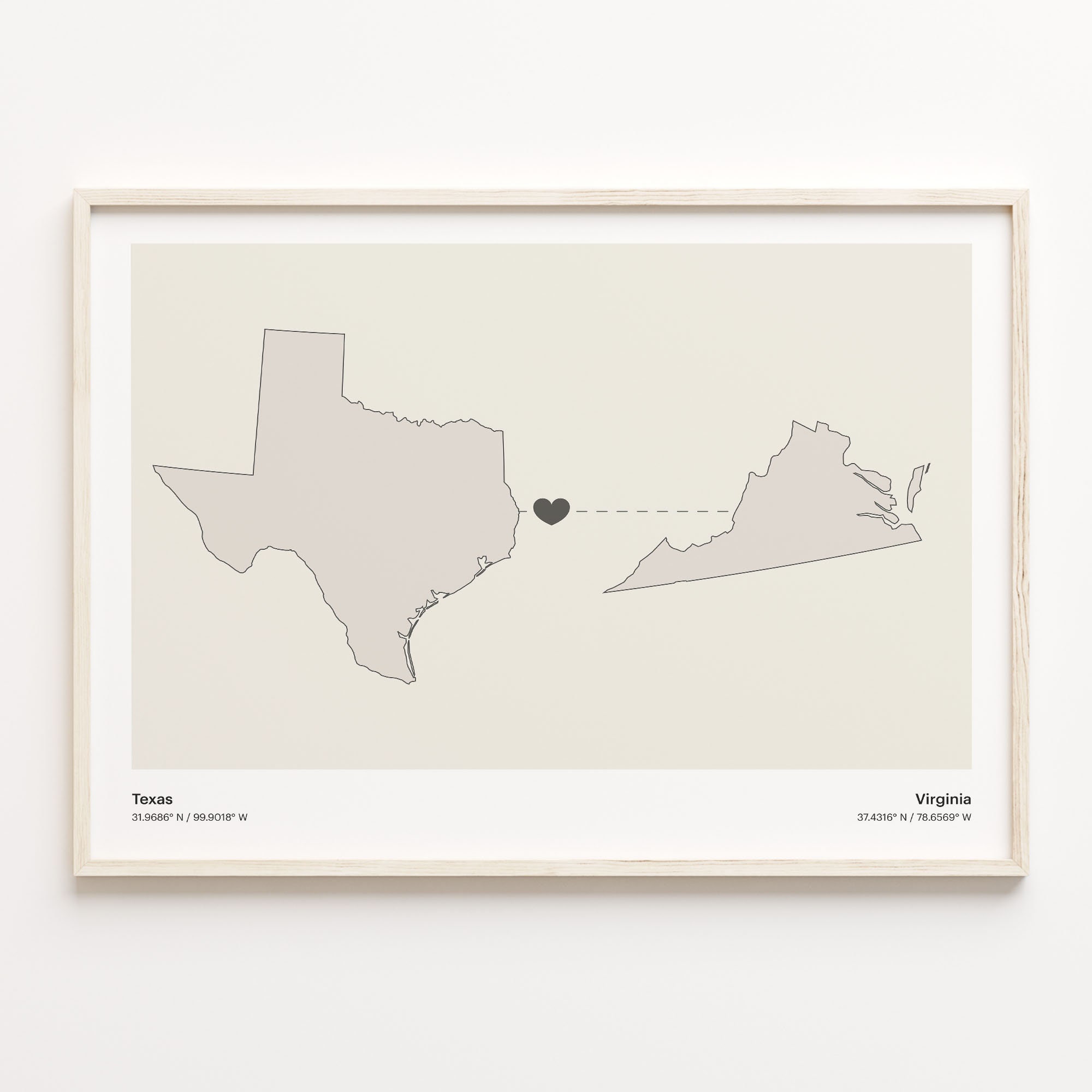
The vast expanse of the United States, a tapestry woven with diverse landscapes and vibrant cultures, often prompts questions about the distances between its varied states. Among these, the query, “How far is Virginia to Texas?” stands out as a gateway to understanding the logistical considerations for travel between these two historically significant and geographically distinct regions. This journey, whether undertaken by car, plane, or even by train, involves traversing a significant portion of the American heartland, offering a unique glimpse into the country’s evolving geography and the lifestyles it supports.
The distance between Virginia and Texas is not a monolithic figure. It’s a dynamic measurement influenced by the specific starting and ending points within each state. Virginia, a state steeped in early American history and boasting a varied topography from the Appalachian Mountains to the Atlantic coast, shares borders with several other states, each offering a different starting point for a westward journey. Similarly, Texas, the second-largest state in the U.S. by both area and population, presents an immense territory, with its easternmost cities like Texarkana being considerably closer to Virginia than its western outposts near the Mexican border, such as El Paso.
Understanding the Distance: Road Travel and Flight Times
When contemplating the distance from Virginia to Texas, the most common modes of transportation offer distinct perspectives. For those who prefer the freedom of the open road, driving is a popular choice, allowing for exploration and a more intimate experience of the intervening landscapes. Conversely, for travelers pressed for time, or those seeking to cover vast distances with minimal disruption, air travel provides a swift and efficient solution.
The Open Road: A Journey Across States
Driving from Virginia to Texas is an undertaking that requires careful planning and a realistic assessment of time and endurance. The approximate driving distance can range significantly. For instance, a journey from Richmond, the capital of Virginia, to Austin, the vibrant capital of Texas, typically spans around 1,400 to 1,500 miles, depending on the chosen route. This distance translates into an estimated driving time of 22 to 24 hours of continuous travel, without accounting for stops for rest, meals, or sightseeing.
This road trip is not merely about covering miles; it’s an immersive experience of the American geography. As you depart Virginia, you might pass through states like North Carolina, South Carolina, Georgia, Alabama, Mississippi, Arkansas, and Oklahoma before reaching the expansive plains and distinctive landscapes of Texas. Each state offers its own unique attractions, from the historic streets of Charleston in South Carolina to the natural beauty of the Great Smoky Mountains National Park straddling the border of Tennessee and North Carolina, or the blues heritage of Mississippi.
The route can be customized to incorporate stays at various accommodations, from charming bed and breakfasts in historic towns to well-equipped hotels along the interstate. Consider a stop in Nashville, Tennessee, known for its thriving music scene and iconic venues like the Grand Ole Opry. Further south, cities like Atlanta, Georgia, offer a blend of history and modernity, with attractions like the World of Coca-Cola and the National Center for Civil and Human Rights. As you enter Texas, the landscape begins to shift, becoming drier and flatter in many regions, with the iconic silhouette of vast ranches and oil fields becoming more prevalent.
Accommodation options along this route are abundant. Major highway corridors are dotted with familiar hotel chains, offering reliable comfort and amenities. For those seeking a more local flavor, exploring smaller towns can lead to discovering unique inns and motels that provide a more authentic travel experience. Planning your stops in advance is crucial for a smooth journey, especially if you’re traveling during peak seasons or holidays.
Taking to the Skies: Swift Passage
For those whose priority is to minimize travel time, flying offers a stark contrast to the overland journey. The flight duration from Virginia to Texas is significantly shorter, typically ranging from 3 to 4 hours, depending on the specific departure and arrival airports and whether the flight is direct or includes layovers. Major airports in Virginia, such as Washington Dulles International Airport (IAD) or Norfolk International Airport (ORF), offer flights to key Texas hubs like Dallas/Fort Worth International Airport (DFW), George Bush Intercontinental Airport in Houston (IAH), or Austin-Bergstrom International Airport (AUS).
The convenience of air travel allows for more time to be spent at your destination, whether it’s exploring the cultural landmarks of Austin, experiencing the urban energy of Dallas, or indulging in the culinary delights of Houston. While the flight itself is brief, one must factor in time for getting to the airport, check-in, security, and travel to and from the arrival airport at your Texas destination.
When choosing to fly, consider the lifestyle implications. Budget airlines can offer cost-effective solutions, but may have stricter baggage policies or fewer amenities. Full-service carriers often provide a more comfortable experience, with in-flight entertainment and meal options. The choice of airport in Texas can also influence your onward travel plans, as Dallas and Houston are major hubs with extensive transportation networks, while Austin offers a more bohemian and arts-focused atmosphere.
Navigating the Vastness: Key Cities and Their Distances
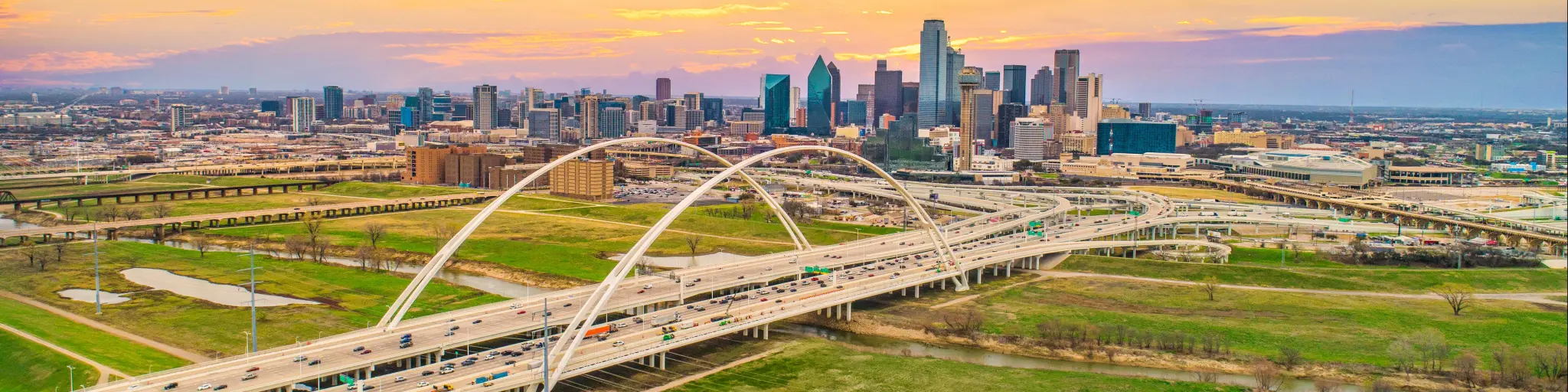
The precise distance between Virginia and Texas is best understood by examining the distances between specific major cities within each state. This granularity helps in planning not only the primary journey but also potential day trips and excursions once you arrive in Texas.
From the East Coast Charm to the Lone Star State’s Heart
Let’s consider some popular starting and ending points:
-
Virginia Beach, Virginia to Houston, Texas: This route covers a significant eastern Virginia location to a major southern Texas metropolis. The driving distance is approximately 1,350 miles, translating to about 21-22 hours of driving time. This journey would likely take you through North Carolina, South Carolina, Georgia, Alabama, and Mississippi.
-
Arlington, Virginia (near Washington D.C.) to Dallas, Texas: A journey from the northern reaches of Virginia to a central Texas economic powerhouse. The driving distance is around 1,300 miles, requiring roughly 20-21 hours of driving. The route might take you through West Virginia, Kentucky, Missouri, and Oklahoma.
-
Roanoke, Virginia to San Antonio, Texas: This route connects the mountainous region of Virginia to the historic heart of Texas. The driving distance is approximately 1,450 miles, with an estimated driving time of 23-24 hours. The path would likely traverse through states like Tennessee, Arkansas, and Oklahoma.
These city-to-city distances highlight the scale of the continent. They also underscore the importance of accommodation choices. In large cities like Houston or Dallas, you’ll find a wide array of options, from budget-friendly motels to luxurious five-star hotels and serviced apartments for longer stays. Exploring landmarks in these cities, such as Discovery Green in Houston or the Sixth Floor Museum at Dealey Plaza in Dallas, becomes more accessible with strategic lodging choices.
Planning Your Texas Adventure: Beyond the Distance
Understanding “how far is Virginia to Texas?” is the first step in planning a memorable trip. Once the distance is established, the focus shifts to the experiences awaiting you in the Lone Star State. Texas is a land of diverse attractions, from the sprawling ranches and vast open spaces of West Texas to the vibrant cultural scenes of its major cities.

Embracing Texas Culture and Attractions
Texas boasts a rich tapestry of local culture, deeply influenced by its history as a republic and its border location. From the iconic cowboy culture and rodeos to the thriving arts districts and world-class museums, there’s something for every travel enthusiast.
-
Austin: Known as the “Live Music Capital of the World,” Austin offers a unique blend of music, food, and outdoor activities. Explore the bat-watching opportunities under the Congress Avenue Bridge, visit the Texas State Capitol, and immerse yourself in the city’s eclectic lifestyle. Accommodation ranges from trendy boutique hotels to family-friendly resorts.
-
Dallas: A hub of commerce and culture, Dallas is home to impressive museums like the Dallas Museum of Art, historical landmarks like the JFK Memorial Plaza, and a burgeoning culinary scene. For business travelers, Dallas offers numerous corporate stays and convention facilities.
-
Houston: The most populous city in Texas, Houston, is a melting pot of cultures and a leader in space exploration and energy. Visit the Space Center Houston, explore the Museum District, and savor the city’s diverse international cuisine. Houston also offers a wide range of resorts and extended-stay apartments.
-
San Antonio: Rich in history and architecture, San Antonio is famous for The Alamo, a pivotal landmark in Texas history, and its picturesque Riverwalk. The city’s Mexican heritage is evident in its food, festivals, and vibrant atmosphere.
When planning your travel to Texas, consider the time of year. Summers can be extremely hot, especially in South Texas, while spring and fall offer more pleasant temperatures for outdoor activities and exploring nature. Tips for navigating Texas include being prepared for long driving distances between cities, staying hydrated, and embracing the friendly Texan hospitality. Whether you’re embarking on a budget travel adventure or seeking a luxury travel experience, Texas promises a journey filled with unforgettable experiences. From the moment you leave Virginia, the anticipation of discovering the vast wonders of Texas will be a driving force, making the distance a mere prologue to an extraordinary adventure.
LifeOutOfTheBox is a participant in the Amazon Services LLC Associates Program, an affiliate advertising program designed to provide a means for sites to earn advertising fees by advertising and linking to Amazon.com. Amazon, the Amazon logo, AmazonSupply, and the AmazonSupply logo are trademarks of Amazon.com, Inc. or its affiliates. As an Amazon Associate we earn affiliate commissions from qualifying purchases.