
Embarking on the journey of marriage in the Lone Star State is an exciting chapter, and understanding the process of obtaining a marriage license is a crucial first step. While the romance of a Texas wedding might conjure images of sprawling ranches or elegant ballrooms, the administrative aspects are just as important to navigate smoothly. This guide will walk you through everything you need to know about applying for a marriage license in Texas, ensuring your path to matrimony is clear and stress-free, allowing you to focus on the joyous occasion itself.
The process is designed to be straightforward, but familiarity with the requirements will prevent any last-minute hiccups. Whether you’re planning a lavish ceremony at a Texas resort or an intimate elopement, securing your marriage license is a universal prerequisite. This comprehensive overview will cover eligibility, required documents, the application process, fees, and important considerations to keep in mind.
Eligibility and Requirements for a Texas Marriage License
Before you can say “I do” under the vast Texas sky, you need to ensure you meet the eligibility criteria for obtaining a marriage license. These regulations are in place to ensure the legal validity of your union.
Age Requirements
In Texas, both individuals applying for a marriage license must be at least 18 years old. For those between the ages of 16 and 18, parental consent or a court order is required. Individuals under 16 cannot marry in Texas without a court order, and even then, specific restrictions apply. It’s important to verify the exact age requirements with the specific county clerk’s office where you plan to apply, as nuances can exist.
Relationship Restrictions
Texas law prohibits marriages between close relatives, including parents and children, siblings, and ancestors and descendants of every degree. This ensures the integrity and societal norms surrounding familial relationships.
Previous Marriages
If either applicant has been previously married, proof of the termination of the prior marriage is required. This can be in the form of a certified copy of a divorce decree or a death certificate. The divorce must be final before a new marriage license can be issued.
Identification and Documentation
To apply for a marriage license in Texas, both applicants will need to present valid identification. Acceptable forms of identification typically include:
- Driver’s License: A current, government-issued driver’s license from any state or country is usually accepted.
- State ID Card: A state-issued identification card serves the same purpose as a driver’s license.
- Passport: A valid passport is a universally accepted form of identification.
- Military ID: For active-duty military personnel, a military identification card is acceptable.
- Birth Certificate: While not always the primary form of ID, a birth certificate may be requested to verify age and place of birth, especially if other forms of ID are insufficient.
In addition to identification, if one of the applicants has been divorced, they will need to provide documentation proving the termination of the previous marriage. This typically includes a certified copy of the final divorce decree or the death certificate of the former spouse. It is advisable to have these documents readily available to expedite the application process.
Residency Requirements
Texas does not have a residency requirement for obtaining a marriage license. This means that individuals who are not residents of Texas can still apply for and obtain a marriage license within the state. This makes Texas an attractive destination for destination weddings, allowing couples from all over to tie the knot in this unique state, perhaps after exploring the vibrant culture of Austin or enjoying the historical charm of San Antonio.
The Application Process: Step-by-Step
Obtaining your marriage license is a relatively simple process, primarily involving a visit to your local county clerk’s office. Understanding the steps involved will ensure a smooth experience.
Step 1: Locate Your County Clerk’s Office
The first step is to identify the county clerk’s office in the Texas county where you intend to apply. While you can get married anywhere in Texas once you have the license, the application must be submitted in person to a county clerk. Many counties offer online information about their offices, hours of operation, and any specific requirements they might have. For example, if you’re planning a wedding near the beautiful Texas Hill Country, you might visit the county clerk in a town like Fredericksburg.

Step 2: Complete the Application Form
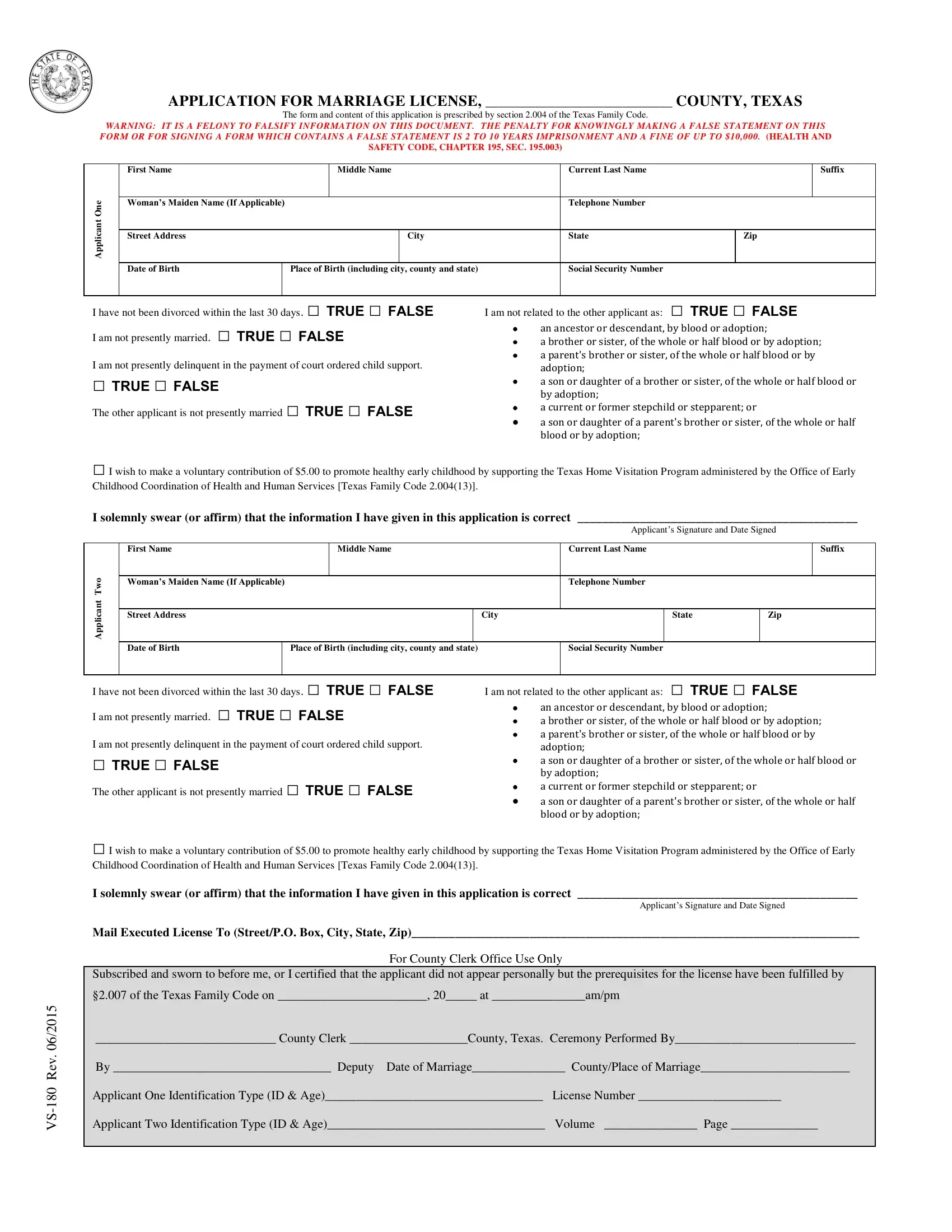
Upon arrival at the county clerk’s office, you will be provided with a marriage license application form. This form will require information from both applicants, including:
- Full legal names
- Dates of birth
- Places of birth
- Social Security numbers (if applicable)
- Parents’ full names and places of birth
- Information about any previous marriages and their termination dates
It’s crucial to fill out this form accurately and completely. Any errors could lead to delays or the need to reapply.
Step 3: Present Identification and Documentation
As mentioned previously, both applicants must present valid government-issued identification. Be prepared to show your driver’s license, passport, or other acceptable forms of ID. If you have been divorced, ensure you have the certified copy of your divorce decree or the death certificate of your former spouse.
Step 4: Swear Under Oath
When you submit your application, you will likely be required to swear under oath that the information you have provided is true and correct. The county clerk or their deputy will witness this oath.
Step 5: Pay the Fee
There is a fee associated with obtaining a marriage license in Texas. The exact amount can vary slightly from county to county, but it generally falls within a specific range. Payment is typically accepted in cash, check, or money order, and some offices may accept credit cards. It’s a good idea to check with the county clerk’s office in advance about their accepted payment methods.
Step 6: Receive Your Marriage License
Once all the requirements are met and the fee is paid, the county clerk will issue your marriage license. This document is your legal authorization to get married.
Important Considerations and Waiting Periods
While the application process itself is relatively swift, there are a few key details to be aware of that can impact your wedding plans.
The 72-Hour Waiting Period
In Texas, there is a mandatory 72-hour waiting period between the issuance of the marriage license and the date of the wedding ceremony. This means that you cannot get married immediately after receiving your license. The license is typically valid for 90 days from the date of issuance. This waiting period is intended to provide a period for reflection before marriage.
However, there are exceptions to this waiting period. If either applicant is an active duty member of the United States armed forces, or if both applicants have completed a premarital counseling course approved by the state, the waiting period may be waived. Proof of completion of the premarital counseling course, in the form of a certificate, will be required. This is a valuable option for couples who want to streamline their wedding timeline, perhaps after enjoying a relaxing stay at a resort in Galveston or exploring the natural beauty of the Big Bend National Park.
License Validity
Your Texas marriage license is valid for 90 days from the date it is issued. If you do not get married within this 90-day period, the license will expire, and you will need to apply for a new one, which will involve another application process and fee. Therefore, it’s important to time your application appropriately in relation to your wedding date. Applying too early might mean your license expires before your big day, while applying too late could cause unnecessary stress.
Where You Can Get Married
Once you have your Texas marriage license, you are legally able to get married anywhere within the state of Texas. This offers couples a great deal of flexibility in choosing their wedding venue, whether it’s a grand hotel in Houston, a charming bed and breakfast in a historic town, or an outdoor setting in one of Texas’s many beautiful state parks.
The Officiant
The person who performs your marriage ceremony must be an authorized officiant in Texas. This includes licensed or ordained ministers, priests, rabbis, judges, and certain other elected officials. After the ceremony, the officiant is responsible for completing and returning the marriage license to the county clerk’s office for recording.

After the Ceremony
Once the marriage license has been signed by the couple and the officiant, and any witnesses required by the county, it must be returned to the county clerk’s office that issued it. This is typically done by the officiant within a specified timeframe, usually 30 days. Once recorded, the marriage license becomes your official marriage certificate, which you may need for various legal purposes, such as changing your name on identification documents, filing joint tax returns, or applying for spousal benefits.
Planning a wedding involves many details, from selecting the perfect wedding attire to choosing a memorable venue like the Omni Barton Creek Resort & Spa or a charming bed and breakfast in Austin. By understanding and following the simple steps to obtain your marriage license in Texas, you ensure that this fundamental legal aspect of your union is handled with ease, allowing you to fully immerse yourselves in the joy and excitement of your upcoming marriage.
LifeOutOfTheBox is a participant in the Amazon Services LLC Associates Program, an affiliate advertising program designed to provide a means for sites to earn advertising fees by advertising and linking to Amazon.com. Amazon, the Amazon logo, AmazonSupply, and the AmazonSupply logo are trademarks of Amazon.com, Inc. or its affiliates. As an Amazon Associate we earn affiliate commissions from qualifying purchases.