
Navigating the journey to becoming a licensed real estate agent in the Lone Star State is an exciting prospect, opening doors to a dynamic industry filled with opportunities. While the core of this pursuit is about mastering real estate principles and regulations, the process itself can be viewed through a lens that resonates with our passion for exploration and discovery – much like planning an unforgettable trip. Think of it as charting a course, gathering your essential gear, and embarking on an adventure that leads to a rewarding career.
This guide will illuminate the path to obtaining your Texas real estate license, breaking down the essential steps and requirements in a clear, actionable manner. We’ll explore the foundational knowledge you’ll need, the educational pathways available, the crucial examinations, and the final steps to officially begin your career. Whether you dream of showcasing sprawling ranches, charming city apartments, or luxurious resort properties, understanding this process is your first vital step.
Laying the Foundation: Essential Requirements and Eligibility
Before you can even begin to explore the exciting world of Texas real estate, there are fundamental prerequisites you must meet. These are the bedrock upon which your application will be built, ensuring that you are prepared and qualified to enter this regulated profession. It’s akin to understanding the visa requirements and necessary vaccinations before embarking on an international adventure; you need to ensure you’re compliant and ready.
1. Age and Citizenship/Residency Status
The first hurdles are straightforward but crucial. To be eligible for a Texas real estate license, you must be at least 18 years of age. This is a standard requirement across many professions, ensuring a certain level of maturity and legal capacity.
Furthermore, you must be a citizen of the United States or a lawful permanent resident. This ensures that you are legally permitted to work and operate a business within the country. This is similar to how certain countries may have specific entry requirements for non-citizens, making sure all participants meet the legal framework.
2. Criminal Background Check
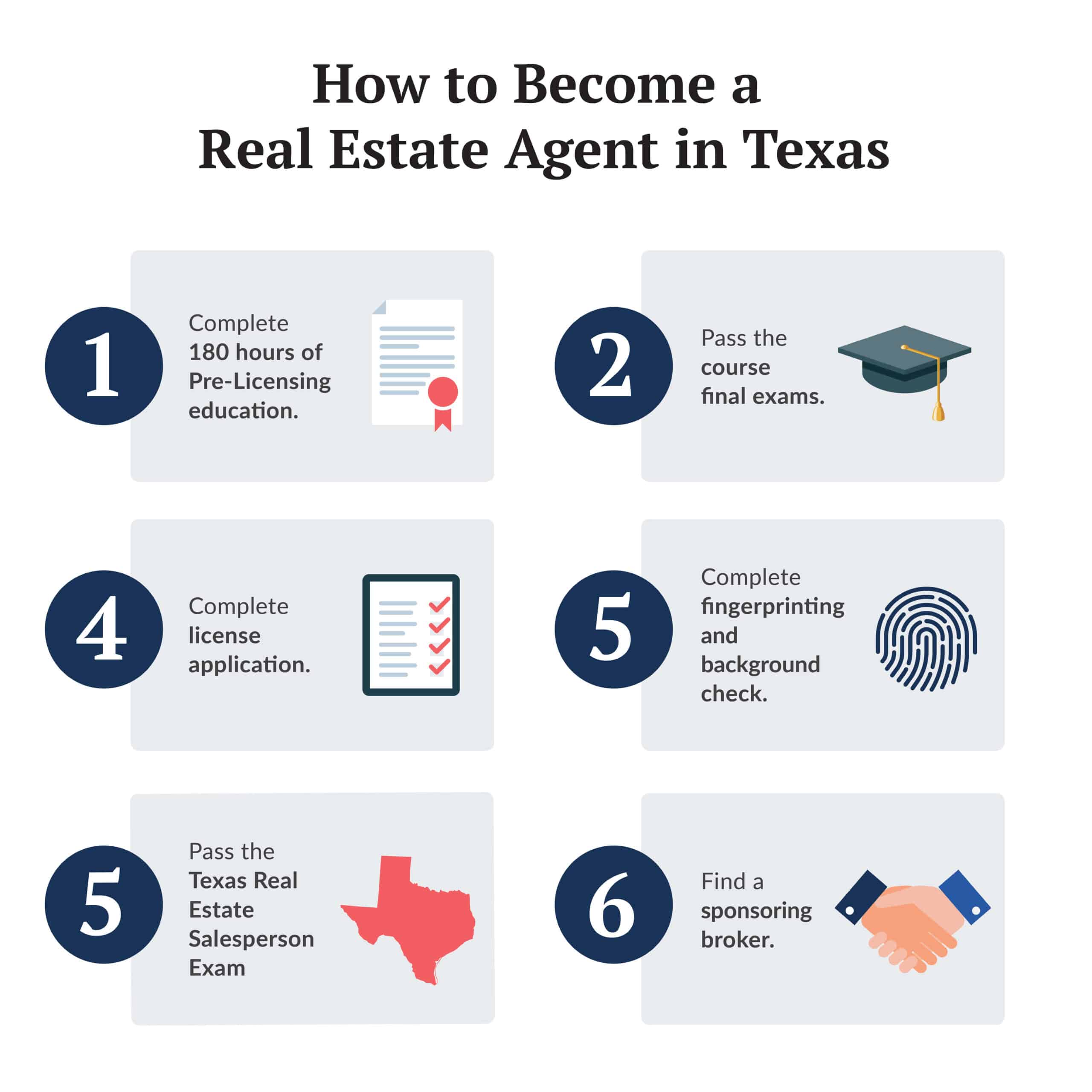
A significant component of the licensing process involves a thorough background check. The Texas Real Estate Commission (TREC) requires all applicants to submit fingerprints for a criminal history background check. This is a standard practice in many licensed professions to ensure public safety and maintain the integrity of the industry. TREC will review your history for any felony convictions or any crimes involving moral turpitude that could disqualify you. It’s important to be upfront and honest about any past issues, as they will likely be discovered during the process. If you have any concerns about your background, it’s advisable to contact TREC directly to discuss your specific situation. This step is like ensuring you have a clean travel record before applying for certain visas; it’s about transparency and meeting established standards.
3. Honesty and Integrity
Beyond the quantifiable requirements, TREC also emphasizes honesty and integrity. Any misrepresentation or omission of information on your application can lead to denial and may impact your ability to obtain a license in the future. This principle underscores the trust placed in real estate professionals by the public. It’s a core value, much like the importance of respecting local customs and being a responsible traveler.
The Educational Journey: Courses and Knowledge Acquisition
Once you’ve confirmed your eligibility, the next crucial step is to embark on the required educational journey. This phase is dedicated to acquiring the knowledge and skills necessary to excel in the real estate profession and to pass the licensing examinations. Think of this as preparing for your expedition: gathering your maps, learning essential survival skills, and understanding the terrain.
1. Completing Accredited Real Estate Courses
The Texas Real Estate Commission mandates that all aspiring real estate agents complete 180 hours of qualifying real estate education. This education must be taken from a TREC-approved real estate school. These courses are designed to provide you with a comprehensive understanding of real estate principles, practices, law, ethics, and appraisal.
The 180 hours are typically broken down into several specific courses:
- Real Estate Principles and Practices I (45 hours): This foundational course covers the basics of real estate, including property rights, ownership, land use controls, financing, and the responsibilities of a real estate agent.
- Real Estate Principles and Practices II (45 hours): Building upon the first course, this one delves deeper into topics such as contracts, agency, disclosure requirements, and market analysis.
- Law of Contracts (30 hours): This course focuses specifically on the legal aspects of real estate contracts, including their formation, validity, and enforceability.
- Real Estate Finance (30 hours): Understanding how real estate is financed is critical. This course covers mortgage loans, types of financing, and the secondary mortgage market.
- Real Estate Appraisal (30 hours): This course introduces the principles and methods used to determine the value of real estate.
Some individuals may find the learning process more engaging and effective when structured similarly to planning a trip. For instance, you might approach the “Real Estate Finance” course with the same enthusiasm you’d apply to researching hotel deals in a new destination, looking for the best “rates” and understanding the “terms” involved. Similarly, “Law of Contracts” could be approached like deciphering the fine print on a travel insurance policy.
2. Choosing a Reputable Real Estate School
Selecting the right TREC-approved real estate school is vital for your success. Look for schools that offer flexible learning options, such as online courses, in-person classes, or a hybrid model, to fit your schedule. Research the school’s reputation, student reviews, and pass rates for the licensing exam. Some popular options include Champions School of Real Estate and Real Estate Express, among many others. The best school for you will depend on your preferred learning style and budget. This is akin to choosing a reputable tour operator for a complex itinerary; you want someone reliable and experienced.
3. Continuing Education Requirements
It’s important to note that after obtaining your initial license, you will be required to complete continuing education (CE) hours every two years to renew it. This ensures that you stay up-to-date with the latest laws, regulations, and industry best practices. The CE requirement typically includes a certain number of hours dedicated to legally required topics, such as agency law and contract law.
Passing the Exams: Your Gateway to Licensure
With your education complete, the next significant milestone is successfully passing the Texas real estate licensing examinations. This is the gatekeeper, ensuring you have retained and can apply the knowledge gained during your coursework. Consider this the final check before embarking on your actual adventure – making sure you’ve packed everything and know how to use your compass.
1. The Salesperson and Broker Examinations
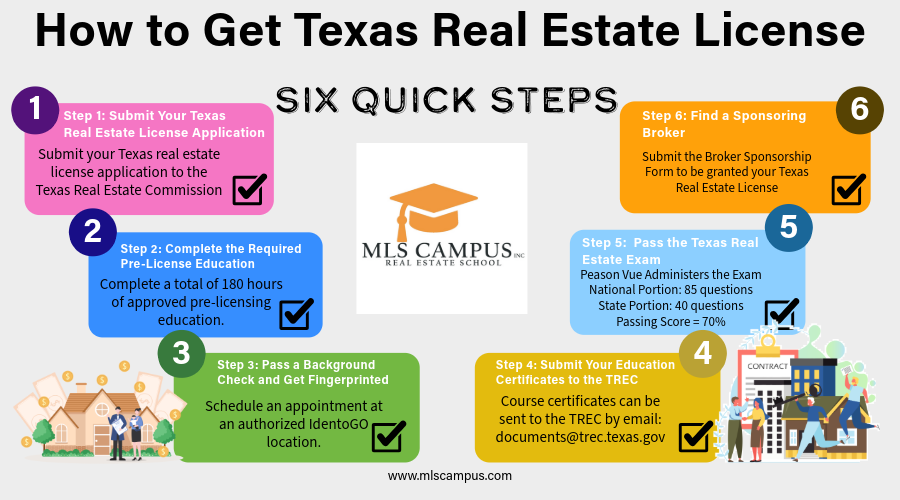
Texas utilizes a two-part licensing examination, administered by Pearson VUE, which is known for its standardized testing across various professional fields. The exam is divided into two sections:
- The National Portion: This part covers general real estate principles and practices that are common across the United States. It assesses your understanding of concepts like property ownership, agency, contracts, financing, and ethics as they apply nationwide.
- The State Portion: This section is specific to Texas real estate law and practices. It will test your knowledge of Texas-specific statutes, rules, and regulations governing real estate transactions, landlord-tenant laws, and disclosure requirements unique to the state.
The difficulty of the exam is a common concern for applicants. Pearson VUE exams are designed to test a thorough understanding of the material, not just rote memorization. It’s recommended to dedicate significant time to studying and utilizing practice exams. Many real estate schools offer review courses and practice tests to help you prepare. Approaching exam preparation like studying for a challenging travel guide quiz can be helpful; you want to know not just the famous landmarks but also the local customs and regulations.
2. Preparing for the Exam
Effective preparation is key to exam success. Here are some strategies:
- Review Your Course Materials: Go back through your textbooks, notes, and any study guides provided by your real estate school. Focus on understanding the concepts rather than just memorizing facts.
- Utilize Practice Exams: Pearson VUE provides sample questions, and most real estate schools offer comprehensive practice exams. Taking these under timed conditions will help you gauge your readiness and identify areas where you need further study.
- Understand the Exam Format: Familiarize yourself with the structure of the exam, including the number of questions in each section, the time limit, and the scoring method. This will help reduce test-day anxiety.
- Focus on State-Specific Laws: Pay particular attention to the Texas portion of the exam. Understanding nuances like the Texas Deceptive Trade Practices Act and specific disclosure requirements is critical.
- Study Groups: Collaborating with fellow students can be beneficial. Discussing concepts, quizzing each other, and sharing study strategies can reinforce your learning.
3. Scheduling and Taking the Exam
Once you feel adequately prepared, you can schedule your exam through Pearson VUE. You will need your TREC education number to register. On exam day, arrive early, bring the required identification, and approach the exam with a calm and focused mindset. The goal is to demonstrate your competence and readiness to serve the public as a licensed real estate professional.
Final Steps and Launching Your Career
After successfully navigating the educational and examination phases, you are on the cusp of launching your real estate career. This final stage involves completing the administrative tasks and making strategic decisions about where and how you will begin practicing. This is akin to booking your flight and accommodation, and planning your itinerary for the new destination you’ve worked so hard to reach.
1. Finding a Sponsoring Broker
As a newly licensed real estate salesperson in Texas, you cannot operate independently. You must affiliate with a licensed real estate broker. This broker will supervise your activities, provide guidance, and ensure you are operating in compliance with TREC regulations.
Choosing the right broker is a critical decision. Consider factors such as:
- The Brokerage’s Reputation and Culture: Does the brokerage align with your professional values and work style? Are they known for ethical practices and client satisfaction?
- Training and Mentorship Programs: Many brokerages offer new agents training, mentorship, and support to help them get started. This is invaluable for building your skills and confidence.
- Commission Splits and Fees: Understand the brokerage’s commission structure, desk fees, and any other associated costs.
- Marketing and Technology Support: What resources does the brokerage provide for marketing your listings and services, and what technological tools are available?
- Specialties: Some brokerages focus on specific niches, such as residential properties, commercial real estate, or luxury homes. Aligning with a brokerage that matches your interests can be beneficial.
Think of finding a broker as selecting a reputable guide for your exploration. They will offer essential local knowledge, support, and a framework for your success. Whether you’re interested in urban living in Dallas, exploring the coastal charm of Galveston, or focusing on the growing markets around Austin, the right broker will be instrumental.
2. Applying for Your License
Once you have secured a sponsoring broker, you will need to submit your official license application to TREC. This application will include information about your education, exam results, and sponsoring broker. You will also need to pay the required licensing fees. TREC will review your application, and upon approval, you will officially be a licensed real estate salesperson. This is the culmination of your efforts, much like receiving your passport and visa after all the preparations for an international journey.
3. Continuing Your Professional Development
The journey doesn’t end with obtaining your license. The real estate market is constantly evolving, and continuous learning is essential for long-term success. Beyond the mandatory continuing education, consider:
- Networking: Build relationships with other agents, lenders, inspectors, and real estate attorneys. These connections can lead to referrals and valuable insights.
- Specializing: Consider specializing in a particular niche, such as luxury homes, first-time homebuyers, or investment properties. This can help you become an expert in a specific market segment.
- Advanced Education: Pursue additional certifications and designations, such as Accredited Buyer Representative (ABR) or Certified Residential Specialist (CRS), to enhance your skills and credibility.
- Staying Informed: Keep abreast of market trends, economic conditions, and changes in real estate law. Follow industry news and publications.
Embarking on a career in Texas real estate is a significant undertaking, but with careful planning, dedication, and a commitment to learning, you can successfully obtain your license and build a fulfilling career. The process, while detailed, is designed to ensure that you possess the knowledge and ethical standards necessary to serve clients effectively in this vibrant and essential industry.
LifeOutOfTheBox is a participant in the Amazon Services LLC Associates Program, an affiliate advertising program designed to provide a means for sites to earn advertising fees by advertising and linking to Amazon.com. Amazon, the Amazon logo, AmazonSupply, and the AmazonSupply logo are trademarks of Amazon.com, Inc. or its affiliates. As an Amazon Associate we earn affiliate commissions from qualifying purchases.