
Embarking on a journey to the bustling metropolis of New York City offers an unparalleled blend of culture, history, and modern marvels. Whether you’re planning a whirlwind vacation rentals, a crucial business stays, or a leisurely long-term stay, understanding the local time zone is more than just a trivial detail; it’s a fundamental aspect of seamless travel planning. The rhythm of the city, from the opening hours of world-class museums to the curtain times of Broadway Shows, is dictated by its position within the global clock.
New York operates within the Eastern Time Zone, a designation that impacts everything from flight schedules and hotel check-ins to dining reservations and event attendance. For seasoned travelers and first-time visitors alike, navigating this time zone effectively can transform a potentially chaotic trip into a smooth and unforgettable experience. This comprehensive travel guide will delve into the intricacies of New York’s time zone, its geographical reach, and crucial tips for maximizing your time in one of the world’s most dynamic destinations.
Understanding New York’s Time Zone: EST and EDT
At its core, the New York Time Zone adheres to Eastern Time (ET), which fluctuates between Eastern Standard Time (EST) and Eastern Daylight Time (EDT) depending on the season. This biannual shift is a crucial element to factor into any travel plans.
Eastern Standard Time (EST) vs. Eastern Daylight Time (EDT)
For roughly eight months of the year, from mid-March to early November, New York observes EDT, which is UTC-4. This means the city is four hours behind Coordinated Universal Time. During this period, the days feel longer, offering more daylight hours for exploring attractions and enjoying outdoor activities. This aligns with Daylight Saving Time, a practice observed in many parts of the United States and Canada to make better use of natural daylight.
Conversely, for the remaining four months, from early November to mid-March, New York switches to EST, which is UTC-5. During these cooler months, the city is five hours behind UTC, and daylight hours are shorter. The transition typically occurs on the second Sunday in March (spring forward) and the first Sunday in November (fall back). While most modern devices automatically adjust, it’s essential for travelers to manually verify their clocks or simply be aware of the shift to avoid missing flights, appointments, or showtimes.

Geographical Reach of ET
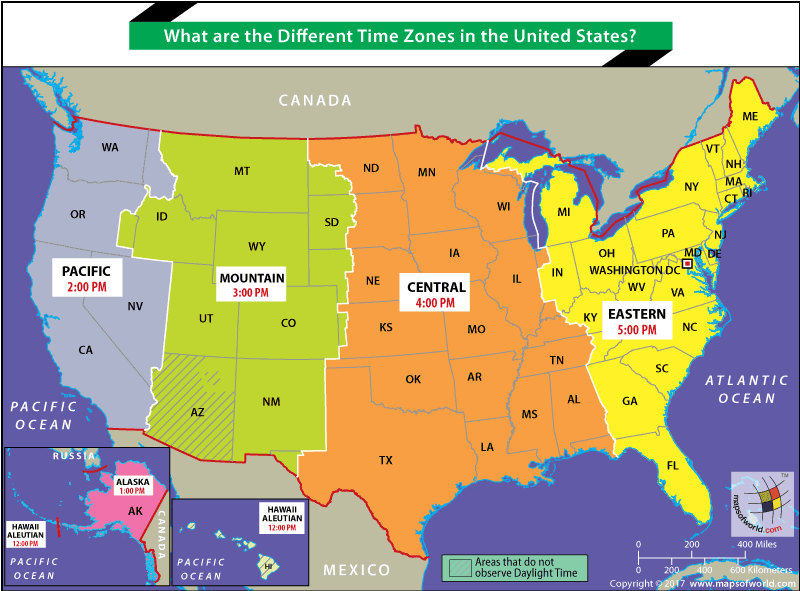
The Eastern Time Zone is one of the most populous time zones in North America, encompassing a significant portion of the eastern United States and Canada. In the United States, this includes all or parts of 17 states, stretching from Maine down to Florida. Major cities like Washington D.C., Miami, Orlando, and Boston all share the same time zone as New York City. This consistency simplifies travel planning within the East Coast, but travelers arriving from the Central Time Zone or Pacific Time Zone will still need to adjust.
In Canada, large population centers like Toronto and Montreal, and the entirety of Québec, also operate on ET. This shared time zone facilitates cross-border business and tourism between these regions. For international travelers, understanding these shifts and the broad scope of ET is key to managing schedules, communication with home, and overall enjoyment of their trip.

The Impact on Your New York Travel Experience
The local time zone profoundly influences every aspect of your New York travel experience, from your initial arrival to your daily itinerary. Acknowledging and preparing for these impacts can significantly enhance your trip.
Battling Jet Lag and Maximizing Sightseeing
One of the most common challenges for travelers crossing multiple time zones is jet lag. Arriving in New York City from Europe or Asia can mean a significant shift, often leading to fatigue, disorientation, and difficulty sleeping. To combat jet lag, try to adjust your sleep schedule gradually a few days before departure. Once you arrive, embrace the local time immediately: expose yourself to natural light during the day, stay hydrated, and try to stick to New York’s meal and sleep times.
For sightseeing, early mornings are often the best time to visit popular attractions like the Statue of Liberty, Empire State Building, or One World Observatory to avoid peak crowds. Being attuned to the local time allows you to plan your day efficiently, making the most of your energy levels and maximizing your opportunities to explore the city’s iconic landmarks. A well-rested traveler can better appreciate the vibrant energy of Times Square or the tranquility of Central Park.
Booking Flights and Accommodations Across Time Zones
When booking flights to John F. Kennedy International Airport, LaGuardia Airport, or Newark Liberty International Airport, always confirm the departure and arrival times are in their respective local time zones. A flight departing London at 10 AM GMT will arrive in New York many hours later, with the local arrival time reflecting the ET offset.
Similarly, securing your accommodation requires attention to time. Check-in and check-out times for hotels, resorts, apartments, or villas are always based on local New York time. If you’re arriving early morning due to an overnight flight, consider booking an extra night or contacting your hotel (Marriott Marquis, The Plaza Hotel, The St. Regis New York) to request an early check-in. Many hotels may accommodate this based on availability or for an additional fee. The same applies to late departures; a late check-out can provide much-needed flexibility. When using platforms like Airbnb for vacation rentals, confirm specific check-in instructions and key exchange times with your host, always clarifying the time zone of reference.
Navigating Time Zones for Seamless Accommodation and Activities
Successful travel in New York City hinges on meticulous planning, with time zone awareness playing a central role in optimizing your accommodation and activity schedules.
Dining and Entertainment Schedules
New York City is a culinary paradise and the entertainment capital of the world, but popular restaurants and Broadway shows book up fast. Making reservations well in advance, and correctly accounting for the ET zone, is essential. Dinner reservations at a Michelin-starred restaurant in Greenwich Village or tickets to a hit musical require precision. Missing a reservation by an hour due to time zone confusion can lead to disappointment.
Furthermore, many New York experiences are time-sensitive. Catching a ferry to Ellis Island, attending a concert at Radio City Music Hall, or joining a guided food tours in Little Italy or Chinatown all adhere to strict local timings. Always double-check the opening and closing hours for museums like the Metropolitan Museum of Art or the Museum of Modern Art, as these can vary by day of the week and season. Some attractions also offer specific timed entry slots that you book in advance, making time zone accuracy paramount.
Optimizing Visits to New York Landmarks
New York’s famous landmarks each have their own ideal visiting times. For instance, the Brooklyn Bridge is stunning at sunrise or sunset, offering spectacular views of the Manhattan skyline. A stroll along The High Line is pleasant during midday, while the bustling energy of Rockefeller Center comes alive in the evenings, especially during the holiday season. Understanding the ET cycle helps you plan your day around natural light, crowd levels, and specific events.
Many landmarks in the Financial District, such as Wall Street and the New York Stock Exchange, are active during standard EST/EDT business hours. For a comprehensive experience, check their websites for guided tour times or public access schedules. Even a visit to Grand Central Terminal can be enhanced by knowing when it’s less crowded, allowing you to admire its architecture in peace.
Practical Tips for Embracing New York Time
Adopting a strategic approach to time zones can significantly reduce stress and enhance enjoyment, whether your trip is for pleasure or business.
Communication with Home and Global Connections
Maintaining contact with family, friends, or colleagues in different time zones requires careful consideration. Before your trip, calculate the time difference between New York and your home location. Use world clock apps or online converters to easily track these differences. This is particularly important for international calls, virtual meetings, or simply sharing your daily adventures without disturbing loved ones at inconvenient hours. For travelers on a long-term stay or those with ongoing remote work, establishing clear communication protocols based on ET is vital for maintaining connection and productivity.
Business Travel and Work-Life Balance
For individuals on business stays in New York City, time zone management is paramount. Early morning meetings with European counterparts or late-night calls with Asian teams are common. Building in buffer time and prioritizing sleep can help maintain a healthy work-life balance amidst these demands. Hotels catering to business travelers often provide amenities like 24-hour business centers and flexible dining options, acknowledging the varied schedules their guests keep. Utilizing these resources can make adapting to the ET zone more manageable while conducting business in the Financial District or near the United Nations Headquarters.
Family Travel Adjustments
Traveling with children presents unique challenges when crossing time zones. Family Trips to New York can be magical, but disrupted sleep schedules can quickly lead to cranky kids and stressed parents. Start adjusting children’s bedtimes a few days before departure. Once in New York, stick to regular meal and sleep routines based on ET. Leverage the city’s parks, playgrounds, and family-friendly attractions during daylight hours to keep children engaged and naturally synchronize their body clocks. Flexible scheduling and allowing for downtime are key strategies for enjoyable family trips in the city that never sleeps.
In conclusion, the New York Time Zone, operating under Eastern Time, is a fundamental element of experiencing the city. From managing jet lag and coordinating accommodation logistics to maximizing your visits to iconic landmarks like Fifth Avenue or exploring the culinary delights of Chelsea Market, a solid grasp of EST and EDT will ensure your New York adventure is as smooth and memorable as possible. Embrace the rhythm of the city, and let New York time guide you through an extraordinary journey along the Hudson River and beyond.
LifeOutOfTheBox is a participant in the Amazon Services LLC Associates Program, an affiliate advertising program designed to provide a means for sites to earn advertising fees by advertising and linking to Amazon.com. Amazon, the Amazon logo, AmazonSupply, and the AmazonSupply logo are trademarks of Amazon.com, Inc. or its affiliates. As an Amazon Associate we earn affiliate commissions from qualifying purchases.