
Embarking on a new adventure in the great state of Texas often brings exciting prospects, from exploring the vibrant streets of Austin to soaking in the history of San Antonio or enjoying the sprawling ranches. Whether you’re relocating for business, planning an extended vacation, or simply embracing a new chapter, one crucial step for many is registering your vehicle. This process ensures your car is legally compliant on Texas roads and allows you to fully immerse yourself in the Texas lifestyle. This guide will walk you through the essential requirements and steps involved in registering your car in the Lone Star State, making this administrative task a breeze.
Understanding the Texas Vehicle Registration Process
Registering a vehicle in Texas is a multi-faceted process managed primarily by the Texas Department of Motor Vehicles (TxDMV). The core purpose of registration is to identify vehicles operating within the state, collect necessary fees, and ensure vehicles meet minimum safety and environmental standards. For new Texas residents, understanding these requirements is paramount to avoid any legal complications as you settle in and begin exploring the diverse attractions Texas has to offer, from the artistic hubs of Dallas to the coastal beauty of Galveston.
The process generally involves obtaining a vehicle title, a Texas vehicle inspection, and then proceeding to your local county tax assessor-collector’s office for the actual registration. Each of these components plays a vital role in the overall legality and operability of your vehicle within the state. It’s a system designed to be comprehensive, covering aspects of ownership, safety, and state revenue.
Proof of Ownership: Securing Your Texas Title
Before you can even think about registering your vehicle, you must establish legal ownership. In Texas, this is done through a vehicle title. If you are new to the state and have previously owned a vehicle, you will need to transfer your out-of-state title to a Texas title. This process is handled by the TxDMV.
To apply for a Texas title, you will typically need:
- Proof of Identity: A valid government-issued identification, such as a Texas driver’s license or ID card.
- Proof of Ownership: This is your current out-of-state title. If you have a loan on your vehicle, your lienholder (the bank or financial institution) will likely hold the title. In such cases, you will need to provide proof of the lien and potentially have the lienholder submit the title directly to the Texas DMV.
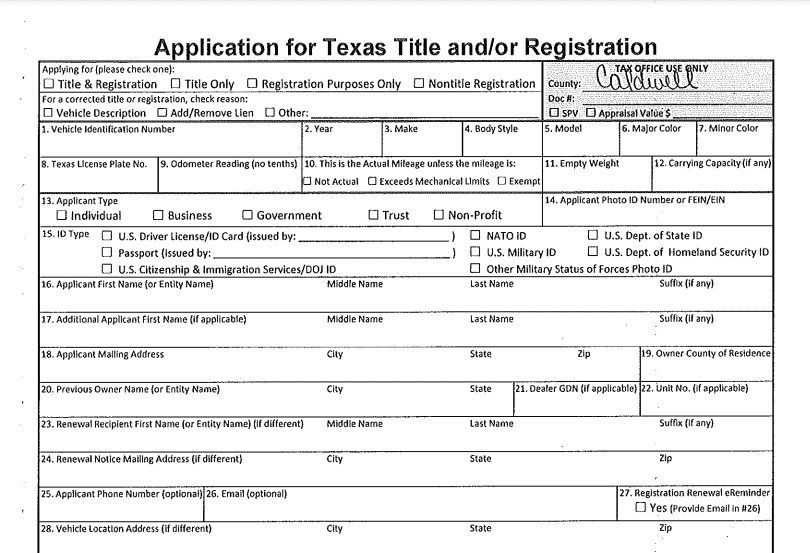
- Application for Texas Title and/or Registration (Form 130-U): This form needs to be completed accurately and signed. It can usually be downloaded from the TxDMV website or obtained at a county tax assessor-collector’s office.
- Bill of Sale: If you purchased the vehicle recently, a bill of sale documenting the transaction, including the purchase price, may be required.
- Odometer Disclosure Statement: Federal law requires an odometer reading to be disclosed at the time of title transfer. This is often part of Form 130-U.
- **Proof of *Texas* Vehicle Inspection:** As detailed later, a valid Texas vehicle inspection certificate is a prerequisite for registration.
- Payment of Fees: There are fees associated with title transfers and registration. These vary based on the vehicle’s type and value.
If you are purchasing a vehicle from a dealership, they will often handle the title and registration process for you. However, it is always wise to confirm this and understand what documentation you will need to provide them. For private sales, the buyer is typically responsible for obtaining the title. The Texas DMV website provides detailed information and forms necessary for title transfers and new titles.
Essential Prerequisites for Registration
Once your ownership is established with a Texas title, two critical prerequisites must be met before you can proceed with registration: a Texas vehicle inspection and proof of financial responsibility (auto insurance). These are not optional steps and are fundamental to ensuring your vehicle is safe for the road and that you are financially protected in case of an accident.
The Texas Vehicle Inspection: Ensuring Safety on the Road
The Texas state vehicle inspection program mandates that all gasoline-powered passenger vehicles, light trucks, and motorcycles that are two model years old or newer are exempt from the safety inspection requirement. However, vehicles older than that, and all diesel-powered vehicles, must pass an annual inspection. This inspection verifies that your vehicle meets the state’s safety standards.
What does the inspection typically cover?
- Brakes: Functionality and condition.
- Lights: Headlights, taillights, brake lights, and turn signals.
- Tires: Tread depth and condition.
- Horn: Operational.
- Windshield Wipers: Functionality.
- Windshield: Cracks or damage that could impair visibility.
- Exhaust System: Ensuring it’s not leaking and meets noise emission standards.
- Mirrors: Condition and presence.
- Steering Wheel: Proper functioning.
For vehicles in the 17 most populous counties in Texas, an emissions test is also required in addition to the safety inspection. These counties include: Brazoria, Collin, Dallas, Denton, El Paso, Fort Bend, Galveston, Harris, Hunt, Johnson, Kaufman, Liberty, Montgomery, Parker, Rockwall, Tarrant, and Waller. The emissions test ensures that your vehicle’s pollution control systems are functioning correctly to minimize its environmental impact.
Upon passing the inspection, you will receive a Vehicle Inspection Report (VIR). This report is crucial and must be presented when you go to register your vehicle. If your vehicle fails the inspection, you will have a specific timeframe to make the necessary repairs and have it re-inspected. It’s advisable to get your inspection done well in advance of your registration expiration date to allow time for any needed repairs. You can find an authorized Texas inspection station near you through the TxDMV website.
Financial Responsibility: Proof of Insurance
Texas law requires all drivers to maintain financial responsibility for their vehicles. This is most commonly achieved through auto insurance. You must have at least the minimum liability coverage mandated by the state. Currently, the minimum requirements are:
- $30,000 of bodily injury liability coverage per person.
- $60,000 of bodily injury liability coverage per accident.
- $25,000 of property damage liability coverage per accident.
When you visit your county tax assessor-collector’s office to register your vehicle, you will need to provide proof of this insurance. This can be in the form of:
- A current insurance card.
- A declaration page from your insurance policy.
- A letter from your insurance company.
It’s important that the insurance policy is in your name and covers the vehicle you are registering. If you are a new Texas resident, you will need to obtain a Texas auto insurance policy shortly after establishing residency. Insurance companies are required to report policy information to the state electronically, but having your physical proof readily available is essential for the registration process.

Completing the Registration: Your Local County Tax Assessor-Collector
With your Texas title in hand, a passed Texas vehicle inspection, and proof of financial responsibility, you are ready to complete the final step: registering your vehicle. This is done at your local county tax assessor-collector’s office. These offices serve as the Texas Department of Motor Vehicles’ local partners, handling various vehicle-related transactions, including registration.
To register your vehicle, you will generally need to bring the following:
- Proof of Vehicle Title: The Texas title or a copy if the original is held by a lienholder.
- **Proof of *Texas* Vehicle Inspection:** Your Vehicle Inspection Report (VIR).
- Proof of Financial Responsibility: Your current auto insurance card or policy information.
- Proof of Residency: Such as a Texas driver’s license or utility bill.
- Completed Application for Texas Title and/or Registration (Form 130-U): If you haven’t already submitted it for title transfer.
- Payment for Registration Fees: These fees vary depending on the vehicle type, age, and weight. You can often find fee calculators on the TxDMV website or your county’s tax assessor-collector website.
Once you submit these documents and pay the required fees, your vehicle will be registered, and you will receive your Texas license plates and registration stickers. These stickers will be affixed to your license plate and indicate the expiration month and year of your registration.
Important Considerations:
- Timeliness: As a new Texas resident, you are typically required to register your vehicle within 30 days of establishing residency. For existing Texas residents, registration must be renewed annually before the expiration date.
- Personalized Plates: Texas offers a wide variety of specialty and personalized license plates. You can inquire about these options at the county tax assessor-collector’s office or research them on the TxDMV website.
- Exemptions: Certain vehicles, such as those owned by active duty military personnel deployed overseas or certain types of farm equipment, may be eligible for registration exemptions. Consult the TxDMV for details.
By understanding these requirements and preparing the necessary documents, you can navigate the Texas car registration process smoothly. This will allow you to fully enjoy all that the state has to offer, from its rich cultural heritage and diverse culinary scene to its stunning natural landscapes and vibrant urban centers. Whether you’re planning a road trip to Big Bend National Park, enjoying the live music in Austin, or exploring the historic missions in San Antonio, a properly registered vehicle is your ticket to experiencing the best of Texas.
LifeOutOfTheBox is a participant in the Amazon Services LLC Associates Program, an affiliate advertising program designed to provide a means for sites to earn advertising fees by advertising and linking to Amazon.com. Amazon, the Amazon logo, AmazonSupply, and the AmazonSupply logo are trademarks of Amazon.com, Inc. or its affiliates. As an Amazon Associate we earn affiliate commissions from qualifying purchases.