
When planning a trip to the Lone Star State, from the vibrant streets of Austin to the historic charm of San Antonio, understanding local laws can significantly contribute to a smooth and enjoyable experience. While you might be focused on booking the perfect boutique hotel in the Texas Hill Country, or discovering the best local BBQ joints, it’s wise to have a general awareness of the legal framework. In Texas, offenses are categorized by their severity, with the least serious being Class C misdemeanors. This classification is crucial for residents and visitors alike, as it dictates the potential penalties and the legal process involved.
Understanding a Class C misdemeanor is essential for navigating your travels without unforeseen legal entanglements. These offenses are often minor infractions, but they still carry consequences. This article aims to demystify Class C misdemeanors in Texas, covering what they are, common examples, and what to expect if you encounter one. This knowledge can help you enjoy your exploration of Texas, from the vastness of Big Bend National Park to the bustling energy of Dallas, with peace of mind.
Understanding the Classification of Offenses in Texas
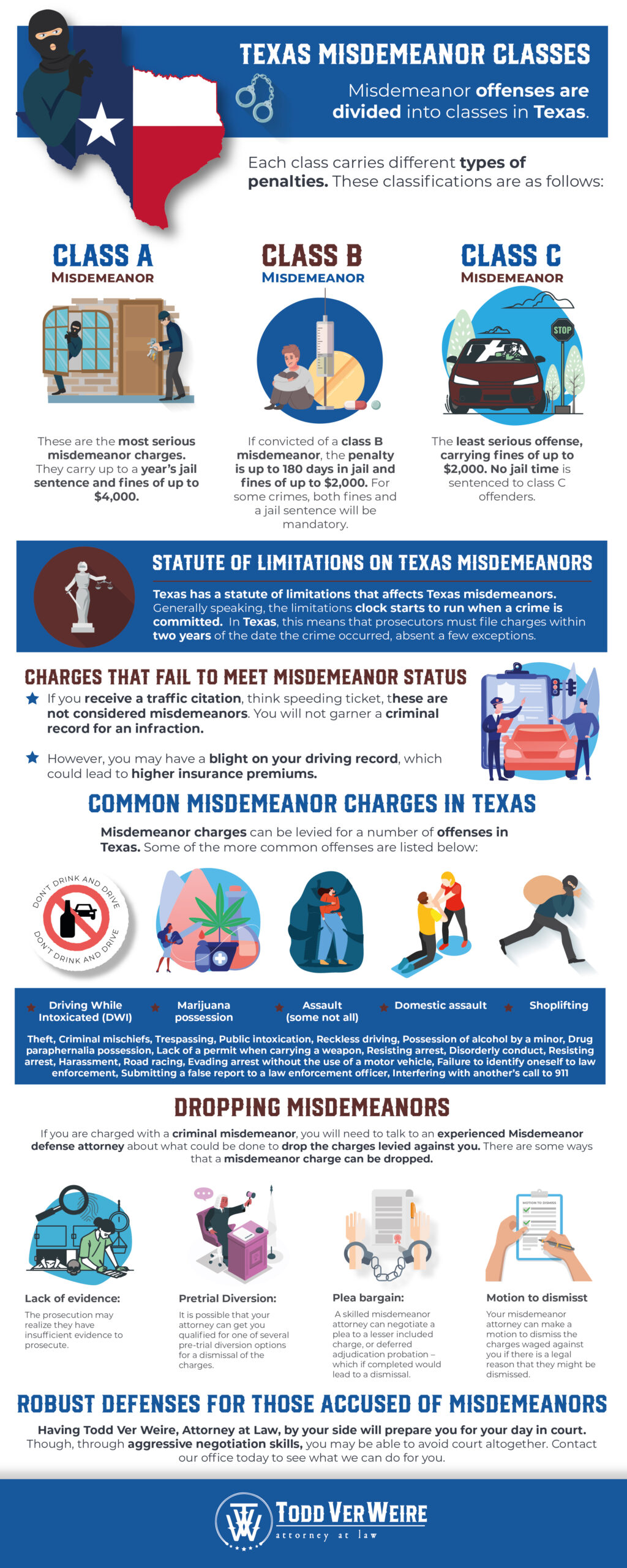
In Texas, criminal offenses are divided into two main categories: felonies and misdemeanors. Felonies represent more serious crimes, carrying heavier penalties like imprisonment in state penitentiaries and significant fines. Misdemeanors, on the other hand, are less severe and are further classified into three levels: Class A, Class B, and Class C. This tiered system allows the legal framework to differentiate the gravity of various offenses and assign penalties accordingly.
The Hierarchy of Misdemeanors
-
Class A Misdemeanor: This is the most serious type of misdemeanor in Texas. Conviction can result in up to one year in county jail and a fine of up to $4,000. Examples include certain assaults, theft of property valued between $500 and $1,500, and DWI (Driving While Intoxicated) with a prior conviction.
-
Class B Misdemeanor: This level of offense carries a potential penalty of up to 180 days in county jail and a fine of up to $2,000. Common examples include theft of property valued between $100 and $500, possession of small amounts of marijuana, and first-time DWI offenses.
-
Class C Misdemeanor: This is the least serious category of misdemeanor. It is unique in that it does not carry the possibility of jail time. Instead, penalties are limited to fines and court costs. While seemingly minor, a Class C misdemeanor is still a criminal conviction and can have lasting implications.
The distinction between these classes is vital, particularly for travelers who may not be intimately familiar with Texas law. For instance, if you’re enjoying a scenic drive along the coast near Galveston or exploring the artistic districts of Houston, understanding the potential consequences of minor traffic violations or public disturbances is beneficial.
What Constitutes a Class C Misdemeanor in Texas?
Class C misdemeanors in Texas are generally considered minor offenses, often referred to as “minor offenses” or “infractions” in other jurisdictions. The key defining characteristic of a Class C misdemeanor is that the maximum penalty is a fine, not jail time. This means that even if convicted of a Class C offense, an individual cannot be sentenced to serve time in a county jail or state prison.
Penalties and Consequences
The statutory fine for a Class C misdemeanor in Texas can range from $1 to $500. However, it’s important to note that this is the base fine. In addition to the fine, courts also assess various court costs, fees, and surcharges, which can significantly increase the total amount owed. These additional costs can often be two to three times the base fine, meaning a $50 conviction could end up costing a few hundred dollars.
Beyond the financial penalties, a Class C misdemeanor conviction becomes part of your permanent criminal record. While often considered minor, these convictions can still appear on background checks conducted by potential employers, landlords, or licensing boards. For international travelers, a criminal record, even for a minor offense, could potentially impact future visa applications or border crossings into other countries.
Common Examples of Class C Misdemeanors
A wide array of common offenses fall under the Class C misdemeanor umbrella in Texas. Many of these are related to traffic violations, public order, and minor property offenses. Being aware of these common examples can help travelers avoid unintentional violations while exploring the diverse attractions of the state, from the historical missions of San Antonio to the vibrant nightlife of Austin.
Traffic-Related Class C Misdemeanors:
-
Most traffic tickets: This is perhaps the most common category. Violations such as speeding (in many cases, especially below a certain threshold), running a stop sign, failure to yield, illegal parking, and driving with an expired inspection sticker typically fall into this classification. For instance, a minor speeding ticket while driving on I-35 between Dallas and Austin would likely be a Class C misdemeanor.
-
No driver’s license: Driving without a valid driver’s license is a Class C misdemeanor. This can be particularly relevant for tourists or visitors who may be unaware of specific Texas licensing requirements.
-
Expired registration: Driving a vehicle with expired registration tags is also a Class C misdemeanor.
Public Order and Conduct Class C Misdemeanors:
-
Disorderly conduct: This broad category can include actions like using offensive language in public, making unreasonable noise, or fighting or threatening to fight in a public place. Imagine a disagreement escalating during an outdoor festival in Austin or a late-night gathering in a resort community – these could potentially lead to disorderly conduct charges.
-
Public intoxication: Being intoxicated to the point of being a danger to oneself or others in a public place is a Class C misdemeanor. This is relevant for individuals enjoying the nightlife in cities like Houston or Fort Worth.

-
Minor in possession of alcohol: If an individual under the age of 21 is found to be in possession of alcohol, it is typically a Class C misdemeanor.
-
Loitering: In certain circumstances, loitering can be classified as a Class C misdemeanor.
Minor Property Offenses:
-
Minor theft (shoplifting): Shoplifting items valued at less than $100 is a Class C misdemeanor. This is a concern for anyone visiting shopping districts or malls across Texas.
-
Vandalism (minor): Causing minor damage to property, often through graffiti or minor defacement, can be a Class C misdemeanor.
The breadth of these examples highlights how easily one might inadvertently commit an offense that falls under this classification. While the penalties may seem light compared to more serious crimes, the conviction itself is a legal matter.
Navigating Class C Misdemeanors: What to Expect
Encountering a Class C misdemeanor charge, whether as a resident or a visitor to Texas, can be a confusing experience. Understanding the legal process and your options is key to managing the situation effectively. For travelers, this knowledge can alleviate stress and allow you to focus on enjoying your trip, perhaps after a visit to a local courthouse to resolve a minor citation.
The Legal Process
When cited for a Class C misdemeanor, you will typically receive a citation, much like a traffic ticket. This citation will outline the alleged offense and instruct you on how to respond. Unlike more serious offenses, you are generally not arrested and booked into jail for a Class C misdemeanor.
Your options upon receiving a citation usually include:
-
Paying the fine: This is often the simplest resolution for minor offenses. By paying the fine, you are admitting guilt and accepting the conviction. The citation will provide instructions on how to submit payment.
-
Contesting the charge: You have the right to plead not guilty and contest the charge. This would involve appearing in court on a scheduled date to present your case. For minor traffic violations, this might involve arguing that the citation was issued in error.
-
Deferred disposition (probation): In some cases, especially for first-time offenders, courts may offer deferred disposition. This means that if you successfully complete a period of probation (which might involve paying fines, attending a class, or avoiding further violations), the charge will be dismissed and will not go on your permanent record. This can be a valuable option for travelers who wish to avoid a permanent conviction.
The Role of the Court
Class C misdemeanors are typically handled in Municipal Courts or Justice of the Peace Courts. These courts are designed to efficiently process a high volume of minor offenses.
-
Municipal Courts: These courts generally handle violations of city ordinances, including most traffic tickets issued within city limits.
-
Justice of the Peace Courts: These courts often handle cases that occur in unincorporated areas of a county or certain specific types of minor offenses.
When you appear in court, you will likely encounter a prosecutor or city attorney who represents the state or municipality. You have the right to represent yourself, but for more complex situations or if you choose to contest the charge, you may consider hiring a legal professional. The judge will hear the evidence and make a decision.
Avoiding Future Issues
For visitors, especially those planning extended stays or frequent trips to Texas, understanding and respecting local laws is paramount. This includes:
-
Obeying traffic laws: Adhering to speed limits, obeying traffic signals, and ensuring your vehicle is properly registered and insured are fundamental.
-
Being mindful of public behavior: Being aware of noise levels, respecting public spaces, and avoiding public intoxication can prevent disorderly conduct charges.
-
Respecting age restrictions: Understanding laws regarding alcohol consumption and possession for individuals under 21 is crucial.
By taking these precautions, travelers can ensure their visits to Texas, whether to explore the art scene in Marfa, enjoy a luxury resort in Dallas, or simply drive through, are free from the complications that a Class C misdemeanor can bring. The goal is always to have a memorable and positive experience, and understanding the legal landscape is a part of that preparation.
LifeOutOfTheBox is a participant in the Amazon Services LLC Associates Program, an affiliate advertising program designed to provide a means for sites to earn advertising fees by advertising and linking to Amazon.com. Amazon, the Amazon logo, AmazonSupply, and the AmazonSupply logo are trademarks of Amazon.com, Inc. or its affiliates. As an Amazon Associate we earn affiliate commissions from qualifying purchases.