
While the allure of Texas often conjures images of vast ranches, lively music scenes, and delicious barbecue, the business landscape of the Lone Star State operates under a unique financial framework. For many entrepreneurs and businesses, understanding the Texas franchise tax is not just a matter of compliance but a crucial aspect of financial planning. This article aims to demystify this tax, explaining its purpose, who it affects, how it’s calculated, and what the implications are for businesses considering setting up shop or expanding within Texas.
The Texas franchise tax is often a source of confusion, particularly for those new to the state’s economic environment. Unlike sales taxes or income taxes, it’s a levy on the privilege of doing business in Texas. It’s not directly tied to profits in the traditional sense, making its calculation and understanding a bit more intricate. This tax is a significant revenue generator for the state, funding essential public services such as education, infrastructure, and public safety. For a state that prides itself on a business-friendly environment, understanding this tax is paramount to navigating its economic terrain successfully.

Understanding the Texas Franchise Tax: A Comprehensive Overview
The Texas franchise tax is essentially a tax on the privilege of doing business in Texas. It was enacted to provide a stable revenue source for the state without imposing a personal or corporate income tax. This unique approach means that businesses operating in Texas are subject to this tax regardless of their profitability. It applies to a broad range of entities, including corporations, limited liability companies (LLCs), partnerships, and even sole proprietorships that are structured as corporations or LLCs.
The core principle behind the franchise tax is to capture a portion of the economic activity generated within the state. This makes it a vital component of Texas‘s fiscal policy, contributing to its ability to fund a wide array of public services that benefit residents and businesses alike. For any business considering establishing a presence in Texas, a thorough understanding of this tax is indispensable for accurate financial forecasting and strategic planning.
Who is Subject to the Texas Franchise Tax?
The Texas franchise tax applies to a wide array of business entities that are registered or doing business in the state. This includes:
- Corporations: Both C-corporations and S-corporations that are formed or doing business in Texas are generally subject to the franchise tax.
- Limited Liability Companies (LLCs): LLCs formed under Texas law or registered to do business in Texas are also liable for the franchise tax.
- Partnerships: While general partnerships and limited partnerships are typically not directly liable for the franchise tax themselves, their partners may be subject to certain reporting requirements and the entities themselves can be liable if they are considered associations taxable as corporations for federal tax purposes.
- Professional Limited Liability Companies (PLLCs) and Professional Corporations (PCs): These entities, often used by licensed professionals like doctors or lawyers, are also subject to the franchise tax.
- Limited Liability Partnerships (LLPs): Similar to general and limited partnerships, LLPs may have specific reporting obligations and liabilities depending on their structure and operations.
It’s important to note that the threshold for owing the tax is determined by a business’s annual gross receipts. If a business’s total revenue from all sources exceeds a certain threshold, they will be required to file a franchise tax report and potentially pay the tax. This threshold is adjusted periodically, so staying informed about the current reporting requirements is essential.
Furthermore, out-of-state businesses that are registered to do business in Texas or engage in business activities within the state are also subject to the franchise tax. This can include companies with employees working remotely in Texas, holding property in the state, or conducting significant sales activities within Texas borders.
Exclusions and Exemptions
While the franchise tax is broadly applicable, certain entities and activities may be exempt. Understanding these exemptions is critical for businesses to determine their specific obligations. Some common exemptions include:
- Certain Non-Profit Organizations: Organizations that are recognized as tax-exempt under Section 501(c)(3) of the Internal Revenue Code, such as certain charitable, religious, educational, or scientific organizations, are generally exempt from the franchise tax.
- Businesses Below the Revenue Threshold: As mentioned, businesses with total revenue below a specified threshold are not required to pay the franchise tax. However, they may still be required to file a “No Tax Due” report.
- Specific Industry Exemptions: In some limited cases, certain industries or types of businesses might have specific exemptions or preferential tax rates, although these are less common and often subject to strict criteria.
- Certain Government Entities: Public entities and governmental agencies are typically exempt from the franchise tax.
It is crucial for businesses to consult the official guidance from the Texas Comptroller of Public Accounts to verify their eligibility for any exemptions or exclusions. The rules and regulations surrounding these exemptions can be complex and are subject to change.
Calculating the Texas Franchise Tax: A Multi-faceted Approach
The calculation of the Texas franchise tax is a multi-faceted process that can be daunting for many business owners. Unlike a simple percentage of net income, the Texas franchise tax has several possible calculation methods, and businesses can choose the method that results in the lowest tax liability. This flexibility allows businesses to tailor their tax approach to their specific financial structure.
The fundamental concept involves determining a business’s “taxable margin.” This margin is derived from total revenue and is then subject to a tax rate. However, the journey from total revenue to taxable margin involves several steps and options.
Understanding Taxable Margin
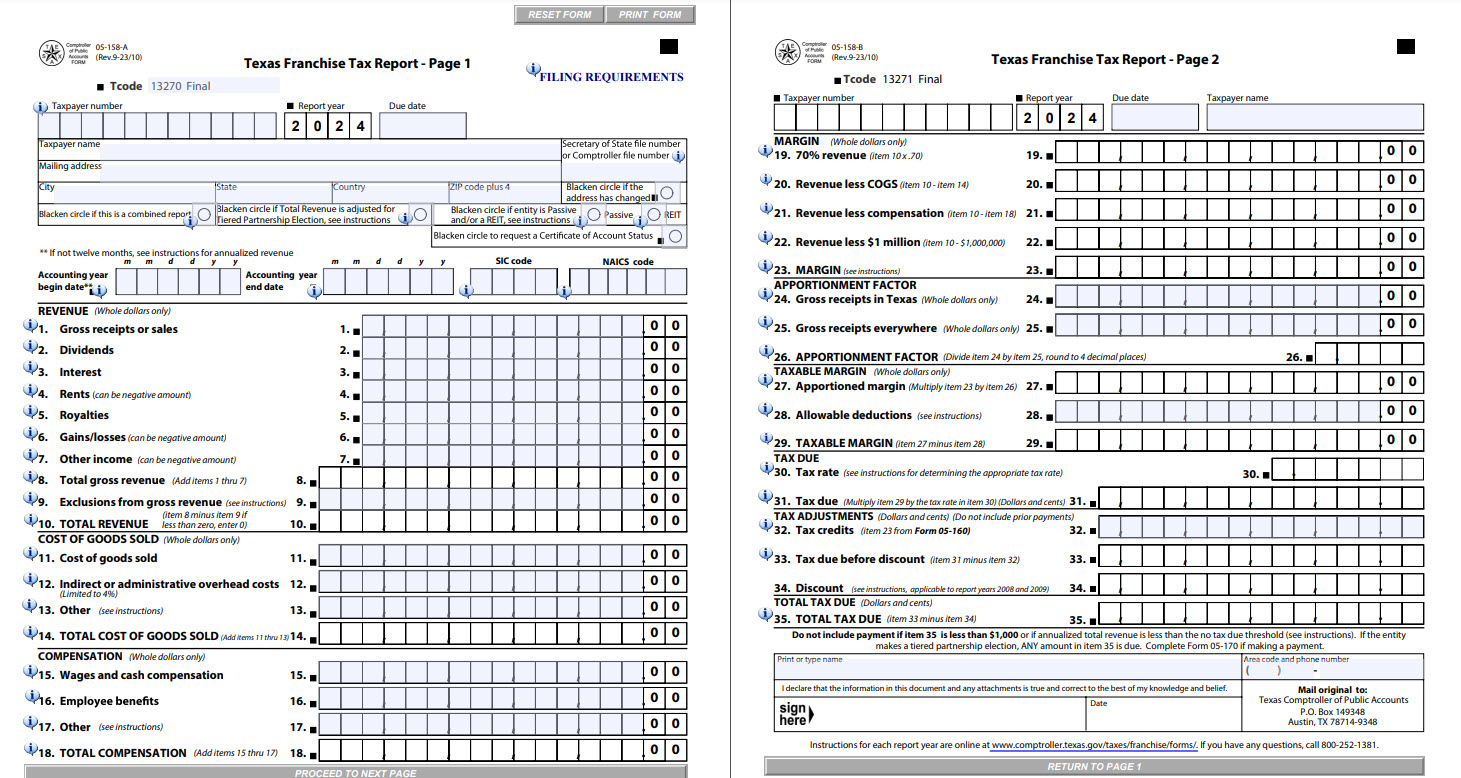
The Texas franchise tax is calculated based on a business’s “taxable margin.” There are two primary methods for calculating this margin, and businesses are permitted to use the method that yields the lowest tax liability:
- Total Revenue Method: This method involves taking a business’s total revenue and subtracting certain allowable deductions. The result is the taxable margin. This method is generally simpler but may not always result in the lowest tax amount.
- Compensation and COPE Method: This method is more complex. It involves taking total revenue and then subtracting the greater of:
- Allowable compensation for employees.
- The cost of goods sold (COGS), also known as Cost of Performance (COPE).
The compensation deduction includes wages, salaries, commissions, and benefits paid to employees. The COPE deduction includes costs directly attributable to the production of goods or services sold by the business. This method can be more advantageous for businesses with high compensation costs or significant COGS.
Tax Rates and Brackets
Once the taxable margin is determined, it is then subject to a tax rate. Texas has historically had different tax rates for various types of entities and based on revenue levels. The general practice is to apply a small percentage rate to the calculated taxable margin. The state periodically adjusts these rates and thresholds, so it is vital to stay updated with the latest Texas Comptroller of Public Accounts publications.
The tax rates are generally quite low, but because the tax is levied on the privilege of doing business and not solely on profit, even businesses that are not profitable can still owe franchise tax if their gross receipts exceed the filing threshold. This is a key distinction that often surprises business owners accustomed to profit-based taxation systems.
Filing and Payment Deadlines
Compliance with the Texas franchise tax requires timely filing and payment. The annual franchise tax report is typically due on May 15th each year. Businesses that fail to file or pay on time may be subject to penalties and interest charges. Extensions are sometimes available, but they generally require filing a request before the original deadline.
For new businesses or those newly entering Texas, it is crucial to establish a clear understanding of these deadlines from the outset. Registering with the Texas Comptroller of Public Accounts and understanding the specific reporting requirements for their business structure is a critical first step.
Strategic Implications for Businesses in Texas
The Texas franchise tax, despite its complexities, plays a significant role in the state’s economic strategy and has several important implications for businesses operating within its borders. Understanding these implications can inform business decisions, from initial setup to ongoing operations and expansion plans.
The perceived business-friendliness of Texas is often attributed to its lack of a state income tax. However, the franchise tax serves as a substitute revenue stream, and its unique structure requires careful consideration. For businesses, particularly those planning to establish a significant presence in the state, such as opening a new branch in Austin or a resort in the Texas Hill Country, a clear understanding of their potential franchise tax liability is crucial.
Business Formation and Structure
The choice of business entity in Texas can have a direct impact on franchise tax obligations. As mentioned, corporations, LLCs, and some partnerships are subject to the tax. When considering forming a business in Texas, or converting an existing entity, businesses should evaluate how different structures might affect their taxable margin and overall tax burden. For instance, a sole proprietorship that is not structured as a corporation or LLC may not be directly liable for franchise tax, though reporting requirements can still apply if they meet certain criteria. Conversely, a large corporation will likely have substantial reporting and payment obligations.
Financial Planning and Compliance
Accurate financial record-keeping is paramount for Texas franchise tax compliance. Businesses need to meticulously track their total revenue, compensation expenses, and cost of goods sold (COPE) to determine the most advantageous calculation method for their taxable margin. Investing in robust accounting software and potentially seeking advice from tax professionals specializing in Texas tax law can help businesses navigate these complexities and ensure they are filing accurately and on time. Failure to comply can result in significant penalties, interest, and potential legal issues.
For businesses that rely on extensive travel and tourism within Texas, understanding how revenue from different sources is classified and reported is also important. For example, revenue generated from hotel bookings at a resort near San Antonio, or from guided tours of Big Bend National Park, all contribute to total revenue and must be accounted for in franchise tax filings.

Economic Development and Incentives
While the franchise tax is a mandatory obligation, Texas also offers various economic development incentives and programs designed to attract and retain businesses. These can include property tax abatements, grants for job creation, and special incentives for specific industries or regions. Businesses should research these potential incentives to see if they can offset some of the costs associated with operating in Texas, including the franchise tax. For example, a new technology company looking to establish a headquarters in Dallas might explore state and local incentives that could ease their initial financial burden.
In conclusion, the Texas franchise tax is a fundamental aspect of doing business in the Lone Star State. While it requires careful attention to detail and ongoing compliance, a thorough understanding of its structure, calculation methods, and implications can empower businesses to operate efficiently and strategically within Texas‘s dynamic economic landscape. By staying informed and seeking expert advice when needed, businesses can effectively manage their franchise tax obligations and contribute to the continued growth and prosperity of Texas.
LifeOutOfTheBox is a participant in the Amazon Services LLC Associates Program, an affiliate advertising program designed to provide a means for sites to earn advertising fees by advertising and linking to Amazon.com. Amazon, the Amazon logo, AmazonSupply, and the AmazonSupply logo are trademarks of Amazon.com, Inc. or its affiliates. As an Amazon Associate we earn affiliate commissions from qualifying purchases.