
The question “What time is it in Texas?” might seem simple, but for the vast, sprawling state of Texas, the answer is not a single definitive moment. It’s a dance across time zones, a reflection of its historical development, and a crucial piece of information for anyone planning to travel to, do business in, or simply connect with this iconic American state. Understanding Texas time is more than just knowing the hour; it’s about appreciating the nuances of a region that straddles a significant portion of the United States.
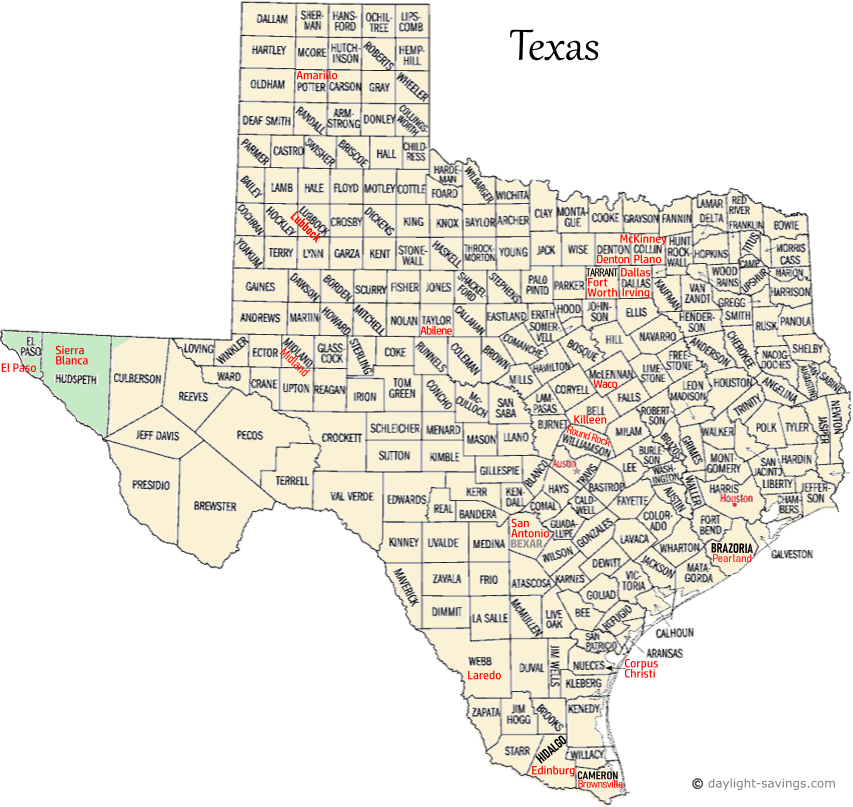
Texas observes two primary time zones, a fact that can surprise visitors unfamiliar with its immense geographical scale. Most of the state adheres to Central Time, while a western sliver, primarily El Paso County and the surrounding areas, operates on Mountain Time. This division isn’t arbitrary; it’s a legacy of how the nation’s timekeeping systems evolved and were adopted. For travelers, this means that a flight from Dallas to El Paso might involve a temporal shift, a subtle yet significant aspect of the travel experience.
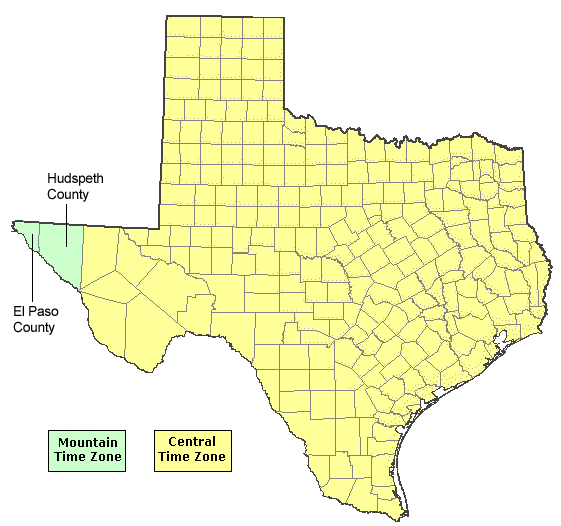
Navigating the Time Zones of Texas
The vast majority of Texas falls under the umbrella of Central Standard Time (CST) during the winter months, which then transitions to Central Daylight Time (CDT) when Daylight Saving Time is observed. Central Time is UTC-6 during standard time and UTC-5 during daylight saving. This is the time zone you’ll encounter in major Texas cities like Houston, Dallas, Austin, and San Antonio. It places Texas firmly in the eastern half of the United States when it comes to synchronized timekeeping, aligning it with states like Illinois, Missouri, and Louisiana.
However, the western reaches of Texas present a different temporal reality. El Paso and its surrounding counties, due to their proximity to New Mexico and their historical connections, observe Mountain Time. Similar to Central Time, this is Mountain Standard Time (MST), UTC-7, during the winter and Mountain Daylight Time (MDT), UTC-6, during the summer. This temporal bifurcation means that a simple drive across Texas can result in crossing a time zone boundary, a curious phenomenon in a single state. For businesses operating across Texas, particularly those with offices or clients in both the eastern and western parts of the state, managing these time zone differences is a daily operational consideration. It underscores the logistical complexities that arise from the sheer size and diverse geography of Texas.
The Historical Roots of Texas Time Zones
The establishment of time zones in the United States was a relatively late development, driven by the needs of the burgeoning railroad industry in the late 19th century. Before the widespread adoption of standardized time, each town and city kept its own local solar time, leading to considerable confusion and inefficiency, especially for long-distance travel. The Interstate Commerce Commission eventually took over the regulation of time zones in 1918, dividing the country into four main zones: Eastern, Central, Mountain, and Pacific.
Texas was officially placed within the Central Time Zone. However, the practicality of this designation, especially for the westernmost parts of the state, eventually led to adjustments. The El Paso region, for historical and practical reasons related to its trade and travel patterns with New Mexico and Arizona, petitioned and was eventually permitted to operate on Mountain Time. This dual-time zone system within Texas is a historical artifact, a testament to the state’s vastness and the evolving needs of its communities. It’s a subtle reminder that Texas is not a monolithic entity but a collection of diverse regions with unique characteristics, even down to the time on the clock. Understanding this historical context adds another layer to the simple question of “What time is it in Texas?”

Planning Your Texas Adventure: Time Zone Considerations
For any traveler planning an itinerary that includes multiple destinations within Texas, awareness of the time zones is paramount. If your travel plans involve a visit to San Antonio and then a flight to El Paso, you’ll need to adjust your watch. This is especially true for coordinating travel arrangements, booking accommodation, and scheduling activities. Missing a flight or a dinner reservation due to a time zone oversight can be a frustrating experience, turning a dream trip into a logistical headache.
Accommodation and Activities Across Texas
When booking hotels or other forms of accommodation, such as resorts or apartments, it’s essential to confirm the local time of your chosen destination. While most booking platforms will display times relative to your current location or the destination’s local time, it’s always wise to double-check. For instance, a resort in Galveston will operate on Central Time, while a charming boutique hotel in Marfa, a popular destination for art and stargazing in West Texas, will be on Mountain Time. This distinction is crucial for planning your arrival, check-in times, and any planned excursions.
Similarly, when exploring attractions, landmarks, and local culture, knowing the correct time will ensure you don’t miss out. Are you planning to catch a sunset at Big Bend National Park? Or perhaps experience the vibrant nightlife of Austin? The timing of these experiences is dictated by the local clock. Daylight Saving Time further complicates matters, as the dates for its observance can vary slightly across different regions or historical periods. While the United States generally observes Daylight Saving Time uniformly, the transition dates are synchronized, meaning that both Central Daylight Time and Mountain Daylight Time begin and end on the same Sundays in spring and fall. This synchronization, while helpful, still requires attention when crossing the Texas time zone divide.
Business and Lifestyle Implications
The dual time zones of Texas also have implications for business stays and various lifestyle pursuits. Businesses with operations or client bases spread across the state must factor in time zone differences when scheduling meetings, conference calls, and project deadlines. A conference call scheduled for 10 AM Central Time would be 9 AM Mountain Time, a seemingly small difference that can be significant in the fast-paced world of commerce.
For those considering long-term stays or relocating to Texas, understanding these temporal nuances is part of familiarizing oneself with the state’s unique character. Whether you’re drawn to the luxury travel opportunities in Dallas, the budget travel options in smaller towns, or family trips exploring the historical landmarks of the Alamo, being mindful of the time zones will contribute to a smoother and more enjoyable experience. Texas is a state of immense beauty, rich history, and diverse experiences, and a little attention to its temporal geography can significantly enhance your journey.
In conclusion, the question of “What time is it in Texas?” is a gateway to understanding the state’s vastness, its history, and the practicalities of traveling and living within its borders. While most of Texas operates on Central Time, the western reaches embrace Mountain Time, a legacy of historical development and regional needs. For visitors and residents alike, this temporal duality is an intriguing facet of the Lone Star State, reminding us that even something as seemingly simple as time can hold a unique story in a place as grand and diverse as Texas. Whether you’re here for business, pleasure, or a bit of both, a moment spent understanding Texas time will undoubtedly enrich your experience.
LifeOutOfTheBox is a participant in the Amazon Services LLC Associates Program, an affiliate advertising program designed to provide a means for sites to earn advertising fees by advertising and linking to Amazon.com. Amazon, the Amazon logo, AmazonSupply, and the AmazonSupply logo are trademarks of Amazon.com, Inc. or its affiliates. As an Amazon Associate we earn affiliate commissions from qualifying purchases.