
While our website primarily focuses on the exciting world of travel, from uncovering hidden gems in far-flung destinations to suggesting the most luxurious resorts and charming apartments for your next long-term stay, we understand that life circumstances can sometimes shift. In such moments, securing stable and affordable accommodation becomes paramount. For residents of California, a crucial avenue for achieving this stability is the Section 8 Housing Choice Voucher Program.
The Section 8 program, officially known as the Housing Choice Voucher Program, is a federal initiative administered by the U.S. Department of Housing and Urban Development (HUD). It aims to make safe, decent, and sanitary housing available to low-income families, the elderly, and the disabled. In California, this program is a vital lifeline for many individuals and families seeking to navigate the often-challenging housing market. Understanding how to apply is the first step towards accessing this essential support.

This guide will walk you through the process of applying for Section 8 in California, outlining the key steps, eligibility requirements, and where to find the necessary information. While our usual focus is on exploring the local culture, indulging in food experiences, or planning family trips, we recognize that sometimes, the most important journey is finding a secure place to call home.
Understanding the Section 8 Housing Choice Voucher Program
The Section 8 Housing Choice Voucher Program is designed to assist very low-income families, the elderly, and the disabled to afford decent, safe, and sanitary housing in the private market. The program is funded by the federal government but administered locally by Public Housing Agencies (PHAs). In California, there are numerous PHAs, each serving specific cities or counties.
How the Program Works
When you are approved for a Section 8 voucher, you are essentially given a subsidy that will help pay a portion of your rent. You are then free to find a rental unit in the private market that meets program standards. The voucher covers the difference between the locally determined payment standard and the rent amount you can afford, which is typically 30% of your adjusted gross income.
It’s important to understand that the PHA does not own or operate the housing units themselves. Instead, they work with private landlords who agree to rent their properties to voucher holders. This means that you will be signing a lease with a private landlord, similar to any other renter, but a portion of your rent will be paid directly by the PHA.
Eligibility Requirements
Eligibility for the Section 8 program is primarily based on income. To qualify, your household income must be below a certain percentage of the median income for the area where you are applying. HUD sets income limits annually, and these limits vary by location and family size. Generally, applicants must have an income that is no more than 50% of the median income for the area, with at least 75% of admissions being for families with incomes at or below 30% of the median.
Other factors that can influence eligibility include:
- Family Status: Whether you are a family, an elderly person, or a person with disabilities.
- Citizenship or Immigration Status: You must be a U.S. citizen or have eligible immigration status.
- Criminal Background: Certain criminal convictions may affect eligibility.
It is crucial to check the specific income limits and eligibility criteria for the PHA in your area, as these can fluctuate.
Steps to Apply for Section 8 in California
Applying for Section 8 in California involves several distinct steps. The process can sometimes be lengthy due to high demand and limited voucher availability. Patience and thoroughness are key.
1. Identify Your Local Public Housing Agency (PHA)
The first and most critical step is to determine which PHA serves your area. California is divided into various jurisdictions, each overseen by a specific PHA. You can usually find this information by searching online for “[your city or county] Public Housing Agency” or by visiting the HUD website and using their PHA locator tool.
Some of the larger PHAs in California include:
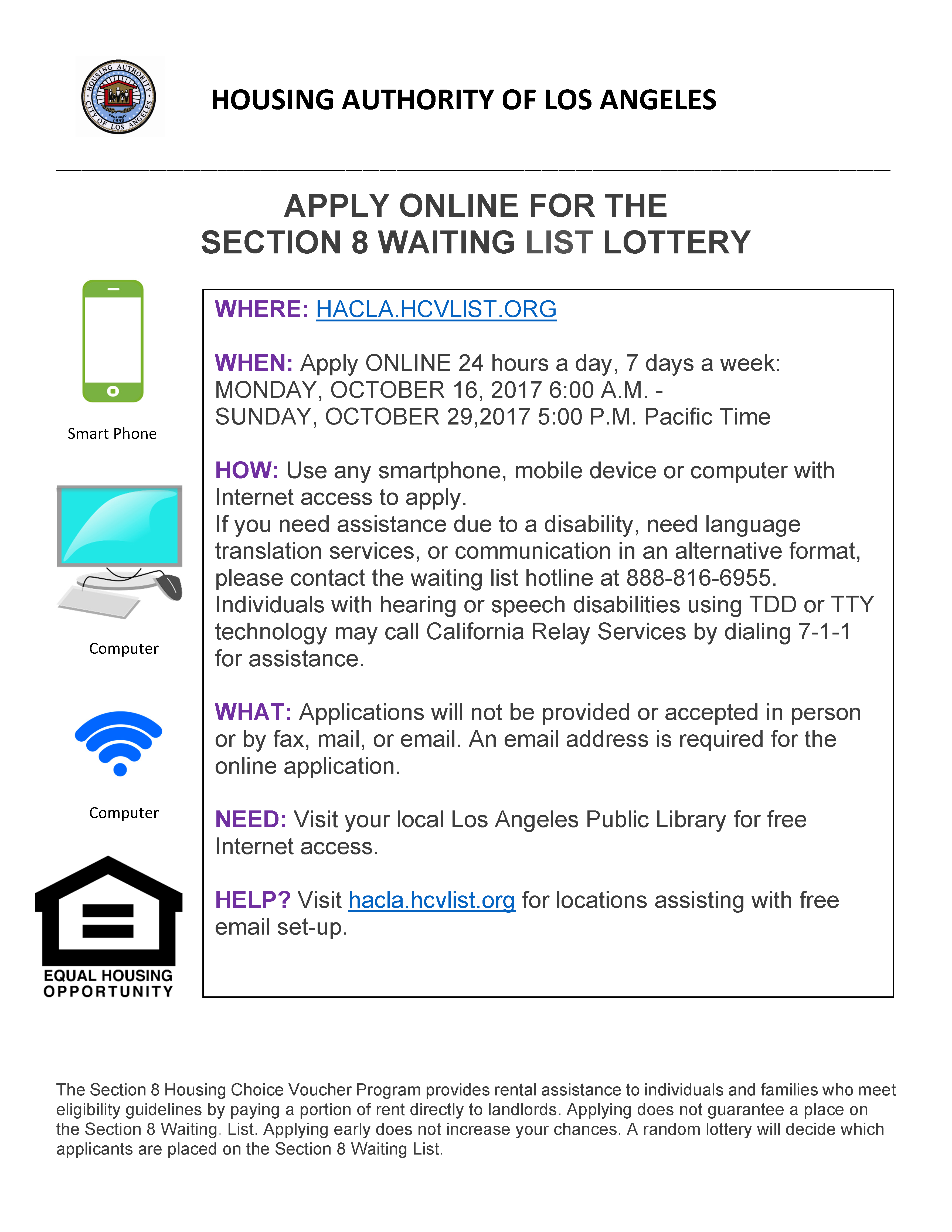
- Housing Authority of the City of Los Angeles (HACLA) for the city of Los Angeles.
- Housing Authority of the County of Los Angeles (HACoLA) for unincorporated areas of Los Angeles County.
- San Francisco Housing Authority (SFHA) for the city of San Francisco.
- Oakland Housing Authority (OHA) for the city of Oakland.
- San Diego Housing Commission (SDHC) for the city of San Diego.
Once you have identified your local PHA, you will need to visit their official website or contact them directly to obtain specific application instructions and forms.
2. Check for Open Waiting Lists
Section 8 vouchers are in high demand, and most PHAs maintain waiting lists. These lists can sometimes be closed for extended periods due to the sheer volume of applicants. It is essential to check if the waiting list for your desired PHA is currently open.
When a waiting list opens, PHAs will typically announce it through their website, local newspapers, and community outreach efforts. You can also often sign up to be notified when waiting lists open by providing your contact information to the PHA.
3. Complete the Application Form
If the waiting list is open, the next step is to complete the application form accurately and completely. These forms typically ask for detailed information about your household, including:

- Personal Information: Names, dates of birth, Social Security numbers for all household members.
- Income Information: Details about all sources of income (employment, benefits, etc.), including pay stubs, award letters, and tax returns.
- Asset Information: Information about any savings accounts, property, or other assets.
- Household Composition: Number of family members, ages, and any special needs (e.g., disabilities, elderly status).
Honesty and accuracy are paramount. Providing false information can lead to disqualification from the program. Many PHAs now offer online applications, which can streamline the process. However, paper applications may still be available for those who prefer or require them.
4. Submit Your Application and Supporting Documents
Once you have completed the application, you will need to submit it along with all required supporting documentation. This often includes:
- Proof of income (pay stubs, benefit statements).
- Proof of identity (driver’s license, state ID, passport).
- Proof of residency in the PHA’s jurisdiction.
- Birth certificates for all family members.
- Social Security cards for all family members.
- For individuals with disabilities, documentation of disability.
The PHA will provide a specific list of required documents. It is advisable to make copies of all submitted documents for your records.
5. Waiting List Placement and Verification
After submitting your application, the PHA will review it for completeness and eligibility. If your application is deemed complete, you will be placed on the waiting list in order of your position. This position is determined by factors such as income level, family status, and preference points (which may be given to veterans, homeless individuals, or those living in substandard housing).
During this waiting period, the PHA may contact you for additional information or to verify details provided in your application. It is crucial to respond promptly to any requests from the PHA and to keep your contact information updated. If you move or change your phone number, inform the PHA immediately to avoid missing important communications.
6. Voucher Issuance and Housing Search
When your name reaches the top of the waiting list, and a voucher becomes available, the PHA will notify you. At this point, you will be issued a voucher, which outlines the maximum rent the PHA will subsidize for your household.
You will then have a limited timeframe (typically 60-120 days, depending on the PHA) to find a suitable rental unit that meets the program’s quality standards. This involves searching for apartments or houses for rent in the private market. You can look for listings on various rental websites, contact property managers, or check with your PHA for a list of participating landlords.
Once you find a potential unit, you will need to submit a Request for Tenancy Approval (RTA) to your PHA. The PHA will then inspect the unit to ensure it meets HUD’s housing quality standards. The landlord will also need to agree to the terms of the lease and the PHA’s contract.
If the unit passes inspection and all parties agree to the terms, the PHA will approve the lease, and you can move into your new home. Your portion of the rent will be due to the landlord, and the PHA will pay the remaining subsidized amount directly to the landlord each month.
Tips for a Smooth Application Process
Navigating the Section 8 application process in California can be challenging, but with the right approach, you can increase your chances of success.
Be Prepared and Organized
Gather all necessary documents before you start the application. Having birth certificates, Social Security cards, income statements, and identification readily available will save you time and reduce stress. Keep digital copies and physical copies of everything.
Understand Local Preferences
Some PHAs offer preferences for certain groups of applicants, such as families with children, elderly individuals, persons with disabilities, or homeless individuals. If you fall into one of these categories, ensure you highlight this on your application and provide any required documentation. These preferences can significantly shorten your waiting time.
Stay Informed and Follow Up
Regularly check the website of your local PHA for updates on waiting list status, application deadlines, and any changes to the program. If you are unsure about any part of the application process, do not hesitate to contact the PHA directly. Polite and persistent follow-up can be beneficial.
Seek Assistance If Needed
If you find the application process overwhelming, consider seeking help from local non-profit organizations or community service agencies. Many organizations specialize in assisting individuals with housing applications and can provide valuable guidance and support. These resources can be particularly helpful in understanding complex forms or navigating bureaucratic procedures.
Be Patient
The Section 8 waiting lists can be very long. It is essential to be patient and understand that securing a voucher can take months or even years, depending on your location and the PHA’s demand. While you wait, continue to work on improving your financial situation if possible, as this can impact future eligibility or the amount of subsidy you receive.
Applying for Section 8 in California is a process that requires diligence and perseverance. By understanding the program’s mechanics, following the outlined steps carefully, and utilizing available resources, you can successfully navigate the application and take a significant step towards securing affordable and stable housing. While our website usually guides you through the delights of exploring new destinations or finding the perfect hotel for your travel adventures, we hope this comprehensive guide empowers you in your quest for essential accommodation within the Golden State.
LifeOutOfTheBox is a participant in the Amazon Services LLC Associates Program, an affiliate advertising program designed to provide a means for sites to earn advertising fees by advertising and linking to Amazon.com. Amazon, the Amazon logo, AmazonSupply, and the AmazonSupply logo are trademarks of Amazon.com, Inc. or its affiliates. As an Amazon Associate we earn affiliate commissions from qualifying purchases.