
Navigating the legal landscape can often feel daunting, especially when you’re seeking to resolve a dispute. For residents of California, the small claims court offers a streamlined and accessible avenue for addressing monetary grievances without the need for an attorney. Whether you’ve experienced a disappointing hotel stay, a dispute over a rental agreement for a villa, or an issue with a service provider encountered during your travels, understanding the process for filing a small claims case in California is crucial. This guide will walk you through the essential steps, from determining if your claim is eligible to presenting your case in court, ensuring you have the knowledge to pursue resolution effectively.
Understanding Small Claims Court in California
Small claims court, officially known as the Small Claims Division of the Superior Court, is designed to be a simpler and less formal legal process than regular civil court. Its primary purpose is to allow individuals to resolve disputes involving relatively small amounts of money. This makes it an ideal venue for many common issues that arise from travel experiences, accommodation arrangements, or interactions with local businesses.
What is a Small Claims Case?
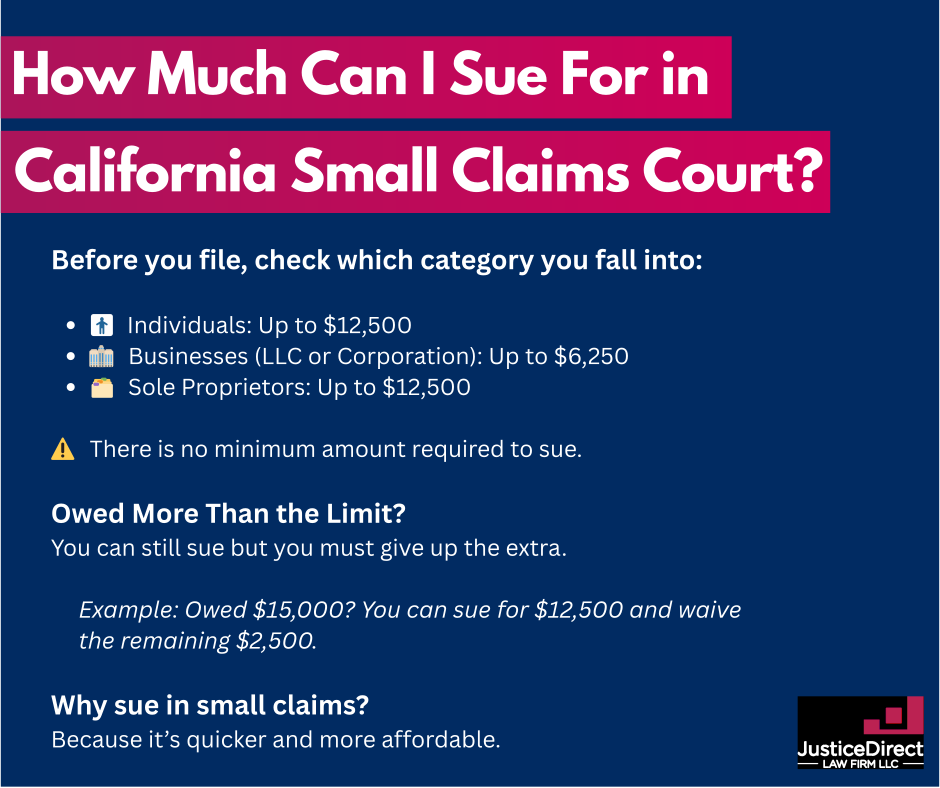
A small claims case is a lawsuit where one person (the plaintiff) sues another person or business (the defendant) to recover money. The maximum amount you can sue for in California small claims court depends on the type of claim and whether you are an individual or a business. As of current regulations, individuals can generally sue for up to $10,000. Businesses, however, have a lower limit, typically $5,000. It’s important to verify these limits as they can be subject to change.
The beauty of small claims court lies in its accessibility. You are not required to have a lawyer, and the procedures are simplified to allow individuals to represent themselves. This significantly reduces legal costs and makes it feasible for individuals to pursue claims they might otherwise abandon due to the expense of traditional litigation. The court aims for a fair and just resolution, focusing on the merits of the case rather than intricate legal technicalities.
Types of Disputes Suitable for Small Claims
Many scenarios encountered in the world of tourism and lifestyle can be resolved through small claims court. Consider these common examples:
- Accommodation Disputes: This could involve issues with a hotel, resort, apartment rental, or villa booking. For instance, if a resort advertised specific amenities like a pool or gym that were unavailable during your stay, and you were charged full price, this could be a basis for a claim. Similarly, if an apartment you rented for a long-term stay in San Francisco had significant undisclosed defects, leading to damages or an uninhabitable condition, small claims might be appropriate. Disputes over security deposits for rentals are also very common.
- Travel Service Issues: If you paid for a guided tour in New York City that was misrepresented in its description or failed to deliver promised experiences, you might have grounds for a claim. This could also extend to issues with transportation services booked for your trip, such as a private car service that was not up to par.
- Consumer Transactions: When purchasing goods or services related to travel or lifestyle, disputes can arise. This might include issues with tour operators, travel agencies, or even local businesses where you purchased souvenirs or services. If a product purchased for a family trip in Disneyland turned out to be defective and the seller refused a refund, small claims could be an option.
- Property Damage: While less common in pure travel scenarios, if your property was damaged by a service provider during a business stay or a home renovation related to a lifestyle choice, this could also fall under small claims jurisdiction.
It is important to note that small claims court is generally for monetary disputes. You typically cannot sue for things like divorce, bankruptcy, or to change someone’s legal name. The primary goal is to recover a specific sum of money.
Preparing Your Small Claims Case
The success of your small claims case hinges on thorough preparation. This involves meticulously gathering evidence, understanding the correct court and forms, and properly serving the defendant. Rushing through these steps can lead to unnecessary delays or even the dismissal of your claim.
Step 1: Determine Your Claim Amount and Jurisdiction
Before you file, you must ensure your claim amount does not exceed the jurisdictional limits of the small claims court. As mentioned, this limit is $10,000 for individuals. If your claim is for more than that, you have a few options: you can reduce your claim to the maximum limit, or you may need to file in a higher court if you are unwilling to waive the excess amount.
You also need to determine the correct venue for your lawsuit. Generally, you should file in the small claims court in the county where:
- The defendant lives.
- The defendant’s business is located.
- The contract was signed.
- The incident occurred (e.g., where a hotel is located, or where a service was performed).
For example, if you had a dispute with a boutique hotel in Los Angeles, you would likely file in the small claims court for Los Angeles County. If you rented a villa in Palm Springs and the issue occurred there, that county’s court would be appropriate. Consulting the California Courts website or your local court’s clerk can help you confirm the correct venue.
Step 2: Gather Your Evidence
Evidence is the backbone of any legal case, and small claims court is no exception. You need to present a clear and compelling picture of why the defendant owes you money. This can include:
- Documents: Contracts, receipts, invoices, booking confirmations, leases, warranties, cancelled checks, bank statements, and any written correspondence (emails, letters) between you and the defendant. For instance, if you’re disputing a charge for a suite at the Ritz-Carlton, keep all your booking confirmations and receipts.
- Photographs and Videos: Visual evidence can be very powerful. If a hotel room was not as advertised, take pictures or videos of the discrepancies. If property damage occurred, document it thoroughly.
- Witnesses: If someone else witnessed the event or can corroborate your story, their testimony can be valuable. You’ll need to be able to contact them and have them available to testify.
- Expert Opinions (if applicable): In some cases, you might need an expert to assess damages or provide an opinion. However, this is less common in small claims due to cost and complexity.
Organize your evidence logically and keep it in a safe place. You will need copies to present to the court and potentially to the defendant.
Step 3: Fill Out the Necessary Forms
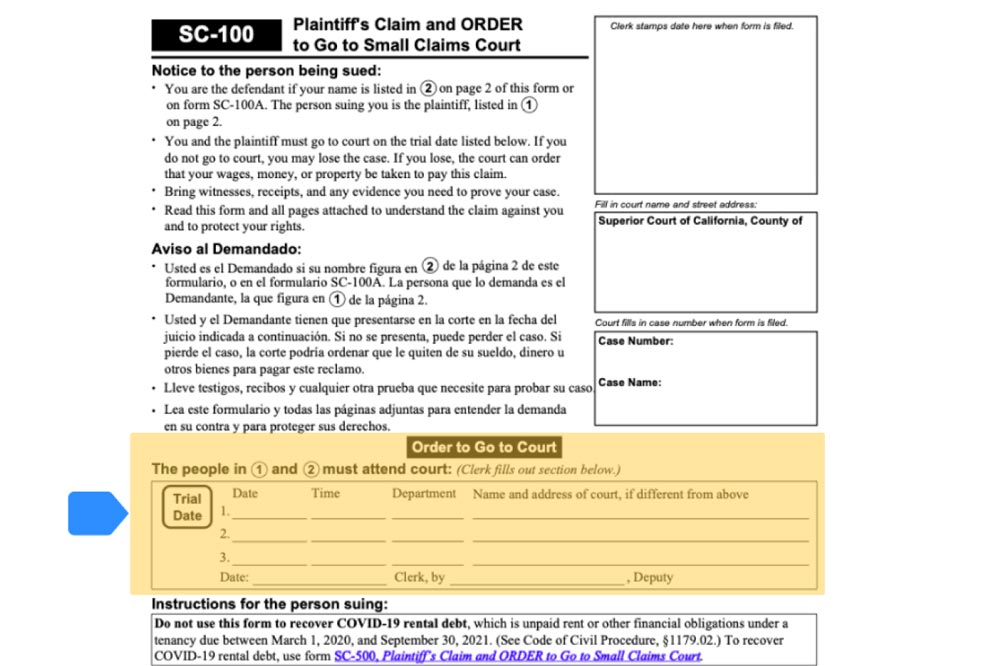
The primary form you’ll need to file is the Plaintiff’s Claim and Order to Appear (Form SC-100). This form requires you to:
- State your name and address.
- State the defendant’s name and address.
- Describe the reason for your lawsuit, including when and where the dispute occurred.
- State the exact amount of money you are claiming.
- Sign and date the form.
You can obtain this form from the California Courts website or from your local courthouse. It’s crucial to fill it out accurately and completely. Mistakes can lead to delays or rejection of your filing. If you are suing a business, ensure you have the correct legal name of the business.
Filing Your Claim and Serving the Defendant
Once you have prepared your case and completed the necessary forms, the next critical steps involve formally initiating the lawsuit and informing the defendant. These processes are strictly regulated to ensure fairness.
Filing the Plaintiff’s Claim
After filling out the Plaintiff’s Claim form (SC-100), you will need to file it with the small claims court clerk in the correct venue. There will be a filing fee, which varies depending on the amount you are claiming. If you cannot afford the filing fee, you may be able to apply for a fee waiver. The clerk will stamp your forms, assign a case number, and schedule a court date. The court will then issue an Order to Appear, which is part of the SC-100 form that tells you and the defendant when and where to appear in court.
Serving the Defendant
“Serving” the defendant means formally notifying them that they are being sued. This is a crucial legal step. You cannot serve the defendant yourself; it must be done by someone who is:
- At least 18 years old.
- Not a party to the lawsuit (i.e., not you).
- A sheriff, marshal, registered process server, or any person authorized by law.
There are several methods of service, including:
- Personal Service: The server personally hands a copy of the lawsuit and the Order to Appear to the defendant.
- Substituted Service: If personal service isn’t possible, the server may leave the documents with a competent person at the defendant’s home or business and then mail a copy. Specific rules apply to this method.
- Service by Mail: In some cases, with the court’s permission, you can serve by certified mail with a return receipt requested.
You must file a Proof of Service form (Form SC-104) with the court, confirming that the defendant was properly served. The deadline for serving the defendant varies depending on how far away they are from the court. Generally, they must be served at least 15 days before the court date if they are in the county, and at least 20 days before if they are outside the county. Failure to properly serve the defendant can result in your case being dismissed.
Preparing for Court
Once you’ve filed and served, it’s time to get ready for your court date. This involves:
- Organizing Your Evidence: Make sure all your documents, photos, and other evidence are well-organized and easy to present. Bring the originals and enough copies for yourself, the judge, and the defendant.
- Practicing Your Presentation: Think about what you will say to the judge. Be concise, clear, and stick to the facts. Explain what happened, why the defendant is responsible, and how you calculated the amount you are seeking.
- Anticipating the Defendant’s Arguments: Try to think about what the defendant might say and how you will respond.
- Understanding Courtroom Etiquette: Be respectful, arrive on time, and dress appropriately. Address the judge as “Your Honor.”
What Happens in Court
On your court date, you and the defendant will appear before a judge or commissioner. The judge will listen to both sides, review the evidence, and ask questions. The proceedings are informal, but it’s important to remain calm and respectful.
The judge will then make a decision. They might rule immediately, or they may take the case under submission and mail a decision later. If you win, the court will issue a judgment against the defendant. However, the court does not collect the money for you. If the defendant doesn’t pay voluntarily, you will need to take further steps to enforce the judgment, such as wage garnishment or bank levies.
If you or the defendant do not appear in court, the case may be dismissed. If you fail to appear, you will likely lose your case. If the defendant fails to appear, you may win by default, but you will still need to prove your case.

Appealing a Decision
If you are unhappy with the judge’s decision, you have the right to appeal. The defendant can also appeal if they lose. The appeal process involves filing a notice of appeal and usually requires a new hearing in a higher court. There are strict deadlines for filing an appeal, so if you are considering this, it’s essential to act quickly and consult the court’s procedures.
Small claims court in California provides a valuable resource for resolving everyday disputes. By understanding the process, meticulously preparing your case, and presenting it clearly and respectfully, you can effectively navigate this legal system and seek a fair resolution to your financial grievances, whether they stem from a memorable landmark visit or a disappointing hotel stay.
LifeOutOfTheBox is a participant in the Amazon Services LLC Associates Program, an affiliate advertising program designed to provide a means for sites to earn advertising fees by advertising and linking to Amazon.com. Amazon, the Amazon logo, AmazonSupply, and the AmazonSupply logo are trademarks of Amazon.com, Inc. or its affiliates. As an Amazon Associate we earn affiliate commissions from qualifying purchases.