
The California Roll is a delightful enigma for many sushi enthusiasts, a dish that often sparks lively debate and curious inquiries. Is it authentically Japanese? Where did it originate? What makes it so distinct from its traditional counterparts? While its name proudly declares its American roots, the California Roll has carved a unique and beloved niche in the global culinary landscape, particularly within the world of sushi and Japanese cuisine. This article delves into the origins, composition, and enduring appeal of this iconic roll, exploring its place within travel, tourism, and lifestyle experiences, all from the vibrant backdrop of the Golden State.

The Unexpected Genesis of a Sushi Icon
The story of the California Roll is a testament to culinary innovation and the fascinating cross-pollination of cultures. Unlike the ancient origins of traditional sushi in Japan, the California Roll is a relatively modern invention, born from a desire to adapt a foreign delicacy to a new palate. The precise details of its creation are shrouded in a bit of friendly rivalry and differing accounts, but the prevailing narrative points to the 1970s in Los Angeles, California.
A Taste of Innovation in Los Angeles
Several sushi chefs in Los Angeles have been credited with its invention, each with their own compelling claims. One popular theory attributes the creation to Chef Kenjiro “Ken” Toi at Tokyo Kaikan restaurant in the 1960s. Another widely circulated story points to Chef Ichiro Mashita at Tokyo Sushi in 1970. Regardless of the exact individual, the common thread is the inventive spirit of sushi chefs in California who sought to introduce sushi to a broader American audience, accustomed to different flavors and textures.
The challenge was that many Americans at the time were hesitant about raw fish and the presence of seaweed (nori) as a visible component. Chefs began experimenting with ways to make the dish more approachable. The breakthrough came with the realization that by reversing the roll – placing the rice on the outside and the nori inside – they could effectively hide the seaweed. This simple yet ingenious alteration was a game-changer.
Furthermore, the use of avocado, a readily available and popular fruit in California, provided a creamy, mild texture that complemented the other ingredients and masked any initial aversion to the raw fish. Crab, often imitation crab meat (surimi), became the standard protein, offering a familiar and palatable seafood option. These adaptations were pivotal in making sushi less intimidating and more appealing to the Western palate. The California Roll was not just a new dish; it was a bridge between two culinary worlds, a symbol of adaptation and fusion that would pave the way for many other “Americanized” sushi rolls.
Deconstructing the California Roll: Ingredients and Variations
At its core, the California Roll is a relatively simple composition, making it a gateway into the diverse world of sushi. Its appeal lies in its straightforward yet satisfying combination of flavors and textures.
The Classic Combination
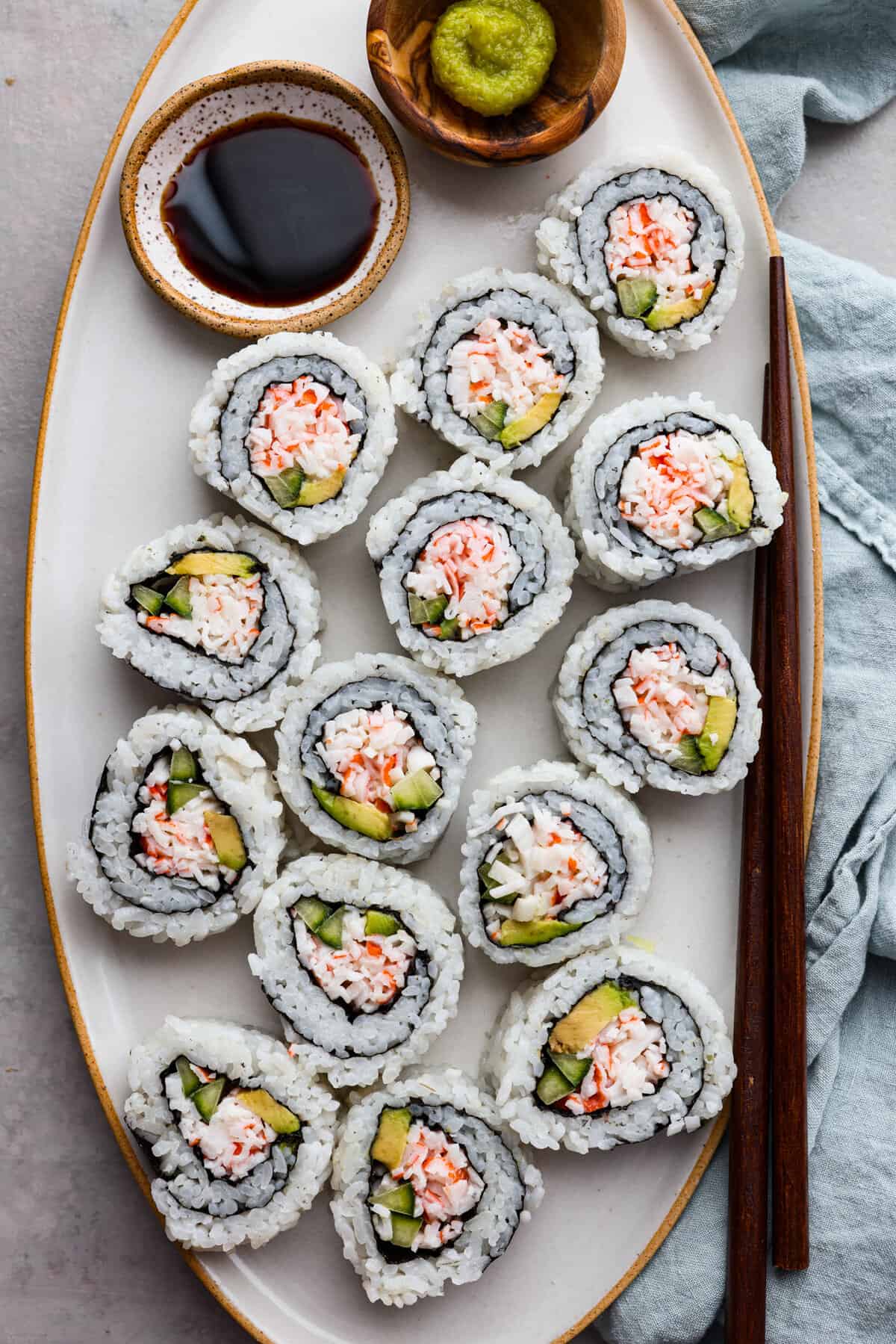
The quintessential California Roll is an uramaki roll, meaning “inside-out roll.” This distinguishes it from traditional maki rolls where the rice is on the inside. The key components are:
- Rice: Seasoned sushi rice, typically short-grain Japanese rice cooked with rice vinegar, sugar, and salt. The rice forms the outer layer of the roll.
- Nori: A sheet of dried seaweed, placed inside the roll, wrapping the filling.
- Avocado: Creamy, ripe avocado slices provide a rich texture and a mild, buttery flavor.
- Crab: Traditionally, imitation crab meat (surimi) is used, which is a processed white fish product. High-quality establishments may opt for real crab meat.
- Cucumber: Thinly sliced cucumber adds a refreshing crunch and a subtle, crisp contrast.

These ingredients are meticulously arranged and rolled using a bamboo mat (makisu). The outside rice layer is often sprinkled with sesame seeds, adding a nutty aroma and a visual appeal. When served, it’s typically accompanied by soy sauce, wasabi, and pickled ginger (gari), common condiments for sushi.
Evolving Flavors and Modern Twists
While the classic combination remains popular, the California Roll has inspired countless variations, reflecting the ever-evolving culinary landscape and the creativity of chefs worldwide. These variations demonstrate the dish’s adaptability and its ability to incorporate diverse flavors and ingredients.
- Spicy California Roll: This popular variation introduces a kick with a spicy mayonnaise mixture, often incorporating sriracha or chili paste, mixed with the crab meat.
- California Roll with Shrimp Tempura: Adding crispy fried shrimp tempura introduces an element of indulgence and a satisfying crunch.
- California Roll with Smoked Salmon: For those who prefer a more robust fish flavor, smoked salmon can replace the crab.
- Vegan California Roll: Plant-based versions often substitute tofu or other vegetables for crab, catering to vegan diners.
These adaptations highlight how the fundamental structure of the California Roll serves as a versatile canvas. Whether you’re dining at a bustling sushi bar in Tokyo, a high-end restaurant in New York City, or a charming eatery in a coastal town, you’re likely to find your own preferred rendition of this beloved roll. The California Roll has become more than just a menu item; it’s a symbol of how global cuisine can be embraced and reinterpreted.
The California Roll’s Enduring Appeal: A Culinary Ambassador
The California Roll has transcended its humble origins to become a globally recognized and appreciated dish. Its journey from a hesitant American adaptation to a staple in sushi restaurants worldwide is a fascinating narrative of cultural exchange and culinary evolution.
A Gateway to Sushi Experiences
One of the primary reasons for the California Roll‘s enduring popularity is its accessibility. For many individuals, it serves as their first introduction to sushi. Its familiar ingredients, absence of visible raw fish (in the traditional sense), and mild flavors make it a less daunting choice for newcomers. This has made it a fantastic ambassador for Japanese cuisine, encouraging people to explore more adventurous sushi options.
When travelers visit California, exploring its diverse culinary scene is often a highlight. The California Roll offers a tangible connection to the state’s innovative spirit. From beachfront cafes in San Diego to trendy eateries in San Francisco, seeking out an authentic California Roll can be a delightful part of a travel itinerary. Many hotels and resorts across California, such as the iconic Chateau Marmont or the luxurious Ritz-Carlton, Laguna Niguel, often feature sushi on their menus, and the California Roll is almost always a prominent offering, catering to international guests and local patrons alike.
Cultural Significance and Culinary Tourism
The California Roll is a prime example of how food can reflect and influence lifestyle and cultural trends. Its creation embodies the spirit of California – a blend of innovation, openness to new experiences, and a laid-back approach. This resonates deeply with the concept of lifestyle travel, where the focus is on experiences that are enjoyable, accessible, and reflective of a particular destination’s ethos.
For those interested in culinary tourism, the California Roll offers a starting point. It prompts questions about the origins of sushi in America, the influence of local ingredients on global dishes, and the art of sushi making itself. Exploring local markets in California, visiting renowned sushi restaurants, or even taking a sushi-making class can be enriching experiences that are directly linked to the popularity of rolls like the California Roll. It’s a delicious entry point into understanding the broader tapestry of food and culture in the Golden State.
Furthermore, the California Roll’s journey highlights the globalization of food. What began as a local adaptation in Los Angeles is now enjoyed in almost every corner of the world, from bustling street food stalls to sophisticated dining establishments. This global reach makes it a topic of interest for anyone curious about how different cuisines interact and evolve, making it a relevant subject for discussions on travel, tourism, and the interconnectedness of our world. It’s a culinary ambassador, a delicious ambassador of California’s spirit and its enduring impact on global food trends.
LifeOutOfTheBox is a participant in the Amazon Services LLC Associates Program, an affiliate advertising program designed to provide a means for sites to earn advertising fees by advertising and linking to Amazon.com. Amazon, the Amazon logo, AmazonSupply, and the AmazonSupply logo are trademarks of Amazon.com, Inc. or its affiliates. As an Amazon Associate we earn affiliate commissions from qualifying purchases.